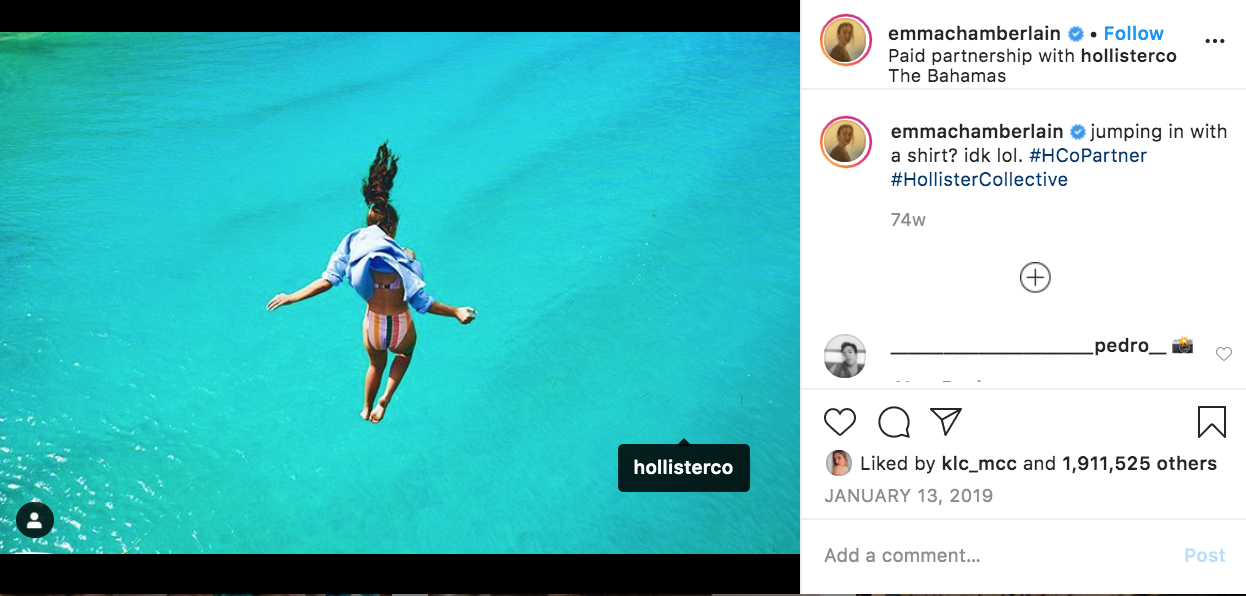
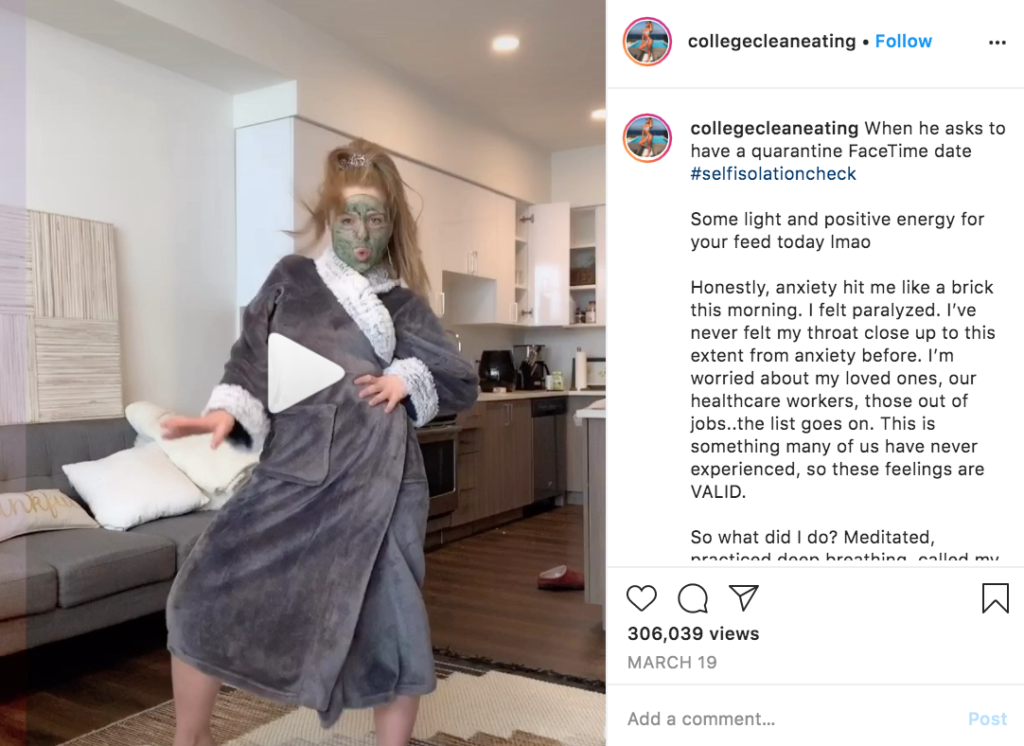
The grocery aisle has always been a battleground for attention. But the battlefield has expanded. Today, a package doesn’t just need to pop off a shelf; it needs to stop a scroll, survive image compression, and be worthy of a 15-second video. Social media has fundamentally changed what “good packaging” means, and brands that understand this are winning. Here are five ways it’s happening.
1. Packing Protein
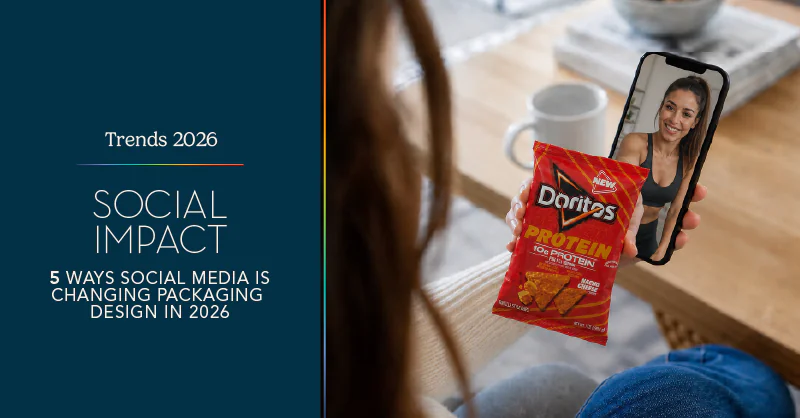
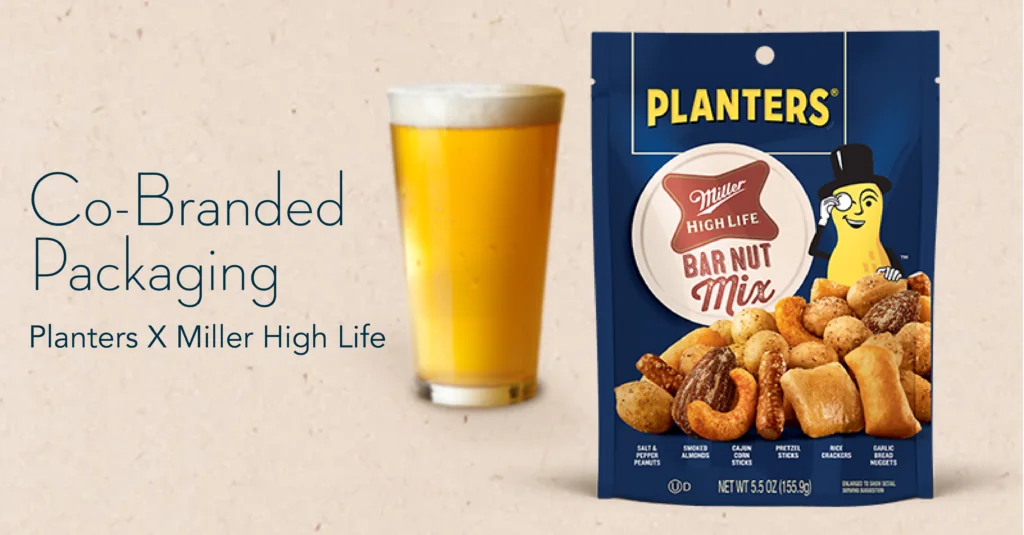
Protein water. High-protein Doritos. Protein ketchup. A decade ago, these would have sounded like a fever dream. Today, they’re just Tuesday at the grocery store, and fitness influencers on TikTok, Instagram, and YouTube deserve a lot of the credit.
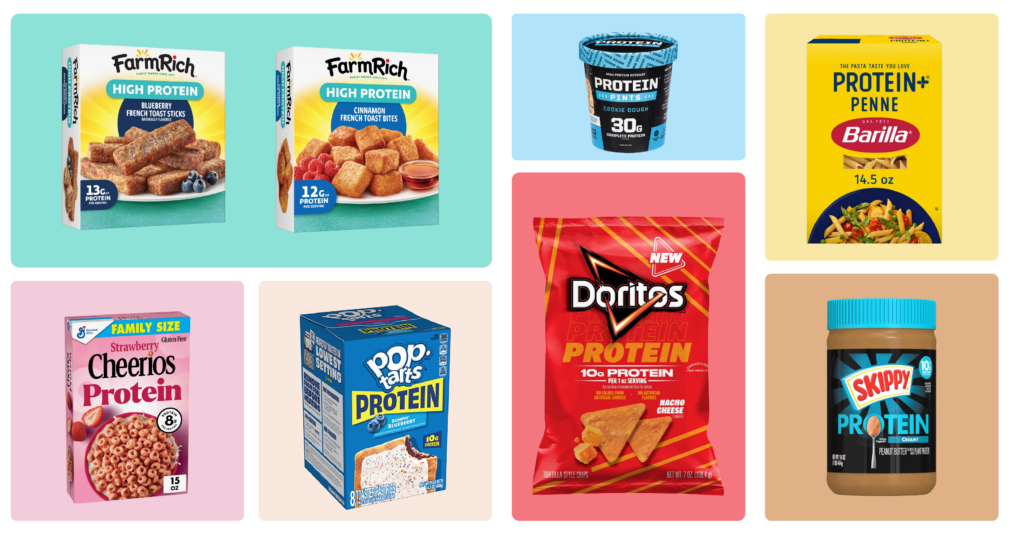
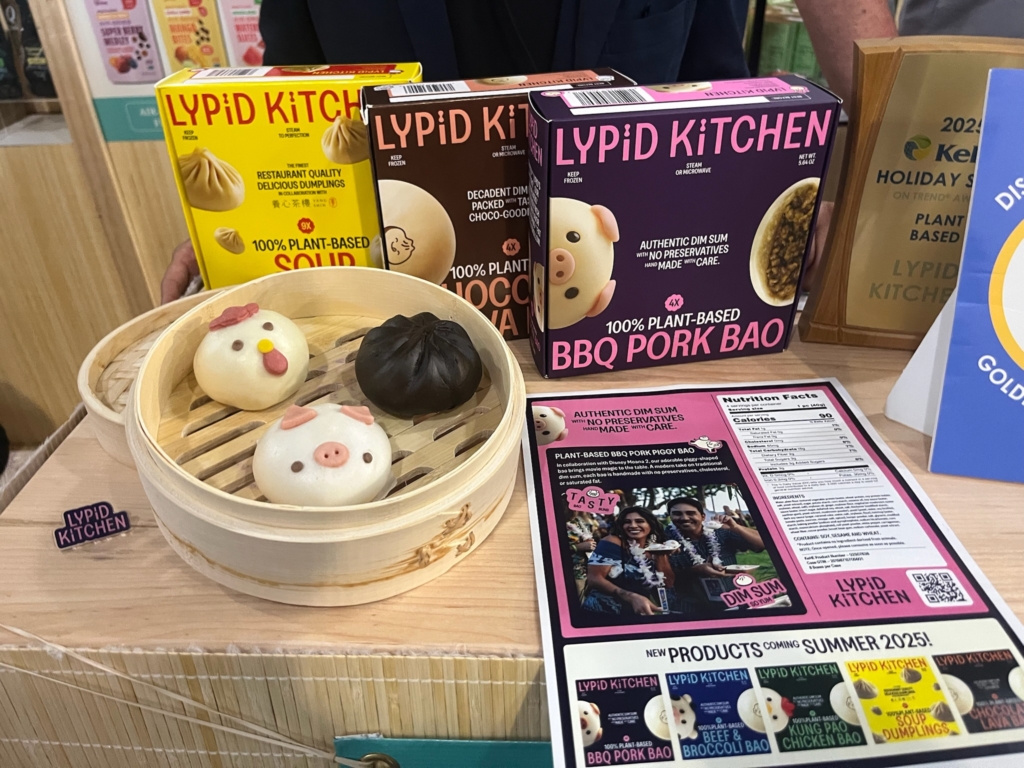
The protein obsession has forced a rethink of packaging strategy across the industry. Some brands are simply moving protein claims from the back panel to the front, turning what used to be a nutritional footnote into the hero of the design. Others are launching entirely new protein-forward SKUs, recasting familiar products as performance foods and reaching new consumer segments in the process. Cereals like Cheerios and even ice cream like Protein Pints have started borrowing the visual language of protein bars and sports drinks, leaning into a performance aesthetic that would have felt out of place five years ago.
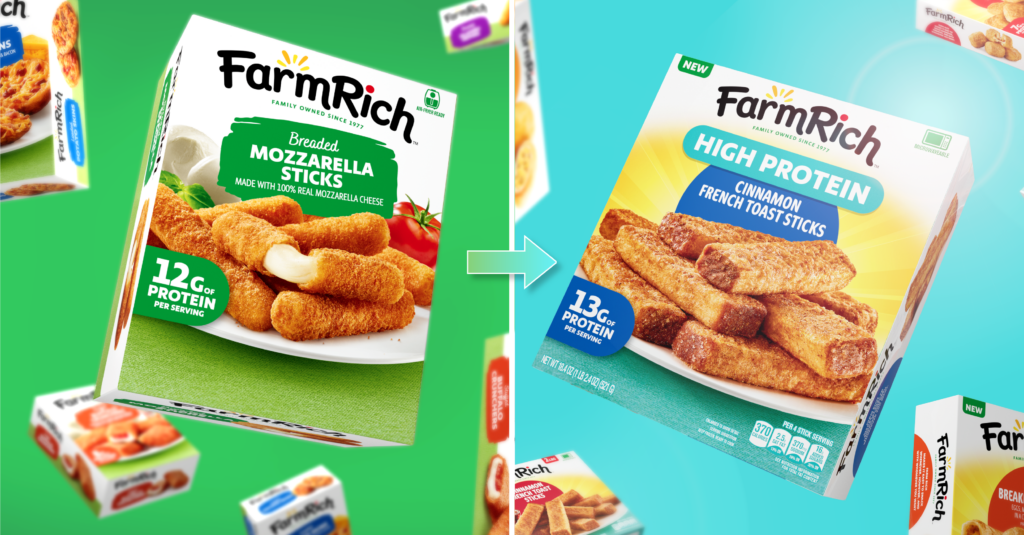
At Smith Design, we’ve helped brands capitalize on this shift, in some cases by simply refreshing brand lineups to highlight the macro nutrient on pack to help consumers get the information they need to reach their protein goals. In other cases, we’ve helped brands go a step further, such as our design of Farm Rich’s high-protein breakfast line of French Toast Sticks.
Trend to watch: Fibermaxxing. With more than 95% of Americans not getting the amount of fiber recommended by the FDA, and a new awareness of the importance of gut health, fiber is getting greater attention on social media. Expect packaging to respond.
2. Collaborations and Limited-Edition Flavor Drops
Social media runs on novelty. Even a brand’s most loyal fans can experience “like fatigue” after seeing the same product photo a thousand times. The solution the industry landed on? Borrow a page from luxury fashion: collaborate, drop, and repeat.
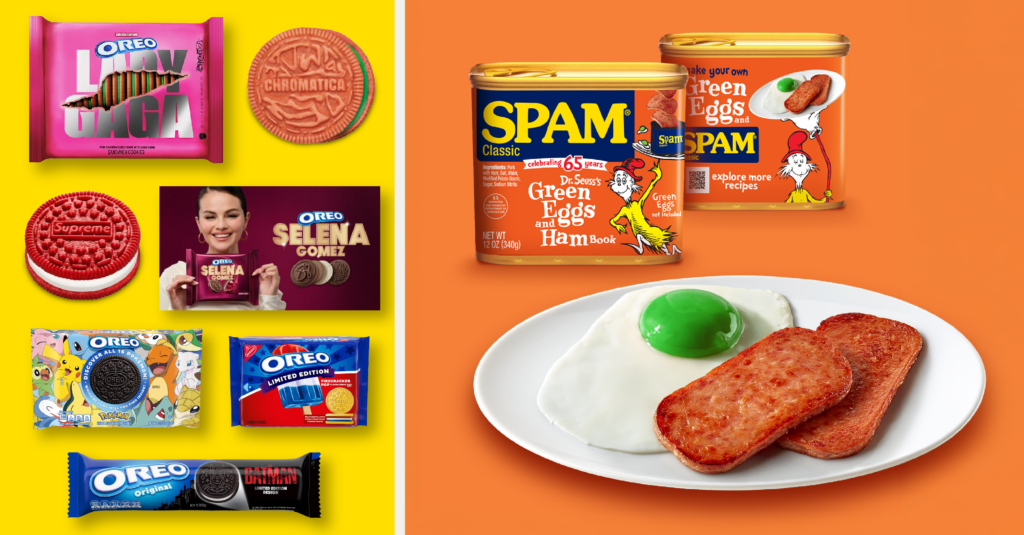
Oreo has become a gold standard. Its collabs have spanned streetwear (Supreme), music (BTS, Lady Gaga’s Chromatica album, Post Malone, Blackpink), gaming (Super Mario Brothers), and beverages (Coca-Cola). Novelty flavors (Candy Corn, Red Velvet, and a Hot Chicken Wing cookie launched in China) keep the brand perpetually buzzy.
Pepsi did it with Peeps (marshmallow-flavored soda, naturally). And then there’s the Crocs x KFC collab: shoes covered in fried chicken imagery that looked like an absurdist art project straight out of Bushwick. Packaging collabs can get incredibly idiosyncratic, funny and personal too, which helps a brand build a personal connection with fans. That was the case when Popsicle collaborated with influencer Jake Shane, who famously loves red Popsicles (but not orange ones) to create a package of All Cherry Jake Shane Popsicles, which racked up millions of views when Shane revealed the packaging.
For packaging designers, collaborations are genuinely exciting; they create space to break from brand guidelines and let two distinct visual voices remix into something neither brand could pull off alone.
Our team has had the opportunity to participate in a lot of fun collaborations and flavor mashups. Last year, we designed Green Eggs and Spam in celebration of the 65th anniversary of the Dr. Seuss classic (and we continue to design all sorts of fun flavors for Spam, and Spam stans online are appreciative!). Popsicle found magic by teaming up with both Disney and Jolly Rancher. The packaging becomes the announcement, the conversation starter, and the collectible all at once.
Trend to watch: Limited-time and seasonal flavors expanding well beyond snacks and chips into categories like condiments, dairy, and beverages.
3. Designing for the 6-Inch Screen
Which came first: bold, flat packaging design or the dominance of user-generated content on social feeds? At this point, it doesn’t matter; they reinforce each other completely.
Winning on shelf used to be the only visual battleground that mattered. Now the 6-inch phone screen is the new storefront, and it plays by different rules. Gradients, beveled type, intricate illustrations, thin serif fonts (sorry, Garamond!) and glossy finishes don’t always survive image compression to 72 ppi very well. A delicate serif typeface that looked refined in print can become illegible as a 200×200 pixel Amazon thumbnail or when it’s being held by a UGC creator for 2 seconds in front of a phone camera. Dainty and detailed simply doesn’t perform on camera.
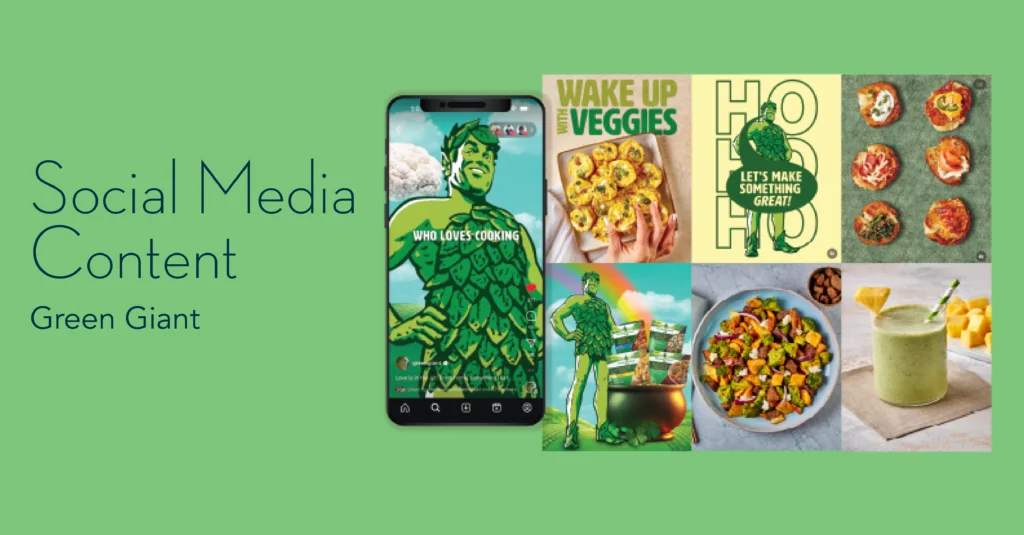
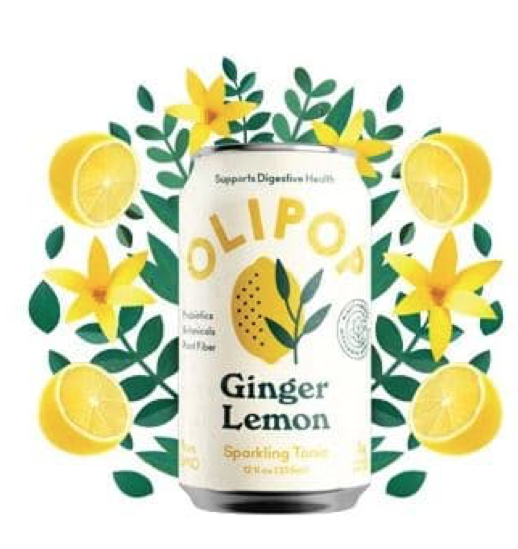
What does work: fewer words, heavier fonts, bolder colors, higher contrast. If a UGC creator holds your product up for three seconds on TikTok, your design needs to read instantly. Brands like Oatly and Olipop have mastered this: their packaging is flat, bold, and playful enough to function as content on its own.
Some brands go further by specifying matte over gloss finishes so ring lights and camera flashes don’t blow out their type. Others, like Magic Spoon, use maximalist color-blocking to ensure they’re unmistakable even at thumbnail size. The throughline: packaging design is paying attention to how the design works onscreen as well as on shelf.
Trend to watch: Have we hit maximum color-maxxing? Brands like Olly and Magic Spoon have used saturated, high-contrast palettes to dominate visual real estate across both digital and physical retail, but we might be seeing a reaction in the other direction, with some brands (like Huel) maximizing white space while others, like the sardine brand Fishwife, are leaning into patterning while keeping the bold color.
4. Packaging as Performance: The Unboxing Era
Beauty brand Glossier was at the forefront of unboxing on social media; its signature pink bubble-wrap pouches were designed to be shared, and they were. Unboxing videos have since become their own content genre, complete with trending audio, quick cuts, and influencers who turn the ritual of opening a package into a mini-drama worth watching.
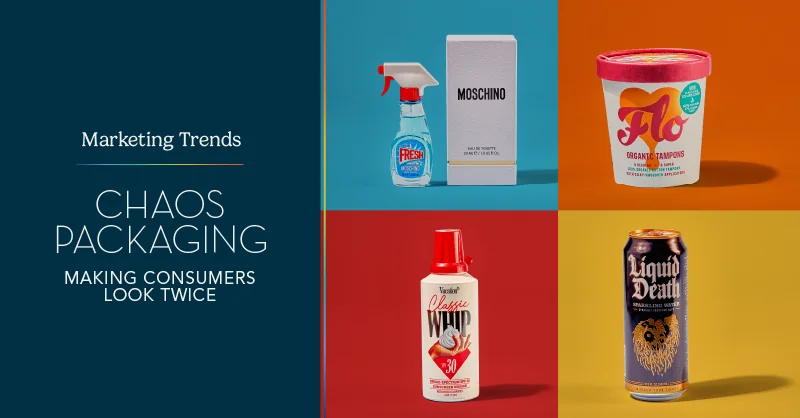
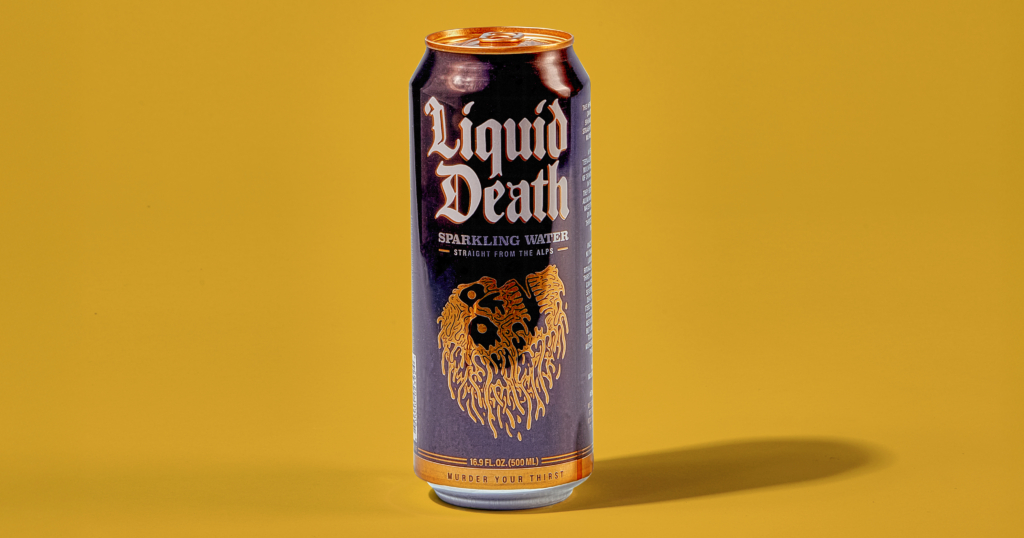
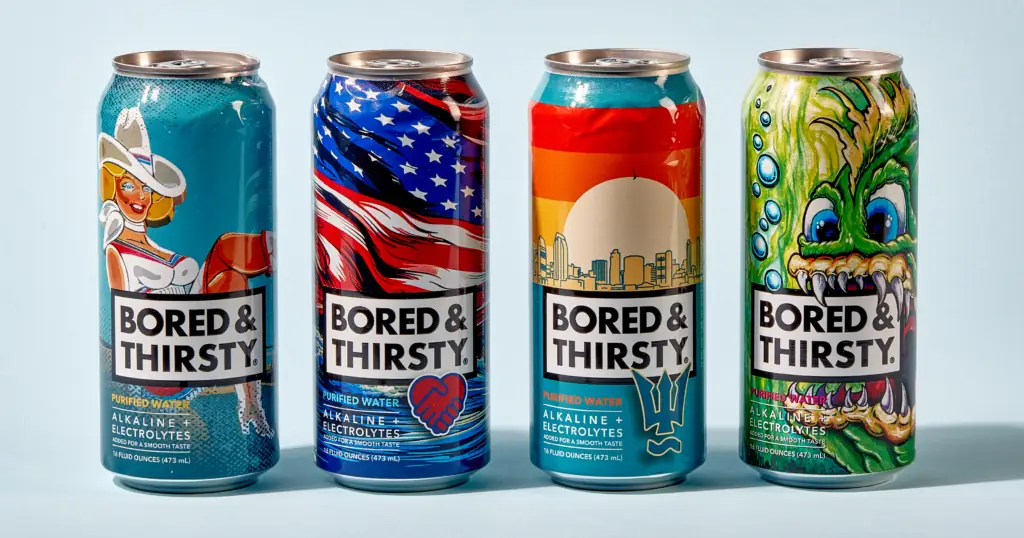
Some on-trend brands have taken notice and started designing for the reveal. Liquid Death is a standout example: its shock-value branding and irreverent copy make it feel like merch from a heavy metal band you love. Including actual merch inserts makes customers feel like members of a club, and gives them something to post about. The collector’s edition 11-pack collaboration with Spinal Tap sold for $1,100 each. Yes, that’s 11 cans of water.
The principle extends beyond DTC brands. Lego and Tiffany have both reinvented the advent calendar into a premium unboxing event. Graza, the olive oil brand, built viral moments around its distinctive squeeze-bottle design that made people want to demonstrate it on camera. Layered packaging — nested boxes, interior messages, double-sided printing with a bold callout on the underside — rewards the consumer who opens it and gives influencers something to discover.
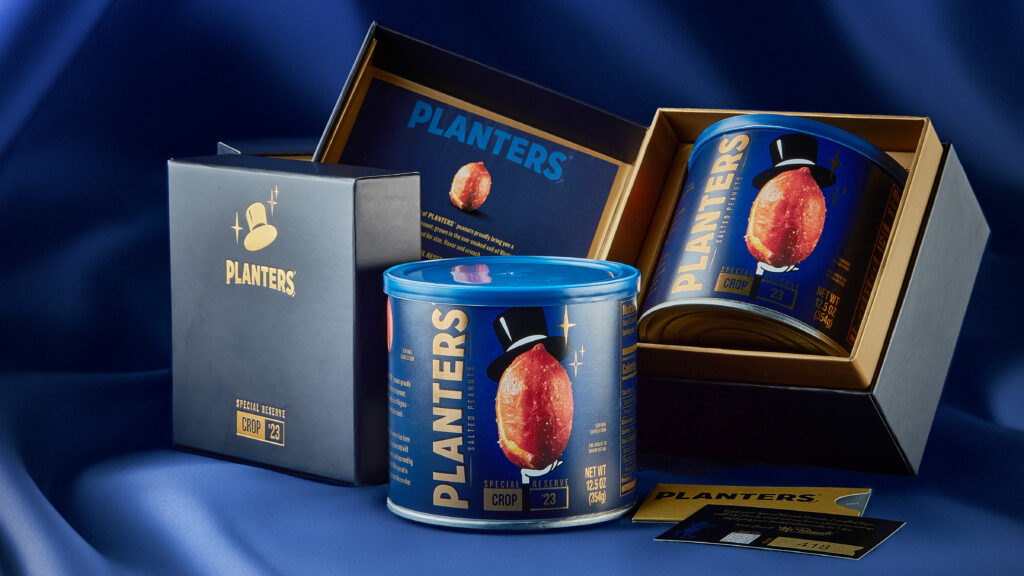
Here at Smith Design, we helped Planters approach this with the limited-edition release of its Special Reserve Peanuts, designing an unboxing experience that felt sensory and elevated, appropriate for a product that deserved to feel special.
Trend to watch: Keepsake packaging: designs worth holding on to (and keeping on a desk or shelf), giving brands perpetual visibility in creators’ backgrounds. Glossier’s pink pouches are reused as travel organizers and get quick recognition even without obvious logos. In Europe, Nutella jars are designed to be turned into drinking glasses and tumblers.
5. The Social Backlash Effect
No honest conversation about social media’s influence on packaging design would be complete without talking about the flip side: the public verdict, delivered instantly and at scale.
Before social media, a brand could roll out a redesign that would sit on store shelves for years before enough consumer complaints filtered through to signal that something was wrong. Today, the feedback loop is measured in hours.
When Cracker Barrel attempted to modernize its logo in 2025, fans took to TikTok and X within days, framing the change as a betrayal of the brand’s nostalgic identity. The company reversed course within a week. Jaguar’s 2025 rebrand generated a different kind of controversy: a polarizing reaction that some argued was a calculated play for visibility, even if the design itself divided opinion.
The lesson most brands have taken from moments like these: move carefully. The risk of getting it wrong publicly (and immediately) has made incremental “refreshes” far more appealing than full rebrands. In an era when consumers feel personal ownership over the brands they love, packaging changes are never just a design decision. They’re a public statement, and the public is always watching.
At Smith Design, we help CPG brands navigate all of this: from trend-driven redesigns to full brand overhauls.
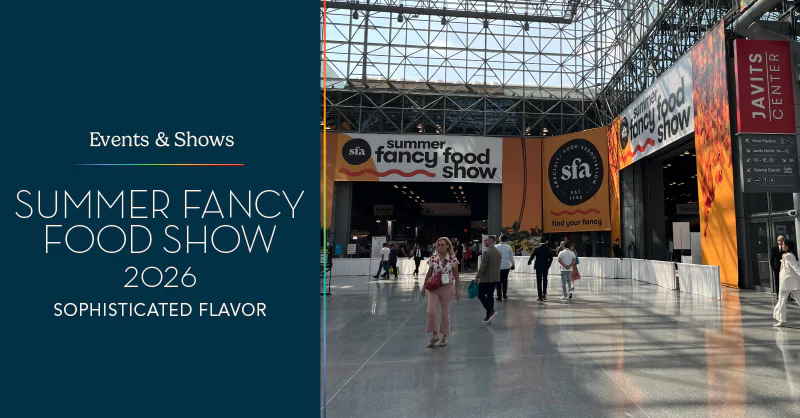
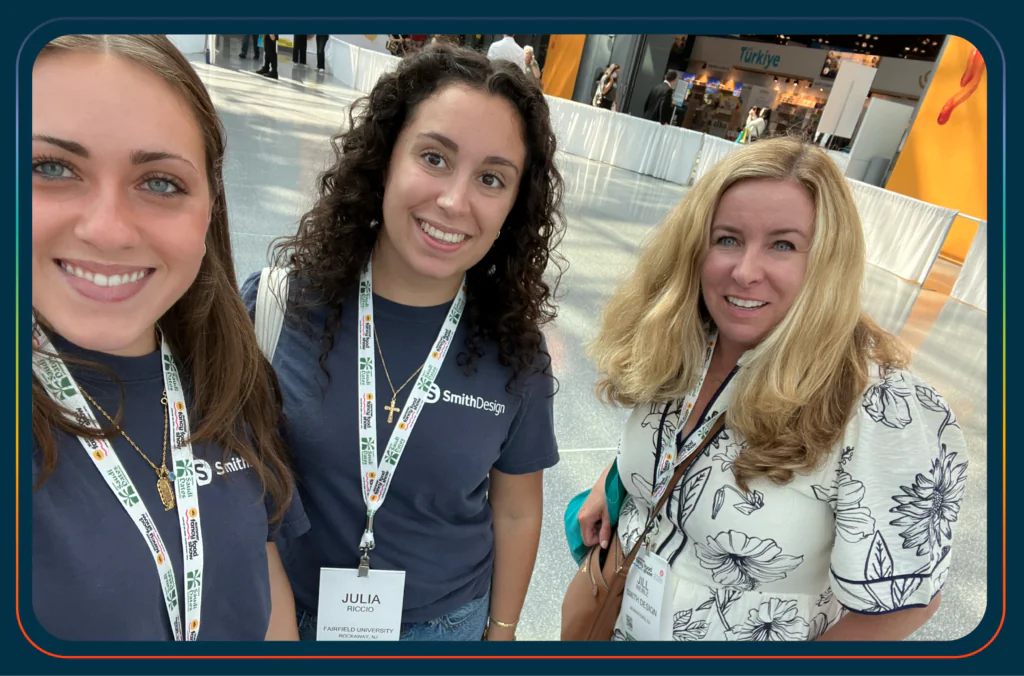
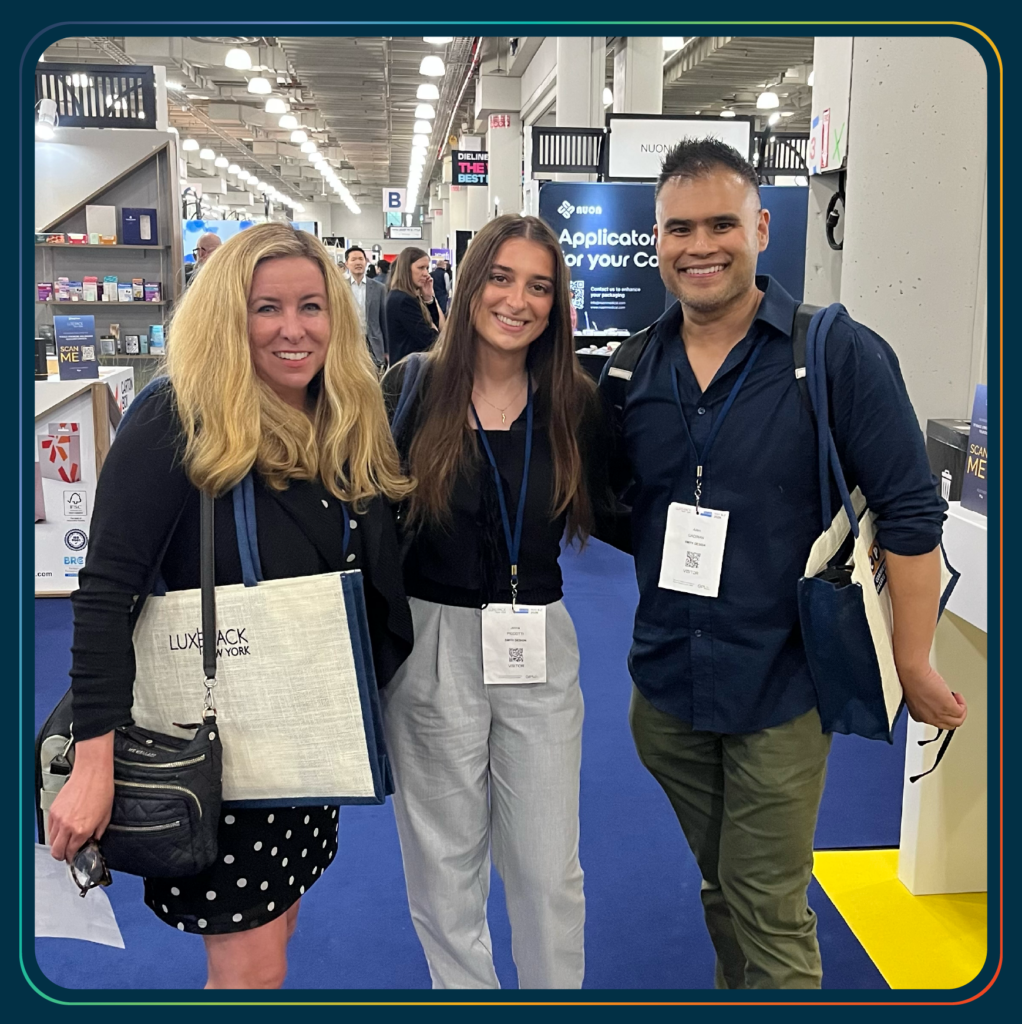
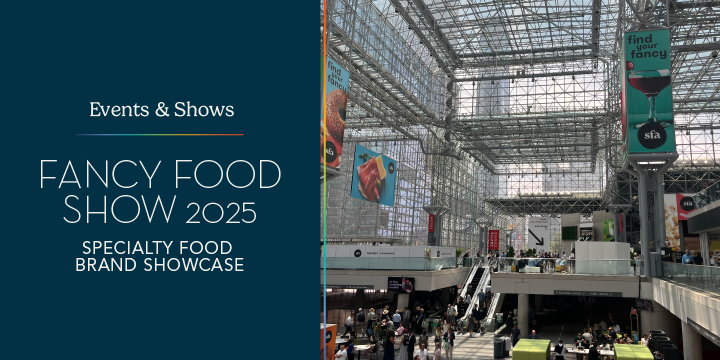
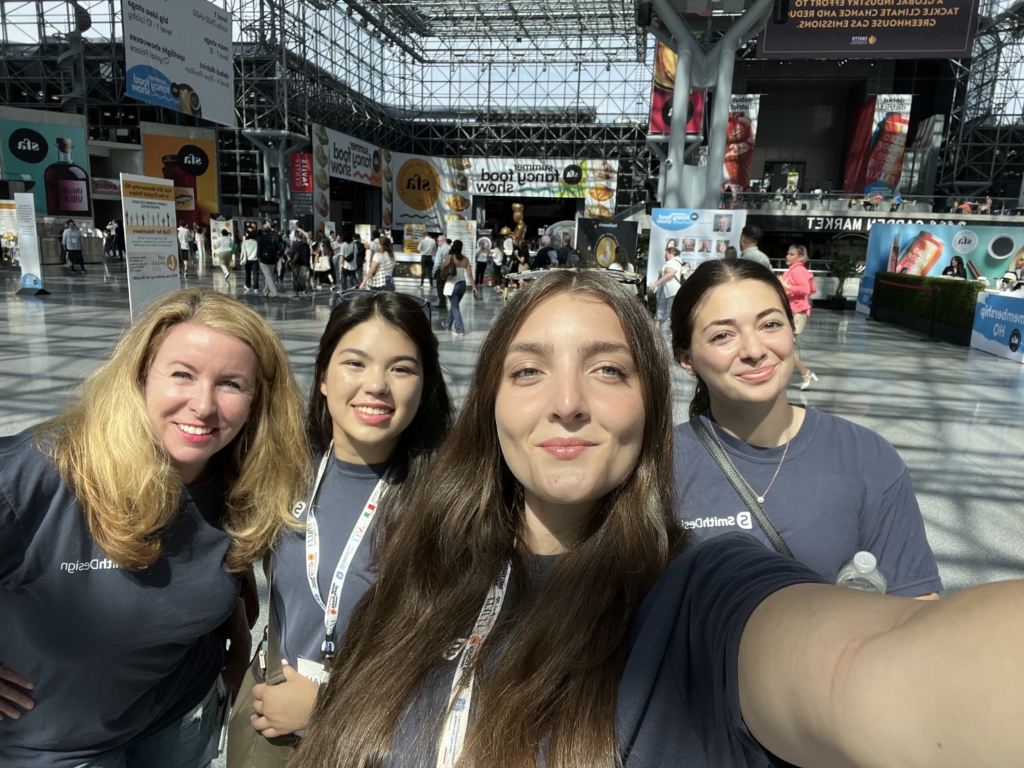
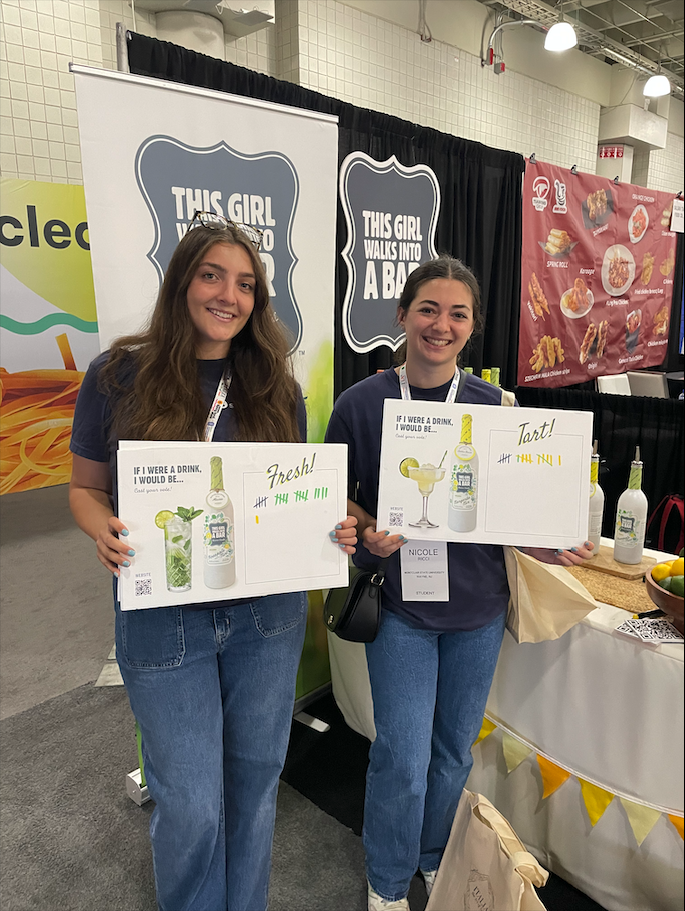
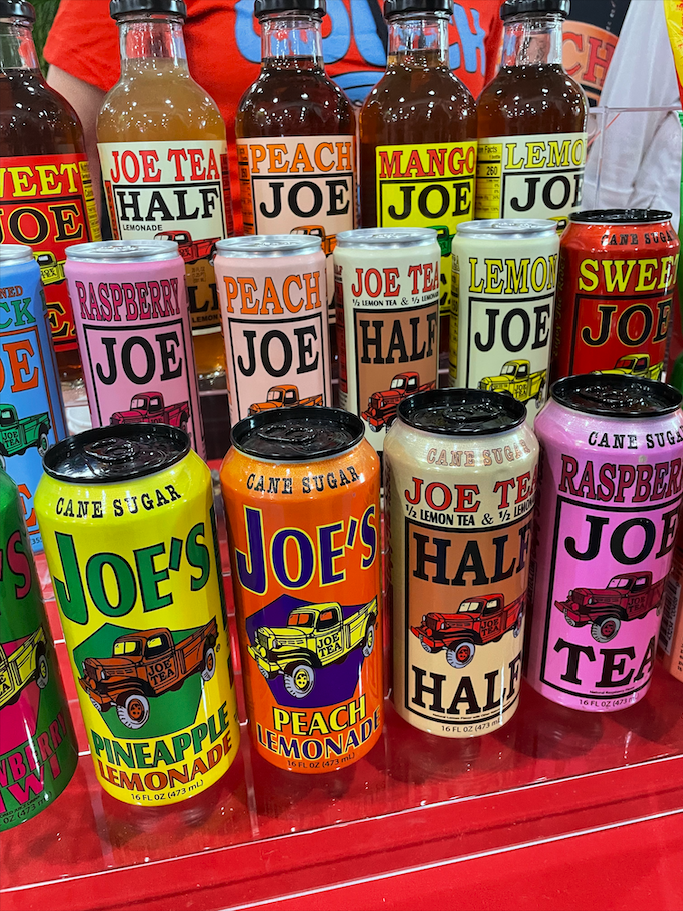
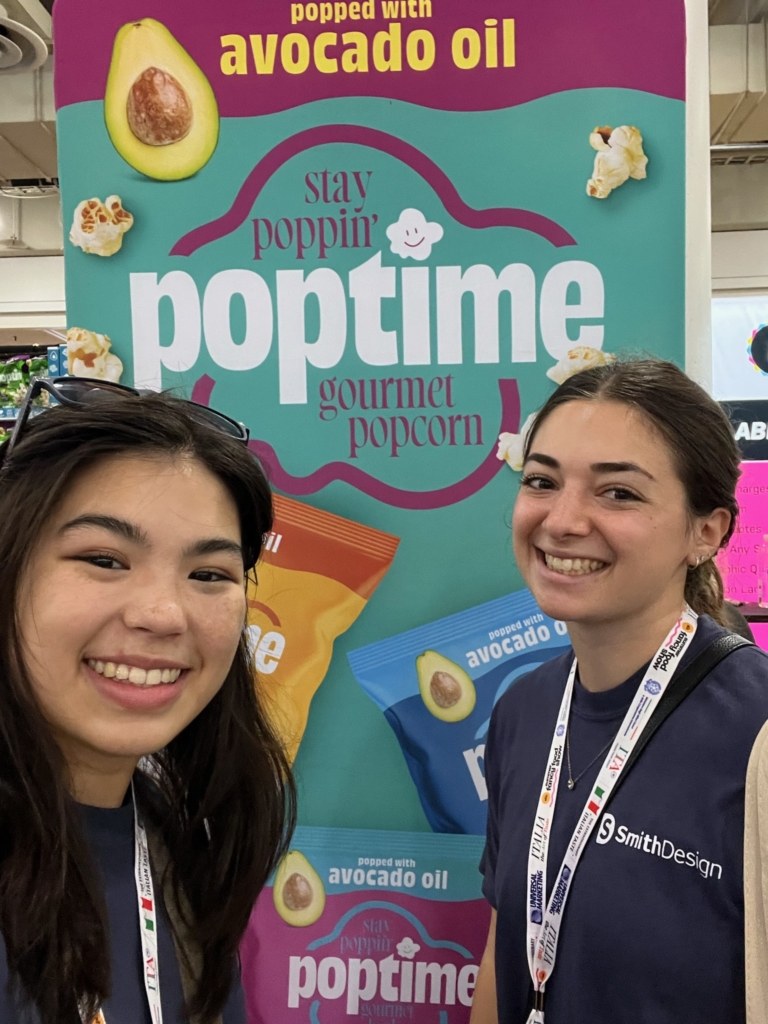
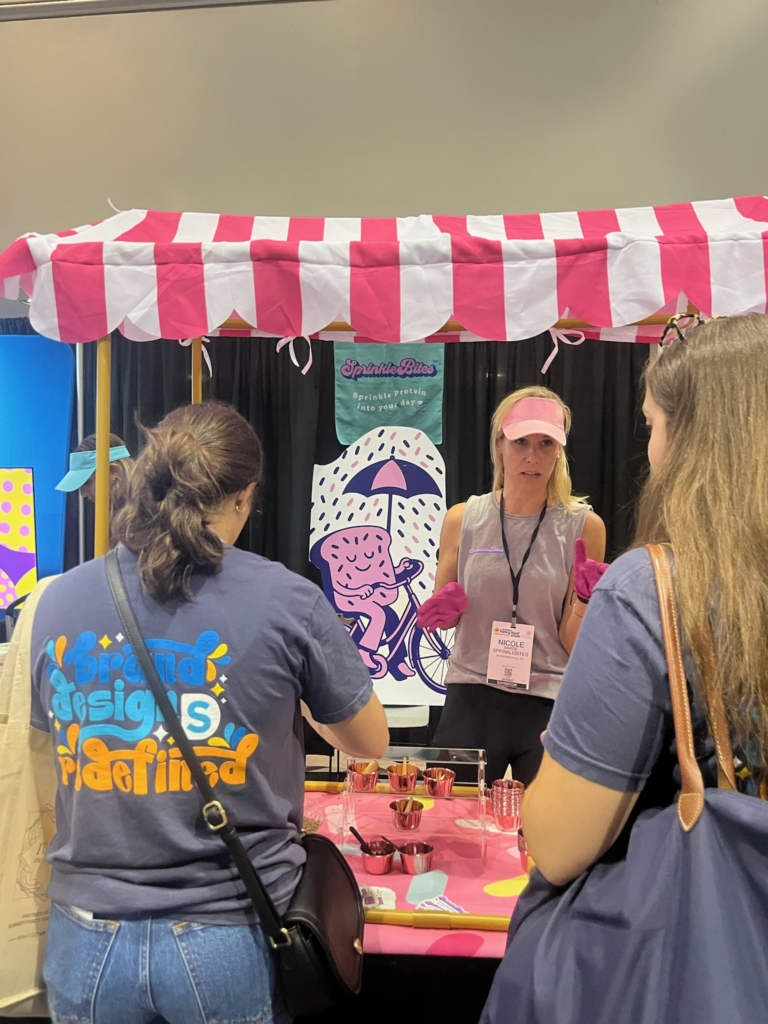
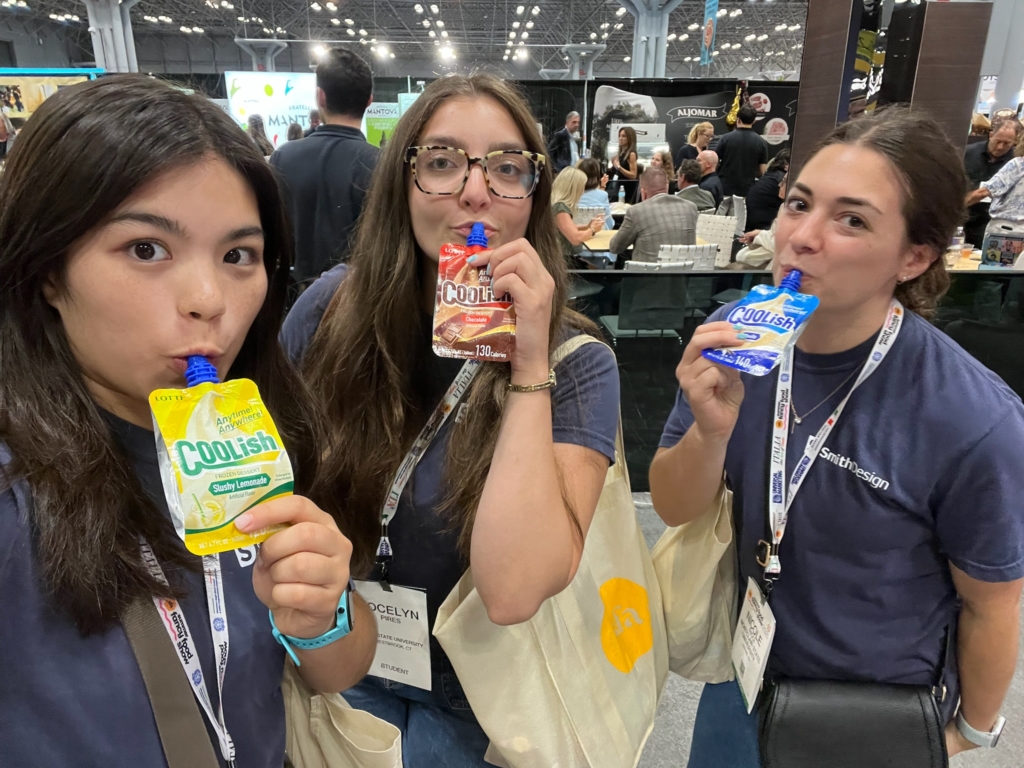
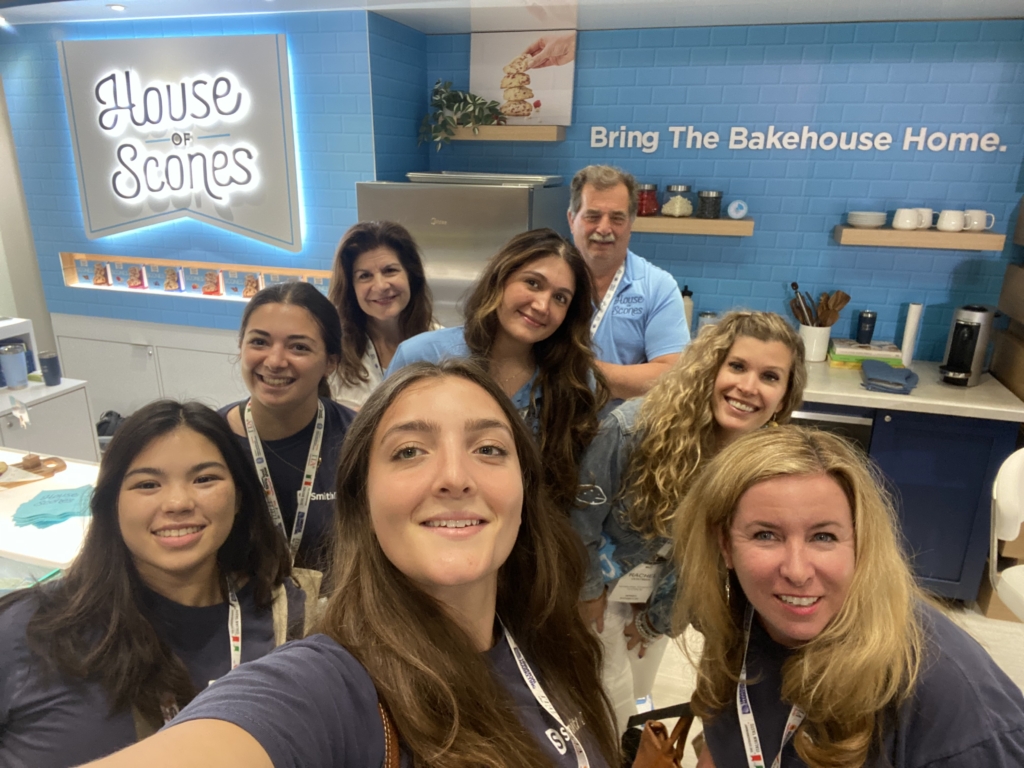
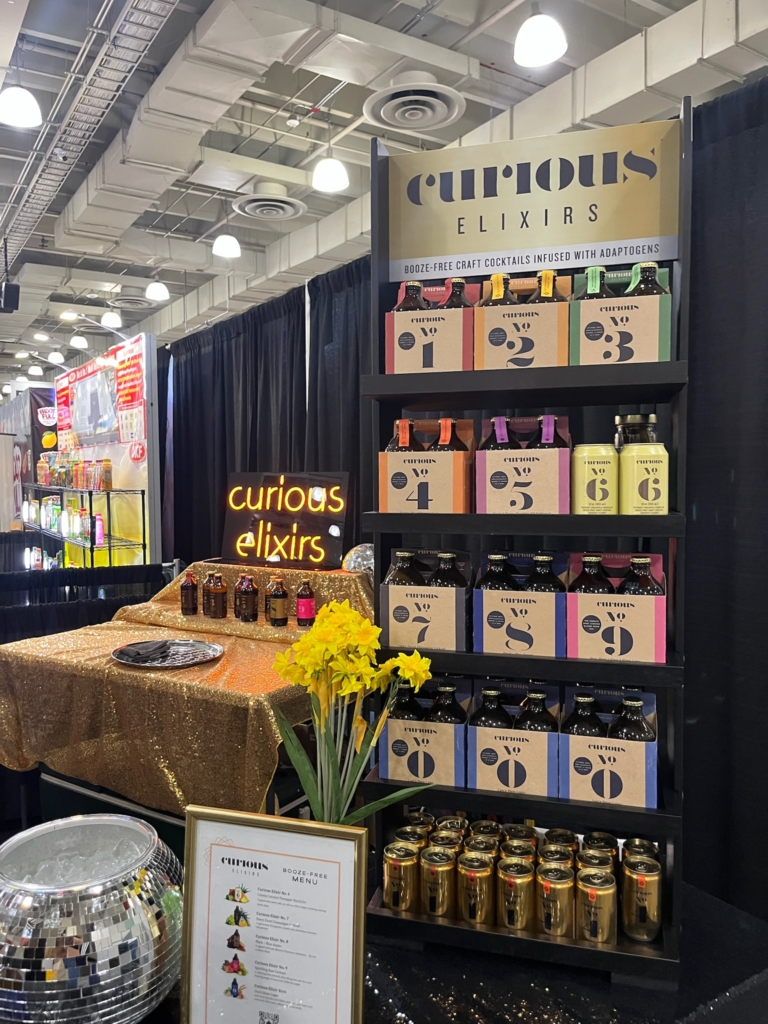
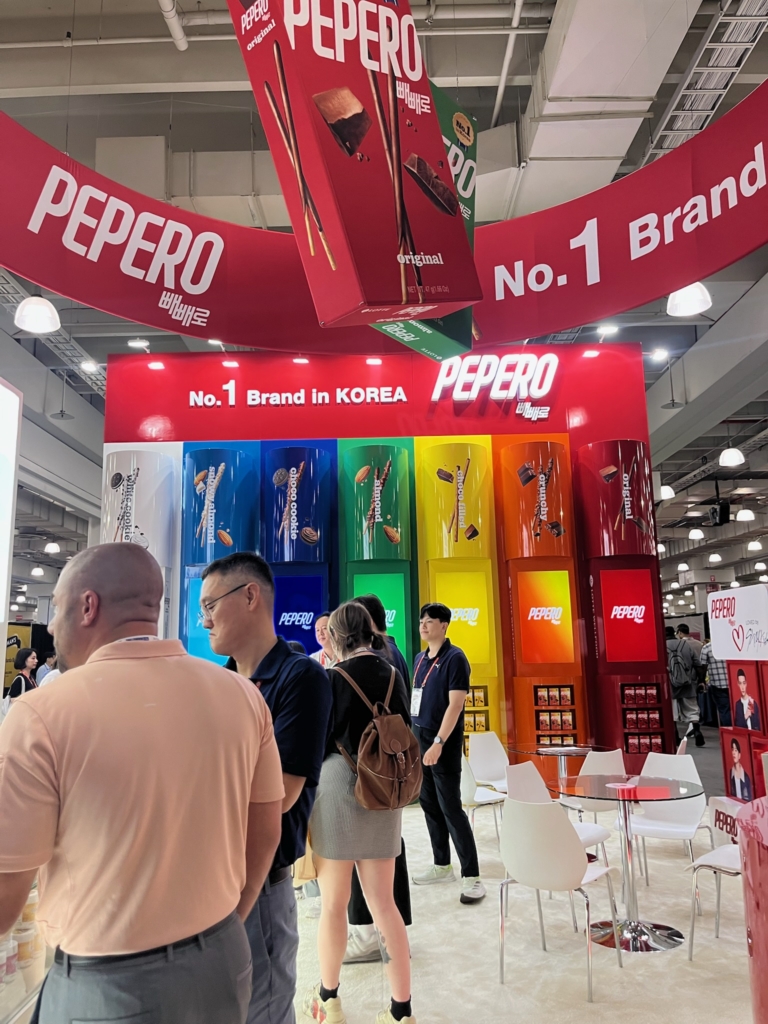
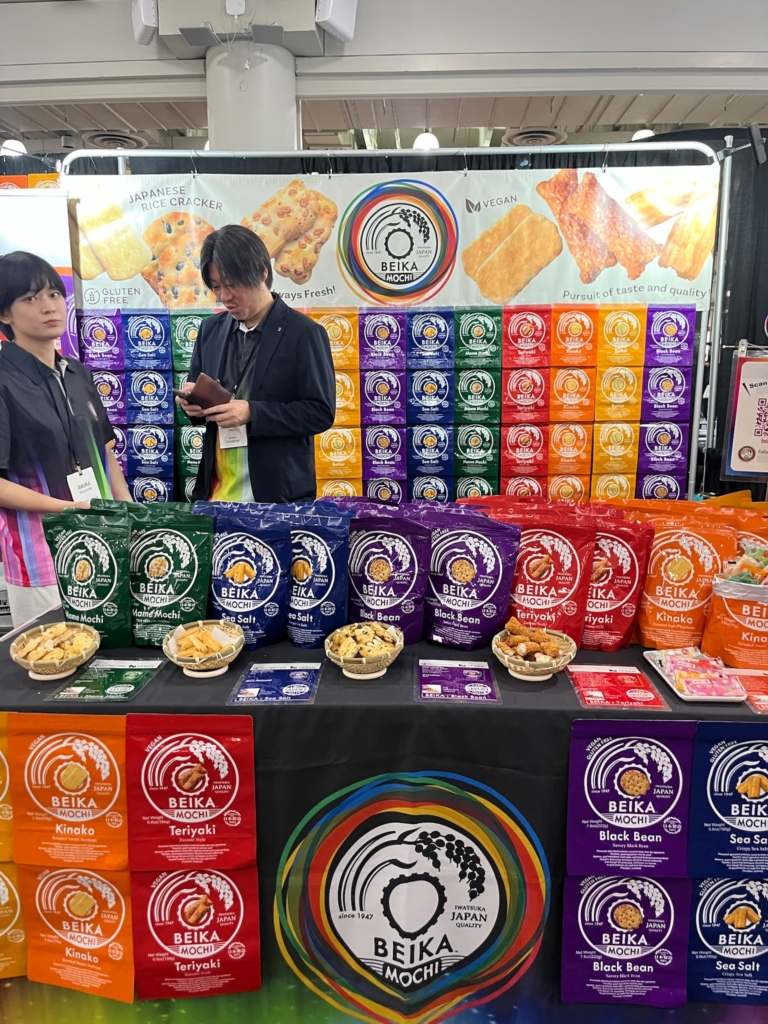
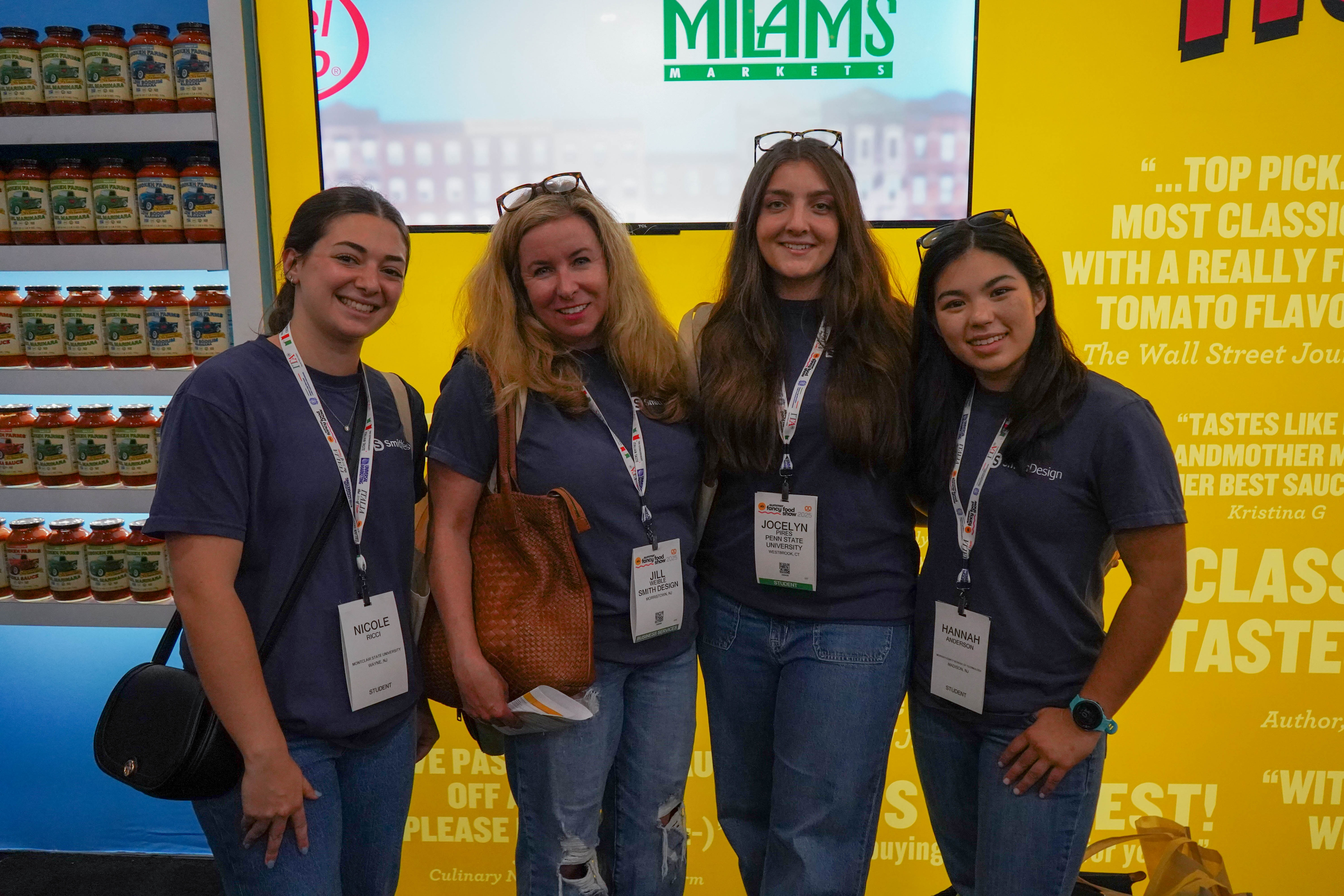
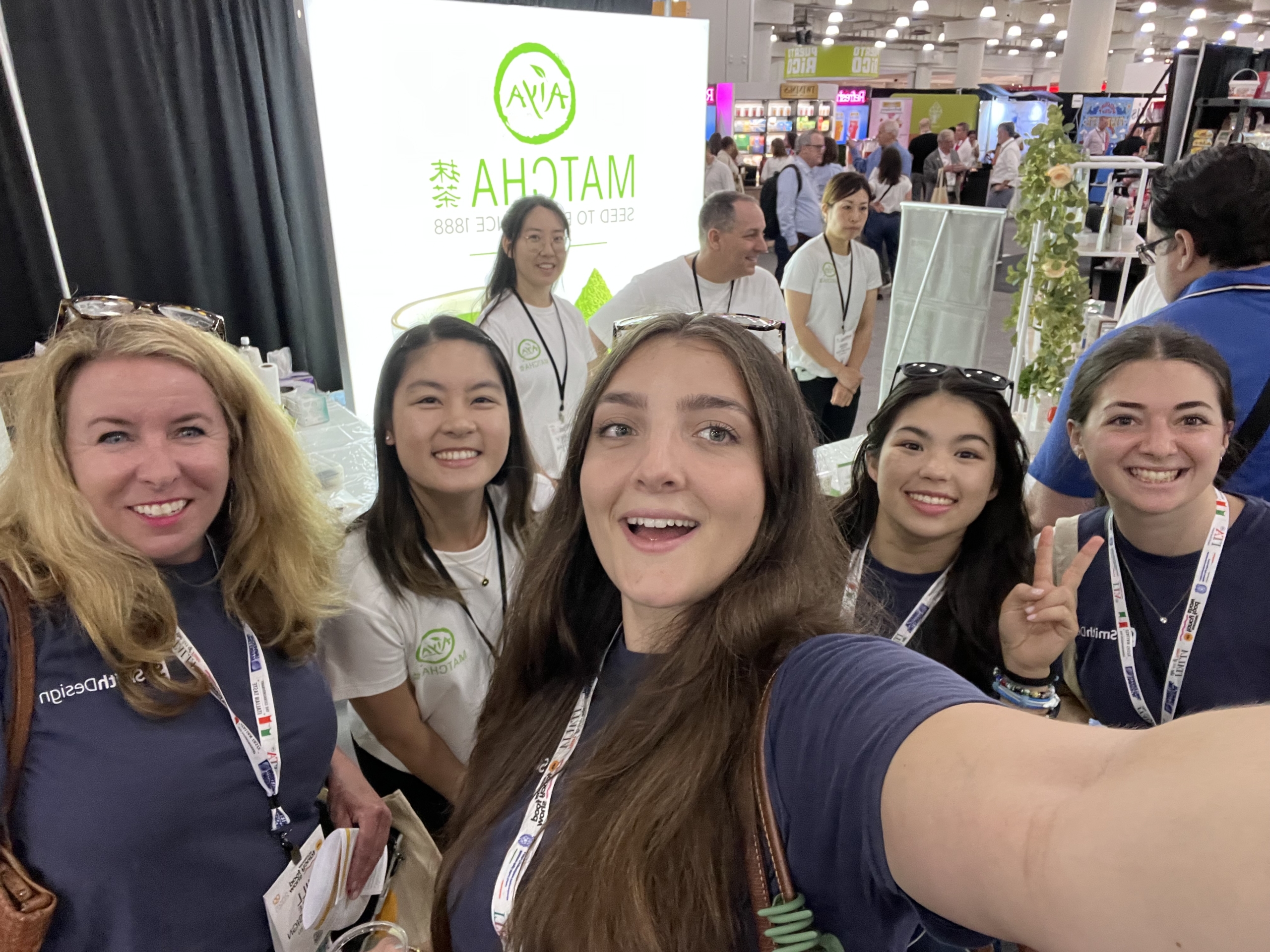
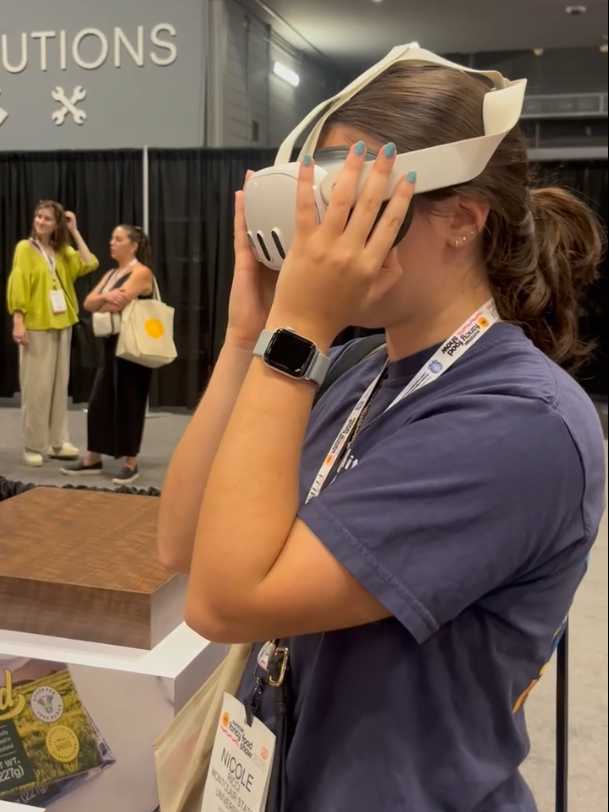
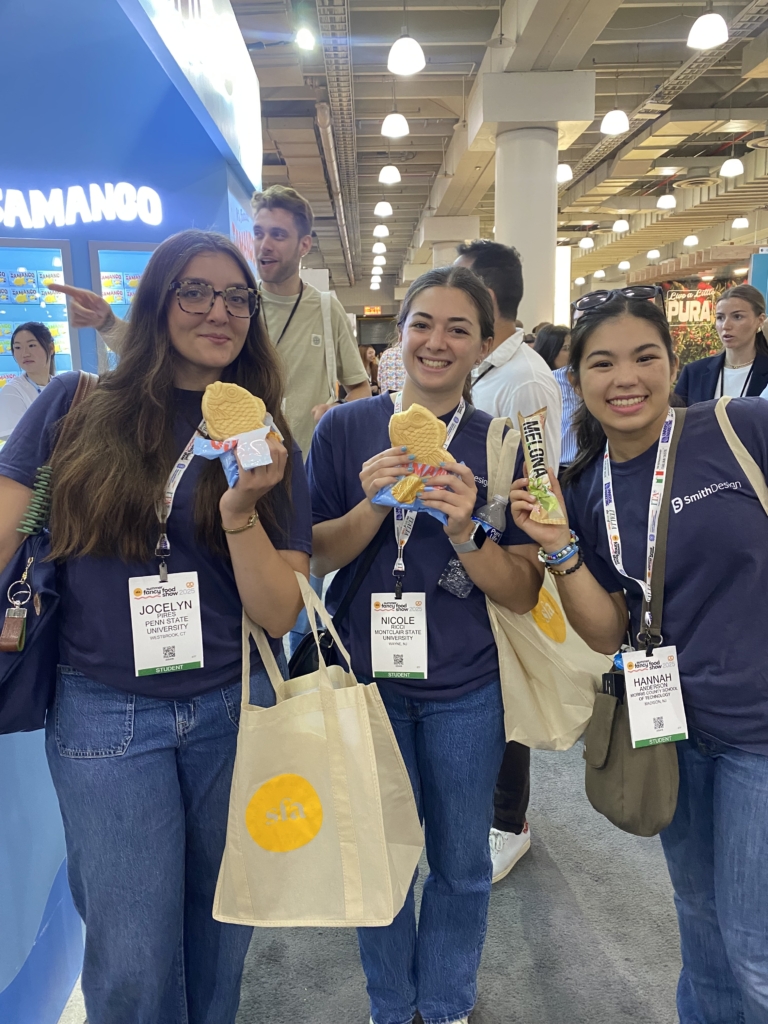
Every year, Smith Design sends a few of their own to SFA’s Summer Fancy Food Show in NYC to observe the hottest new food products of 2026. This year, Smith Design had the pleasure of attending two out of the three days of the food show where we had the opportunity to track the newest trends in food and packaging! This year’s attendees were Jill Weible, Senior Client & Business Growth Development Manager, and two of Smith’s Summer Interns Julia (Marketing Intern) and Miranda (Design Intern). Come along with us and learn what the fanciest foods of 2026 are!
The Future of Functional Foods
It’s no secret that we’ve entered a global health awareness era in recent years, with millions of products providing healthier choices and benefits to consumers. As we walked through nearly 2,500 booths, we noticed an exponential boom in better-for-you food products, many of which included incredible amounts of protein and fiber, solutions to dietary restrictions, as well as ingredient substitutions, which we foresee changing the game of the food industry forever.
Collagen Goes Mainstream
One of the most interesting health trends at this year’s Summer Fancy Food Show was seeing collagen move beyond the supplement aisle and into everyday foods. Once primarily associated with powders and wellness drinks, collagen is now being incorporated into familiar snacks and pantry staples, making it easier than ever for consumers to add it to their daily routines. Instead of asking people to take another supplement, brands are finding creative ways to build collagen into foods they already enjoy.
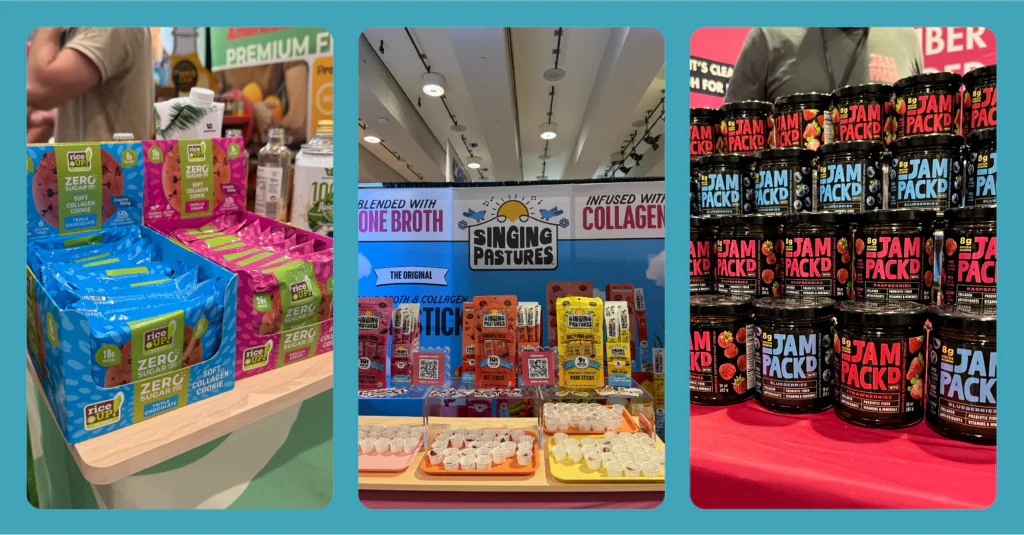
One example was Rice Up, which transformed the trend into a sweet treat with its soft collagen cookies. Each cookie delivers 18 grams of protein and 8 grams of grass-fed collagen while remaining gluten-free, high in fiber, and free of added sugar. Building on the idea that functional ingredients don’t have to sacrifice flavor, Singing Pastures incorporated collagen into its slow-cooked meat sticks by blending them with nutrient-rich bone broth. Made with grass-fed beef and pasture-raised pork, the sticks provide 9–10 grams of protein while emphasizing clean, responsibly sourced ingredients.
The trend didn’t stop at snacks either. Jam Pack’d reimagined a pantry staple by infusing its strawberry, raspberry, and blueberry spreads with collagen, 8 grams of protein, prebiotic fiber, antioxidants, vitamins, and minerals. Marketed as a “complete superfood spread,” the jam contains no added sugar, no artificial ingredients, and low net carbs, proving that even traditional foods are being reinvented with added functional benefits.
Together, these products painted a clear picture of where the industry is headed. Collagen is no longer being marketed as a specialty supplement reserved for smoothies and powders, instead, it’s becoming an everyday ingredient that fits naturally into consumers’ lifestyles. This shift reflects the broader movement toward functional foods that combine convenience, clean ingredients, and wellness, allowing consumers to support their health without changing the way they eat.
The Freeze-Dried Revolution
Another trend that continued to gain momentum at this year’s Summer Fancy Food Show was the evolution of freeze-dried foods. Once known mainly for camping snacks and dried fruit, freeze-drying is now being used across a wide range of food and beverage categories to create products that are convenient, shelf-stable, and full of flavor. Brands are proving that the technology can preserve taste and texture while extending shelf life, opening the door for entirely new product innovations.
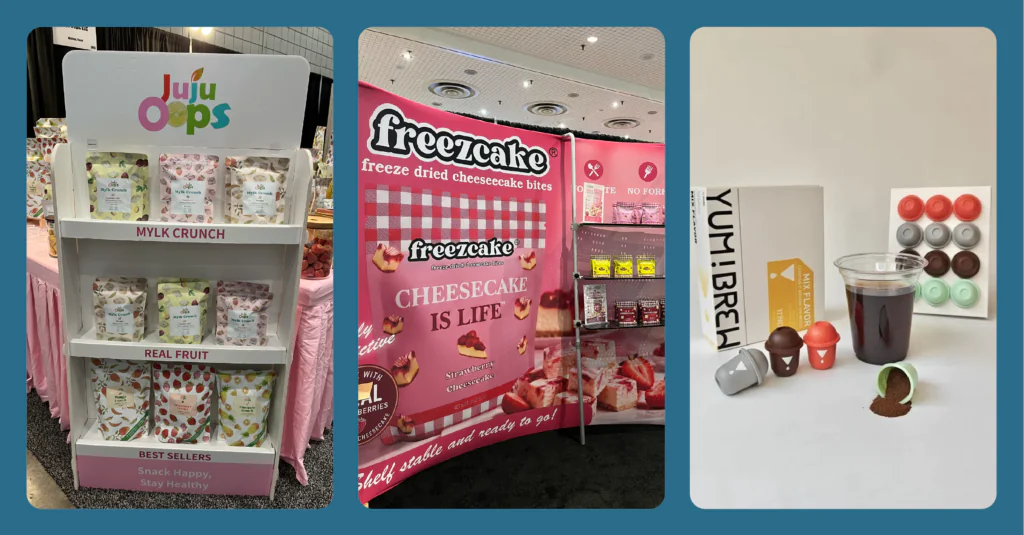
One brand embracing this shift was Juju Oops, which showcased whole freeze-dried fruits, including pineapple, dragon fruit, mango, strawberry, and passionfruit. Instead of cutting the fruit into small pieces, the brand preserves each piece whole, creating a snack that feels more premium while maintaining the fruit’s natural flavor and ingredients.
Brands also extended the concept beyond fruit. FreezeCake demonstrated how freeze-drying can completely transform desserts with its shelf-stable cheesecake bites in flavors like Strawberry, Tiramisu, and Cookies & Cream. By taking a traditionally refrigerated dessert and making it portable without sacrificing its signature taste, the brand showed just how versatile freeze-drying has become.
Even beverages are entering the freeze-dried space. Yumbrew introduced instant freeze-dried coffee made from 100% premium Yunnan Arabica beans that dissolves instantly in either hot or cold water without the need for brewing equipment. Available in flavors like Coconut Latte, Lemonade Americano, Espresso, and Jasmine Americano, the product highlights how freeze-drying is creating greater convenience while maintaining quality and flavor.
Each of these products contributed to a much larger shift in the food industry.Freeze-drying is no longer limited to preserving food; it’s becoming a tool for innovation. Whether it’s whole fruit, indulgent desserts, or premium coffee, brands are using the technology to reimagine familiar products in ways that better fit today’s consumers, who are looking for convenience, portability, and long shelf life without compromising on taste or quality.
The Rise of the Food Accommodation Industry
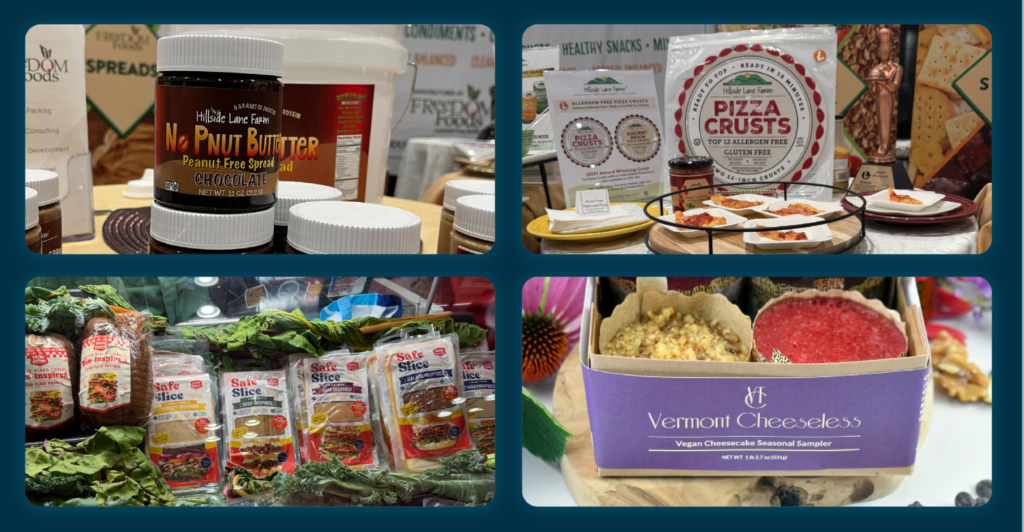
With dietary restrictions remaining a very prevalent issue within the food industry, we’ve witnessed a great amount of products directly targeting food intolerances with simple ingredient swaps. By substituting common allergens with healthier non-irritants, these brands directly target a large demographic of people who struggle to find foods that align with their dietary tolerances. Hillside Lane Farm is a primary example of brands doing food accommodation right. Their No Pnut Butter spread offers a delicious nutty taste and all the same benefits of peanut butter without the risk of an allergic reaction. They go a step further with their gluten-free pizza crusts, which are also free of an additional 12 allergens, including dairy, eggs, nuts, and soy. Their products include a wide variety of gluten-free, peanut-free, and dairy-free products, perfectly fit for a wide range of allergen-susceptible consumers. Similarly, Nikigo, an Asian-style sauce brand, introduces an alternative to the direct product market. It’s a bit of a tongue-twister, but their soyless soy sauce offers a delicious and convincing alternative to soy sauce in flavors such as classic soy, teriyaki, and noodle sauce. With no soy, no gluten, and no sesame, Nikigo battles all three allergens that classic soy sauce consists of, giving those with intolerances a truly delicious and convincing substitute.
Now, the Food Accommodation Industry doesn’t solely target allergens, that’s only one of its many sectors. A large part of this industry is simply about providing customers with healthier options rather than the typical processed products out on store shelves today.
With processed meats being at the top of the world’s most unhealthy foods, Prime Roots took note and supplied the market with Safe Slice: plant-based, meat-inspired deli meat. Crafted from mushrooms, Safe Slice contains no nitrates or celery salt, is GMO-free, and avoids the top nine allergens. They also make an important “Pregnancy safe” callout on their packaging, giving expectant mothers a better-for-you alternative to nitrate-filled deli meats that pose a threat to infant development and birth. Not only are they contributing to rectifying the health detriments of highly processed deli meats, but they are also giving pregnant women an outlet for their deli meat cravings, without the risk.
Ending on a sweeter note, the product that stole the whole show also happened to be a part of the Food Accommodation Industry and that was Vermont Cheeseless’ plant-based and cheeseless cheesecake. Made from a blend of tofu and raw cashews, the cheesecake was exceptionally creamy and flavorful, delivering all the indulgence of traditional cheesecake in a better-for-you dessert. They may have taken the cheese out of cheesecake and replaced it with natural ingredients, but you truly would never know!
Honey, Honey
Looking back on our time at the Fancy Food Show, there was one food in particular that seemed to follow us along every turn we took. We should’ve known right away by the sweet trail of liquid gold running across the floors, but it was the honey industry that seemed to pop up with new and innovative products.
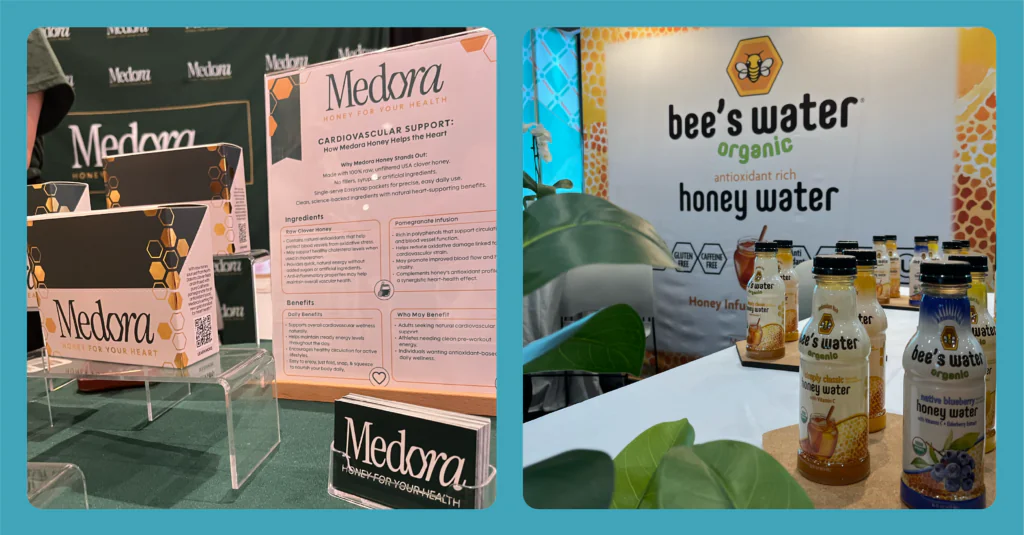
It’s no secret that honey is a major power food filled with tons of health benefits, so that’s why Medora decided to highlight its advantages with its snappable honey pouches. Made with 100% raw, unfiltered clover honey, Medora focuses on cardiovascular health and creating a honey product that is good for the heart. Preportioned and perfect for daily use, their product contains natural antioxidants that protect blood vessels from oxidative stress, as well as provide cardiovascular support due to its infusion of pomegranate. Turning nature’s sweetener into nature’s medicine, this brand invites a whole new perspective on the perks of honey and turns it into its own functional health product.
Similar to the benefits it provides, the list of forms that honey can take is extensive. Brands today are curating new ways to do honey differently, and that’s where Bee Water’s Organic Honey Water comes to play. Rich in antioxidants and Vitamin C, this new beverage offers a refreshing alternative to sugary sports drinks or sodas. With honey providing a concentrated source of natural carbohydrates, Honey Water offers a quick boost of natural energy that is unlike any of the current energy and sports drinks out on the market today. We foresee Honey Water becoming the next leading product in the realm of natural energy beverages in the coming years.
The Brighter & Bolder, the Better
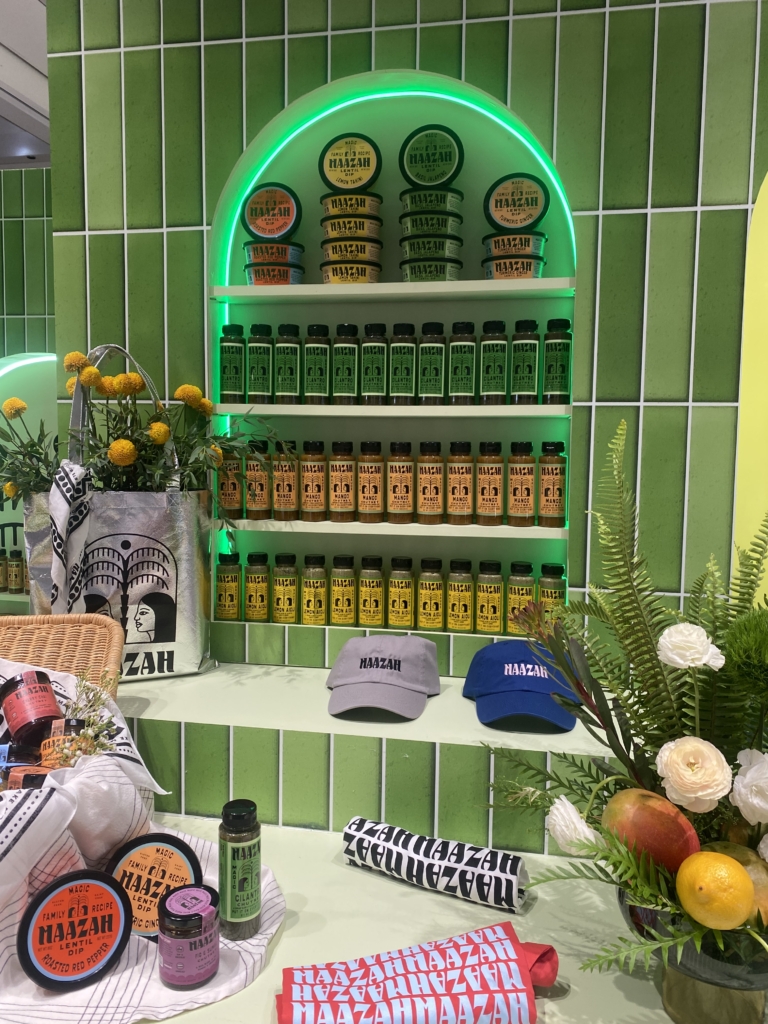
Smith Design is first and foremost a package design agency, so we obviously needed to include our impressions of the package design showcased at FFS. We noticed one genre of design that immediately caught our eyes and begged for attention and that was the packaging that included bright, vibrant palette combinations, paired with big, bold, and organic typography. An additional motif we noticed amongst this genre was the inclusion of illustrations and brand mascots. Pairing each aspect together: color, typography, and illustration, it’s safe to say that these brands had the utmost of personality at the show.
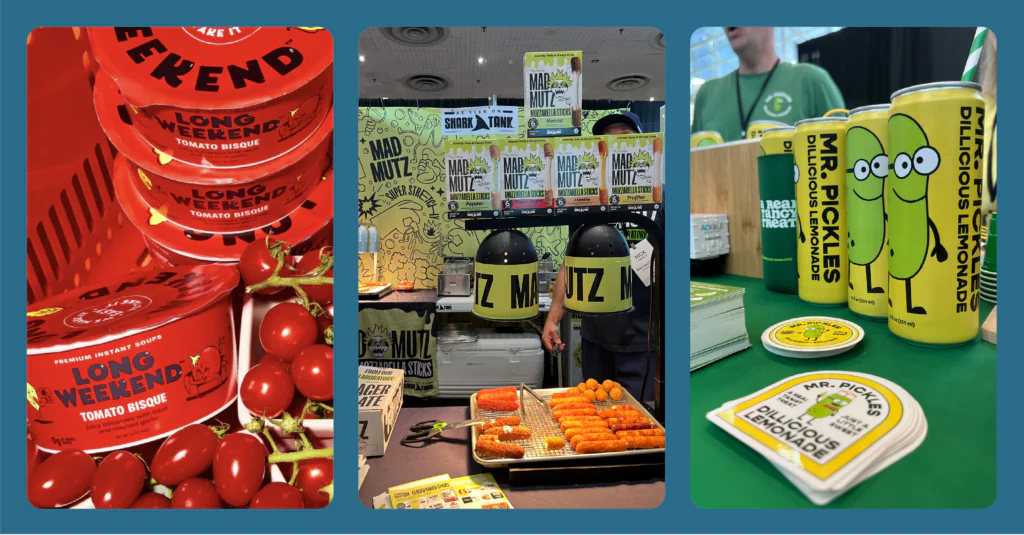
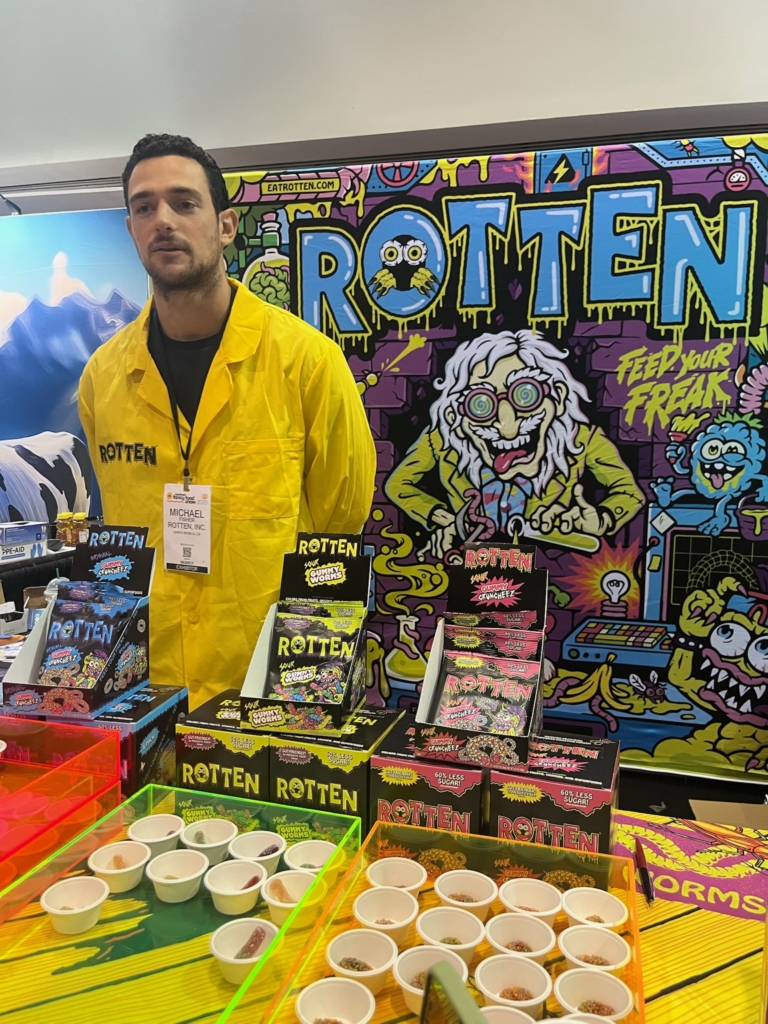
Take a look at Long Weekend – Premium Instant Soups: Each flavor has its own family of illustrated ingredients, each doing a variety of everyday activities. This brand comes to life by simply escaping the ordinary world of packaged soups, encouraging customers to interact and be immersed in the whole experience of eating their soups. Simply by having a calm, cool, and collected personality, it encourages their customers to feel just this same way, making the action of eating that much more experiential. In talking about experiential brands, Mad Mutz is a must! It was one brand that we saw at a distance and had no choice but to get a closer look due to its unique and personality-driven brand identity. With the theme of the brand surrounding a laboratory of all things, it welcomes a world of chaos, silliness, and a little bit of grunge. Their brand identity immediately came to life and shouted right in our faces, ensuring we would never forget them and their delicious mozzarella sticks!
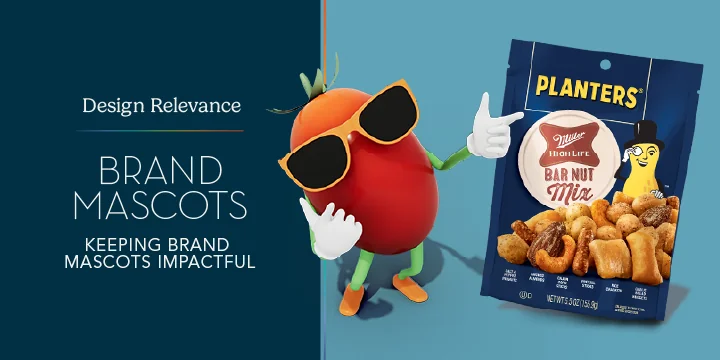
We simply could never forget about Mr. Pickle’s Dillicious Lemonade! Although simpler in design, it packs in just as much personality as the previously mentioned products, all due to its adorable pickle mascot, Mr. Pickles. The unconventional concept of the beverage surely helps in grabbing customers’ attention, but it’s the look and feel of the product that ultimately remains in our minds. So if you’re a fan of unconventional, personality-driven beverages, give Mr. Pickle’s Dillicious Lemonade a try!
Who Doesn’t Love a Little Shine?
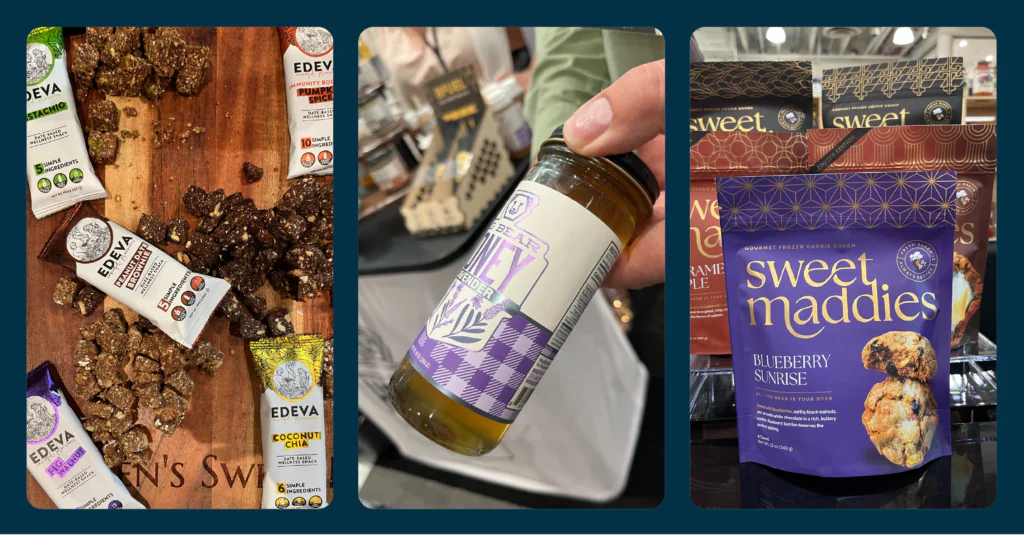
There was a common theme in design that we found pretty difficult to ignore, especially when the light hit it just right. The presence of metallic foil was seen a handful of times across multiple food categories giving every product a subtle but impactful differentiator from their prospective competitors. Just take a look at Edeva, Big Bear Honey, and Sweet Maddie’s and how the light simply illuminates their whole look!
Authenticity Sells
While innovative products and eye-catching packaging initially drew us into many booths, it was the people behind the brands who left the biggest impression. One of the most rewarding parts of attending the Summer Fancy Food Show was having the opportunity to speak directly with founders, family members, and brand representatives, who proudly shared the stories behind their companies. Hearing these histories firsthand made each product feel far more meaningful and demonstrated how powerful authentic storytelling can be in building lasting connections with consumers.
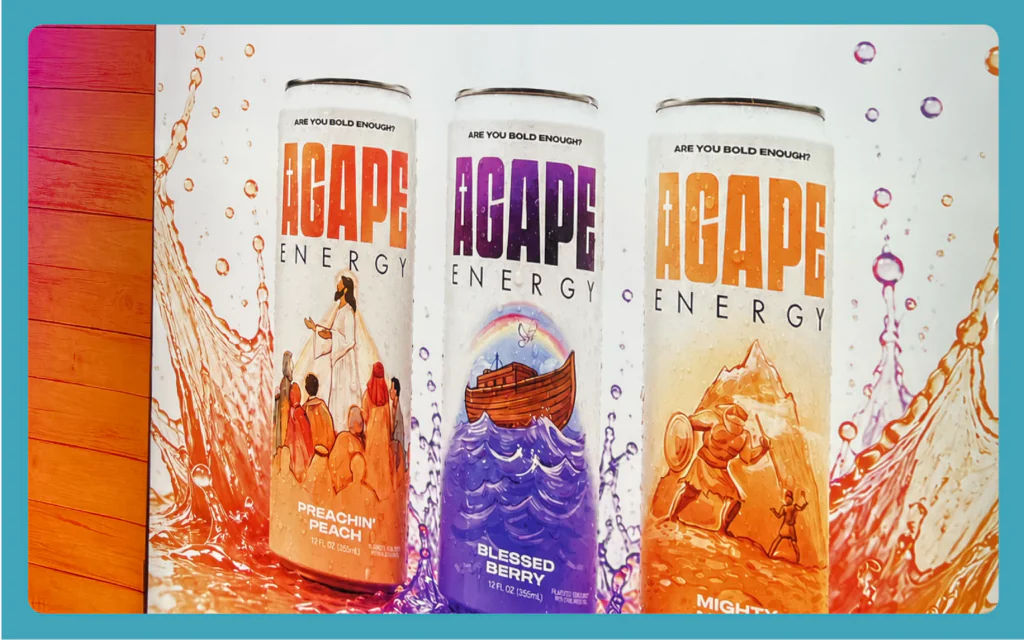
One brand that embodied this approach was Agape Energy. As we spoke with the team, it became clear that they weren’t simply selling an energy drink, they were sharing a mission. Centered around their “316 Mission,” every can is designed to inspire faith and spark conversations through scripture, giving consumers something much bigger than a caffeine boost. Their passion for the brand was evident, making their purpose feel genuine rather than just another marketing message.
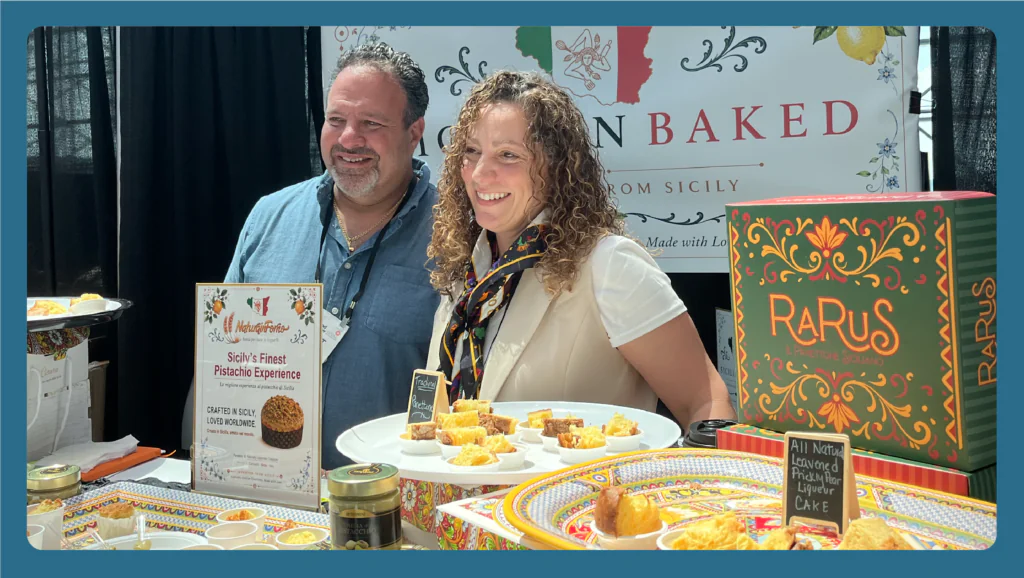
That same sense of passion was especially evident at Sicilian Baked. The family behind the brand welcomed us into their booth and shared the story of bringing authentic Sicilian tradition to the United States through their artisanal panettones. Their elegant packaging immediately reflected the premium quality of the product, but it was after tasting it that everything came together. The panettone was incredibly soft, rich, and flavorful, making it one of the most memorable products we sampled at the show. The combination of exceptional quality, beautiful packaging, and the family’s genuine passion for their craft made Sicilian Baked one of the most memorable brands of all.
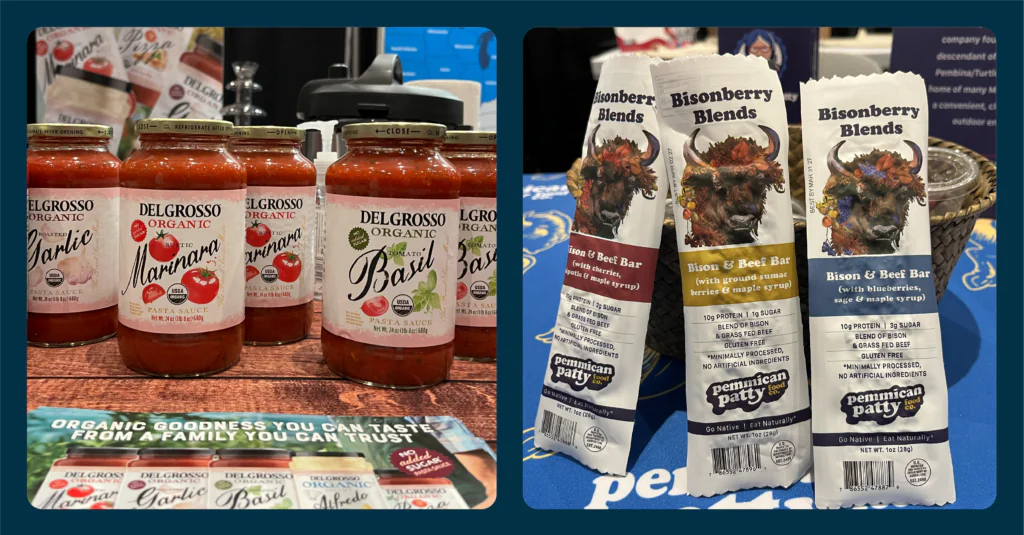
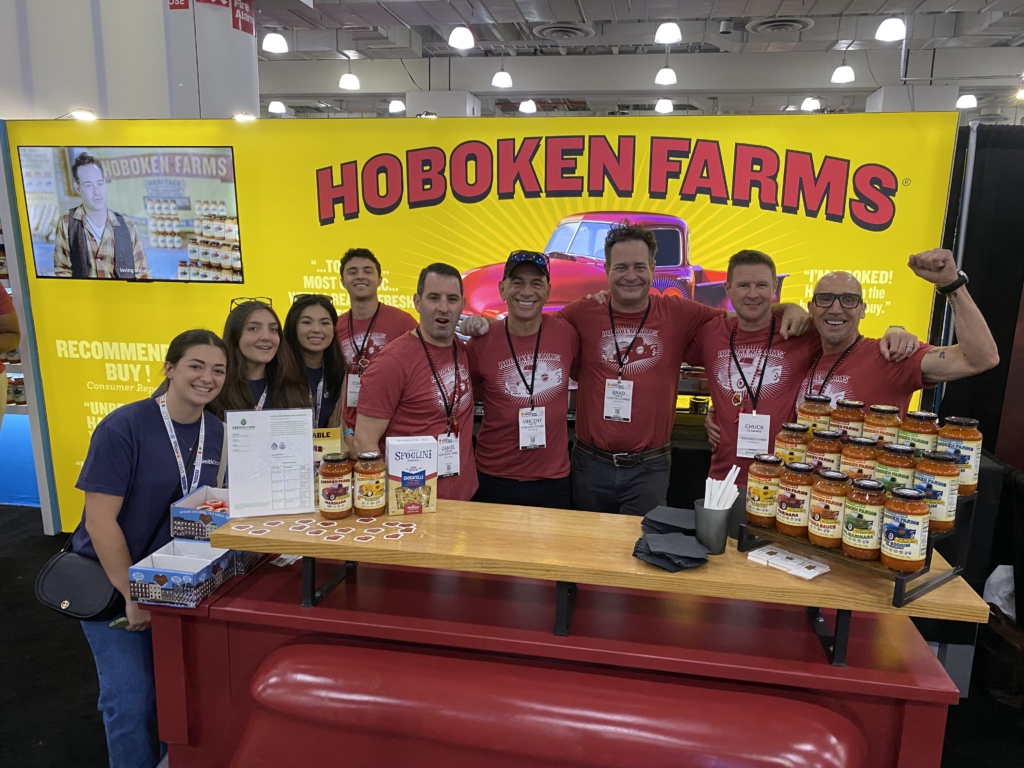
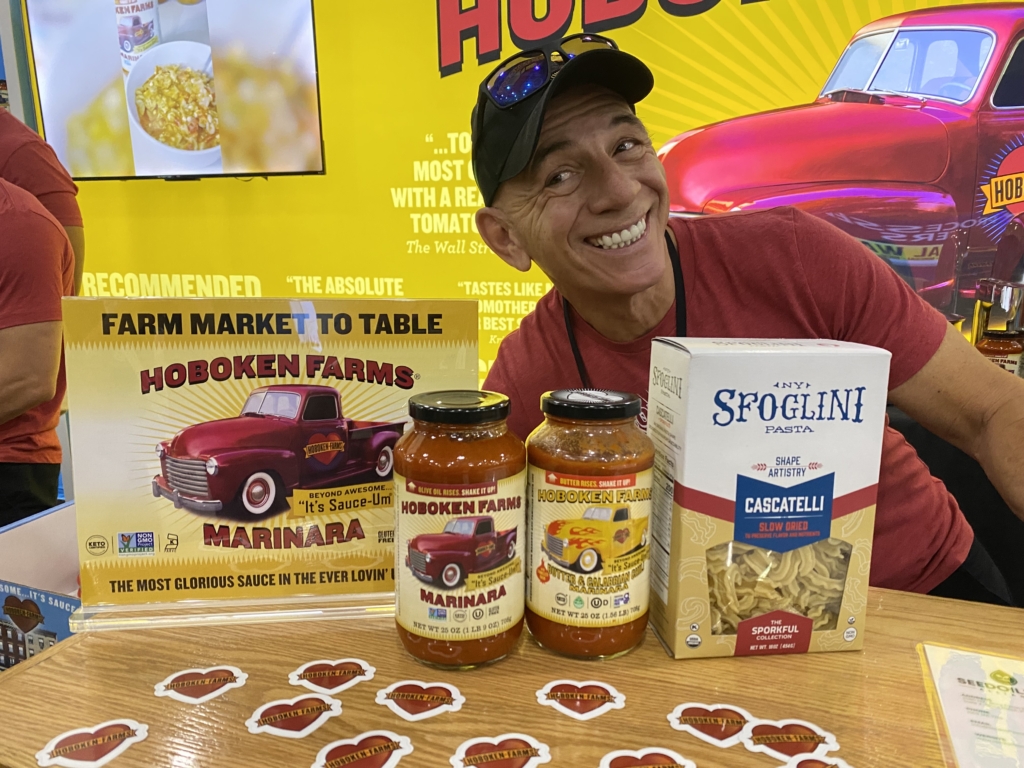
Continuing that theme of family legacy, DelGrosso Foods shared the remarkable history behind America’s oldest family-owned pasta sauce company. As we spoke with the team, it was evident that family remains at the heart of the business. The cousins working the booth proudly shared stories of their family’s history, creating an authentic connection that made the brand even more memorable. Their pride in carrying on the family’s recipes and values was reflected not only in their products but also in the way they welcomed and connected with attendees. It was a reminder that some of the strongest brands are built on genuine family traditions that continue to thrive generation after generation.
Even newer brands recognized the importance of sharing their story. Pemmican Patty Food Co.‘s Bisonberry Blends introduced us to its philosophy of “Go Native, Eat Naturally,” explaining how the brand is inspired by simple, minimally processed ingredients and traditional sources of protein. Their vision is to bring pemmican into the modern day by reimagining the age-old recipe with clean, natural ingredients while preserving its history for future generations. “Rooted in the past, yet tailored for the present”, Pemmican Patty Foods shares the legacy of their ancestors and vibrant culture with consumers, ultimately passing on the story of the Chippewa and Metis people. By taking the time to explain the purpose behind their products, they gave us a deeper appreciation for both the brand and its mission.
Across the show these experiences demonstrated that the strongest brands are built on more than just great products. Authentic storytelling, thoughtful design, memorable packaging, and genuine personal connections all worked together to create brands that stood out in a crowded show floor. When a compelling story is paired with a quality product and a memorable experience, it creates a connection that consumers are far more likely to remember.
Booths That Built Buzz
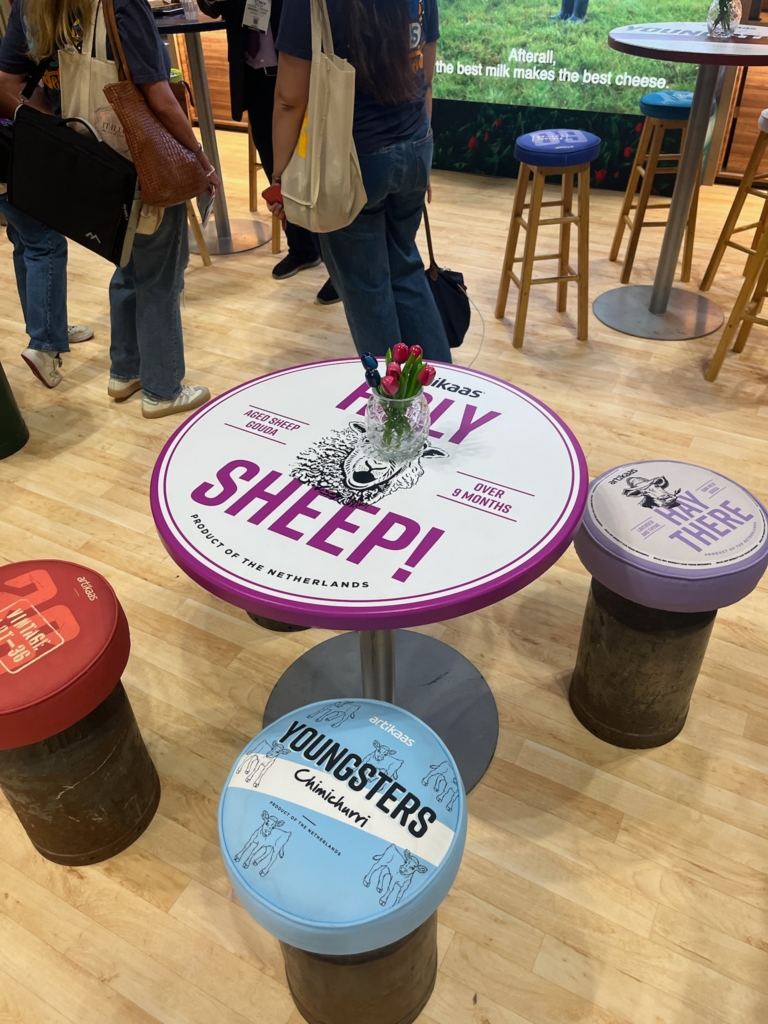
Despite strong branding and compelling stories being a confounding factor to what draws in customers to a brand, we found that it was the brands that created a full-on experience that stuck in our minds most. Rather than relying solely on product samples or traditional displays, exhibitors transformed their booths into interactive destinations that encouraged attendees to stop, participate, and share the experience with others. In a show filled with nearly 2,500 exhibitors, creating a memorable moment proved to be just as important as creating a memorable product.
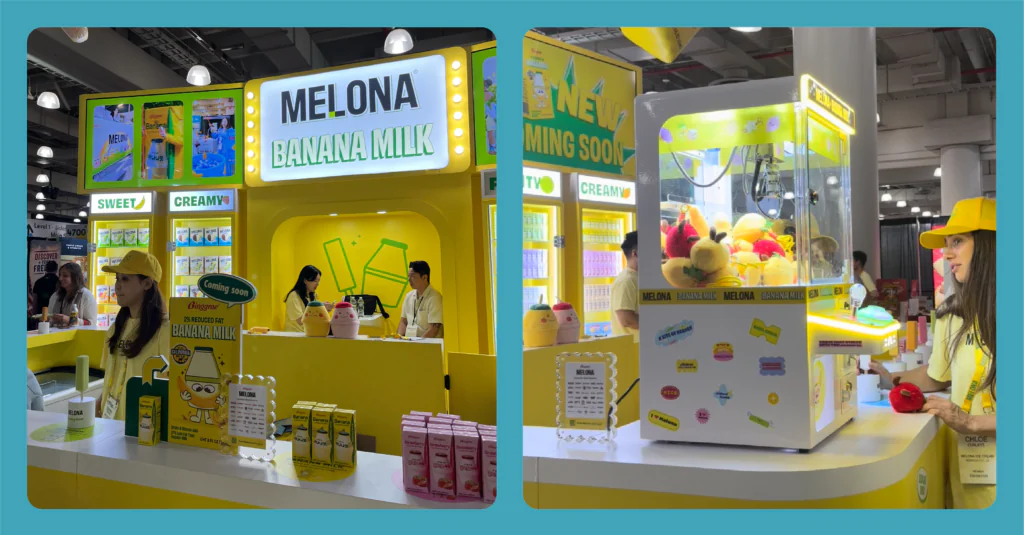
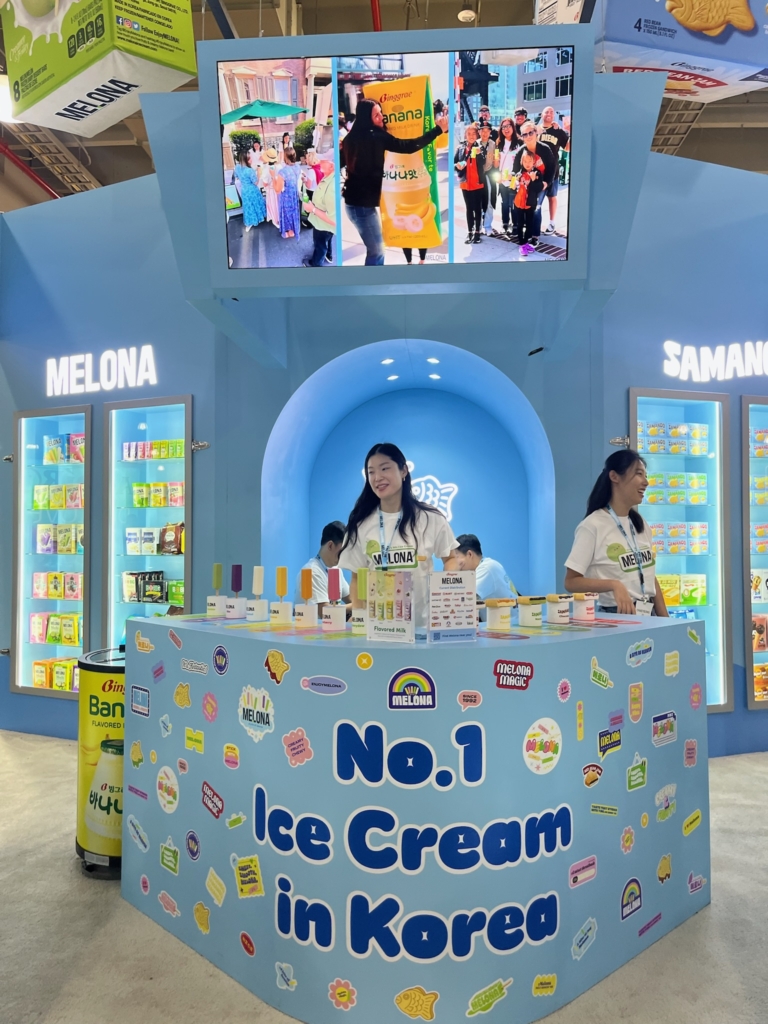
One of the best examples was Melona, whose booth remained busy throughout the day. The vibrant space featured a claw machine filled with prizes and a shopping cart overflowing with its new Banana Flavored Milk. The interactive setup encouraged visitors to engage with the brand rather than simply walk past it, and before long, attendees could be seen throughout the show carrying Melona ice cream bars. That visibility turned visitors into walking advertisements, naturally generating curiosity and drawing even more people to the booth. Combined with Melona’s reputation as America’s best-selling Korean ice cream, the experience reinforced how interactive marketing can strengthen brand recognition long after someone leaves the booth.
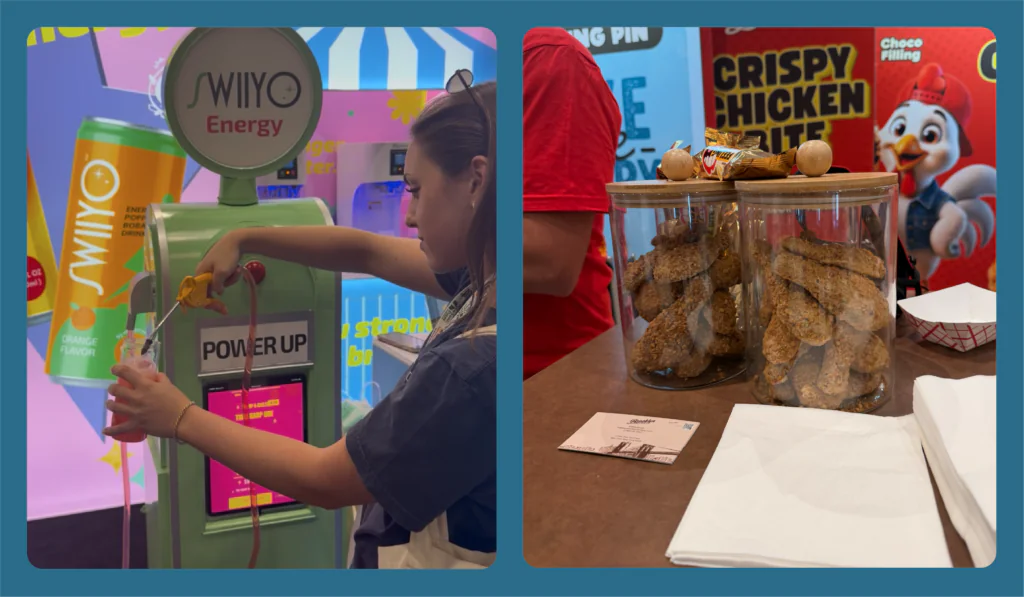
While Melona focused on interactive activities, Brooklyn Bites and Original Gourmet captured attention through surprise and entertainment. Instead of relying on a traditional sampling station, the team created a lively atmosphere around the launch of its viral Crispy Chicken Chocolate Bite. Vendors enthusiastically shouted, “It’s not chicken, it’s chocolate!” as attendees gathered to see what all the excitement was about. The playful surprise of discovering that a realistic-looking fried chicken tender was actually chocolate sparked laughter, conversations, and plenty of photos. It was a simple concept, but one that demonstrated how curiosity and entertainment can become powerful marketing tools.
Swiiyo took experiential marketing in an entirely different direction. Originally rooted in professional boba craftsmanship, the brand has expanded into functional beverages focused on clean energy and beauty. Its booth featured a bright gas station-inspired setup where visitors could “fuel up” their drinks at a life-sized pump as part of the brand’s Power Up Energy Station. Paired with trendy clear cans that showcased the colorful beverages inside, the entire experience reinforced the idea of giving your body clean energy in a fun and memorable way. Rather than simply explaining the product’s benefits, Swiiyo brought its brand message to life through an interactive experience that attendees were eager to participate in.
A common thread among these brands was that successful marketing extends far beyond the product itself. Interactive experiences, thoughtful branding, and creative displays captured attention, encouraged conversation, and gave attendees something worth remembering and sharing. In today’s crowded marketplace, creating an emotional connection through experience can be just as valuable as the product on the shelf, turning a simple booth visit into a lasting impression.
Our Lasting Impression
Attending the 2026 Summer Fancy Food Show was an incredible learning experience and gave us valuable insight into where the food and branding industries are headed. From the rise of functional foods like collagen-infused products and ingredient alternatives to eye-catching packaging, authentic brand storytelling, and interactive booth experiences, it was clear that today’s consumers are looking for products that offer both purpose and personality. Events like the Summer Fancy Food Show continue to inspire Smith Design by keeping the team up to date on emerging trends, helping spark new creative ideas, and strengthening relationships within the food industry. As interns, we had the opportunity to meet people from all over the world, discover innovative products, make meaningful connections, and gain a better understanding of how branding influences the way consumers experience food. We left the show feeling inspired, excited to apply what we learned, and grateful to have been part of such an unforgettable experience.
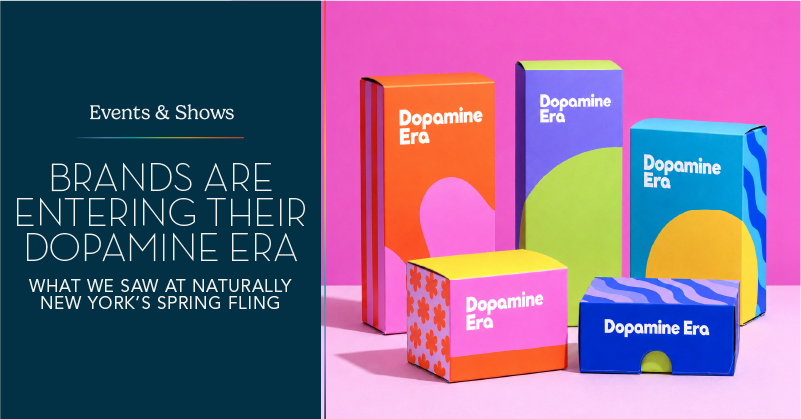
There’s a certain energy that happens when emerging CPG founders, marketers, creatives, and operators all gather in the same room. At the Naturally New York Spring Fling, that energy felt especially clear: the better-for-you space is growing up, and its branding is getting bolder.
The event itself was refreshingly informal. A bright, upbeat room full of founders sharing products, stories, and ideas. And while every brand had a different point of view, one visual trend kept popping up: Dopamine Packaging.
This mood-first branding is bringing joy to shelves (and directly to consumers). “Dopamine Packaging” seems to be one of the defining visual languages of emerging food and beverage brands.
Bright colors. Optimistic typography. High-energy palettes. Packaging designed not just to inform, but to spark emotion instantly. In a crowded category where consumers make split-second decisions, these brands understand something important: people don’t just buy products anymore. They buy brands that they connect with.
In the better-for-you space specifically, we’re seeing a move away from the sterile, overly clinical wellness aesthetic to brands embracing indulgence, personality, humor, nostalgia, and visual stimulation. A few brands that were showcased really embodied that shift.
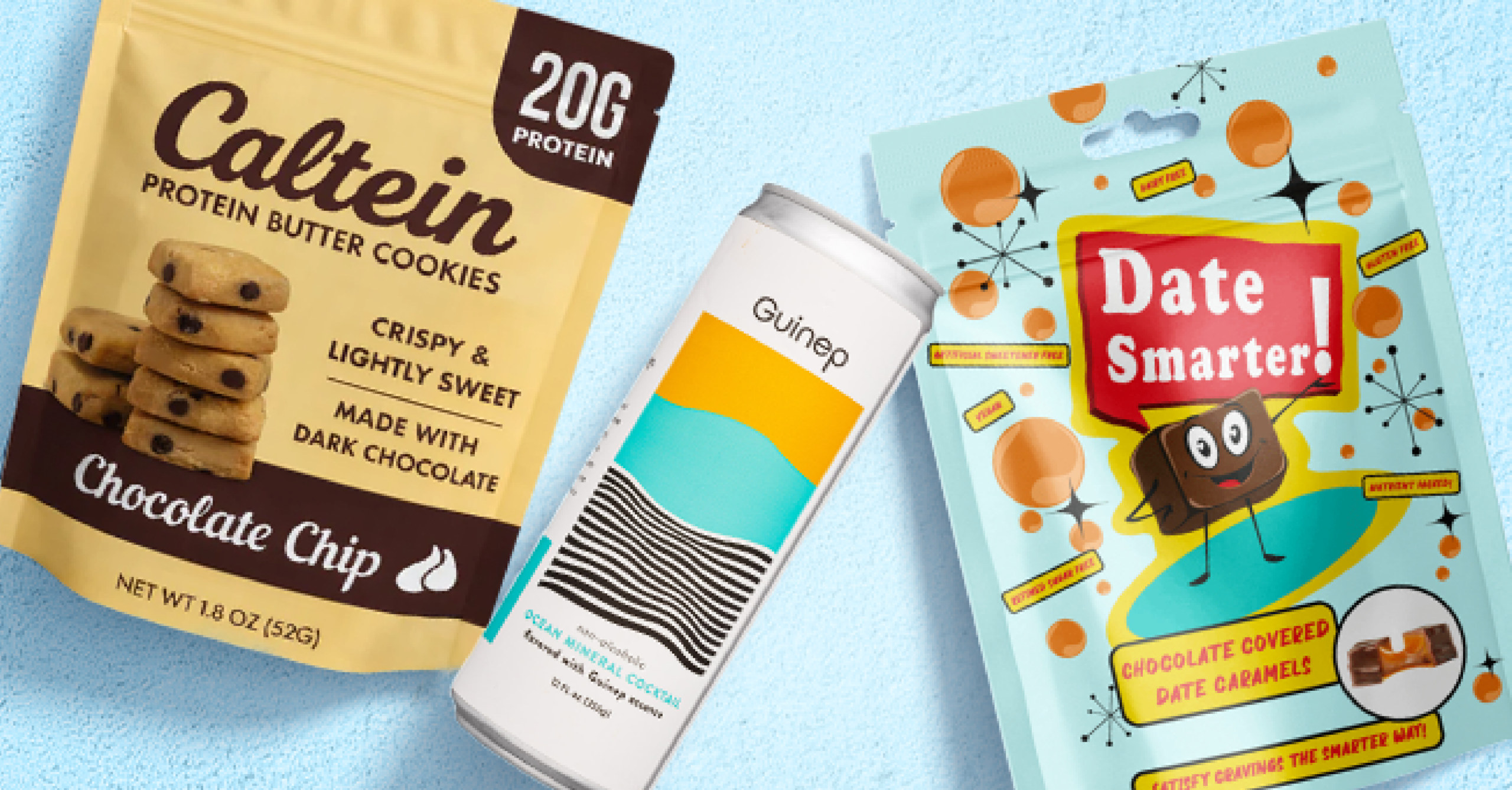
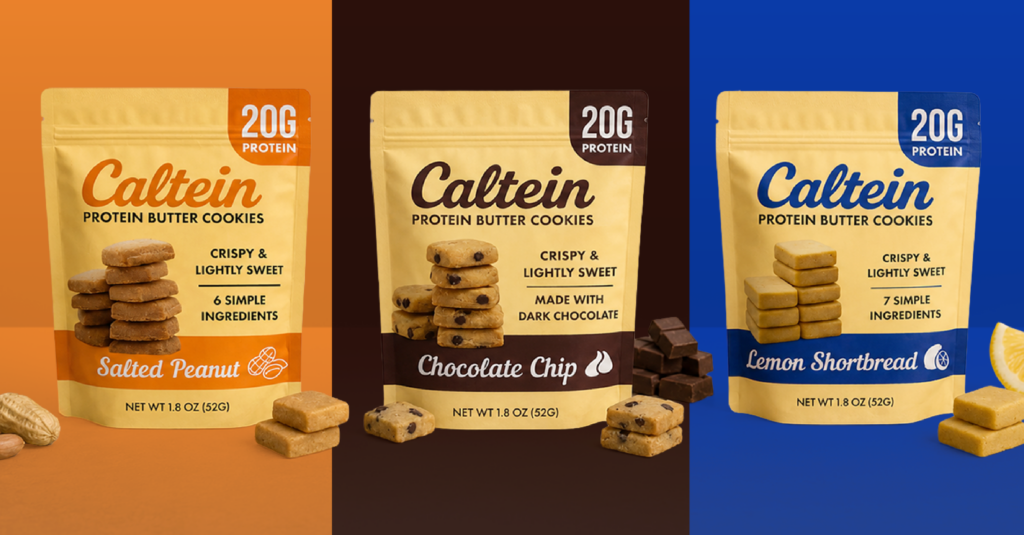
The protein category has historically leaned heavily into performance-first branding: dark colors, aggressive typography, hyper-masculine visual systems. CALTEIN flips that entirely.
Their butter cookie pouches feel nostalgic, playful, and genuinely appetizing, while still communicating functional benefits like high protein and simple ingredients. The warm color palette and retro-inspired typography create a softer, more emotionally driven entry point into the category. This aligns with a broader shift we’re seeing across wellness brands: consumers increasingly want products that feel joyful, not restrictive.
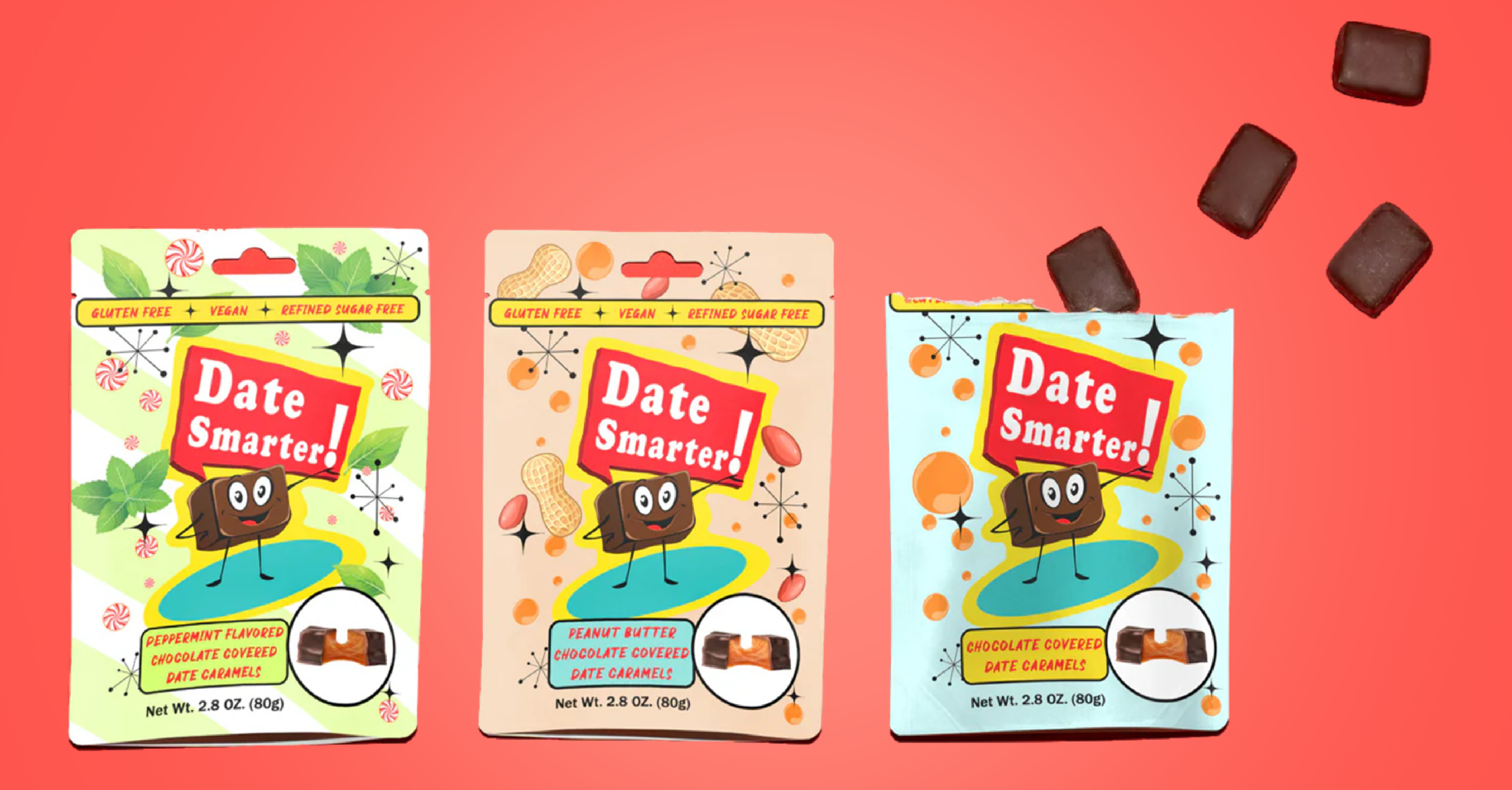
Date Smarter’s packaging leans into vibrant color, kinda-retro inspired illustration, playful callouts, and personality-driven messaging, all while introducing consumers to a healthier snack built around dates. Packaging like this instantly reframes the experience as fun, craveable, and accessible.
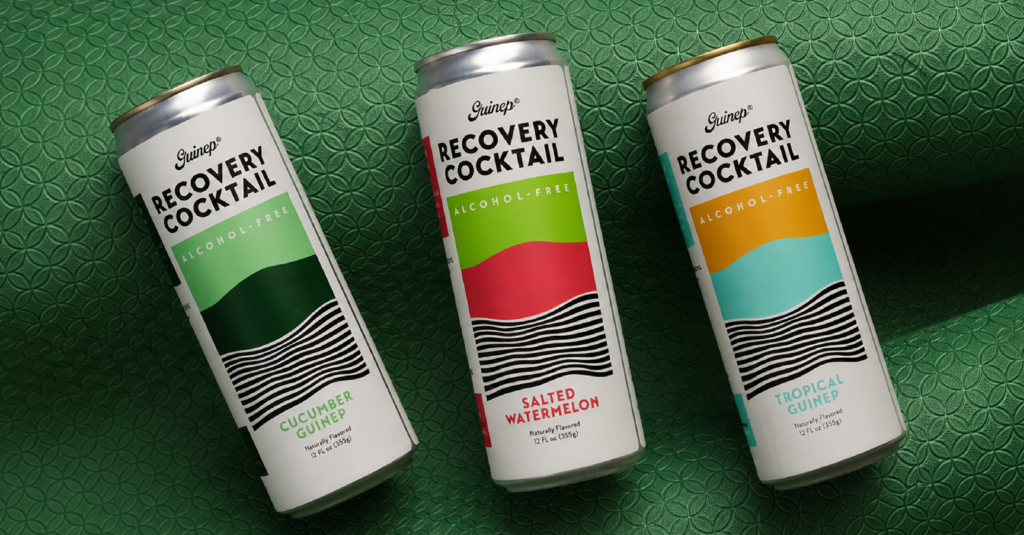
GUINEP took a slightly different approach but still tapped into the same emotional territory through color blocking and bold visual contrast. Their cans feel modern, energetic, and culturally expressive without becoming visually overwhelming.
The best emerging brands today understand that packaging no longer lives only in-store, it lives in TikToks, Instagram Stories, unboxings, and founder content.
All these emerging brands recognize that branding is the product experience.
Packaging has become: a growth tool, a trial driver, a social asset, a positioning strategy, and a way to communicate emotion instantly. And especially in the better-for-you space, brands are finally realizing that wellness doesn’t have to look clinical to feel credible.
At Smith Design, staying at the forefront of packaging innovation is central to the work we do. Attending LUXE PACK New York provided us with the opportunity to stay at the forefront of luxury packaging.
The Show That Sets the Standard
LUXE PACK New York is the East Coast’s premier B2B trade show dedicated entirely to luxury packaging. Held at the Jacob K. Javits Convention Center over two days, it’s the only event of its kind in the U.S. with over a 20-year legacy. The 2026 edition brought together more than 230 exhibitors from 22 countries, with over 5,200 attendees.
The show connects luxury brands with the suppliers, material specialists, and manufacturers behind high-performing packaging across beauty, fragrance, spirits, wellness, fashion, and fine food. Beyond the exhibit floor, a robust conference program featured panelists from L’Oréal, Shiseido, Estée Lauder, and Unilever, tackling topics from AI-driven design to circular materials and consumer engagement.
LUXE PACK also hosts the Dieline Awards: one of the most prestigious honors in global packaging design. Attending the ceremony and seeing the winning work showcased on the event floor was a highlight. It reinforced something we believe deeply: great packaging design isn’t decoration; it’s a discipline and a genuine competitive advantage for brands.
Design, Detail, and Differentiation
Walking into LUXE PACK, we were immediately met by the level of craft and intentionality on display. Booth setups were immersive and design-forward; exhibitors put as much thought into how they presented themselves as the products they manufacture. From embellishment innovations like double hot-stamping to mono-material paper boxes with structural pop-up details, the show floor was an incredible view of where premium packaging manufacturing is headed.
Sustainability and Other Hot Topics
LUXE PACK New York 2026 featured a wide range of expert-led panel discussions. Sustainability and circular materials emerged as recurring themes across nearly every session. Three sustainable topics stood out:
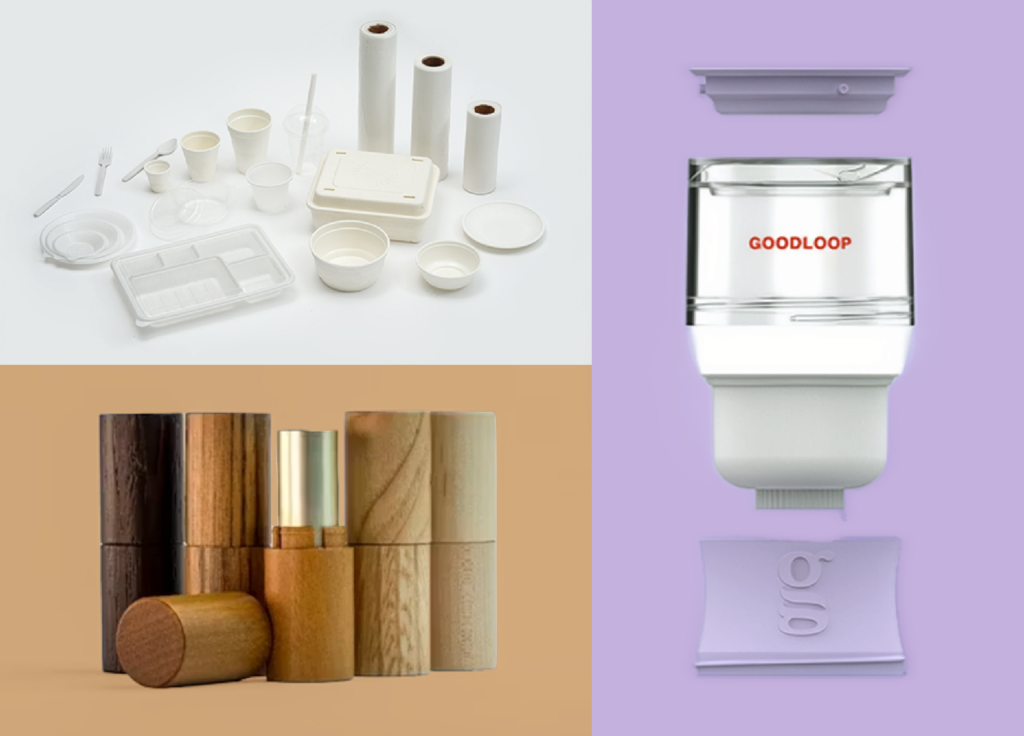
Mono-material packaging uses a single material across an entire component (think an all-aluminum mascara tube), allowing it to be recycled without disassembly. Driven in part by increasing global regulatory pressure, mono-material design is becoming a core strategy for circular packaging.
Grastic is a high-gloss, plastic-free material developed by NABLE as a sustainable alternative for prestige packaging. Designed to replicate the tactile feel and visual appeal of traditional plastic, it is fully biodegradable and compostable.
Refillable packaging systems continue to gain momentum across beauty, fragrance, and spirits categories. Designed for repeated use, these systems pair durable outer packaging with replaceable inner cartridges or refills, helping brands reduce material consumption and packaging waste while reinforcing long-term customer loyalty and premium positioning.
The immersive “Per(fume)-form” installation was a show highlight, driving home the idea that fragrance packaging isn’t just a vessel; it’s part of the experience itself. Materials that protect the formula while offering a tactile, premium unboxing moment are central to how fragrance brands differentiate at the point of sale and beyond.
Personalized fragrance and packaging experiences emerged as a growing area of innovation, with several discussions exploring how AI and consumer data are shaping the future of luxury product design. A standout keynote from Alex Wiltschko, CEO of Osmo, focused on “olfactory intelligence,” using AI to translate human behavior, emotion, and preference data into customized fragrance and packaging insights. The conversation highlighted how brands are beginning to explore more individualized, data-driven consumer experiences across both scent creation and packaging design.
The Bigger Picture
The conversations at LUXE PACK reinforced a broader shift: the luxury packaging industry is rethinking what packaging is fundamentally for. Sustainability is no longer a nice-to-have; it’s the baseline expectation, driven by both consumer values and tightening regulations. And as materials become more sophisticated, the relationship between design and manufacturing is getting closer. The best packaging work happens when creative vision and production reality are aligned from day one, and that’s something we’re deeply attuned to at Smith Design. As an Ecovadis-certified agency, we bring that same commitment to sustainability, actively guiding our clients toward materials, processes, and structures that reduce environmental impact without compromising on the packaging experience they expect.
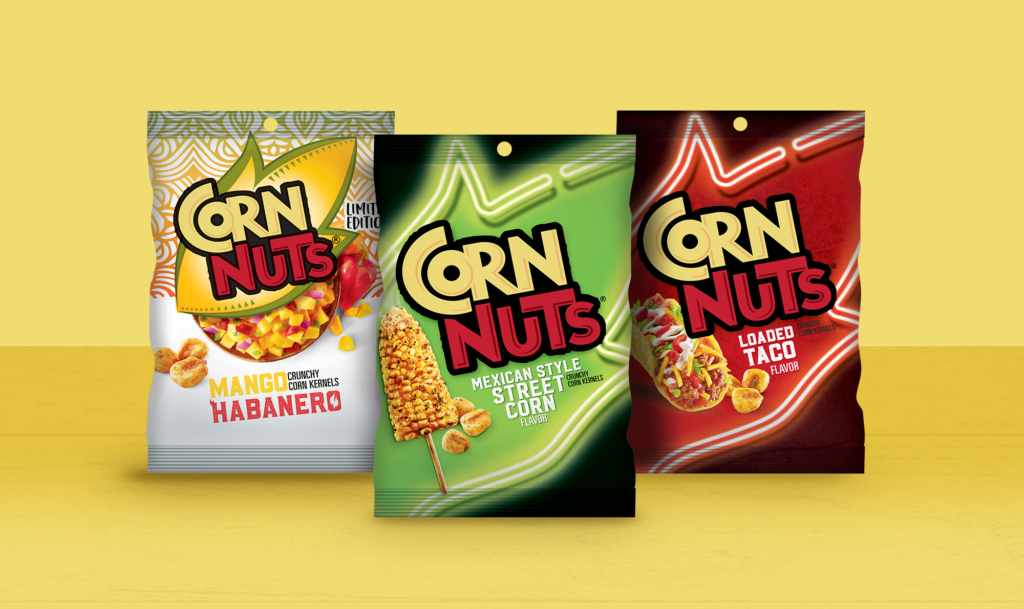
As Millennials and Gen Z continue expanding their palates, global flavors have become integral to their culinary experiences. Both generations grew up surrounded by diverse global cuisine, and for Gen Z, global food is more than just about taste; it’s an immersive experience that combines authenticity, culture, and emotional connection. This shift towards adventurous eating reflects a desire for more sophisticated palates as a way to enhance their culinary explorations. As retailers and brands respond to this growing interest, the availability of unique and complex flavors is expanding across various food and beverage categories. From snacks to drinks, options are becoming increasingly diverse, catering to audiences eager for new taste sensations.
Traditional brands that have historically relied on American flavor profiles are now expanding their horizons by embracing globally-inspired varieties. This shift allows them to connect with the adventurous tastes of Millennials and Gen Z while staying aligned with ever-evolving culinary trends.
Where Flavor Innovation Meets Authentic Design
But flavor innovation alone isn’t enough. As shelves become more crowded with globally inspired offerings, package design plays a critical role in signaling authenticity, communicating flavor cues, and inviting consumers to explore something new. Color palettes, typography, patterns, and imagery all work together to evoke cultural inspiration while maintaining a brand’s own visual equity. When done thoughtfully, packaging becomes a gateway, helping consumers quickly understand unfamiliar flavors and feel confident trying them.
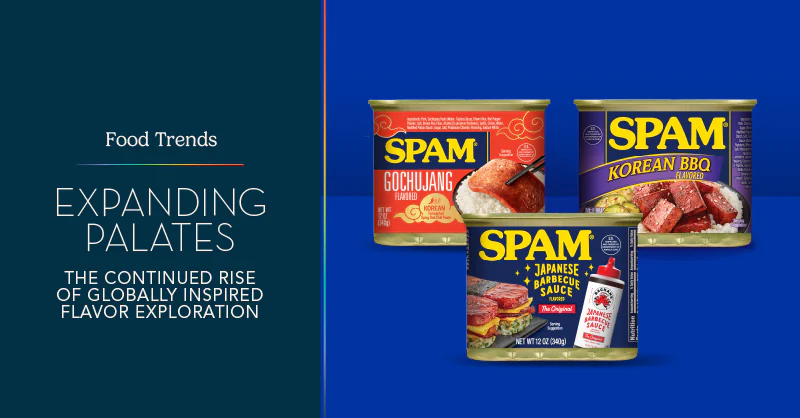
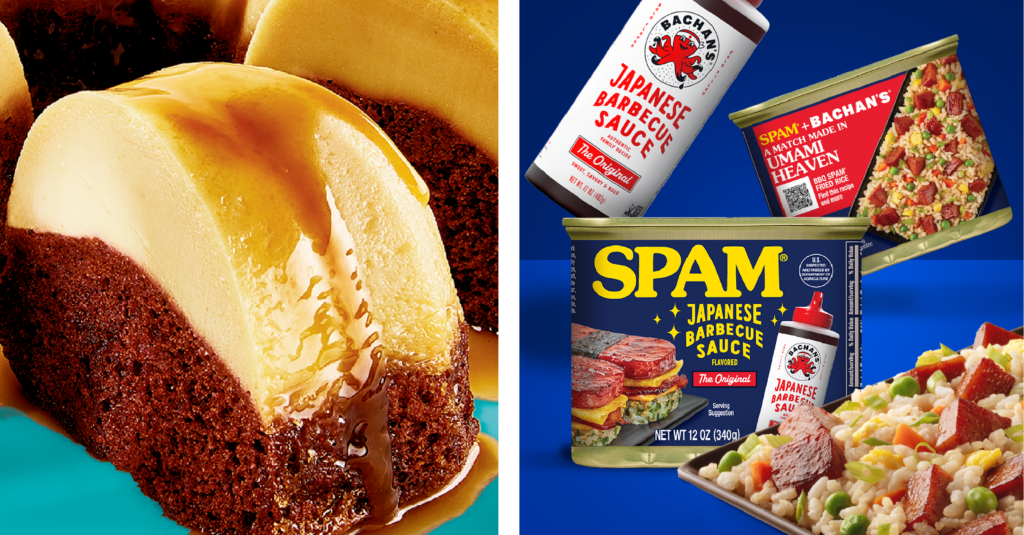
SPAM has long held a meaningful place in Asian American food culture, where it’s been embraced across generations in dishes like musubi, fried rice, and other comfort-driven fusion meals. Recent limited-time offerings continue to build on that cultural connection, blending familiar pantry staples with globally inspired flavors to celebrate community and culinary creativity. A recent collaboration between the SPAM brand and Bachan’s Japanese Barbecue Sauce brings this idea to life, combining two pantry staples rooted in Asian American food culture into a single, umami-rich experience inspired by a pairing fans have been creating at home for years.
The SPAM Japanese Barbecue Sauce flavored variety, made with Bachan’s Original Japanese Barbecue Sauce, delivers a savory balance of sweet, garlicky, and soy-forward notes while celebrating Japanese American culinary traditions. Smith Design partnered with the SPAM team to help shape the packaging for this collaboration, translating the bold flavor fusion into a package design system that feels culturally informed, modern, and shelf-ready.
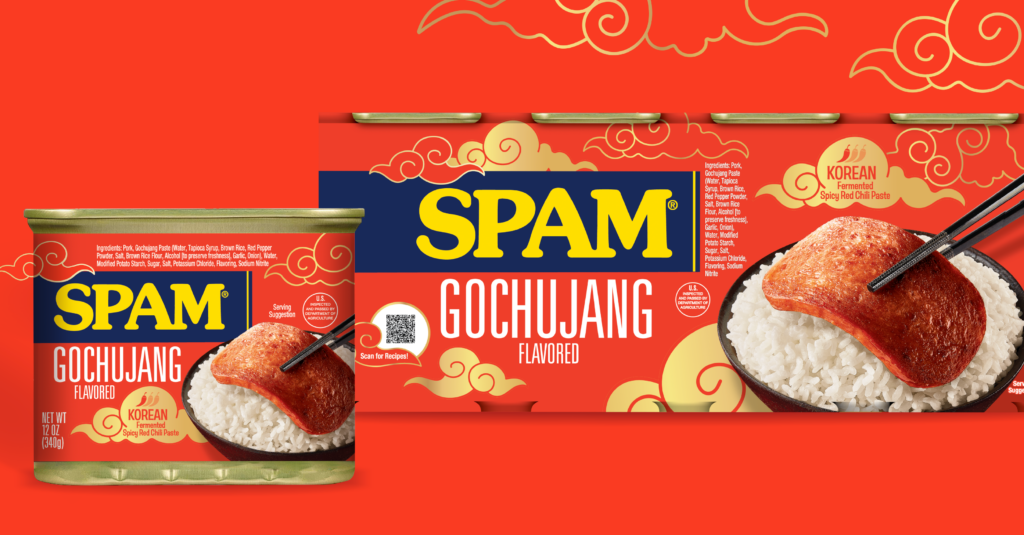
The launch of SPAM Gochujang, inspired by the popular Korean condiment, is another example of this trend. This limited-edition variety combines spicy, sweet, smoky, and umami elements, making it a great addition to any occasion. Smith Design also had the pleasure of collaborating with SPAM to shape the visual aesthetic of this product, ensuring it resonates with Korean heritage and aligns with the essence of gochujang sauces found in adjacent categories. This focus on design not only elevates the product’s appeal but also creates a deeper connection with consumers seeking immersive culinary experiences.
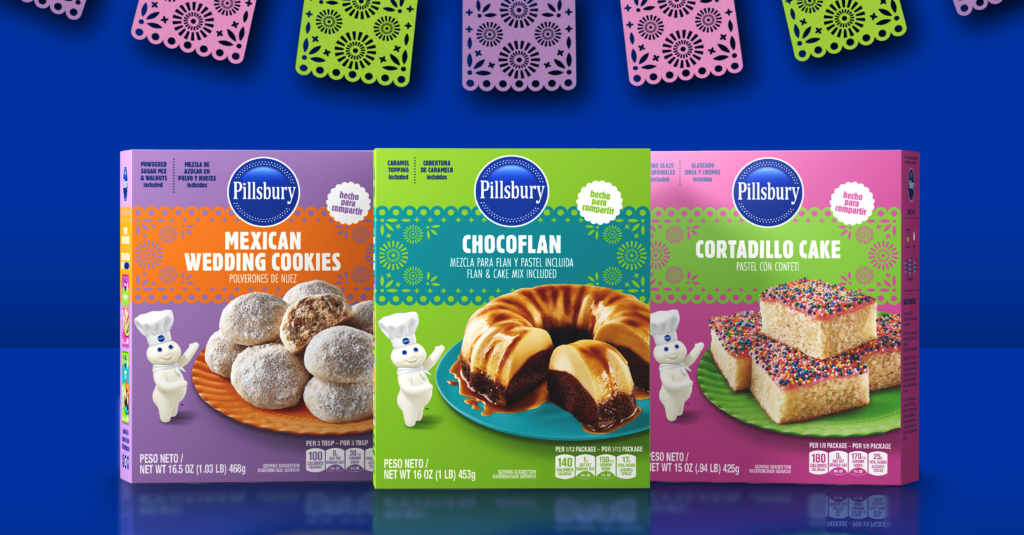
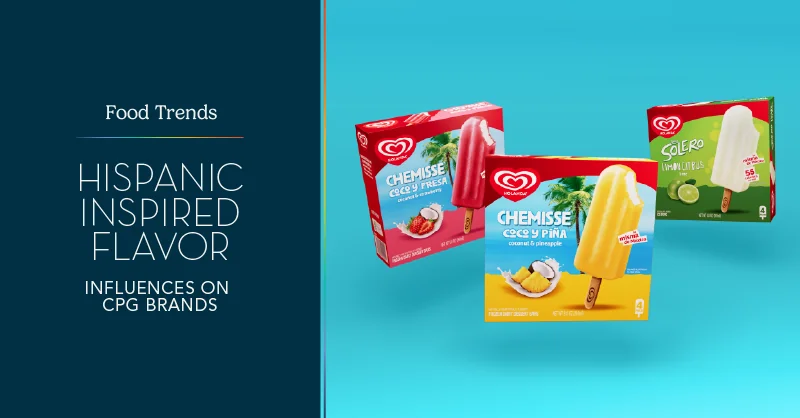
Beyond globally inspired heat and fusion, brands are also finding growth in traditional Hispanic flavors rooted in nostalgia, cultural pride, and the comfort of home. Consumers are gravitating toward offerings that feel authentic and emotionally resonant, creating a compelling opportunity for brands to expand into heritage-driven spaces with credibility and warmth. This insight guided our recent partnership with Pillsbury Baking and Hometown Foods to launch a new line of Hispanic Recipe baking mixes.
Following an in-depth cultural and visual audit and market analysis, we helped translate deeply familiar flavors into a modern retail experience that feels both genuine and accessible. The resulting packaging for Mexican Wedding Cookies, Chocoflan, and Cortadillo Cake blends vibrant, culturally inspired color palettes and patterning with photography that evokes homemade indulgence. The design honors time-tested recipes while staying true to Pillsbury’s playful, trusted brand voice, creating a bridge between tradition and contemporary shelf appeal.
Flavor Communication to Cultural Storytelling
As interest in global flavors continues to grow, packaging is evolving from simple flavor communication to storytelling. Whether highlighting regional ingredients, showcasing flavor mashups, or using design to convey heat, sweetness, or spice, brands have an opportunity to turn global inspiration into a compelling shelf presence. The result is packaging that doesn’t just describe the product, it sparks curiosity and encourages discovery.
Functional beverages continue to evolve, and a new dual-focus trend has emerged, with drinks that support both cognitive wellness and visible beauty. Consumers are no longer satisfied with single-purpose beverages; they want products that enhance how they feel and how they show up in daily life. Expo West 2026 highlighted this shift, revealing brands that combine wellness benefits, flavor, and lifestyle-focused experiences to redefine what drinkable function can be.
From Single Benefit to Integrated Wellness
Five years ago, functional beverages were largely defined by a single promise: energy, hydration, immunity, or digestion. Bold ingredients like adaptogens, probiotics, and nootropics dominated.
Today, the category is moving toward integrated wellness. Hydration incorporates broader mineral profiles. Energy is expected to feel balanced and sustainable. Magnesium has emerged as a key ingredient, supporting stress response, recovery, and overall equilibrium.
Consumers also evaluate flavor, design, and experience alongside efficacy. The most successful brands integrate benefits seamlessly, providing a daily ritual that fits naturally into modern lifestyles.
Trends in Action at Expo West
Expo West 2026 made these shifts tangible. Leading brands no longer focus on single ingredients. They combine multiple benefits into cohesive, everyday experiences.
Everyday wellness is evolving. Drinks now blend adaptogens, nootropics, and hydration with lifestyle benefits. Classic formats are being reimagined. Soda-inspired beverages feature functional ingredients and bold, nostalgic flavors. Protein is increasingly incorporated to support satiety and sustained energy. Bright, fruit-forward flavor combinations make functional benefits approachable and enjoyable.
Together, these trends reinforce a key insight: success is no longer defined by one ingredient. It comes from how well benefits, flavor, and experience are integrated.
Brain + Beauty: A Defining Shift
A major emerging trend is the convergence of cognitive wellness and beauty. Consumers no longer see these areas separately. Stress affects skin. Hydration impacts both mental clarity and appearance. Recovery, sleep, and overall balance influence how people feel and present themselves.
Magnesium plays a central role in this shift. Traditionally associated with relaxation and muscle function, it now supports calm, recovery, and overall balance. These benefits influence both cognitive clarity and visible well-being. In this way, magnesium bridges brain and beauty, connecting internal wellness with external expression.
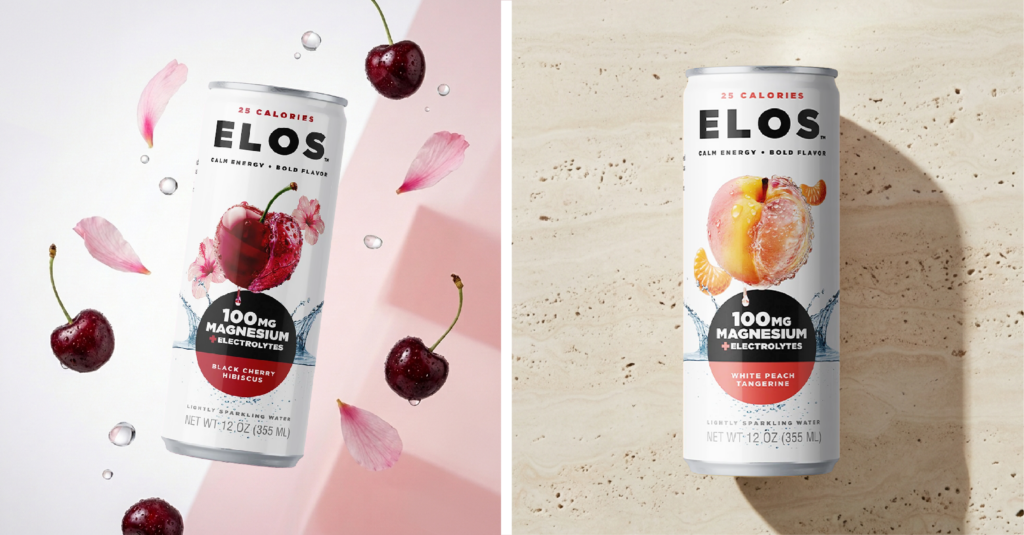
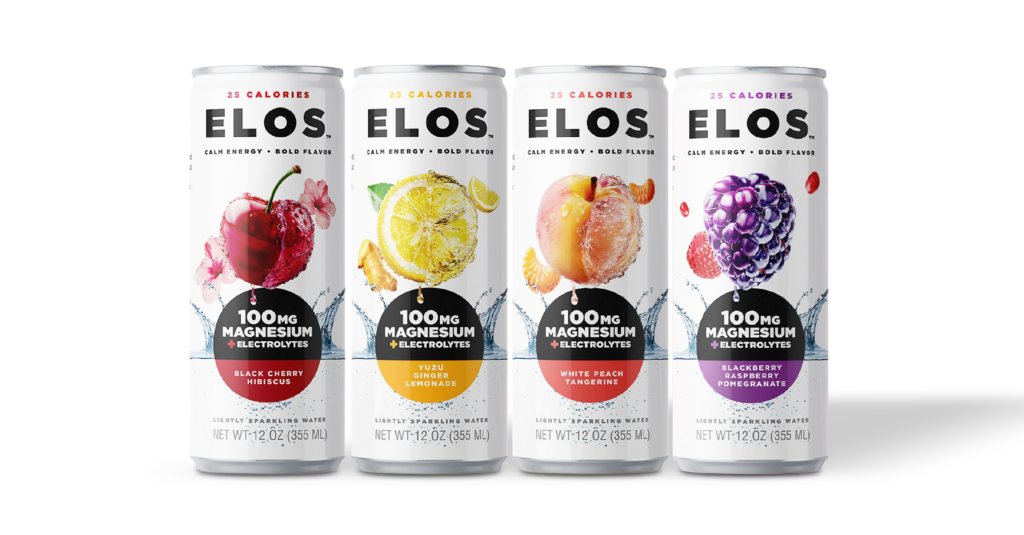
At Smith Design, we recently partnered with Accelerated Manufacturing Solutions (AMS) to launch ELOS, a functional sparkling water brand that officially debuted at Expo West 2026. From the beginning, we worked end to end: naming guidance, brand positioning, visual identity, packaging, and comprehensive brand guidelines.
Our process began with a deep dive into the beverage category and broader wellness landscape. We analyzed competitors, consumer motivations, and emerging cultural signals to identify strategic opportunities for differentiation.
Smith Design collaborated closely with AMS to shape every aspect of the brand:
Naming: We explored potential brand names and strategies, ultimately landing on ELOS, a modern, flexible identity designed to grow with the category
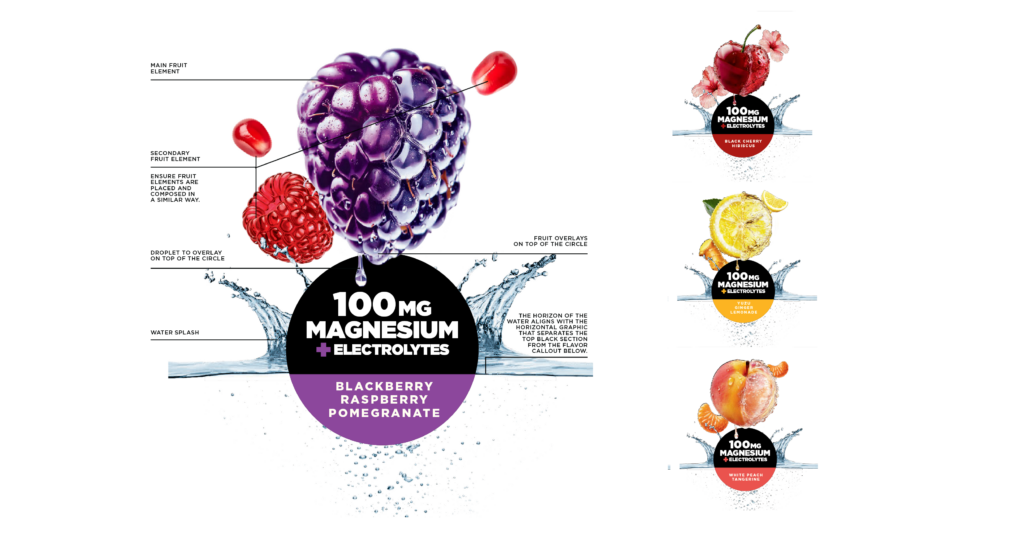
Brand Positioning: We defined a promise of refreshment paired with everyday wellness benefits, expressed through a bold, rebellious personality. Large hyper-liquified fruit graphics signal energy, edge, and shelf presence
Visual Identity and Packaging: Design systems communicate premium refreshment while reflecting the playful, bold spirit of ELOS
Brand Guidelines: Comprehensive guidelines ensure consistency across packaging, marketing, and future product extensions
The initial product delivers a lightly sparkling beverage with magnesium, electrolytes, essential vitamins, and fruit-forward flavor. ELOS is designed as a flexible brand platform capable of evolving with trends, flavors, and consumer expectations.
By combining functionality with flavor, design, and experience, ELOS reflects the future of integrated wellness beverages and the Brain + Beauty movement.
Looking Ahead
Expo West 2026 confirms a clear trajectory for the category: integration is key. Consumers want products that deliver benefits, enjoyment, and balance, seamlessly woven into everyday rituals.
The brands that will lead combine credible wellness claims with strong identity, thoughtful design, memorable flavors, and compelling storytelling. ELOS demonstrates this evolution, pairing wellness, flavor, and personality in a way that feels current, forward-looking, and fully integrated.
For brands and partners, the takeaway is clear. Success comes from building platforms designed to evolve alongside consumers, where integrated wellness, enjoyment, and experience define the next chapter of functional beverages.
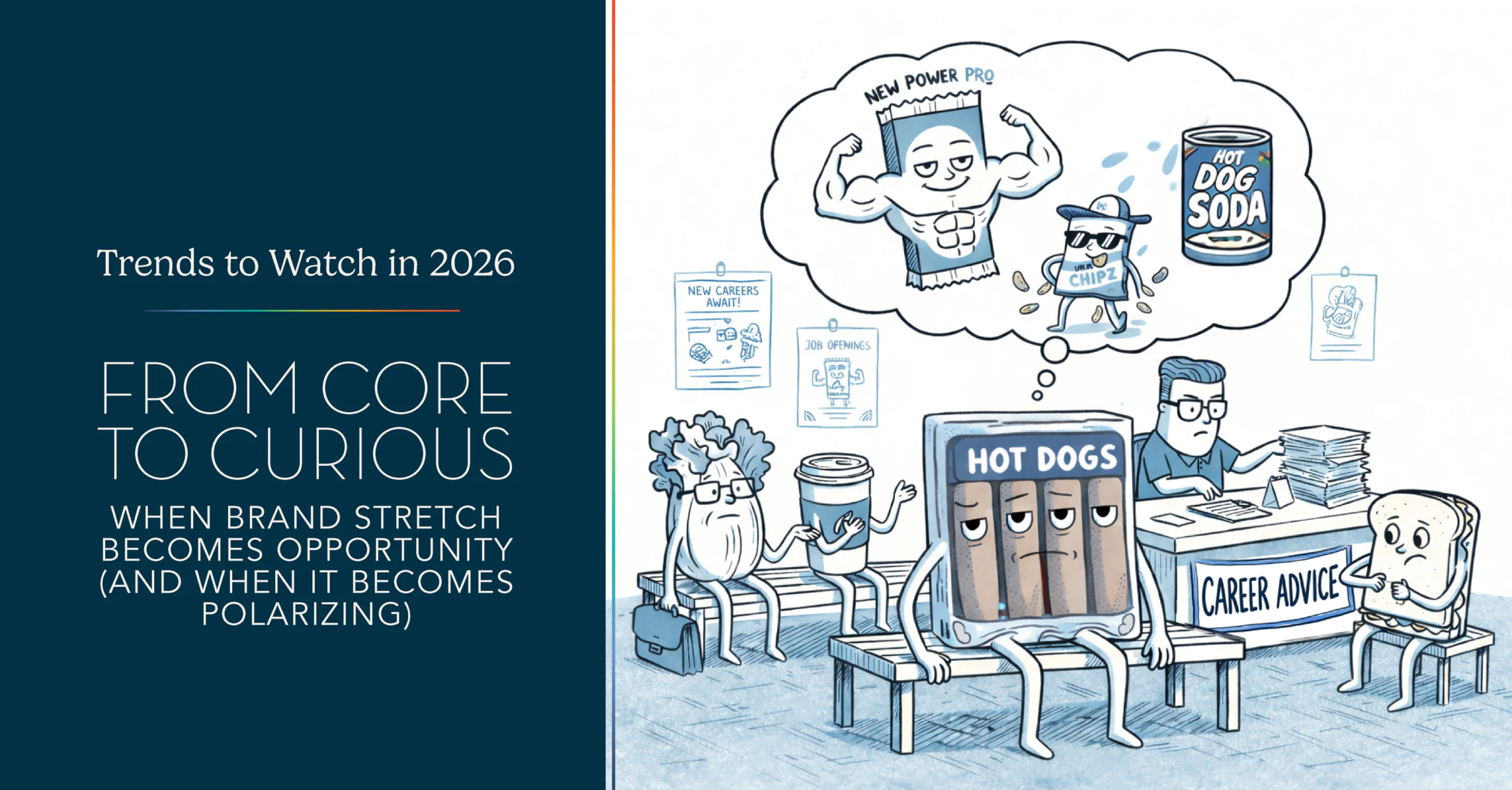
Brand extension is no longer a cautious step into closely related categories. Today, brands are making bolder, more visible leaps, sometimes logically, sometimes provocatively, into new spaces in pursuit of relevance, growth, and cultural momentum. In an era defined by fast-moving trends and fragmented consumer attention, expanding beyond the core can feel like a necessary survival strategy. Yet recent launches reveal a critical tension: not every stretch is embraced. Some feel like natural evolutions of what a brand already represents, while others ignite confusion, skepticism, and even backlash across social platforms. The question is no longer whether brands can stretch, but when that stretch feels authentic, and when it crosses the line into cultural dissonance.
A recent and highly visible example is Beyond Meat’s move into the functional beverage space. For some consumers, the launch signaled innovation and a broader lifestyle platform built around plant-based nutrition. For others, it felt disconnected from what Beyond Meat has historically stood for: meat alternatives grounded in food science, sustainability, and savory meal occasions. The polarized reaction underscores a growing challenge in modern brand strategy. Consumers expect brands to evolve, but only if that evolution aligns with the mental model they already hold. When the connection is unclear, even well-intentioned innovation can feel forced or opportunistic.
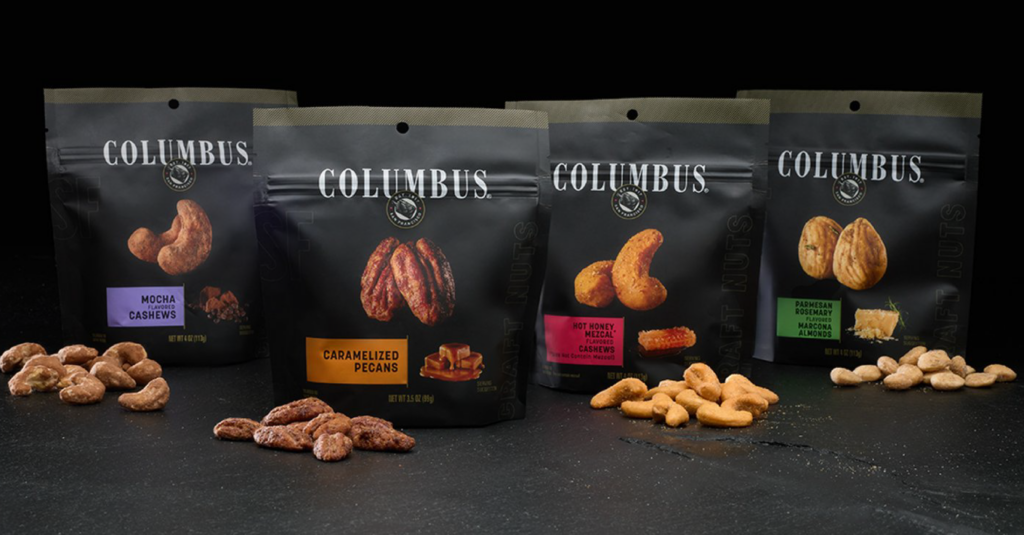
In contrast, several recent brand extensions demonstrate how stretching can succeed when rooted in clear brand logic and occasion relevance. Columbus Meats’ expansion into premium nuts felt intuitive because it extended the same world of craft, quality, and elevated snacking that the brand already owned. Premium nuts naturally fit into charcuterie boards, entertaining moments, and upscale grazing occasions—spaces where Columbus already had cultural permission to play. Rather than redefining the brand, the move simply broadened how and when consumers could interact with it.
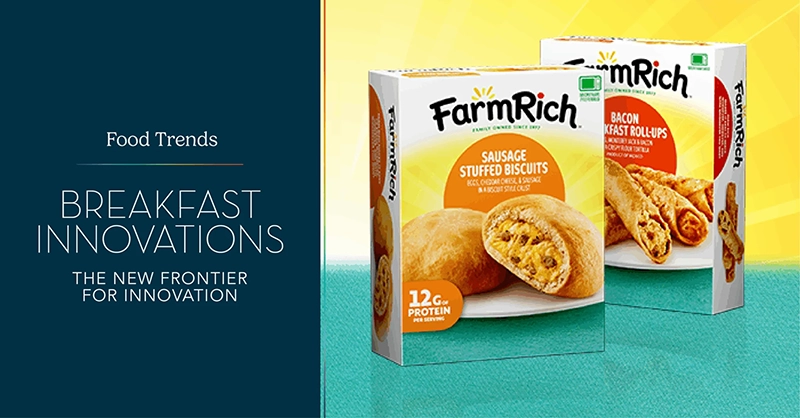
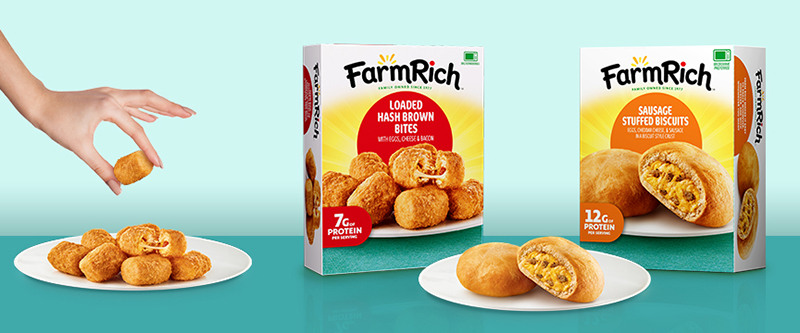
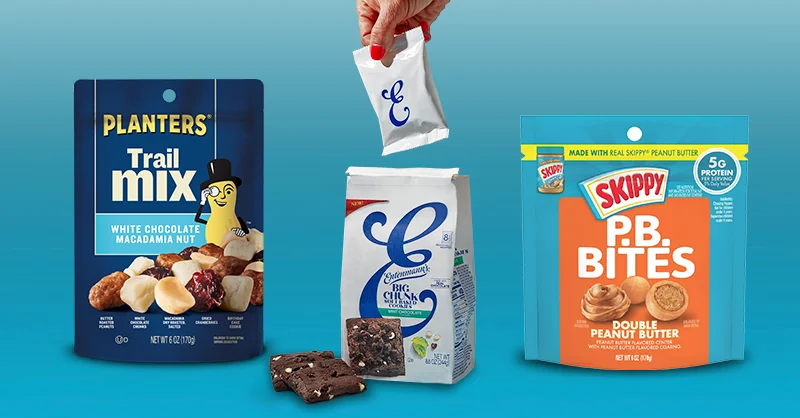
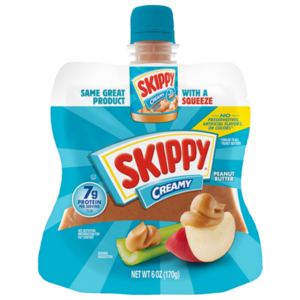
Similarly, Farm Rich’s expansion from frozen appetizers into frozen breakfast built upon its existing equity in comfort, convenience, and freezer-aisle familiarity. Breakfast was not a reinvention but a natural adjacency, allowing the brand to show up at a new daypart while delivering the same promise of easy, crowd-pleasing food. Skippy’s launch of PB Bites followed a comparable logic. By translating its strongest equity, iconic peanut butter taste, and nostalgic appeal, into an on-the-go snacking format, Skippy responded to modern consumption behavior without abandoning its core identity. This was not a leap into a new category as much as a format evolution, meeting consumers where their routines had shifted.
Boar’s Head’s recent entry into indulgent dessert dips may be the boldest example, yet it still remains grounded in the brand’s long-standing reputation for premium, deli-counter craftsmanship. By reframing its role from strictly savory to “premium entertaining,” Boar’s Head expanded into a new emotional territory while staying true to its values of quality and indulgence. The move widens its relevance at social gatherings, extending the brand beyond meats and cheeses into dessert moments without eroding its upscale positioning.
Across these successes, three strategic principles consistently emerge. First, effective brand stretches expand existing occasions rather than inventing entirely unrelated ones. Columbus did not jump into soda; it deepened its presence in snacking and entertaining. Skippy did not become a wellness brand; it stayed in the snack lane and simply made peanut butter more portable. Beyond Meat, by contrast, entered a beverage category defined by different emotional and functional expectations, creating friction between what consumers knew the brand for and what it was suddenly offering.
Second, successful extensions leverage true brand equity, not just brand awareness. They draw from taste cues, trust, quality signals, and the emotional role a brand already plays in consumers’ lives. When Farm Rich entered breakfast, it carried forward its promise of easy comfort food. When Boar’s Head entered the dessert dips market, it leaned into premium indulgence and special-occasion appeal. Extensions fail when they rely solely on logo recognition without translating the brand’s deeper story into the new category in a meaningful way.
Finally, the most successful stretches feel additive rather than opportunistic. Today’s consumers are highly attuned to trend-chasing, especially in saturated spaces like functional beverages and wellness products. Without a clear narrative bridge, Beyond Meat’s move risked being interpreted as a business maneuver rather than a brand evolution. By contrast, Skippy PB Bites addressed a real, practical need: peanut butter without the spoon, making the extension feel purposeful and consumer-driven rather than reactive.
As categories fragment and consumption moments multiply, brand stretching will only accelerate. But the brands that win will not be the ones that stretch the farthest; they will be the ones that stretch with coherence. The difference between opportunity and polarization lies in narrative continuity—whether a new product feels like a natural next chapter or an unrelated side quest. When a brand extension expands an existing role, honors core equities, and solves a genuine consumer need, it builds relevance and long-term growth. When it breaks the mental contract consumers have with the brand, it risks becoming a headline instead of a strategy. In today’s culture, visibility may spark conversation, but authenticity is what sustains trust—and trust remains the most powerful currency a brand can carry into any new category.
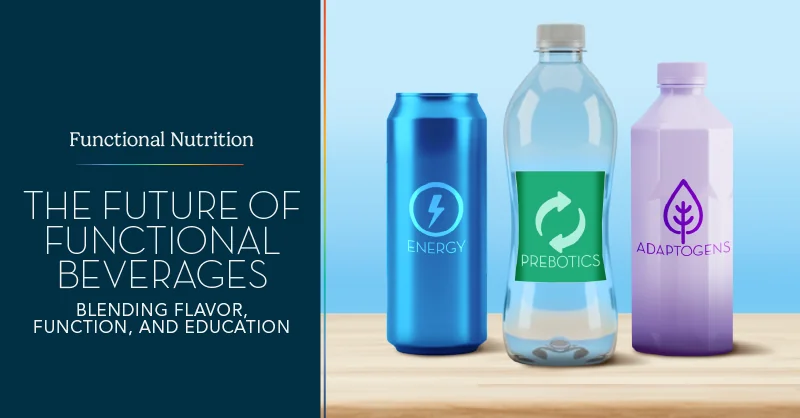
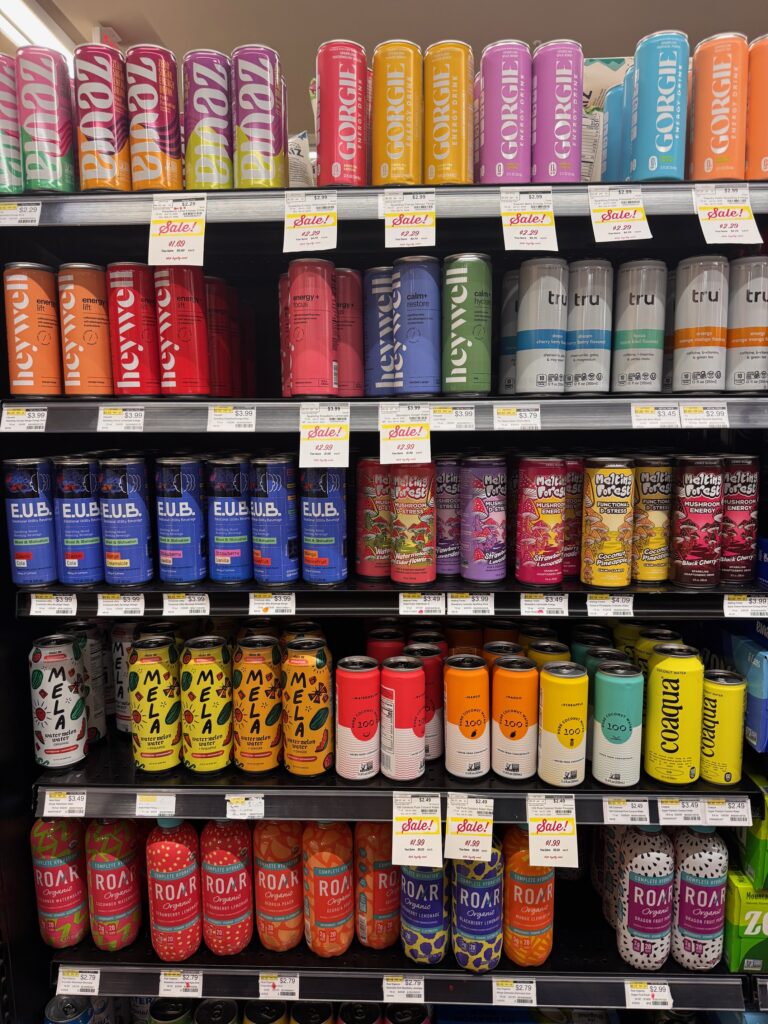
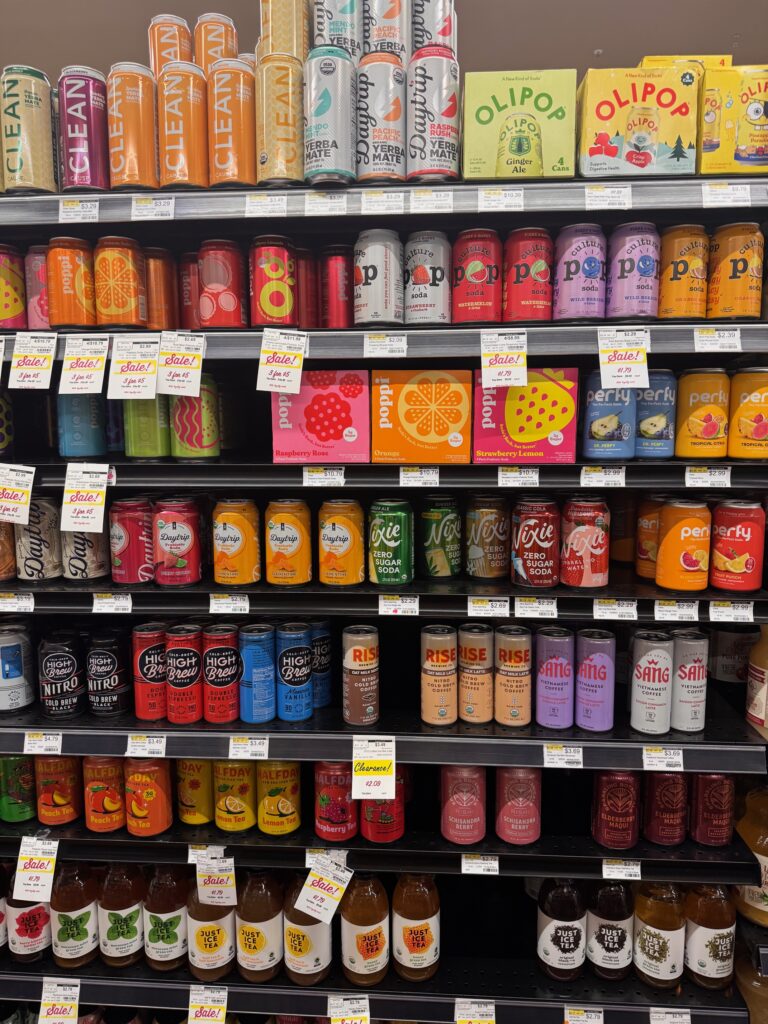
The functional beverage market is entering its next phase of growth, one defined not only by efficacy but also by experience. As consumers increasingly look to drinks for energy, calm, focus, hydration, and gut health, these products are becoming integrated into daily rituals rather than treated as occasional supplements. Functional beverages are now staples for consumers seeking holistic wellness solutions. However, as the category becomes increasingly crowded, differentiation is no longer driven solely by ingredients. According to NielsenIQ and Euromonitor, the number of functional beverage launches has surged across various channels, resulting in a proliferation of similar claims and formats. In this environment, branding, packaging, and marketing clarity have become the primary drivers of trust, trial, and repeat purchase.
Branding: From Functional Claims to Confident Guidance
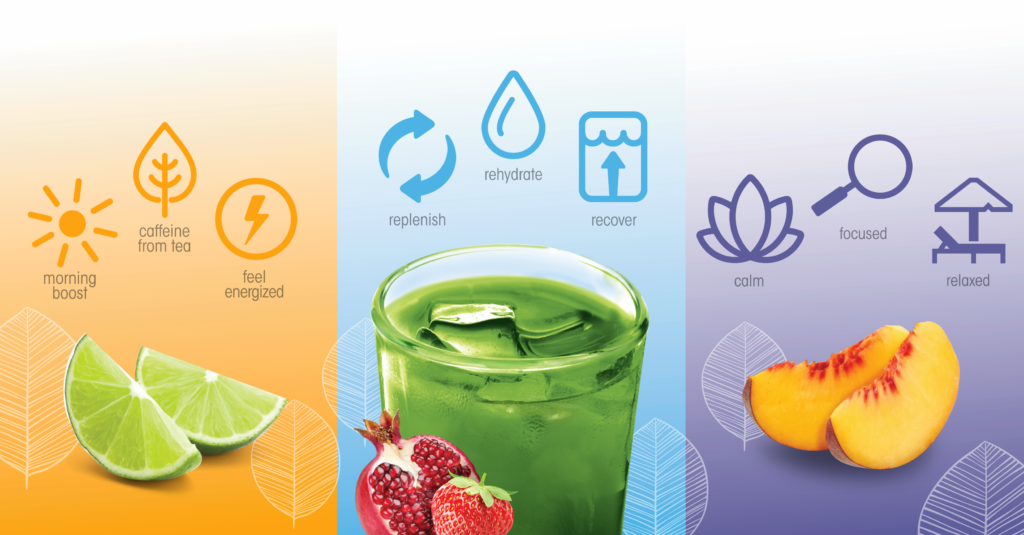
Consumers today are highly informed—but also increasingly skeptical. FMCG Gurus reports that shoppers want functional benefits, but they do not want to “decode” labels to understand them. This places new pressure on brands to act as guides, not just product providers. Mintel highlights that transparent, educational messaging is now table stakes, particularly for ingredients like adaptogens, nootropics, probiotics, mushrooms, and cannabinoids. Successful brands are simplifying complex science into clear, benefit-led language, using terms like “calm,” “focus,” “restore,” and “unwind,” while offering deeper education through secondary panels, QR codes, and digital extensions. WGSN further notes a shift toward reassuring familiarity: pairing emerging ingredients with well-known nutrients (such as magnesium, B vitamins, or electrolytes) helps lower the barrier to trial.
From a brand strategy standpoint, this means:
Clear brand architecture that ladders products to moments or outcomes
A confident, authoritative tone that educates without overwhelming. Replace ambiguity with confidence and truth.
Consistent language across packaging, paid media, and owned channels
Packaging: Designing for Shelf Clarity and Sensory Appeal
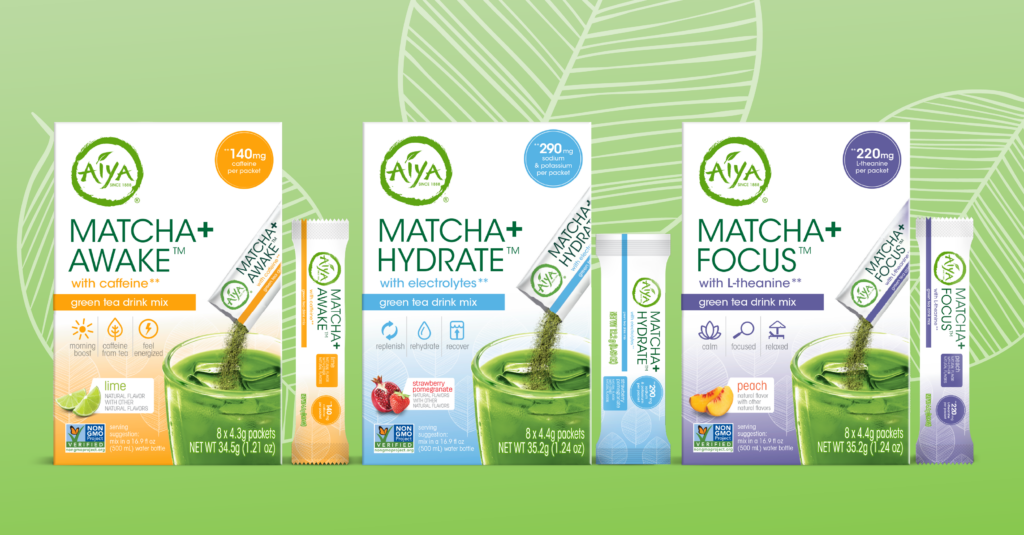
While functionality drives consideration, flavor ultimately drives purchase. Mintel identifies taste as the top attribute consumers associate with functional beverages, ranking above health benefits. Beverage Marketing Corporation reinforces this insight, noting that repeat purchase is overwhelmingly tied to flavor satisfaction. Packaging must strike a careful balance by clearly and quickly communicating function, while simultaneously evoking flavor, enjoyment, and sensory reward—positioning the product within the realm of “permissible wellness,” where it feels indulgent yet justified. This has led to packaging systems that borrow cues from premium food, beauty, and even spirits categories.
Design trends include:
Rich, flavor-forward color palettes paired with clean benefit callouts
Elevated typography and restrained layouts that signal credibility
Ingredient photography or illustration that suggests natural origins and taste
We see a growing role for high-quality, in-house photography in enhancing flavor appeal and trust, especially in categories where taste can feel abstract. Products that look delicious feel less medicinal and more lifestyle-oriented. For brands targeting the sober-curious or alcohol-alternative consumer, WGSN highlights a shift toward cocktail-inspired aesthetics featuring glass cues, botanical illustrations, and ritual-driven design, positioning functional drinks as social, rather than solitary.
Marketing: Occasion-Based, Ritual-Driven, and Social by Design
Functional beverages are no longer confined to “me time.” Mintel & Nielsen both report that nearly 60% of consumers want to see functional drinks offered in bars and restaurants, signaling a major expansion in usage occasions. By 2027–28, the report predicts these beverages will become commonplace at concerts, fitness studios, sporting events, and sober-curious social spaces. This shift has significant implications for marketing strategy, as brands seeing the strongest growth are those that anchor products to moments, not just benefits. People are looking for products that focus on morning productivity and rituals, midday stress relief or hydration resets, and even winding down or alcohol replacement occasions. Marketing that highlights when and how to drink, rather than just why, helps consumers integrate functional beverages into their daily lives. Social content, sampling programs, and experiential activations are increasingly centered on shared moments, positioning these drinks as connectors rather than utilities.
For functional beverage brands, success begins by leading with flavor and reinforcing it with function. Taste is what captures attention at shelf, while clear, educational messaging is what builds trust and confidence over time. Consumers want products that deliver on health benefits, but they are far more likely to engage when those benefits are framed through an enjoyable, craveable experience. Clear benefit communication, evocative visuals, and credible design cues must work together to quickly convey value, differentiate from competitors, and signal quality in a crowded set. At the same time, brands must simplify the science, making complex ingredients and formulations easy to understand without undermining authority or credibility.
The functional beverage category is rich with opportunity, but it is also increasingly unforgiving. The brands that will win are those that treat brand strategy and packaging not as decoration, but as strategic tools that translate function into desire. When flavor, function, and education work in harmony, functional beverages transcend claims and become part of culture.
References
Mintel, Functional Drinks – US – 2024
NielsenIQ, Beverage Category Insights
Euromonitor International, Health & Wellness Drinks
WGSN, Food & Drink Trend Forecasts
FMCG Gurus, Consumer Attitudes to Functional Nutrition
In honor of the holiday season, we’re celebrating the connections between cultures, stories, and traditions that make our world richer and more flavorful.
Because we believe that food has the power to bring people together in profound ways, we are donating to World Central Kitchen, supporting its mission to provide nourishing meals to communities in need around the world.
Below, you will find recipes from a few of our team members; small tastes of the many backgrounds and experiences that shape who we are.
Happy Holidays from Smith Design!
Becki’s Polish Chruściki
Ingredients:
5 large egg yolks at room temperature
1 large whole egg at room temperature
1/2 teaspoon salt
1/4 cup confectioners’ sugar plus extra for sprinkling
1/4 cup heavy cream
1 teaspoon vanilla
1 tablespoon rum or brandy
2 cups all-purpose flour
3 cups canola or vegetable oil
Instructions:
In the bowl of a stand mixer or in a large bowl with a hand mixer, combine egg yolks, whole egg and salt. Beat at high speed until thick and pale yellow, about 5 minutes.
Beat in sugar, cream, vanilla extract and rum. Add flour and beat until dough forms, about 5 minutes.
Turn the dough out onto a floured surface. Divide it in half, then cover with plastic wrap and let it rest for at least 20 minutes.
Working with half of the dough at a time, roll out to ⅛-inch thickness. Using a pizza cutter or a sharp knife, cut the dough into 2-inch-wide strips.
Cut the strips on the diagonal at 4-inch intervals. This results in 2×4 inch rectangles.
Make a slit in the center of each strip of dough. Pull one end through the slit to create the traditional twist shape.
Heat 2 inches of oil in a large, deep skillet to 350°F.
Fry 4 to 6 Chruściki at a time for 1 minute or less per side or until golden brown. Keep an eye on them, they fry quickly! Drain the crisped Chruściki on paper towels.
Dust with confectioners’ sugar.
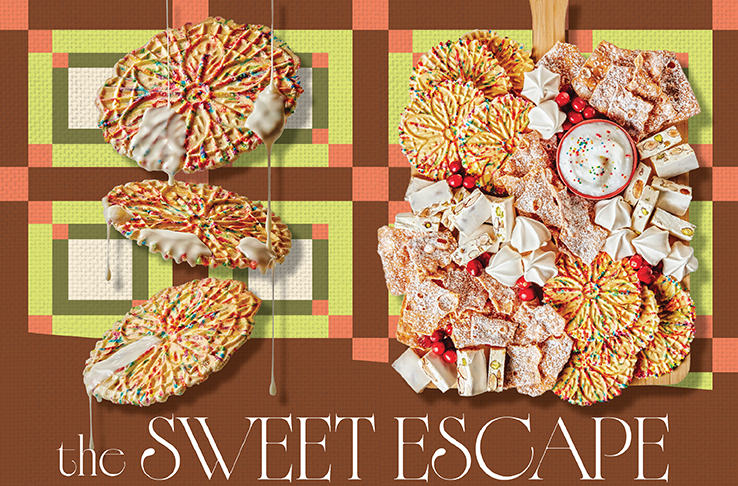
Elana’s Italian Pizzelle
Ingredients:
6 eggs
2 Tbsp vanilla extract
1 1/2 cups sugar
6 cups flour
4 tsp baking powder
1 cup melted butter, cooled
1 Tbsp anise seeds
round rainbow sprinkles
Instructions:
In a stand mixer (or with a handheld mixer), beat the eggs, adding the sugar gradually.
Beat the eggs and sugar until smooth. Add the cooled, melted butter and vanilla extract.
Sift the flour and baking powder together, then add them to the eggs and sugar. Stir in the anise seeds and roll the mixture into small balls.
Heat up a pizzelle iron. While the iron heats, pour the sprinkles into a small bowl.
Roll the cookie dough balls into the sprinkles so they are coated on the outside.
Place the sprinkled cookie dough into the pizzelle maker and press to cook. Repeat with the remaining dough balls.
Grace’s Sicilian Almond Torrone
Ingredients:
2 sheets wafer paper, cut to fit baking pan
1 cup honey
1 ⅔ cups sugar
3 egg whites, at room temperature
1 pinch salt
1 Tablespoon clear vanilla extract
1 Tablespoon lemon zest
3 cups nuts, roasted almonds, pistachios, hazelnuts, or pecans
Instructions:
Prepare a 9-inch square baking dish (or similar size) by lining it with plastic wrap, ensuring the bottom and sides are fully covered.
Cut both sheets of wafer paper to fit the size of the baking dish. Place one sheet of the wafer paper into the bottom of the dish, and set the other piece aside for later.
Take the room temperature egg whites and beat them with a dash of salt in a stand mixer until soft peaks form. Keep them in the stand mixer for later.
Take a medium to large-sized heavy-bottomed pot, and add the honey and sugar. Stir this mixture on medium heat until it has reached 300ºF.
Once the sugar mixture has reached 300ºF, remove from heat and immediately bring it over to the stand mixer.
With the mixer on medium-high, stream in about 3 Tablespoons of the hot sugar mixture, let it fully combine with the egg whites, and whip for a few moments
before slowly streaming in the remaining sugar mixture.
Add in the lemon zest and vanilla extract. Pay close attention to how thick the mixture is getting as it cools. Continue to whip it until the sides of the bowl
are cool enough to keep your hand on it for 10 seconds. It takes about 30 seconds to cool down.
When this happens, add in the nuts and give it one good mix to combine, then shut it off. If the mixture is getting too thick before the bowl is cool enough to
keep your hand on it, add the nuts in and stop mixing at any point. Working quickly, pour the mixture into the prepared baking dish, on top of the wafer paper.
Gently spread as evenly as possible. Use a lightly greased spatula to spread the nougat if needed.
Top the nougat with the second wafer paper sheet. Gently press everything down tightly and flat, trying to get as flat and level a top as you can – you can
use the bottom of a cup to help smooth it out if needed.
Let cool at room temperature.
When ready, carefully turn the torrone out onto a cutting board. Remove the plastic wrap and use a long serrated knife to cut the torrone into desired sizes.
Melissa’s Pork Tenderloin
Ingredients:
2 pork tenderloins (about 1 1/2 pounds each)
2 tablespoons canola oil
Salt and freshly ground pepper
Guava Glaze:
1 cup guava jelly, or apricot jam
1/4 cup Dijon mustard
1/4 cup freshly squeezed orange juice
Salt and freshly ground pepper
Orange-Habanero
2 tablespoons canola oil
1 small red onion, finely chopped
4 cloves garlic, finely chopped
1/2 cup fresh lime juice
3 cups freshly squeezed orange juice
1/2 habanero chile, seeded and finely chopped
2 tablespoons chopped fresh cilantro leaves
1 teaspoon cumin seeds
Salt and freshly ground pepper
Instructions:
Preheat the grill to high.
Brush pork with oil, and then season it with salt and pepper.
Set aside a few tablespoons of the Guava Glaze for brushing the cooked pork.
Grill the pork tenderloins for 4 to 5 minutes per side, brushing frequently with the Guava Glaze.
Remove from the grill, brush again with glaze, and let rest for 10 minutes. Slice into 1/2-inch thick slices, drizzle with the Orange-Habanero Mojo, and serve immediately.
Guava Glaze:
Whisk jelly, mustard, and orange juice together in a small bowl.
Season, to taste, with salt and pepper.
Orange-Habanero Mojo:
Heat oil in a small saucepan over medium-high heat. Add onion and garlic and cook, stirring, until soft, about 5 minutes.
Add lime juice, orange juice, and habanero chile and bring to a boil. Cook until reduced by half.
Whisk in the cilantro and cumin and season to taste with salt and pepper. Drizzle over pork.
Allen’s Hawaiian Lumpia
Ingredients:
16 oz lumpia wrappers
1 lb ground pork
2 cloves garlic
1 tsp salt
1 tsp black pepper
1 tsp garlic powder
1 tsp shoyu soy sauce
1/2 cup onion
1/2 cup carrots
1/2 cup cabbage
1/2 cup green onions
oil for frying
flour paste sealer
1/2 tbsp flour
1/2 tbsp water
spicy seasoned vinegar sauce
2 tbsp white vinegar
1/4 tsp salt
1/8 tsp pepper
1 clove garlic
1 red Hawaiian chili pepper, optional
Instructions:
Prepare vegetables ahead of time.
To make the filling, heat a pan over medium heat and drizzle oil into it. Add in the garlic.
Cook for about 30 seconds or until aromatic. Be careful not to burn the garlic.
Add in the ground pork and cook until all has turned brown. Drain the oil in a colander.
While the meat is draining, reuse the same pan. Drizzle in some oil and add in the vegetables.
Sauté until the vegetables have become slightly tender.
Add the meat back into the pan and add in the seasonings: salt, pepper, garlic powder, and shoyu. Mix and cook for one more minute. Then add in the green onions and cook for an additional minute. Take it off the heat and let it cool down to room temperature.
Make the flour paste by combining the flour and water in a small bowl. Mix to get a thick paste-like consistency.
Assemble the lumpia by separating one sheet of the wrapper. Lay the wrapper on a plate with one corner pointing towards you. Add about 2–3 tbsp of the filling. Take the bottom corner of the wrapper and fold over the filling. Roll tightly until you reach about three-fourths of the way to the top corner. Gently but firmly fold the right and left corners to the middle (it’ll look like an envelope). Tightly roll towards the top, leaving about an inch gap. Apply the paste and roll the rest of the way to seal it off. Repeat this procedure until all of the filling and wrappers have been used.
Fill a pan or pot with oil. Heat it to 350ºF and carefully add the wrapped lumpia. Fry until golden brown, about 2–4 minutes.
Line a plate with a paper towel to place the fried lumpia on.
To make the sauce, combine the vinegar, salt, pepper, garlic, and chili pepper.
Serve the lumpia with your choice of dipping sauce.
Rachel’s Potato Latkes
Ingredients:
1 1/2 pounds russet potatoes, peeled
1/2 medium onion, peeled
1 large egg, lightly beaten
3 tablespoons all-purpose flour
1 teaspoon salt
1/2 teaspoon baking powder
1/4 teaspoon ground black pepper
Vegetable oil
Instructions:
Grate the potatoes and onion on the largest holes of a box grater. Alternatively, you can use the grating attachment of a food processor.
Place the potato and onion mixture on a lint-free kitchen towel or a large piece of cheesecloth and squeeze out as much liquid as possible.
In a large mixing bowl, stir to combine the potato and onion mixture with the egg.
Sprinkle the flour, salt, baking powder, and pepper evenly over the potato mixture. Stir it gently to combine well.
Meanwhile, fill a large, heavy-bottomed skillet with ¼-inch of oil. Heat it over medium-high heat to 350°F.
Working in batches, drop spoonfuls of the latke mixture, between 3 to 4 tablespoons in size, into the hot oil. Press gently with the back of a spoon or spatula to slightly flatten their tops.
Cook for about 3 minutes until golden brown. Flip the latkes and cook for an additional 1 to 3 minutes until golden brown. Adjust the heat as needed to maintain 350°F.
Place the latkes on a paper towel-lined plate or a wire rack set over a small, rimmed sheet tray. Repeat with the remaining potato mixture, adjusting the heat as needed.
Serve the latkes with sour cream and applesauce, if desired.
Jenna’s Eggplant Caponata
Ingredients:
2 lb eggplant cut into 1 1/2″ cubes
1/2 cup (120g) olive oil plus more as needed
1 teaspoon Diamond Crystal Kosher salt
1/2 teaspoon black pepper
1/4 cup (60g) extra- olive oil
1/3 cup (45g) pignoli nuts
3 ribs celery, chopped
1 large red bell pepper, chopped
1 medium red onion, sliced
1 6-ounce can tomato paste
1 cup (140g) chopped pitted green olives
2 tablespoons (18g) capers, rinsed
1/4 packed cup (42g) raisins, optional
2 tablespoons (26g) sugar
1/4 cup (60g) red wine vinegar
1/4 teaspoon crushed hot red pepper flakes
1/4 cup mince flat-leaf Italian parsley
3 tablespoons mint and/or basil for garnish
Salt and pepper to taste
Instructions:
Toast the pignoli nuts in a dry pan over medium-low heat for approximately 5 minutes, being careful not to burn. Once toasted, set aside.
Heat a large pan to medium heat with extra-virgin olive oil. Add the celery, red onion, and bell pepper and sauté for 5–7 minutes or until softened.
Add the tomato paste and continue cooking for another 5 minutes, stirring frequently. If the paste starts to burn, add a few ounces of water to the pan.
Next, add the hot red pepper flakes and cook for 30 seconds.
Add the green olives, capers, raisins, sugar, and red wine vinegar. Cook for 5 minutes, allowing the vinegar and sugar to cook through and incorporate.
Add the roasted eggplant to the pan and gently mix it all together, being careful not to crush the eggplant. Taste test the acidity and add more sugar or vinegar if required. Season with salt and pepper to taste.
When satisfied with the taste, turn off the heat and add the parsley and pignoli nuts. Mix well. Caponata can be eaten right away, but it’s better to refrigerate it overnight so that the flavors meld together.
Dave’s Swedish Meatballs
Ingredients:
Meatballs:
1/2 sweet onion, finely chopped
1 tsp olive oil
2 lbs ground pork (or beef)
1/2 cup panko breadcrumbs
2 eggs
2 tbs fresh parsley, chopped
1/2 tsp cardamom
1/2 tsp ground nutmeg
1/4 tsp ground all spice
1 tsp garlic powder
1.5 tsp salt
1/4 tsp black pepper
Sauce:
4 tbs butter
3 tbs flour
2 cups beef broth
1 cup heavy cream
1 tbs Worcestershire sauce
1 tsp Dijon mustard
Salt + pepper to taste
Instructions
Meatballs:
Preheat the oven to 400°F. Line a large baking sheet with parchment paper.
Sauté the chopped onion in a little olive oil until just translucent, about 2 minutes.
In a large bowl, combine the meatball ingredients with your hands. Form medium-sized balls and place onto the baking sheet.
Bake for 20 minutes or until internal meatball temperature registers 160°F.
Sauce:
On medium-high heat, melt the butter in a pan and add the flour. Continuously whisk until the rue turns brown.
Slowly add and whisk in the broth and then the heavy cream.
Next, mix in the Worcestershire and Dijon and bring everything to a boil. Lower the heat to a simmer and cook until the sauce thickens, stirring occasionally. Season with salt and pepper to taste.
Add the cooked meatballs to the pan and continue to simmer for another few minutes, drizzling them with the sauce.
Brian’s Poutine
Ingredients:
3 or 4 large russet potatoes
2 tablespoons extra-virgin olive oil
1 teaspoon sea salt
1 1/2 teaspoons dried thyme
Freshly cracked black pepper
Gravy
4 tablespoons (½ stick) unsalted butter
1/4 cup all-purpose flour
3/4 teaspoon garlic powder
1/2 teaspoon onion powder
1 cup chicken broth
1 cup beef broth
1 1/2 teaspoons Worcestershire sauce
1 beef bouillon cube
1 teaspoon unfiltered apple cider vinegar
For serving:
10 ounces white cheddar cheese curds, at room temperature
Minced fresh parsley
Instructions:
Make the fries. Place the batons in a large bowl and cover them with cold water.
Let soak for at least 30 minutes, up to 24 hours for crispier fries.
Preheat the oven to 425°F. Line 2 large rimmed baking sheets with parchment paper.
Spread the potatoes out onto large, clean kitchen towels. Dry them off as best as possible.
Place the potatoes on the prepared baking sheets, drizzle with the olive oil, sprinkle with the thyme and salt, and add black pepper to taste.
Toss to coat evenly, then spread out the potatoes into a single layer.
Bake for 10 minutes, then toss the fries and rotate the pans, swapping the one on the top for the one on the bottom. Increase the oven to 450°F and bake the fries for 10 minutes more. Toss the fries and swap the pans from top to bottom again. Turn on the broiler and cook the fries until they begin to brown and crisp, about five more minutes. Continue to toss and broil until the fries reach the desired doneness. Season with salt and pepper.
Meanwhile, make the gravy. In a large saucepan set over medium heat, melt the butter. Sprinkle the flour over the butter and cook, stirring constantly, until golden brown, about 2 minutes. Stir in the garlic powder and onion powder. Slowly add the chicken and beef broth.
Increase the heat to medium-high and bring to a boil, stirring often. Reduce the heat to low and simmer until thickened. Stir in the Worcestershire, beef bouillon, and vinegar. Season with salt and pepper.
To assemble the poutine, divide the fries among four plates. Sprinkle the fries with the cheese curds, drizzle on the gravy, and garnish with parsley.
Serve immediately.
Miles’ Cheese Stuffed Meatballs
Ingredients:
10 oz ground pork
20 oz ground beef
2 eggs
1/4 cup grated Parmesan cheese
1 tbs Italian seasoning
Salt and pepper
3 cheese string sticks
Instructions:
Preheat the oven to 375F.
In a large bowl, mix together the pork, beef, egg, Parmesan cheese and seasonings.
Cut the string cheese into small pieces.
Take a small handful of the meat mixture and place a piece of the string cheese inside.
Form the meat around the cheese into a ball shape.
Place the meatballs on a baking sheet lined with foil and cook for 15–20 minutes until the meat is cooked through and the cheese has melted.
This recipe makes approximately 24 meatballs.
Mark’s Italian Antipasto
Ingredients:
1 loaf of ciabatta bread
1 cup marinated artichoke hearts, roughly chopped
3/4 cup favorite kind of olives, sliced
3/4 cup roasted red bell pepper, diced
1/3 cup pepperoncini, sliced
8 to 10 pepperoni slices, divided
8 to 10 salami slices, divided
10 to 15 slices provolone cheese, divided
2 tbsp grated Parmesan
1 tbsp olive oil
Instructions:
Preheat the oven to 400 degrees.
Place the ciabatta bread on a baking sheet.
Using a paring knife, score about a one-inch border around the top of the bread.
Remove the crust from inside the border and a little bit more of the bread underneath.
In a mixing bowl, combine the artichokes, olives, roasted bell pepper, and pepperoncini.
Take some of the provolone slices and line the bottom of the bread loaf until covered overlapping as necessary to fit.
Arrange some of the salami slices on top of the provolone, followed by some of the pepperoni slices.
Take half the antipasto mixture and spread it in an even layer on top of the pepperoni slices.
Repeat step three layering followed by step four.
Sprinkle the Parmesan cheese on top of the antipasto mixture. Brush the edges of the bread with olive oil.
Cover the bread with foil and bake for about 30 minutes or until the cheese has melted.
Breakfast has emerged as one of the most dynamic innovation zones in the CPG landscape. Shifts in consumer habits, heightened focus on wellness, and a craving for convenience have turned the morning meal into a canvas for experimentation and an opportunity for growth for CPG companies.
A Category Reawakened
With more people working from home or adopting flexible schedules post-pandemic, breakfast has moved from a rushed necessity to a daily ritual consumers are eager to personalize, enhance, and optimize.
Add to this the rise of functional foods, growing demand for clean-label ingredients, and a desire for flavor exploration, and it becomes clear: the traditional cereal aisle is no longer enough.
Trends Driving the Breakfast Boom
Consumers want more from their first meal, giving rise to notable trends across the category. A few trends exhibiting tenacity right now include:
1. Functional Nutrition
Consumers want breakfast with benefits: energy, focus, satiety, and gut support. Brands like Taika (adaptogenic lattes) and MUSH (probiotic-rich oats) lead the charge by embedding function into formats people already know and love.
2. Protein Priorities
Breakfast has become the protein anchor of the day. Brands like Farm Rich are turning familiar formats into high-performance food without sacrificing taste. Smith Design recently worked with both brands to capture innovations in breakfast. Farm Rich’s High Protein Cinnamon French Toast Sticks, Loaded Hash Brown Bites, Bacon Breakfast Roll Ups, and Sausage Stuffed Biscuits offer the delight and familiarity of indulgent breakfast foods in a portable format that packs a protein punch. Smith created the logo for Farm Rich, redesigned the packaging, and shot the food photography.
3. Plant-Based
With demand for plant-forward meals increasing, breakfast is an ideal entry point. PB2’s Apple Cinnamon Muffin Mix combines the benefits of added protein that’s all plant-based. Smith Design worked with PB2 on the label design and food photography for this innovative morning mix.
4. Snackification of the Morning Meal
Today’s breakfast might be eaten in the car, at a desk, or mid-Zoom. This shift has opened doors for portable, resealable, microwaveable formats. Smith Design leveled up the package design and photography for Eggland’s Best Sous Vide Egg Bites, which go from frozen to fabulous in minutes and are easy to bring on the go.
The Breakfast Opportunity
For CPG brands, breakfast offers a unique intersection of habit, health, and hedonism. It’s a chance to build brand loyalty in a new category through daily rituals, capture self-space in multiple grocery aisles, and drive category disruption without the need to educate consumers from scratch about their brand.
First held in 1903, the Tour has become one of the most prestigious events in sports, captivating fans with its dramatic mountain climbs, high-speed sprints, and iconic landscapes. It’s a grueling, multi-week stage race that blends athleticism with tradition.
But beyond the peloton lies a fascinating visual language: the jerseys themselves. From the famed maillot jaune to the green, polka dot, and white jerseys, each color tells a story—honoring the race’s history, celebrating standout performances, and adding a layer of symbolism to every pedal stroke. Whether you’re new to the Tour or a longtime fan, understanding the origins of these jerseys offers a richer appreciation for the spectacle and strategy of the race.
Yellow Jersey (Maillot Jaune) – Overall Leader
Introduced: 1919
Significance: Worn by the rider with the lowest overall time (General Classification).
Why Yellow?: It matched the yellow newsprint of L’Auto, the race’s original organizing newspaper.
Fun Fact: Eugène Christophe was the first to wear it. At the time, it was controversial because riders felt it made them too easy to target.
Green Jersey (Maillot Vert) – Points Leader
Introduced: 1953 (50th anniversary of the Tour)
Significance: Awarded to the best sprinter based on points from stage finishes and intermediate sprints.
Why Green?: It was originally sponsored by a lawn mower company, hence the green color.
Fun Fact: Points are weighted toward flat stages to favor sprinters.
Polka Dot Jersey (Maillot à Pois Rouges) – King of the Mountains
Introduced: 1975
Significance: Given to the best climber, based on points earned on categorized climbs.
Why Polka Dots?: A chocolate sponsor (Chocolat Poulain) used red polka dots in its branding.
Fun Fact: Climbs are categorized by difficulty, with more points available on the hardest ones.
White Jersey (Maillot Blanc) – Best Young Rider
Introduced: 1975 (discontinued in 1989, revived in 2000)
Significance: Awarded to the best rider under 25 in the General Classification.
Why White?: It represents youth and potential—a clean slate.
Fun Fact: Many eventual Tour winners started out by winning the white jersey early in their careers.
And while history, tradition, and pure athletic prowess are the center points of this epic endurance event, let’s not forget the calories. It takes a fair amount of them to fuel such continued exertion. As an amateur competitive cyclist, I can tell you that certain foods are more suited to sustaining the energy needed to climb the Alps. Even better, I discovered I can support caloric intake for an endurance ride, pulling only from Smith Design client projects.
Here’s how I would set my menu:
Night before:
While the science of “carb-loading” has shifted, a pasta meal is still a great idea, as long as it’s a healthy balance of macronutrients. I’d choose Buitoni Chicken Parmesan Ravioli.
Breakfast:
Cream of Wheat will top off your carbs in the morning. I like to stir in some Skippy Creamy Protein Peanut Butter for extra satiation.
On the Bike:
The pros have support cars and domestiques to fetch their snacks, but amateurs? We need to cram our pockets full of goodies. Single-serve packets are easily stashed in cycling jerseys, and small bites are best for snacking on the go. I’d reach for:
Skippy P.B. Bites, Planters Trail Mix, and Entenmann’s Big Chunk cookies.
Electrolytes in your water bottle are an absolute must. Did you know you can make your own by combining a little Maple Grove Farms Maple Syrup and pinch of salt?
After it’s all over, don’t forget to show your bike some love. Towel it off using Bona’s All Purpose Cleaner (Lavender scent, of course) and a microfiber cleaning cloth.
The Tour de France airs from Saturday, July 5th, through Sunday, July 27th, and the Tour de Femmes airs from July 26th to August 3rd.
This year’s SFA Summer Fancy Food Show was stocked with delicious treats, hot new products, and over 2,500 innovative, beautifully designed, eye-catching booths. Four of Smith Design’s own were able to attend: Senior Client & Business Growth Development Manager, Jill Weible, and our three summer interns, Hannah, Jocelyn, and Nicole.
THE ADVENTURE BEGINS
We started the day by meeting up at the front of the Javits Center! Jill briefed us on our game plan and, after picking up our own special name badges, we headed to the first floor ready to stuff our tote bags full of samples to bring back to the office! With over five thousand booths to go visit, we made sure to bring our best walking shoes and prepared to fill our brains (and bellies) with a whole lot of food knowledge.
Booth by booth, we were able to see so many different foods, snacks, drinks, and desserts! Some have been around for decades, centuries even; others were brand new, fresh takes on treats we had never seen before! By talking with the diverse group of exhibitors, we were able to learn about new technologies, flavor combinations, business collaborations, and find out what is, or will be, trending now!
A SPICY KICK
There was no shortage of heat at SFA’s Summer Fancy Food Show, and we’re not just referring to the weather. Spice was one of the most popular trends among this year’s exhibitors. After prior Fancy Food Shows helped launch Mike’s Hot Honey into the stratosphere, hot honey was an incredibly popular ingredient in various products, especially marinara sauce.
Speaking of Spice, our friends at Hoboken Farms launched a spicy, new sauce flavor – Butter & Calabrian Chili Marinara. We spent some time at their truck-themed booth watching their Yo-Yo master perform and sampling the new sauce cooked up by Brad.
Our taste buds were on fire all day after trying everything from Saharan Hot Pecans at Althea Farms, Rondele Mango Habanero Cheese at Lactalis, the adorably designed Noodletown Sesame Noodles with Chili Crisp at Acecook, and Maazah’s fresh Cilantro Chutney sauce.
ALTERNATIVES FOR EVERYONE
If one thing was clear at this year’s show, it’s that the food industry is in the midst of an accommodating age. We tried a huge variety of alternative products, some highlights being The Ultimate Artichoke’s artichoke burgers, Natural Heaven’s heart of palm pasta, Prime Shrimp’s shrimp burger, and Bezi Labeneh’s tangy cream cheese alternative. We even sampled protein sprinkles at Sprinkle Bites, which was one of the most innovative products we tried at the show.
In addition to offering different ingredients and regionally-inspired flavors, many of the alternative products were also created to accommodate health and dietary preferences. These packages were sprinkled with claims of being high in protein and fiber and low in fats, sugar, and carbs.
Continuing on with the health theme, another major trend we noticed at Fancy Food was the abundance of products highlighting the inclusion of prebiotics. Visiting “Rotten Candy”, a new brand that ironically produces healthier alternatives to classic gummy candies, felt like stepping into a mad scientist’s laboratory with their neon, nostalgic illustrations. We sampled their unbelievable gummy candies that also happened to be packed with prebiotics and offer 60% less sugar than leading gummy brands.
EASE & CONVENIENCE
One of our favorite micro-trends we observed was convenient, on-the-go packaging. We also saw lots of individually packaged snacks with portioned servings. Lotte’s Coolish Frozen Desserts came in squeezable pouches, bringing all the fun of ice cream, without the drippy mess.
Many brands introduced new products offering a gourmet flavor experience at home. King Arthur Baking Company was serving fresh, hot biscuits straight from the oven with strawberry rhubarb jam and melted butter using their Buttermilk Biscuit Flour Blend. We also enjoyed visiting House of Scones, sampling their delicious scones and seeing Smith Design’s polished branding and package designs on display. These brands and their standout products offered a thoughtful cooking and eating experience, in addition to their delicious taste.
RAINBOW OR REFINED?
Rather than sticking to a particular brand color, many brands have been leaning into the rainbow aesthetic. These brands remain anchored by their wordmarks and logos, with different rainbow shades for every flavor. Curious Elixirs, Joe Tea and Pepero were standout booths because of their punchy, multi-colored packaging.
Monochromatic color schemes could be equally effective for some brands. We loved Melona’s icy blue booth, tricked out with neon signs and colorful stickers, which perfectly complemented their Taiyaki Ice Cream sandwiches. Artikaas leaned into the “cheesy” theme, their tables and barstool cushions adorned with their clever cheese wheel designs. Maazah’s soothing, green-tiled booth felt like an oasis in the chaos of the Javits Center. Their chutneys and lentil dips were tasty paired with a full charcuterie spread.
Highlights: – Visiting our clients and seeing their fabulous booths and new product innovations – Learning the stories behind products – Josephine’s Cookies, history of Twinings – Westgold VR headset – we could almost taste the grass! – Ornate tinned fish – Sprawling charcuterie spreads – Easting samples 😉
There was so much to see and do at the show. We learned so much and will cherish this experience forever. We were able to see how much work goes in behind the scenes to get the products we use and eat every day to the shelves and left the center inspired and ready to apply our newfound knowledge in our work.
After a long day at Fancy Food, we made our way back to New Jersey with overflowing totes, satisfied appetites, packed camera rolls, and even a brand-new pizza board. Here’s to another great year at SFA’s Summer Fancy Food Show!
In an era of fragmented attention and fast-moving trends, brand mascots can no longer rely on nostalgia alone but must be actively designed for relevance. Driven by shifts in consumer behavior, digital marketing strategies, and the rise of parasocial relationships in online culture, they have evolved dramatically from static product icons to dynamic social media personalities.
As influencer culture grew in popularity, marketers recognized the value of authentic content and forming emotional connections with their audience. A mascot helps a brand cut through the noise, standing out using humor, sarcasm, or irreverence while still being “on brand.” Even better, because they’re not real people, mascots are flexible digital assets that can respond to trends quickly and don’t need costly influencer contracts. They become nimble, multi-platform brand representatives capable of driving engagement, merchandising, and emotional connection.
Mr. Peanut and The Jolly Green Giant
Smith Design worked with some long-standing mascots, notably Mr. Peanut and the Jolly Green Giant, helping to evolve their presence on packaging and social media.
We created the cobranded visual identity and shot the food photography for the Mr. Peanut × Miller High Life Bar Nut Mix, a campy and clever collaboration between two century-old brands that appealed to Millennials and Gen Xers who appreciate retro-kitsch, especially regarding their favorite snacks.
In creating content for Green Giant’s social media, Smith Design focused on posts that allow the Giant to participate in social media trends while retaining his strong, silent persona. One trending post jumped on the “looking for a man” trend and proved one of the brand’s most popular posts. Audiences recognized the trend and appreciated the nod to pop culture.
A Tomato is Born: Designing a Character That Works
Today’s mascots have human-like quirks, backstories, and even relatable drama. Think Duo, Duolingo’s sassy owl, known for chaotic shenanigans like sending threatening reminders to keep up with learning streaks, flirting with celebrities, dancing in public, and office antics.
Smith Design embraced the opportunity to create character-focused, relatable, organic social media content for sauce company Hoboken Farms. The brand had no pre-existing mascot in this case, but Smith made a band of unofficial mascots to breathe fresh air into their social media content.
Consequently, a quartet of anthropomorphized Roma tomatoes have become “regulars” on the brand’s social media feed. They’ve gone dancing for New Year’s Eve, announced grocery store partnerships, and even graduated college. As 3D animated representatives, they’re easygoing and adaptable to the task.
And when Smith creatively pivoted them to participate in the popular AI “action figure” trend, they spawned personalities of their own, complete with signature accessories representing each of Hoboken Farms’ four varieties of sauce. Tammy, Tommy, Johnny, and Isabella Tomato are now a part of the sauce’um Hoboken Farms gang, and we’re excited to see what they do next!
If you’re looking to give your brand a representative, an enhanced voice, or even a little extra charisma, let’s chat. At Smith Design, we have vast experience in working with heritage brand mascots as well as inventing fresh, new characters that truly stand out. Whether you’re envisioning a cheeky character, a clever sidekick, or a mascot with undeniable swagger, we’re here to help your brand make a lasting impression. Let’s create something that gets noticed and keeps people talking.
Record Growth of the U.S. Hispanic Population will transform both CPG Brand Offerings and Marketing Strategy
According to the U.S. Census Bureau data, the Hispanic population, which is expanding at a faster rate than non-Latino population in the U.S., is expected to grow to 26.9% by 2060. Hispanics’ flavorful and multicultural cuisine preferences continue to have more influence on the American food landscape. The exposure to more Hispanic cuisine in the U.S. opens exciting avenues for CPG brands to showcase authentic cuisine and flavors while reaching a broad consumer base. Let’s explore how brands can leverage culinary heritage and innovation to resonate with Hispanic audiences and beyond.
Food Traditions Create Meaningful Connections
Many brands are leaning into authenticity to build stronger relationships with Hispanic consumers. Food often plays a central role in family traditions, cultural celebrations, and everyday moments of comfort. These experiences help create lasting emotional connections, making certain flavors and brands feel deeply familiar and meaningful across generations. This is where culturally rooted branding becomes especially powerful by honoring heritage while resonating with modern consumers.
The Holanda Case Study: Cultural Authenticity with Broad Appeal
One standout example of culturally rooted branding is Holanda, a beloved Mexican ice cream and novelty brand that recently partnered with Walmart for an exclusive U.S. launch aimed at appealing to a broad Hispanic consumer base. Holanda relied solely on packaging, without advertising support, to capture attention in Walmart’s freezer aisle.
Holanda teamed up with Smith Design to create the packaging. Familiar brand elements were thoughtfully adapted for the U.S. market. Smith Design enhanced the Holanda logo with brighter colors and a distinctive outer shape to maximize shelf impact. Spanish was used as the primary language on the packaging, with English in a secondary role, reinforcing the brand’s cultural authenticity and honoring its Mexican heritage.
This approach helped Holanda form a meaningful connection with Hispanic shoppers, including those who may not have grown up with the brand but recognize and value its roots in Mexico. At the same time, the packaging intrigued non-Hispanic consumers looking to explore authentic international flavors.
Holanda’s packaging strategy demonstrates how effective design can convey tradition and cultural relevance while remaining accessible. By emphasizing its origins and maintaining core brand elements, Holanda celebrates cultural pride and authenticity while resonating with a diverse U.S. audience. The brand’s success underscores the power of intentional design and heritage-driven storytelling. Find out where to get Holanda Novelties, click here!
Celebrating Hispanic Flavors in Different Channels
Adding flavors and spices can enhance foods and attract consumers who love more vibrant and tangier Hispanic-influenced flavors.
In the snacking channel, Hormel Foods has recently launched two new Mexican-inspired additions to its CORN NUTS® brand: Mexican-Style Street Corn and Loaded Taco. Packed with crunchy goodness and popping with flavor, these snacks appeal to consumers seeking bold, crave-able tastes. Smith Design created vibrant packaging that not only catches the eye but amplifies the excitement behind the products. Read more about these products, check out Innovation at its Crunchiest featuring CORN NUTS®.
The beloved Tajin® Brand seasoning has truly taken off as a flavor enhancer and is now trending as a margarita rimmer. Tajin® has also collaborated with several brands, including condiments like Hellmann’s Chili Lime Mayonnaise Dressing and breakfast items such as Pop-Tarts with Tajin seasoning and fruity Chamoy sauce. There seem to be no limits to which channels can offer more spice and Hispanic-influenced flavor!
A Flavorful Future for CPG Brands
The integration of Hispanic cuisine and flavors in the U.S. reflects a cultural journey that will continue to enrich America’s culinary landscape. With products that honor heritage, offer authentic flavors, and appeal to diverse tastes, brands have an exciting opportunity to resonate with a growing Hispanic population and a broader market. For CPG companies, the path forward is clear: embrace the diversity within Hispanic cuisine, create products that celebrate tradition, and invite all consumers to experience the depth of Hispanic flavors. By aligning with consumer interests and honoring cultural significance, brands can build lasting connections and unlock a world of flavor possibilities across a wide variety of channels.
Whether you’re a designer or a brand marketer, this blog offers insights that can help you harness the power of Visual Generative AI. Maximize agility with faster turnaround times and cost efficiency with “GenAI”.
AI has rapidly evolved from a niche area in computer science into a transformative force across various industries, particularly graphic design. Visual GenAI enables machines to perceive, interpret, and act on visual data similarly to how humans do, but the implications of this technology extend far beyond mere image recognition.
GenAI – New Developments
The recent conversations surrounding GenAI focus on developments in AI image synthesis such as Firefly, Runway, DALL-E, Midjourney, and Flux, which have accelerated automated creativity.
The integration of GenAI in graphic design has evolved from basic automation tools to sophisticated generative systems, significantly impacting the creative process by streamlining repetitive tasks, generating design ideas, and enhancing image manipulation, allowing designers to focus more on conceptualization and high-level decision-making.
The future of AI in graphic design likely includes even more advanced customization, personalized design experiences, and the ability to seamlessly integrate diverse data sources into visual outputs, further blurring the lines between design and data analysis.
Guess Which Images Are Made With AI?
Stay tuned for the answer revealed further down in the blog…
GenAI – Governance
In mid-October Smith Design sent three representatives to the Adobe MAX 2024 conference in Miami Florida. They returned with a wealth of new knowledge, including how Adobe is paving the way for GenAI governance by implementing content credentials and using only permitted content. Adobe takes responsible innovation in the age of GenAI very seriously. Their leadership positioning and commitment to thoughtful AI innovation is an example for other GenAI development models. A diverse Adobe AI Ethics Review Board oversees training, testing, and the review process to ensure accountability, responsibility, and transparency. Click here to learn more about our learnings from the Adobe Max conference: https://smithdesign.com/blog/adobe-max-2024-recap/
With an everchanging landscape, the GenAI risk and governance stakeholders in different organizations will need to diligently oversee the responsible use of GenAI by mitigating potential biases, security threats, and ensuring safety and ethical practices.
Drive Efficiency and Enhance the Creative Process Using AI as a Tool
As we are weeks away from entering the last year of Q1 in the 21st Century, several key trends converge to reshape the industry. Advancements in machine learning, natural language processing, and computer vision are driving these trends, making AI more accessible and powerful than ever before. Designers who embrace these technologies will equip themselves to meet the demands of an increasingly digital and personalized world in the 21st century Q2 and beyond.
Think of the process of using AI as spit balling ideas, image swipe sessions, or post-it sketch storms with your team, during the beginning phase of design. How might you use AI to generate ideas, or use it in your workflow?
You can use AI to:
Enhanced Creative & Visual Briefs: Generate unique design concepts that designers may not have considered. AI can assist designers in providing fresh perspectives to spark creativity.
Efficiency and Speed: Quickly generate designs or concepts, significantly reducing turnaround times. This speed can be crucial in meeting tight deadlines.
Customization: Tailor designs based on specific prompts, enabling a high degree of personalization.
Cost-Effectiveness: Streamline the design process, especially for preliminary concepts and prototypes, making it more affordable than traditional research methods.
Exploration of Styles: Mimic various artistic styles and genres, allowing designers to experiment with different looks and feel without needing to master each style individually. AI programs enhance efficiency and creativity by quickly generating ideas and automating repetitive tasks. It can also help with style references, material reference, consumer types, objects, materials, conveying idea/context, design language, packaging types, photography language, etc.
Consistency: Maintain design consistency across various projects by adhering to predefined style guidelines and parameters.
Accessibility: For those without advanced design skills, or the ability to verbally communicate their vision, AI tools can provide a way to create professional-looking designs with minimal expertise.
Data-Driven Insights: Analyze trends and patterns to inform design decisions.
Experimentation: Assist in testing and iterating on multiple design concepts quickly, helping designers find the best solution without extensive manual effort.
Support for Collaboration: Facilitate collaborations by providing a shared platform where team members can generate and refine design ideas together.
And now for the answers!
Conclusion
As AI continues to advance, its impact on graphic design and marketing will only grow. By integrating these technologies into their workflows, designers can unlock new levels of creativity and efficiency. The future is bright for those willing to embrace the possibilities that AI brings to the table.
Want to learn more about how to successfully navigate using AI as a tool for inspiration and efficiency? Fill out the form below to be one of the first to receive our more extensive white paper that is in development. Please add that you are interested in the GenAI white paper.
Smith Design also offers Educational Seminars where we host webinars and live or streamed events on trending topics. Please fill out the form to connect and to learn more.
In today’s world of retail, consumers crave uniqueness, surprise, and a touch of rebellion – and the latest packaging trend, aptly called “chaos packaging,” brings all these elements to the forefront. Chaos packaging, a phenomenon that continues to gain traction on TikTok and recently spotlighted by The Wall Street Journal, embraces an unorthodox approach by selling products in containers that are unconventional to their category. Think tampons packaged in what looks like ice cream containers or water in tallboy cans traditionally used for beer. This outlandish packaging taps into our curiosity and challenges the norms of what packaging “should” be, prompting many to wonder: How far will this trend go, and what could be next?
Small Startups Disrupt the Shelves
The chaos packaging trend began with small startup brands that, due to limited budgets, needed to stand out against larger competitors. Without funds for extensive advertising, these companies had one primary promotional tool – their packaging. Rather than using conventional packaging that might get lost on shelf, they adopted surprising, playful forms, and in many cases, they used stock packaging to keep costs down. By placing their products in non-standard containers, these brands caught the eye of consumers in a shockingly fresh and economical way.
Influencers Fuel the Chaos Packaging Craze
Social media influencers continue to play a significant role in amplifying chaos packaging. This past summer, the Vacation brand sunscreen went viral. This sunscreen packaged in a whipped cream container really whipped up a frenzy of social posts!
Another standout example comes from Moschino, a perfume brand beloved by influencers. The perfume’s outer box appears plain, but inside, the bottle resembles a surface cleaner’s trigger spray bottle – an unexpected twist that shocks and delights.
A Mini Bit of Nostalgia
The Moschino perfume’s packaging may remind Gen Z and Gen Alpha of the “mini-brand” and “unpacking” trends that flooded YouTube in the past decade. Videos of unboxing surprise toys, mystery eggs, and miniatures sparked fascination and surprise, a sentiment chaos packaging now revives. In a news segment about chaos packaging that recently aired on a Philadelphia station, one of the news anchors stated that the Moschino brand is like the answer to Gen Z growing up. Brands actually become mini-brands!
What’s Next for Packaging Trends?
With chaos packaging capturing attention, the natural question is: What’s next? The idea of a “surprise element” in packaging has deep roots in consumer culture, from cereal box toys to Happy Meal surprises. As brands look for the next big thing, candy and personal care sectors may continue to experiment with innovative shapes and formats, perhaps pushing the boundaries further than ever.
Consider the rising trend of using tackle boxes for candy storage or the popularity of unusual shapes and vessels in beauty stores like Sephora and Ulta. As a medium, packaging is transforming into an experience itself, inviting consumers to interact, play, and share their finds with friends and followers.
Sustainability Meets Chaos: A New Frontier
As brands push the envelope with chaos packaging, sustainability remains a crucial priority for all packaged goods. Both CPG companies and packaging manufacturers are researching and innovating with eco-friendly packaging options.
An example of sustainable packaging innovation is the in-mold labeling (IML) technology for plastic containers. With the IML manufacturing process, the labels are fused to the containers, allowing for easier recyclability because the packaging is a single material. Yogurt cups, primarily made with IML packaging, could inspire chaos packaging in unexpected categories. Imagine beauty products such as face masks or an exfoliator sold in yogurt containers! IML yogurt cups can also be used as packaging for foods in the snacking category, from dried fruits and nuts to chips and dips.
Aluminum is perhaps the most sustainable material on earth as it is highly recyclable. A current trend we observed is water being packaged in aluminum cans. As previously mentioned, Liquid Death water is pretty disruptive as it looks like beer in an aluminum tall boy can. Another fun example of water being packaged in cans is Bored & Thirsty water which has a plethora of wild designs with one consistent simple and clean logo. These designs allow the consumer to make a statement as they enjoy their water!
The future and evolution of packaging, if not chaotic, then certainly fun and sustainable
The chaos packaging trend signals a shift in consumer expectations, with brands redefining traditional forms. As brands innovate, there’s no telling how far they’ll take this trend and how packaging will evolve. Consumer packaging will continue to be a canvas for creativity, tapping into consumers’ love for surprise, fun, and perhaps even a bit of nostalgia – all while adapting to a more sustainable world.
Looking for ideas for your brand’s packaging?
You have come to the right place for inspiration, creativity, and brand strategy!
At Smith Design, we continue to research and immerse ourselves in trends and solutions across different categories. We’d love to hear from you!
Please fill out the form below with your contact information, and we will schedule a consultation.
It’s Women’s History Month and to honor women’s contributions to American history, we are excited to bring back our Women in Design series! Each week we will shine a light on women trailblazers in the design industry. You might not know them all by name, but definitely by their work and influence on the design world as a whole.
Virginia native Sylvia Harris was a strategist, educator, and graphic designer. Harris attended Virginia Commonwealth University, where she graduated with a BFA in Communication Art and Design and an undergraduate focus in film and photography. After college, Sylvia moved to Boston where she discovered graphic design as a career path. She felt that there was still more for her to learn about the art world and design and decided to attend Yale School of Art where she graduated with an MFA.
Harris’ experience as a Black woman during the desegregation in the 1960s instilled in her a strong belief in social justice and a calling to help others that were disenfranchised by social systems.
Harris established Sylvia Harris LLC, a design and strategy company with a focus with on using design to solve problems for civic agencies, universities, and hospitals.
Notably, Harris was the creative director behind the design of the 2000 Census for the United States Census Bureau. With the goal to increase participation, especially among under-represented populations, she had the opportunity to study how and what design could do to get more citizens engaged.
Among her may accomplishments, Harris worked with New-York Presbyterian and the Columbia Medical Center as an independent project leader creating information master plans for the hospital designed to improve communication with patients.
Source: https://www.aiga.org/
In April of 2014, Harris was awarded AIGA’s highest honor and most distinguished award, the AIGA Medal. Sylvia Harris will always be remembered as a pioneer of vital inspiration to the field of social design. After her untimely death, the AIGA (American Institute of Graphic Arts) established the Sylvia Harris Citizen Design Award to honor her dedication to the field of social impact design.
It’s probably no surprise that one of our favorite pastimes here at Smith is discovering new brands and sharing the products, design, and people who inspire us. In honor of Black History Month, we’re sharing a handful of our favorite Black Owned brands and businesses. If somehow you make it to the end of the list without scooping up what these brands have to offer, we’ve also rounded up some resources on other ways you can support Black businesses in your community and beyond. Happy browsing!
“Uncle Bobbie’s Coffee & Books is a Coffee Shop and Bookstore located in the heart of the Germantown section of Philadelphia. Founded by Marc Lamont Hill in 2017, Uncle Bobbie’s was created to provide underserved communities with access to books and a space where everyone feels valued. In addition to their specially curated book selection, they also serve high quality coffee, food products and other items like apparel and children’s games. They are also a community space, that holds free author talks, and dozens of other events including weekly story time for kids and back to school drives.”
Founded by designers and entrepreneurs Bryon and Dexter Peart, GOODEE “leads the way in curating a marketplace that brings together the values of good design, good people, and good purpose. Offering essential homewares and lifestyle products for better living. GOODEE believes conscious commerce has the power to transform the world and seek to empower both creators and consumers to create change by championing community, transparency, and sustainability.”
Shennel Fuller, Founder and CEO of unisex kid’s brand Miles and Milan, developed a brand that provides key basics and fashion items that are playful, effortless, and current. A perfect in-between that supports Fuller’s minimalistic yet fashion thoughtful aesthetic, she wanted to create a brand that grows with your child.
Tristan Walker, founder and CEO of Walker and Company’s mission is to make health and beauty simple for people of color. He launched Bevel, the first and only head to toe grooming brand crafter for Black men, customized with ingredients for customers skin and textured hair. Bevel also donates a portion of their sales to Walmart to support Anti-Recidivism legislation, continuing education, and job training for returning citizens.
Denise Woodard, Founder and CEO of Partake created the company when her daughter was diagnosed with multiple food allergies. Partake offers a selection of delicious allergy friendly foods that those with and without food restriction can enjoy and share with confidence. She shines awareness on food allergies and their effects on 1 in every 13 children across the country. Black children especially are at significantly higher risk of developing these allergies. Partake also partners with organizations like No Kid Hungry to provide access to the food, education and advocacy these families deserve.
As a Black & Asian American woman, Denise is passionate about raising awareness of Black and female entrepreneurship and increasing opportunities for underrepresented people seeking careers in the food and beverage industry. In 2020, Denise founded Black Futures in Food & Beverage, an annual fellowship program that mentors HBCU students and helps them secure internships and jobs at the program’s end.
Using color, science and technology Hue Noir develops innovative, everyday makeup solutions ideal for customers with nuanced skin tones ranging from fair to deep. Hue Noir strives to give women more choices and better options for achieving their desired look. For instance, their True Hues Flawless Finish Foundation product is available in 25 true-to-skin-color shades.
Owner of Jam + Rico, Lisette Scott created the company to dive deeper into her love of design and the Caribbean. Both of her grandparents were immigrants from islands of Jamaica and Puerto Rico and she has always been curious about their upbringing and traditions. Once she got older she was able to travel to both of her grandparents home islands where she found her love of her heritage grow even stronger. She designs to bring herself closer to the cultural connection of her ancestors. Looking at the bright and beautiful design of her products, you can get an idea of where her inspiration comes from.
Coco and Breezy is a designer optical glasses and sunglasses brand that was founded by twin designers Corianna and Brianna Dotson. Growing up in Minnesota, the sisters were bullied for their color. Through this hardship, they found their love and passion for sunglasses by how they felt when they put on their glasses, they became their alter egos. Today, their designs are renowned for their style and have been featured in major publications like Vogue and Harper’s Bazaar. – MSNBC
Unsun Cosmetics was founded by Katonya Breaux after she was frustrated by the lack of options within the world of clean sunscreen products for women of color. The brand was created to provide clean, no-residue options that were kind to the person using it as well as the environment its being used in.
Growing up Ibraheem Basir’s kitchen was full of Creole, Caribbean, and Latin American cooking. As he got older, he saw the importance of eating naturally but hated how hard it was to find convenient foods that were both healthy and authentic. He started A Dozen Cousins so that it would be easier to enjoy authentic cultural recipes made with wholesome ingredients. All of A Dozen Cousins recipes are inspired by traditional Black and Latino recipes. They also have a give back initiative of providing an annual grant and volunteer support to non-profit organizations that are working to eliminate socio-economic health disparities in the US.
Salone Monet launched her brand of color-inclusive nude shoes when she realized a need for color equity in the footwear space. The line has been worn by Beyonce Knowles, Gabrielle Union, Keke Palmer and many others.
Founded by designer Ashley L. Fouyolle, Unwrp is one of “the most popular, Instagram-worthy, luxury gift wrapping companies”. A one-stop-shop for all your gifting needs, Unwrp offers products including wrapping paper, fabric wraps, greeting cards and home goods designed by talented artists around the world. Unwrp’s mission is to “create quality gifting goods that are produced with ethical and environment values.”
Pernell and Rod, founders of BLK & BOLD created the brand with the idea that they could make a change. Their idea of giving young people the tools to “live their best lives and overcome familiar unfortunate circumstances by turning a daily ritual, enjoying a cup of coffee & tea, into a means of giving back.” The company pledges 5% of its profits to initiatives aligned with sustaining youth programming, enhancing workforce development, and eradicating youth homelessness.
“MLK MKT Vintage is a Brooklyn, NY-based antique/vintage concept shop, specializing in collectibles, cast-offs and curiosities”. Founders Jannah Handy and Kiyanna Stewart founded the brand with over fifteen years of combined collecting and picking experience. Their collection includes vintage literature, vinyl records, clothing, art, houseware/décor, furniture and many other goods. “By centering Black cultural artifacts via thoughtful curation and varying modes of accessibility, we’re communicating very explicitly to Black folks that ‘not only do we see you, but we love you as well. You’re worthy. What you’ve created is worthy. You are important here.”
There are so many ways to support Black owned businesses including the ones listed here: reshare their products on social platforms, purchase something for yourself, a family member or friend, write a review, seek out Black owned businesses near you to support and tell your friends about, and so much more.
For additional information on how to find and support Black owned businesses near you, check out the resources below:
Last minute gift shopping? Check out these 12 brands that give back!
T’is the season for giving! Finding meaningful gift for everyone special in your life is no easy feat. Luckily, we’ve got a round up of 12 great brands that can make your last-minute gifting a little extra special. Not only will you love these brands and their products but each of these humbling companies have unique ways that they give back. Just by doing a little holiday shopping you can help work towards making a difference in the world. Check out these brands that #giveback to find the perfect gifts for the holiday season!
For every purchase, State Bags supports American children and families in need. Their giving initiatives include donating fully packed backpacks at signature “Bag Drop” rallies and fueling #WhatDoWeTellTheKids activations and special projects with partner charities and schools.
The #WhatDoWeTellTheKids initiative was first launched in 2016 to bring attention to important social issues and help to spark and guide what are often seen as difficult conversations with kids. Topics have included, #BlackLivesMatter, damaging language directed at LGBTQ and disabled communities, the Flint water crisis and the national anthem protests. You can check out more of their initiatives – and their stylish bags on their website.
The Tote Project was founded by two best friends with a passion for creating a brand that gives back. They started their journey to create a tote bag company that empowers survivors of human trafficking around the world. Now, they have spread awareness to hundreds of people through speaking engagements, social media, press and online resources. They have donated $40,680 and counting to empower survivors and those at risk of sex trafficking. On top of that, all of their products support and empower the people who make them – they work closely with their fair-trade partners to ensure that their supply chain is free of human trafficking and child labor.
MABLE is a company creating beautiful products made from sustainable materials that prevent plastic waste from harming the environment. MABLE works with communities and educators to help spread awareness on the importance of making sustainable choices and will donate a toothbrush for very one purchased!
Fazl’s backstory is the root of their love. Founders Mike and Vanessa met in North India while on a trip volunteering at orphanages. In 2015, they moved to from Canada to a tiny Himalayan single-road village so that they could serve orphanage children long term. Fazl all started when Vanessa held up a pair of handmade socks and had the idea of not only supporting the children, but also the women who make these beautiful products. From there, Fazl was started. Their mission is to give back to the orphanages and to provide Himachali women a safe place to express their creativity and earn fair wages. Now they employ over 500 different artisans and are growing every day. Every time you purchase something from Fazl, you provide food, shelter, education, and clothing to orphaned and impoverished children in India. They also dedicate 50% of their net profits to this cause. While they are excited for what is to come and adding new products and patterns, they know that the “main legacy of FAZL lies with the women who create these socks.”
Ivory Ella takes pride in their knowledge and love of elephants. Elephants are some of the most relatable creatures in the world, with a complex consciousness and capability for strong emotions. The ivory trade, coupled with accelerating habitat and range loss, has put the elephant population at risk. Ivory Ella is trying to change that. Working alongside their partners at Save the Elephants, they have donated over $2 million to Save the Elephants and other charitable organizations. They have 400+ elephants tracked across the wilds of Africa using GPS Collar Technology and have over 65 employees and 18 schools working to support their mission.
They also donate to and partner with other organizations such as Young Survival Coalition, Pollinator Partnership, Earth Day, Reef Restoration Foundation and more. And you can help too! They encourage their customers to shop responsibly with companies that promote sustainability, and use their voice on social media platforms to stay informed and spread the word on the importance of protecting vulnerable species and giving back. Ivory Ella donates 10% if all profits to these organizations, so every purchase you make from is already making a difference.
Cuddle and Kind was started by parents of three young children who were shocked to learn the true statistics of childhood hunger. 6 million primary school-aged children attend classes hungry every day. 45% of deaths in children under five are caused by poor nutrition –that’s 3.1 million children each year. Devastated by these numbers, Cuddle and Kind’s founders wanted to do something to make a change. For every doll purchased, 10 meals are provided to children in need around the world through their respected giving partners, including World Food Program USA School Meals Program, Children’s Hunger Fund, Orphanages in Haiti and Breakfast Club of Canada. By providing nutritious school meals, these organizations give students the energy to learn and play. Plus, providing nutritious meals is considered one of the most effective ways to empower children to break out of the cycle of poverty, providing additional incentives for attendance and for families to send their children to school.
More than just an adorable gift for the little ones in your life, these dolls provide the opportunity to help kids all around the world. So far, the dolls that customers have purchased have helped Cuddle & Kind donate meals to kids in 66 countries.
When Hand in Hand started their business in 2011, millions of children were dying each year from water-related illnesses that could be prevented with washing hands alone. Hand in Hand decided to create a soap and program to help save lives with their Buy One, Give Back program. They have since donated 13.8 million bars of soap, 120k gallons of water and have served 23 countries to date. They have partnered with Eco Soap Bank and My Neighbors Children to help install and repair clean water wells and to recycle and distribute leftover hand soap. In addition to their Buy One, Give Back initiative, a portion of every purchase directly supports their global mission to provide communities access to soap, clean water and hygiene education.
Sustainability is also important to Hand in Hand. They are one of the first brands to use infinitely recyclable aluminum in their packaging and are currently developing a bottle pump that is recyclable as well. All of their products are 100% vegan and never derived from or tested on animals. They also refuse to use palm oil in order to protect rainforest ecosystems and endangered species from deforestation and destruction.
Handbands for Hope gives back by putting smiles on faces. For every item sold, a headband is donated to a child with an illness. They also want to be a part of the solution, so each year during their Headband Together Week, they donate 10% of their sales to a charitable organization working to cure childhood illnesses. They also have a program called “Headband Hero” where each quarter they choose a child battling illness to be their Headband Hero. For 24-48 hours, 20% of their online sales will go to the child’s family for use towards their medical bills. A donation of headbands will be sent to their hospital of treatment as well. Headbands for Hope also hosts and annual Give Gala. Unlike other Galas, which are focused on raising money through high prices tickets and silent auctions, attendees of the Give Gala come offering a service, gift or talent to children with cancer and other life-threatening conditions. Some examples include photography lessons, use of beach house property, tickets to sporting events, personal styling and more.
Need a comfy sweatshirt that helps save dogs or a pair of socks that plant trees? Look no further, Conscious Step has what you need! Every purchase from Conscious Step supports one of their 17 partner organizations and the communities they serve. These include Habitat for Humanity, Action Against Hunger, Malaria No More, St. Jude Children’s Research Hospital, Oceana, Best Friends – Save them all, The Trevor Project and many more. To date, they have donated $506,719. They also pride themselves in their effort to keep their manufacturing sustainable and transparent. Their socks are made from clean, organic cotton by empowered producers in safe and fair working conditions. They are certified in Global Organic Textile Standard, Fairtrade Cotton, Certified Vegan and 1% for the Planet!
Need a gift for the healthcare hero in your life? FIGS is a healthcare apparel and lifestyle brand that celebrates, empowers, and serves current and future generations of healthcare professionals. Threads for Threads put an initiative in place where for every set of scrubs sold, they donate a set to healthcare professionals who work in resource-poor countries and lack the proper uniform to do their jobs safely. They have also partnered with amazing organizations and humans who have helped them deliver their scrubs and donate their time, expertise, and care. They have partnered with 60 organizations and donated to 35 countries while making a ton of memories along the way.
Rescue Dog Wines’ goal is to not only produce world-class award-winning wines from locally sourced, certified green sustainable grapes but to also bring awareness to, celebrate and provide financial support to the rescue dog movement. 50% of their profits go to support rescue dogs and charity organizations as well as local SPCAs (Society for the Prevention of Cruelty to Animals). They also volunteer their time, and personally foster dogs as well!
Love your Melon was founded by two friends who wanted to start a business with meaningful and positive social impact. With a goal to improve the lives of children battling cancer, it began with a simple idea of putting a hat on every child battling cancer in America.
Their goal was to give back 45,000 hats, one for every child battling cancer in America. To date, they have given over 8.3 million dollars to fight against pediatric cancer and over 200,000 hats to children battling cancer. 50% of net profits from the sale of all products are given to organizations around the world that lead the fight against pediatric cancer. They also give back by providing relief for children through creating unforgettable adventures. They have the opportunity to take children battling cancer on unique therapeutic adventures tailored specifically to their interests.
They also have a “request a hat” program, giving friends and families the opportunity to surprise a child battling cancer with a Love your Melon Hat in hopes to provide smiles and support during difficult times. Not only that, but with their “send a smile” initiative, you can make a child’s day by sending them words of encouragement and well wishes in a Superhero Card that will be personally delivered to them.
It probably goes without saying, but Smith Design is full of creatives. In our new Smith Spotlight blog series, we’re highlighting the talents of our team and their endeavors outside of our studio. Follow along to get to know the people who make Smith Design awesome.
We’re excited to highlight the incredible art of Brian Greenhalgh in our third Spotlight!
Brian sells unique apparel and stickers through his online store, ScaryFunny. As the brand name suggests, his art style combines a dark, punk style with a light-hearted sense of humor. Inspired by graffiti artists and Keith Haring, he creates eye-catching pieces that contain hidden meanings and clever twists. His collections include music-related pieces, towns he’s connected to, and other themes of cultural or personal relevance.
A piece inspired by Brian’s dog, Cali
When he gets an idea for a new illustration, he has to get it on paper and into existence. This drive has led to him having a diverse array of artwork to feature on apparel and stickers.
Turning his passion for art into an actual store is something he’s always had on his mind, but he committed to opening his store in December of 2020. He enjoys getting the chance to engage with his customers. He tries to respond to every message and post he sees on social media, and especially loves to see customers post pictures in their gear.
He mainly markets his brand and products through social media, but also shares stickers of his art with local businesses. Now that we’re able to be out and about in the world, he plans to kick up his marketing efforts by giving out stickers and fliers.
The store has also given him the opportunity to raise money for charity, including creating a special piece to support Prevent Child Abuse America.
The advice he’d give to artists pursuing a similar path is to just keep going. He explains that it’s easy to get discouraged, so don’t pressure yourself for perfection.
“Just make something fun, and enjoy yourself.”
To check out Brian’s merch, visit his online store here! scaryfunny
Conversations around sustainability, environmental impact, and eco-friendliness have become more central to brands and their products. Not only is it ethical for companies to consider their environmental impact, but it is also necessary in order to be trusted by their consumers.
We partner with brands to execute their sustainable efforts on and off pack, from presenting eco-friendly design solutions to communicating efforts through various media.
Through our client partnerships, we’ve seen the tactical ways brands bring their sustainability efforts to life through their products and packaging. Because it’s Better aims to provide a healthier, more sustainable protein alternative for dog food through their innovative plant-based products. All Free and Clear pure provides a powerful clean through a 99% bio-based detergent, which is gentle on skin and better for the environment. ZeroWater’s EcoFilter helps consumers use fewer plastic bottles by providing unmatched filtration technology straight from the tap. Plus, unlike competitors, its long-lasting filter utilizes no plastic filter shells, also cutting down on waste.
Education is also a central component in sustainability. We’re partnered with clients to create concise and intelligible communications both on and off pack (via QR codes and digital content) that guide consumers on how to properly recycle packaging.
With increased environmental focus and research bringing more solutions to the forefront of design, we’re excited to continue to help brands innovate for a healthier future. Recyclable packaging, waste-reducing solutions, safer chemicals in cleaning products – every step towards sustainability is progress.
Interested in learning more about our experience working with brands on their sustainable packaging solutions? Contact us below and click here to read about our membership in the Sustainable Packaging Coalition.
Already a booming category, the sharp rise in pet ownership during the pandemic pushed demand for pet care, products and services to new highs. The American Pet Product Association estimates that Americans spent an astounding $100 billion on their pets in 2020 alone. While pet services like grooming, training, vet care and even insurance are being disrupted by tech-enabled challenger brands, the consumer goods category is also experiencing unprecedented innovation.
Millennials in particular are leading a new generation of pet owners who view, treat and shop for pets as “part of the family.” This means not only higher spending but also higher standards. Younger pet owners are now more likely to shop for their pets along the same value lines they shop for themselves, prizing attributes like sustainability, transparency and brand purpose.
“Americans spent an astounding $100 billion on their pets in 2020 alone.”
American Pet Products Association
Sustainability in particular is a growing trend in pet care. While pet food has long used animal byproducts, more food and treat companies are now finding inventive ways to upcycle ingredients from the human food chain. Utilizing things like shells, bones and fruit pulp provides added nutrition to pets and helps to cut down on food waste. Beyond upcycling, consumers are beginning to demand greater transparency in ingredient sourcing, especially as it relates to supplier’s environmental practices.
In addition to food and treats, we’re seeing pet accessories like leashes, toys and bedding get sustainable makeovers as well, from plastic-free offerings to those using recycled, natural or biodegradable materials. Of course, any conversation around sustainability must also take packaging into account. Innovations in packaging allow brands who opt for greener materials new opportunities to reduce their footprint, especially when paired with ample communication that ensures consumers are educated on how to best recycle packaging when they’re finished with it.
When designing brands for pet owners, it’s equally important to be mindful of the new retail landscape. Many premium pet brands that have launched in the past 5 years have done so exclusively online, favoring a DTC model. These digitally native brands offered new standards of experience, convenience and personalization. In the mass channel, the runaway success of sites like Chewy.com have helped traditional brick & mortar shoppers acclimate to online shopping. To keep pace with new and innovative brands, and to ensure success as more pet owners shop primarily though ecommerce, pet brands must ensure that their brand presence and packaging are optimized for the digital experience.
In the thriving pet care industry, brands have an unprecedented opportunity to create delightful and innovative experiences. Tapping into the needs and wants of the new consumer and moving quickly to meet them will help brands of all sizes lead the pack.
Designing meaningful products and experiences for kids carries unique challenges, and this has never been more true than for “Generation C”, the millions whose early formative years have been defined by living through the pandemic.
Despite the hardships of the last year, Gen C have proven themselves to be remarkably resilient. Whether it’s getting back up after a skinned knee, learning to read facial expressions under a mask, or even making friends over Zoom, there is no doubt that this cohort will continue to adapt and thrive in the post-pandemic world.
Throughout the past year and beyond, we’ve partnered with brands to find new ways to create engaging and memorable brand experiences, from custom characters for Dial that make washing up more fun, to an AR experience with Florida’s Naturals that livens up the breakfast table, to a brand world for Softee Dough that encourages endless, device-free imagination.
As Gen C prepares to re-enter the “normal” world they will do so with a perspective unlike any generation that’s come before them. In this new landscape, brands will have the opportunity to rethink ways to make meaningful connections, whether through online experiences that cater to Gen C’s digital fluency, innovative products that inspire play and creativity, or something new entirely.
Even as we welcome our clients and collaborators back into the studio, we’re excited to continue to offer the flexibility of remote photoshoots! Over the past year, we’ve honed our process to offer an engaging and attentive experience with our in-house photo team and studio, all without the time or expense of traveling to the set. Check out the below or get in touch to learn more about how we’re bringing the set to you!
Back-to-school shopping is one of the biggest retail holidays of the year. In 2019, consumers spent more than $26 billion in their shopping to stock up for the school year. Like so many traditions impacted in 2020, the usual back-to-school scramble felt different this year. Supply lists shifted to include Chromebooks, teaching easels, and kid-sized desks, as parents are doing their best to make their home an efficient learning space.
Technology needs of the online classroom drove sales up, for an estimated total of $33.9 billion. Online retail sales are seeing an unsurprising increase across all industries, and school supplies have been no exception. 70% of parents and students have shifted to buying supplies online due to COVID-19.
Retail brands that typically see a surge in demand during the back-to-school season had to pivot their tried-and-true strategies to meet the suddenly changing needs of their consumers. These brands now have to support their consumers in a different way. Going forward, they have to determine and communicate how their products can fit into our new virtual, homebound routines.
Positioned as “communication essentials”, Bic is a brand that has become fundamental to back-to-school supplies. In a time of changing communication structures, they have an opportunity to build trust in their consumer base by striving to remain the go-to supplies for learning, despite the shift to virtual classrooms. For example, their Evolution® pencils are sturdy and long-lasting, and could be positioned to parents as perfect for stocking up shelves with supplies that won’t need constant replacing.
Tasked with finding hands-on activities that encourage creativity and provide a break from the screen, parents are purchasing supplies like Softee Dough. Softee Dough recently launched a new look for their modelling clay kits. The new design stands out both on shelf and digitally, a necessity in this era of increased online shopping.
In addition to school supplies, parents have been looking for quick and easy snack options for their kids at home. Snacks that kids can access independently during their virtual lessons are in high demand. Skippy’s mess-free peanut butter in their new squeeze pouch is convenient for snacking between online assignments.
This back to school season brought attention to the need for nimble and flexible brand strategies. With the holiday season quickly approaching, brands will need to apply learnings from this fall to their holiday retail strategies.
For help navigating the ever-changing world of consumer trends, subscribe to our newsletter or reach out to our team below.
In this blog series, we shine a light on women trailblazers in the design industry – women who have earned a Wikipedia page (or are likely to very soon). You might not know them by name, but definitely by their work and influence on the design world as a whole.
This month, we’re highlighting Jessica Walsh, a bright star in the design field and an all-around creative. Her agency, &Walsh, founded in July of last year has become one of only 36 female-led creative studios in the United States.
Unsurprisingly, Walsh was a self starter from the get-go. Teaching herself coding at age 11, she soon had a growing client base of middle school students looking to launch their own websites. Although web was her first introduction to design, her style really flourished years later at art school and then during her internship at Print. Described as daring, surreal and bold, she cleverly utilizes the tools available to create thought provoking, hilarious, clever and heartfelt pieces.
Jessica Walsh unapologetically commits to the big idea. While some of us might struggle with execution, she commits to the idea first and executes without compromise, often without the use of a computer. In this way, she is operating in a world where technology is used as a tool, but not the only tool. Her creations, more than just graphic works, commit to a big idea first.
“What I have learned over the years is that a computer is a great tool, but it’s just a tool. Sometimes when you just get off the computer and start working with your hands, you end up having a lot of accidental discoveries and ideas that never would have happened if you are just sitting there all day pushing pixels on the screen.”
Walsh joined Sagmeiter INC., in 2012, making partner 3 years later. Remarkable as that may sound, her true accomplishments during this time are in her personal projects. First, in 2013, Walsh catalogued in video and graphics (later becoming a book) her experience dating Timothy Goodman, a designer friend in “40 days of dating”. A film is currently in the works. Then in 2016 she teamed up with the same friend in “12 kinds of kindness” , exploring ways to be kinder and other similar themes. These social experiments are fascinating, thought provoking, beautifully designed, and ultimately very personal and exposing, appealing to young people familiar with the reality TV experience.
Walsh is aware of her responsibility as a female leader in a male dominated category. She includes Paula Scher, Gail Anderson & Maira Kalman as sources of inspiration as she acknowledges that the agency world has in the past been a tough place for women leaders. She also is aware of how her position as a female can be used as a competitive advantage. When Walsh posed naked with Sagemiter to announce their partnership, (a call back to a similar image Sagmeister himself released when he founded his company in 1993) they received instantaneous notoriety through social media, according to a February 2013 interview with The Creative Influence Director Mario De Armas.
To quote Ms Walsh, it achieved its goal… “it was quite a functional piece of design.”
Now, at 33, with Walsh running her own agency servicing clients such as Museum of Modern Art, The New York Times, and The School of Visual Arts, it is still her genre defying personal work that stands out above the rest. While her former partner Stephan Sagmeister takes 1 year off in every 7 to recharge his creative batteries, Jessica Walsh seems to keep her creativity flowing by focusing on the human experience, something we can all relate to. By sharing her inner world, we the audience are invited to take a look at our own personal creativity to see where it can lead us.
COVID-19 will undoubtedly leave an unprecedented impact on the world. All industries and business markets will be affected, even the digital landscape.
However, budget cuts are impacting digital campaigns and partnerships. In order for companies to weather the current situation, many budgets have been reduced and reworked. Marketing budgets have come under more detailed scrutiny than ever, so paying for sponsored content partnerships tends to get deprioritized. Influencers have been reducing their rates to try and continue partnerships with brands, but unfortunately, many campaigns have been paused or cancelled, despite the positive metrics.
With the increase in social media usage and the quickly accelerating growth of e-commerce, brands across all categories shouldn’t dismiss sponsored content as a valuable marketing strategy in a post-COVID-19 world. There is now an opportunity for brands and influencers to create a more authentic connection with each other and with their audiences. Sponsored partnerships are being approached openly and honestly, parameters being laid out with an understanding of the difficulties COVID-19 has caused. As Later points out, influencers are able to approach brands with reduced pricing for sponsored campaigns and content, creating partnerships that may not have happened before. If your brand is considering starting or refreshing an influencer marketing campaign, now might be the perfect time to solidify plans.
Great examples of brands successfully utilizing social media channels and influencer partnerships, even during this time of new challenges, are found in the tool industry. Many brands of tools partner with influencers on social media, who use and review their products in their professions. Their opinion is reliable because these influencers actually use these products on jobsites. They naturally relate to the brands’ target audience, building community and trust, while encouraging others in their field to try the products they recommend. This digitally connected network of influencers and audiences will continue to drive positive results for the partnered brands, especially with the ongoing rise of e-commerce.
In addition to reevaluating existing partnerships and developing new ones, there is an opportunity to reframe content to be more effective in the changing world. Recently, sponsored content through a filtered lens has been losing its charm on audiences. In an analysis of the fashion magazine industry, The Times asked “In a world where toilet paper is hard to come by, is there a place…for magazines selling dreams of luxury?” This question applies to influencers and their content as well. Influencers will be more successful with their sponsored content if their voice is honest and reliable. Consumers crave authenticity. Audiences, especially from Generation Z (who make up the majority of Instagram users), will respond well to content that does not feel disconnected from reality.
The perspective of influencer marketing has to change from “don’t you want to be like me?” to “I am just like you”. Now more than ever, people want to feel comforted by honesty, authenticity, and familiarity. Campaigns that achieve this will connect with their target audiences and earn brand loyalty.
Emma Chamberlain, a YouTuber and influencer who is especially popular with Gen Z, has built her entire personal brand around authenticity, often taking it to the extreme with her content. Her content is so real and relatable that it makes her followers feel like they are on the inside of a private joke with her.
Another example of successful authenticity is fitness influencer Katrina @collegecleaneating. She posts engaging content, opening up about relationships, mental health, and body positivity struggles she’s experienced on her fitness journey. Her approachable, empathetic digital presence has earned her about 650,000 followers on Instagram and differentiates her profile from other fitness accounts that rely heavily on perfection. When she shares sponsored content, her followers are ready to engage and inherently trust her opinion.
As the world moves forward and marketing teams are faced with many decisions, influencer marketing shouldn’t be overlooked. With the right content, partnerships, and strategy, influencer marketing is a powerful tool that B2C brands can use to leverage the rising popularity of e-commerce, build brand loyalty, drive traffic to websites, and ultimately increase digital sales. Questions about developing effective brand and digital marketing strategies? Contact us below.
In this blog series, we shine a light on women trailblazers in the design industry – women who have earned a Wikipedia page (or are likely to very soon). You might not know them by name, but definitely by their work and influence on the design world as a whole.
Maira Kalman is a renowned artist and writer. She was born in Tel Aviv, Israel and moved to NYC when she was a young girl, where she continues to reside. She was married to the famed graphic artist Tibor Kalman for 18 years until his death in 1999. They founded the agency M & Co together and were highly successful, blending illustration, typography and imagery to create iconic art for prestigious institutions, including the National Audubon Society and MOMA, and covers for the acclaimed Interview magazine.
After the birth of their children, Maira took a new, independent path that led her to become a design legend in her own right.
Over the course of her career, she has written and illustrated books for both children and adults that feature her playful take on the world. Her style perfectly captures the whimsical and wise, combining a naive style with a sage’s vision. As a storyteller, which is how she refers to herself, her careful use of language and image work together to capture the eccentric, intelligent way Kalman herself views the world and her appreciation for society, history, and the humorous aspect of life.
She was commissioned to illustrate the iconic design bible “The Elements of Style” in 2005, which promoted this quote from the New York Times – “While The Elements of Style has never lacked fans or dutiful adherents, appreciation for this slim volume has taken a turn toward the whimsical and even surreal.”
Her work is almost always uniquely personal, capturing her point of view on anything from politics to family. Working with her son Alexander, Maira created an exhibition dedicated to the memory of her mother Sara Berman, an early inspiration, which later became a book titled ‘Sara Berman’s Closet’. She has also collaborated on a short firm with her son called “The Most Wonderful Day” which can be seen here on YouTube.
Her wit, charm and intelligence come through most famously in the The New Yorker magazine cover published in December 2001. She collaborated with her partner Rick Meyerowitz, redrawing the New York City map post 9/11 and renaming it ‘New Yorkistan’. The response to the cover was overwhelming, the magazine disappearing from newsstands in two days and becoming the best selling issue in the magazine’s history.
Maira Kalman’s impactful work is a reminder to notice and appreciate life. She inspires audiences to look closer at seemingly common things, to see the importance of the ordinary. She elevates politics and philosophy to higher levels of thought, commanding worthy attention. To learn more about Maira Kalman, visit her website, Instagram, or watch her Ted Talk.
If I’m being honest, recent global events have made me nostalgic. Typically, I like to live in the moment but recently I’ve found myself digging through old photos and journals in search of…? I’m not sure. These trips down memory lane feel comforting thoughts, in a childlike way. There is a tendency to glamorize the past, looking through rose-colored spectacles at simpler, less complex times. But one thing is for sure – Marketers know that these nostalgic feelings sell brands.
Take for example recent additions to the marketplace such as the Olipop soda brand. Their simple chic packaging leverages nostalgia in a way that triggers a recall that isn’t there – but somehow we believe in its authenticity. Fitch and Leedes lean heavily into a kitschy 50’s genre for their brand of tonics and mixers. The retro brand sends strong trust & quality signals to consumers that say “this is a brand that has stood the test of time and endured.”
A few years ago, a flagging cereal category released limited edition nostalgic packaging in the hope of inspiring Gen X and younger Boomers into revisiting their favorite childhood flavors. The problem with this is that it’s a short-lived fantasy. Say Fruity Pebbles was your thing back in the day. You see it packaged the way you remember it and it sparks good memories of Big Wheels and The Flintstones. You might even buy it. But these types of purchases are one-offs as most of us don’t have the constitution to eat sugary cereal the way we used to. Predictably, nothing could save the cereal category from its inevitable decline. However, Pabst Blue Ribbon has found an ingenious workaround. Their newest offering -– a Hard Coffee – is said to taste exactly like YooHoo Chocolate Milk. By tapping into a taste instead of just a graphic approach, PBR may well have found the perfect way to be nostalgic for childhood without abandoning reality completely.
Other brands are using flavor as a way to bring consumers into the fold by leveraging holistic wellness in an unusual way. With flavors like Classic Chocolate and Dark Chocolate Milk, Slate beverages with a low sugar and high protein claim will certainly bring back happy memories and cue happier times thus keeping your mind AND body healthy. Cue the serotonins!
Finally, let’s not forget the heritage brands that are having another minute in the spotlight. As we face challenges buying fresh food during this time of social distancing, tried and true shelf stable brands are thriving as consumers rediscover their favorites from childhood – foods like Hamburger Helper and Chef Boyardee. Time will tell whether this is a permanent change in consumer behaviors but, Jon Nudi, head of General Mills, North American would like to think so.
“Right now, we have people trying the products they haven’t had for a while, and we hope they’re surprised and find that they’re delicious and that we have them come back,” he is quoted as saying in the New York Times back in early April.*
Regardless, brands that focus on creating stronger emotional bonds between consumers and their products, especially in childhood and early adulthood, will find that those bonds are strong and lasting. As we weather our current circumstances, when the future is uncertain, we can all take some comfort in reminiscing in the way things used to be – because sometimes looking back is the best way to move forward.
Sustainability, environmental impact, eco-friendliness – these are more than just trending buzzwords. Not only is it ethical for companies to consider the environmental impact of their operations, but it is also necessary in order to be trusted by their consumers (especially socially-conscious millennials). The way many brands approach sustainability in their products and packaging has adapted with increased environmental focus and research.
Some brands are created with green-friendliness at the core of their products. Ocean Huggers produces plant-based alternatives to seafood. Ahimi replicates raw tuna with tomatoes, and unami utilizes eggplant to replace freshwater eel. The goal is to reduce the stress overfishing causes on our oceans.
In addition to eco-friendly products, many companies incorporate sustainability into their packaging as well. Seed Phytonutrients, a producer of natural bath products, is credited with developing the first shower-friendly paper bottle. These unique bottles use 60% less plastic than traditional bottles. The paper is able to withstand water without getting damaged, then it dries to look good as new.
Pretty famously, Saltwater Brewery created a biodegradable six-pack holder in response to the overwhelming amount of plastic in our oceans. The sustainable holder safely disintegrates in water and is actually edible for ocean wildlife. The Florida brewery hopes this innovation will draw attention to the environment and inspire people to find ways they can contribute to a sustainable future.
As the impact we have on the environment becomes increasingly apparent, people are discovering new ways to innovate towards a healthier future. From creative shampoo bottles to new enzymes that break down plastic in record time (learn more in our newsletter), every step towards sustainability is progress.
It’s always nice to see brands support great causes, and packaging is a creative way to emphasize the importance of giving back.
Charitable packaging supports important causes by raising awareness. This packaging can also be a call-to-action, inspiring others to support the cause as well. Charitable packaging is often a smaller part of a brand’s overall partnership with a cause. Consumers have come to expect brands to make a conscious effort to give back to the community. Showing their charitable side through these partnerships help brands connect with their consumers on a human level.
Dial® partnered with Big Brothers Big Sisters through the Healthier Futures™ program. Healthier Futures™ promotes healthy hygiene habits. To show their support, Dial® featured artwork on their packaging that incorporates drawings by the children who participate in Big Brothers Big Sisters. The packaging captures the spirit of Big Brothers Big Sisters so delightfully with scenes that represent the mission of the organization and raises awareness of their initiatives to support children and their communities.
Patients of St. Jude Children’s Research Hospital showcased their artwork on Green Giant’s limited edition packaging. The cans featured illustrations of vegetables; sweetcorn growing tall, dancing green beans and sunny blue skies are all featured prominently in the colorful labels. The cans are one of the ways Green Giant shows their support of St Jude. The brand also donates money towards St. Jude’s amazing research, and encourages their employees to support the cause as well. In 2018, B&G Foods donated $350,000 on behalf of the Green Giant brand.
Hormel Foods raised awareness of childhood hunger with their limited edition Chili can designs. The limited-edition label represents the first time the brand has shifted away from its conventional yellow, orange, and red color scheme on its Hormel®Chili No Bean variety in more than 80 years. The cans represent the brand’s partnership with professional football player Adam Thielen for a campaign called “Thursdays with Thielen”. For every yard Thielen gained during a game, Hormel Foods donated Hormel Chili to Second Harvest Heartland in the Twin Cities. Hormel Foods was able to donate 20,000 cans, which provided about 15,000 meals.
Now more than ever, consumers need to see that the brands they support are kind, caring, and human. The brands featured above are going beyond a charitable donation by making a powerful statement on their actual packaging – a proud and bold declaration of support to their causes.
For those new to the conversation, gender neutrality is the concept that social institutions should not distinguish roles according to a person’s sex or gender. In recent years, parents with young children are focusing on personal identity, offering children plenty of choices and encouraging traits that make a good human – not just man or woman.
The CPG industry has been slow to follow suit. Darby Saxbe, Ph.D., associate professor of psychology at USC, has found “there is an unspoken taboo that prevents marketing traditionally “girl” toys to boys.
“We want girls to play with a chemistry set but we don’t want boys to play with dolls or tea sets. But in fact, learning how to care for others, taking turns, and interacting socially might be really important values for building a better society,” Saxbe says*.
Some brands, however, are starting to challenge whether gender even has a place in design. Just like the ahead-of-its-time Calvin Klein One fragrance of the 80’s – why can’t brands be for a boy AND a girl? A recent Mintel study implies that brands might do better to focus on the need they are fulfilling rather than the gender they are targeting. Basic human needs, after all, are usually not gender specific.
Odele bath products appeal to both our need for simplicity and gender neutrality. The women-owned business states on their website “we decided to throw this whole his/hers/theirs nonsense out the bathroom window and start Odele.” They go on to say “Our 100% natural fragrance is ungendered, and our products are developed based on needs by hair type; not by gender, age, or any other measure”. We say Brava!
Another brand throwing out traditional rules is the aptly named Fluide. The make-up brand was established to cater to a growing number of people who do not identify with a gender or as they put it “…gender expansive identities.” Fluide’s partnerships with LGBTQI health & advocacy groups show that they are prepared to live by their line “We are they. We are them. We are you.”
How can designers support this evolution and serve as actors of change? By acknowledging their gender biases and stereotypes, prioritizing the needs of the target consumers as people, looking beyond the history of gendered graphics – but most of all, by being aware of the gender neutral movement and understanding how to respectfully address the needs of an evolving population.