The pet food industry has shifted significantly in the last decade. Owners are increasingly reading nutrition labels more closely: asking where ingredients come from and looking for pet food options that feel closer to real food.
The Rise of Cold-Pressed Dog Food
This shift has paved the way for processing methods that previously had little presence in the pet food aisle. Originating in Germany and the Netherlands in the early 2000s, cold-pressed dog food is one of these methods, made by combining ingredients with water and pressing them into pellets at low temperatures rather than cooking them at high heat. This gentler process helps preserve more of the food’s natural nutrients and flavor, and the pellets break down faster once a dog eats them, making it easier to digest.
These qualities are just the starting point. Cold-pressed food comes with a range of other benefits for pups:
Gentler on sensitive systems: The minimal processing makes it a great choice for puppies, senior dogs, and dogs prone to stomach sensitivity.
Dry and shelf-stable: Cold-pressed food stores the same as traditional kibble in that it doesn’t need refrigeration or freezer space, all while delivering some of the same nutritional advantages associated with raw diets.
Pairs well with raw feeding: Because it breaks down at a similar rate, some owners use it alongside raw food or in its place when convenience matters.
Supports skin and coat health: Many owners report a softer coat and fewer skin issues after switching.
Better energy levels: Owners often notice more consistent energy throughout the day rather than spikes and crashes.
For pet food brands, cold-pressed represents a chance to expand into a category that’s still relatively new to most consumers. The opportunity isn’t just in offering the product; it’s in explaining what makes the process and benefits different, and doing so clearly enough to stand out in a category that’s becoming more premium and crowded.
Many pet owners don’t know what separates cold-pressed from freeze-dried, air-dried, or traditional kibble, so brands need to communicate the process itself, often before a shopper ever picks up the bag on shelf.
Why That First Glance Matters
Nextrition, one of our past clients that is now within the cold-pressed space, describes the cold-pressed process as delivering food that’s “up to 30% more nutrient-dense than traditional kibble.” (Pet Age). They’ve also noted that even picky eaters, dogs that have rejected fresh, freeze-dried, and air-dried options, often respond well to cold-pressed food specifically, which they attribute to how much of the ingredients’ natural flavor survives the process.
That kind of response from dogs is one thing. Getting a shopper to notice the difference before the food ever reaches a bowl is another challenge entirely, and it’s the exact challenge we took on with another brand: Supreme Source.
Bringing Cold-Pressed to Shelf with Supreme Source
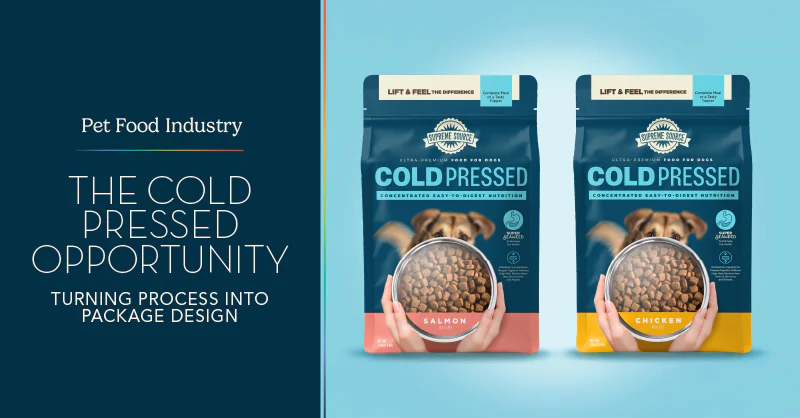
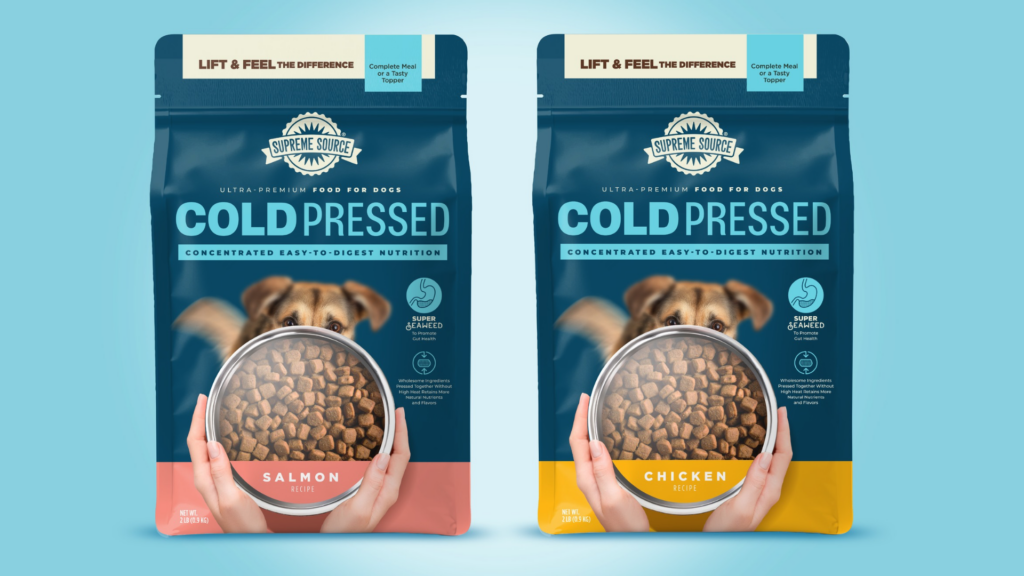
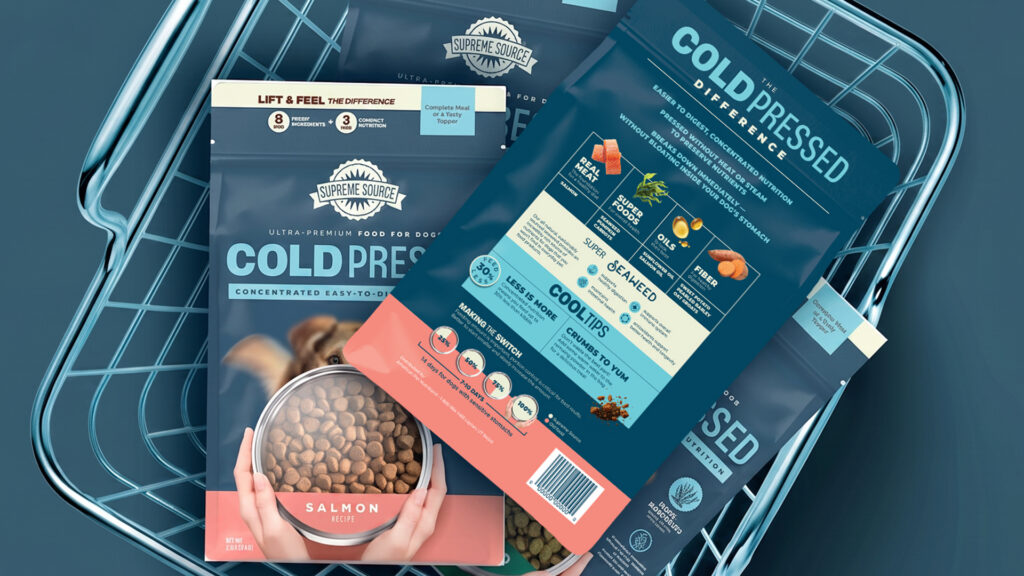
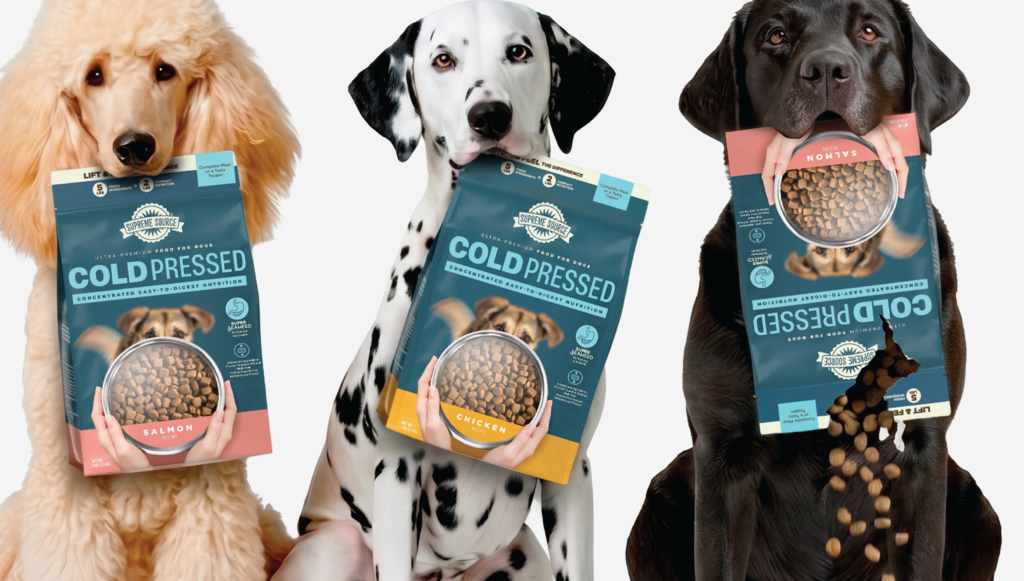
For Supreme Source’s new cold-pressed line, the goal was to make the format instantly understandable in the few seconds a shopper actually spends looking at a shelf. Our team explored multiple directions before landing on an approach that balanced shelf standout with premium credibility and felt distinct within Supreme Source’s existing portfolio. Cold-pressed reads as a confident and intentional choice, rather than a term shoppers have to stop and decode.
In addition, the viewing window became the centerpiece of that strategy, putting the product on display so the food makes its own case. Ingredient callouts, like seaweed and mushrooms for digestive health, are visible enough to inform without cluttering a design built to communicate faster.
Check out our full Supreme Source case study below:
Cold-pressed is still early in its growth, but that won’t last long. As more brands move into the space, shoppers will have more options to compare and less patience for packaging that doesn’t quickly explain what sets one product apart from the next. Right now, a lot of the education still falls on the brand itself, since most consumers don’t yet have a baseline understanding of what cold-pressed means, the way they do with terms like “freeze-dried.”
That gap is an opportunity for brands willing to invest in it, but it won’t stay open forever. As awareness grows and more competitors enter the category, cold-pressed will likely follow the same path as other formats: what once needed a full explanation on pack will eventually become a term shoppers recognize at a glance. The brands that get the story right now, while there’s still room to define what cold-pressed means to a new customer, will have a real head start in how pet parents come to understand and trust the format.
Smith Design helps CPG brands turn complex stories into packaging that makes sense at shelf.
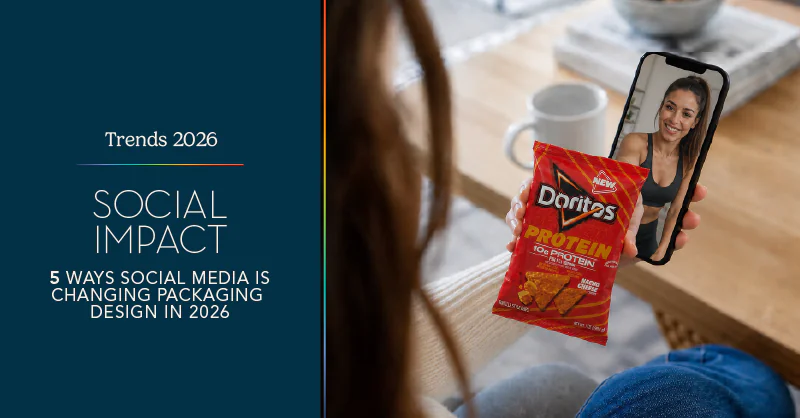
The grocery aisle has always been a battleground for attention. But the battlefield has expanded. Today, a package doesn’t just need to pop off a shelf; it needs to stop a scroll, survive image compression, and be worthy of a 15-second video. Social media has fundamentally changed what “good packaging” means, and brands that understand this are winning. Here are five ways it’s happening.
1. Packing Protein
Protein water. High-protein Doritos. Protein ketchup. A decade ago, these would have sounded like a fever dream. Today, they’re just Tuesday at the grocery store, and fitness influencers on TikTok, Instagram, and YouTube deserve a lot of the credit.
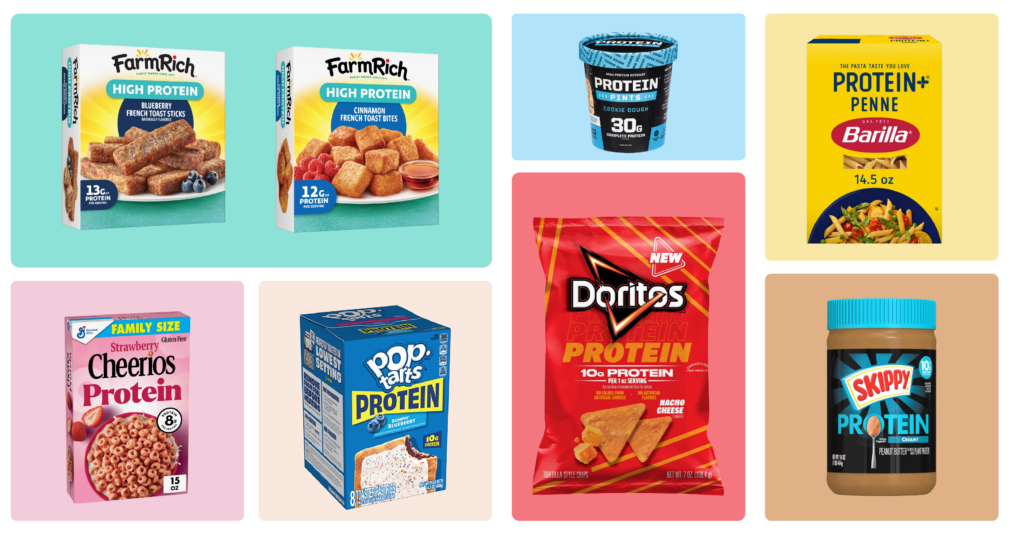
The protein obsession has forced a rethink of packaging strategy across the industry. Some brands are simply moving protein claims from the back panel to the front, turning what used to be a nutritional footnote into the hero of the design. Others are launching entirely new protein-forward SKUs, recasting familiar products as performance foods and reaching new consumer segments in the process. Cereals like Cheerios and even ice cream like Protein Pints have started borrowing the visual language of protein bars and sports drinks, leaning into a performance aesthetic that would have felt out of place five years ago.
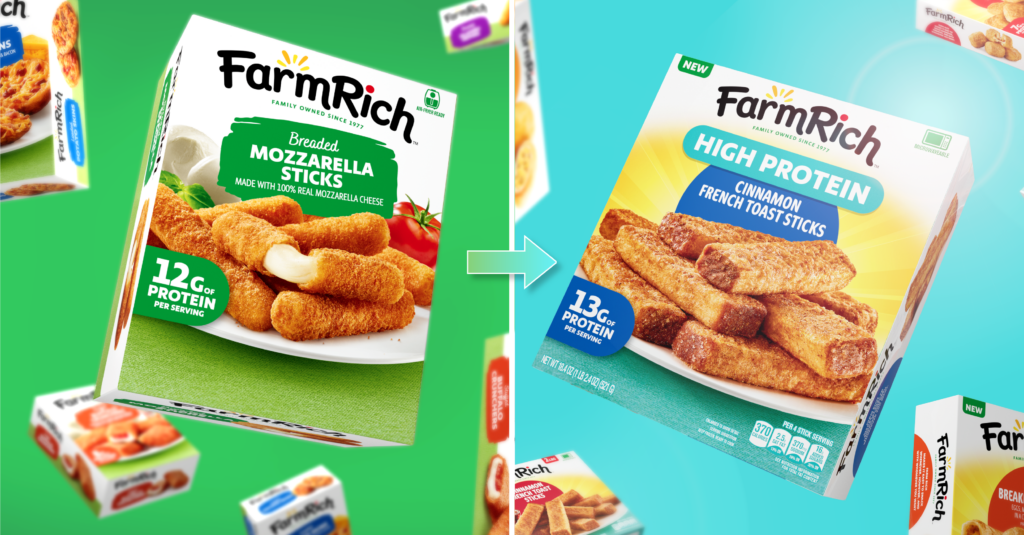
At Smith Design, we’ve helped brands capitalize on this shift, in some cases by simply refreshing brand lineups to highlight the macro nutrient on pack to help consumers get the information they need to reach their protein goals. In other cases, we’ve helped brands go a step further, such as our design of Farm Rich’s high-protein breakfast line of French Toast Sticks.
Trend to watch: Fibermaxxing. With more than 95% of Americans not getting the amount of fiber recommended by the FDA, and a new awareness of the importance of gut health, fiber is getting greater attention on social media. Expect packaging to respond.
2. Collaborations and Limited-Edition Flavor Drops
Social media runs on novelty. Even a brand’s most loyal fans can experience “like fatigue” after seeing the same product photo a thousand times. The solution the industry landed on? Borrow a page from luxury fashion: collaborate, drop, and repeat.
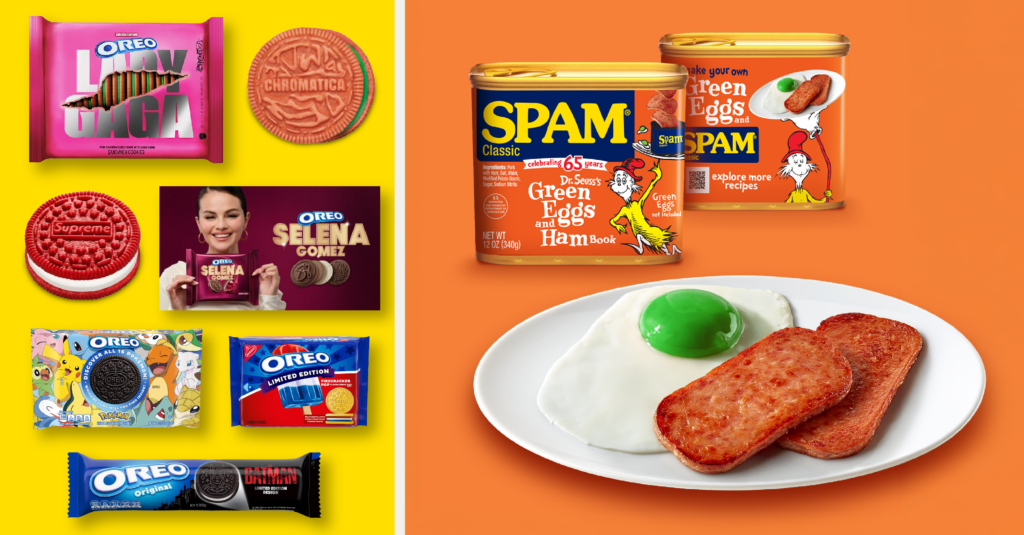
Oreo has become a gold standard. Its collabs have spanned streetwear (Supreme), music (BTS, Lady Gaga’s Chromatica album, Post Malone, Blackpink), gaming (Super Mario Brothers), and beverages (Coca-Cola). Novelty flavors (Candy Corn, Red Velvet, and a Hot Chicken Wing cookie launched in China) keep the brand perpetually buzzy.
Pepsi did it with Peeps (marshmallow-flavored soda, naturally). And then there’s the Crocs x KFC collab: shoes covered in fried chicken imagery that looked like an absurdist art project straight out of Bushwick. Packaging collabs can get incredibly idiosyncratic, funny and personal too, which helps a brand build a personal connection with fans. That was the case when Popsicle collaborated with influencer Jake Shane, who famously loves red Popsicles (but not orange ones) to create a package of All Cherry Jake Shane Popsicles, which racked up millions of views when Shane revealed the packaging.
For packaging designers, collaborations are genuinely exciting; they create space to break from brand guidelines and let two distinct visual voices remix into something neither brand could pull off alone.
Our team has had the opportunity to participate in a lot of fun collaborations and flavor mashups. Last year, we designed Green Eggs and Spam in celebration of the 65th anniversary of the Dr. Seuss classic (and we continue to design all sorts of fun flavors for Spam, and Spam stans online are appreciative!). Popsicle found magic by teaming up with both Disney and Jolly Rancher. The packaging becomes the announcement, the conversation starter, and the collectible all at once.
Trend to watch: Limited-time and seasonal flavors expanding well beyond snacks and chips into categories like condiments, dairy, and beverages.
3. Designing for the 6-Inch Screen
Which came first: bold, flat packaging design or the dominance of user-generated content on social feeds? At this point, it doesn’t matter; they reinforce each other completely.
Winning on shelf used to be the only visual battleground that mattered. Now the 6-inch phone screen is the new storefront, and it plays by different rules. Gradients, beveled type, intricate illustrations, thin serif fonts (sorry, Garamond!) and glossy finishes don’t always survive image compression to 72 ppi very well. A delicate serif typeface that looked refined in print can become illegible as a 200×200 pixel Amazon thumbnail or when it’s being held by a UGC creator for 2 seconds in front of a phone camera. Dainty and detailed simply doesn’t perform on camera.
What does work: fewer words, heavier fonts, bolder colors, higher contrast. If a UGC creator holds your product up for three seconds on TikTok, your design needs to read instantly. Brands like Oatly and Olipop have mastered this: their packaging is flat, bold, and playful enough to function as content on its own.
Some brands go further by specifying matte over gloss finishes so ring lights and camera flashes don’t blow out their type. Others, like Magic Spoon, use maximalist color-blocking to ensure they’re unmistakable even at thumbnail size. The throughline: packaging design is paying attention to how the design works onscreen as well as on shelf.
Trend to watch: Have we hit maximum color-maxxing? Brands like Olly and Magic Spoon have used saturated, high-contrast palettes to dominate visual real estate across both digital and physical retail, but we might be seeing a reaction in the other direction, with some brands (like Huel) maximizing white space while others, like the sardine brand Fishwife, are leaning into patterning while keeping the bold color.
4. Packaging as Performance: The Unboxing Era
Beauty brand Glossier was at the forefront of unboxing on social media; its signature pink bubble-wrap pouches were designed to be shared, and they were. Unboxing videos have since become their own content genre, complete with trending audio, quick cuts, and influencers who turn the ritual of opening a package into a mini-drama worth watching.
Some on-trend brands have taken notice and started designing for the reveal. Liquid Death is a standout example: its shock-value branding and irreverent copy make it feel like merch from a heavy metal band you love. Including actual merch inserts makes customers feel like members of a club, and gives them something to post about. The collector’s edition 11-pack collaboration with Spinal Tap sold for $1,100 each. Yes, that’s 11 cans of water.
The principle extends beyond DTC brands. Lego and Tiffany have both reinvented the advent calendar into a premium unboxing event. Graza, the olive oil brand, built viral moments around its distinctive squeeze-bottle design that made people want to demonstrate it on camera. Layered packaging — nested boxes, interior messages, double-sided printing with a bold callout on the underside — rewards the consumer who opens it and gives influencers something to discover.
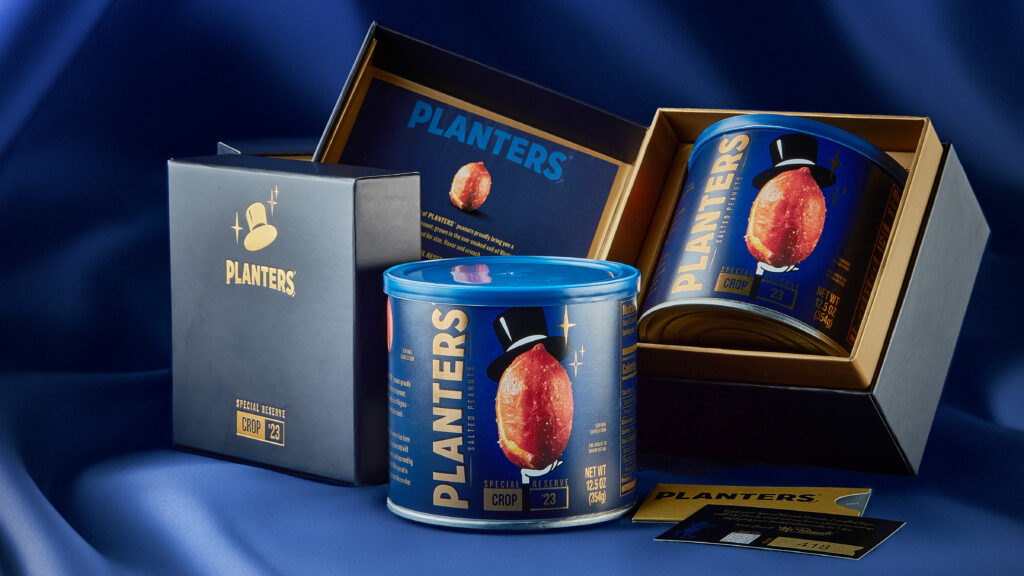
Here at Smith Design, we helped Planters approach this with the limited-edition release of its Special Reserve Peanuts, designing an unboxing experience that felt sensory and elevated, appropriate for a product that deserved to feel special.
Trend to watch: Keepsake packaging: designs worth holding on to (and keeping on a desk or shelf), giving brands perpetual visibility in creators’ backgrounds. Glossier’s pink pouches are reused as travel organizers and get quick recognition even without obvious logos. In Europe, Nutella jars are designed to be turned into drinking glasses and tumblers.
5. The Social Backlash Effect
No honest conversation about social media’s influence on packaging design would be complete without talking about the flip side: the public verdict, delivered instantly and at scale.
Before social media, a brand could roll out a redesign that would sit on store shelves for years before enough consumer complaints filtered through to signal that something was wrong. Today, the feedback loop is measured in hours.
When Cracker Barrel attempted to modernize its logo in 2025, fans took to TikTok and X within days, framing the change as a betrayal of the brand’s nostalgic identity. The company reversed course within a week. Jaguar’s 2025 rebrand generated a different kind of controversy: a polarizing reaction that some argued was a calculated play for visibility, even if the design itself divided opinion.
The lesson most brands have taken from moments like these: move carefully. The risk of getting it wrong publicly (and immediately) has made incremental “refreshes” far more appealing than full rebrands. In an era when consumers feel personal ownership over the brands they love, packaging changes are never just a design decision. They’re a public statement, and the public is always watching.
At Smith Design, we help CPG brands navigate all of this: from trend-driven redesigns to full brand overhauls.
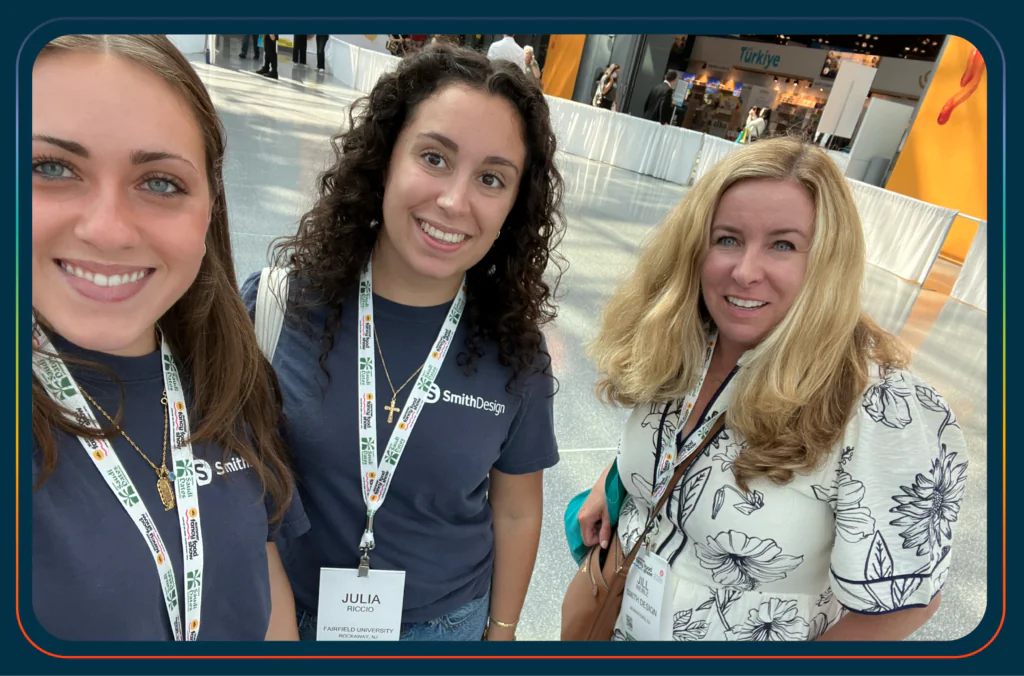
Every year, Smith Design sends a few of their own to SFA’s Summer Fancy Food Show in NYC to observe the hottest new food products of 2026. This year, Smith Design had the pleasure of attending two out of the three days of the food show where we had the opportunity to track the newest trends in food and packaging! This year’s attendees were Jill Weible, Senior Client & Business Growth Development Manager, and two of Smith’s Summer Interns Julia (Marketing Intern) and Miranda (Design Intern). Come along with us and learn what the fanciest foods of 2026 are!
The Future of Functional Foods
It’s no secret that we’ve entered a global health awareness era in recent years, with millions of products providing healthier choices and benefits to consumers. As we walked through nearly 2,500 booths, we noticed an exponential boom in better-for-you food products, many of which included incredible amounts of protein and fiber, solutions to dietary restrictions, as well as ingredient substitutions, which we foresee changing the game of the food industry forever.
Collagen Goes Mainstream
One of the most interesting health trends at this year’s Summer Fancy Food Show was seeing collagen move beyond the supplement aisle and into everyday foods. Once primarily associated with powders and wellness drinks, collagen is now being incorporated into familiar snacks and pantry staples, making it easier than ever for consumers to add it to their daily routines. Instead of asking people to take another supplement, brands are finding creative ways to build collagen into foods they already enjoy.
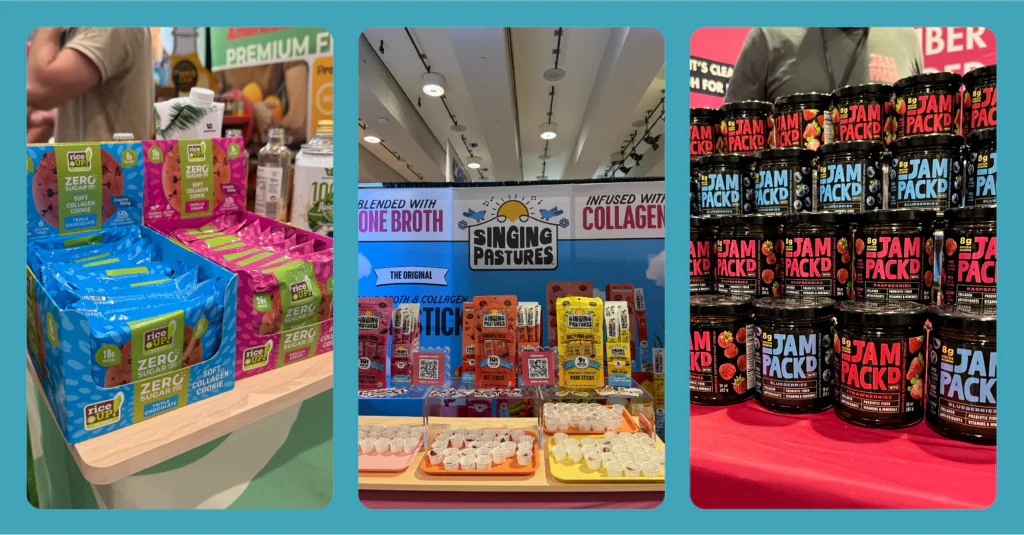
One example was Rice Up, which transformed the trend into a sweet treat with its soft collagen cookies. Each cookie delivers 18 grams of protein and 8 grams of grass-fed collagen while remaining gluten-free, high in fiber, and free of added sugar. Building on the idea that functional ingredients don’t have to sacrifice flavor, Singing Pastures incorporated collagen into its slow-cooked meat sticks by blending them with nutrient-rich bone broth. Made with grass-fed beef and pasture-raised pork, the sticks provide 9–10 grams of protein while emphasizing clean, responsibly sourced ingredients.
The trend didn’t stop at snacks either. Jam Pack’d reimagined a pantry staple by infusing its strawberry, raspberry, and blueberry spreads with collagen, 8 grams of protein, prebiotic fiber, antioxidants, vitamins, and minerals. Marketed as a “complete superfood spread,” the jam contains no added sugar, no artificial ingredients, and low net carbs, proving that even traditional foods are being reinvented with added functional benefits.
Together, these products painted a clear picture of where the industry is headed. Collagen is no longer being marketed as a specialty supplement reserved for smoothies and powders, instead, it’s becoming an everyday ingredient that fits naturally into consumers’ lifestyles. This shift reflects the broader movement toward functional foods that combine convenience, clean ingredients, and wellness, allowing consumers to support their health without changing the way they eat.
The Freeze-Dried Revolution
Another trend that continued to gain momentum at this year’s Summer Fancy Food Show was the evolution of freeze-dried foods. Once known mainly for camping snacks and dried fruit, freeze-drying is now being used across a wide range of food and beverage categories to create products that are convenient, shelf-stable, and full of flavor. Brands are proving that the technology can preserve taste and texture while extending shelf life, opening the door for entirely new product innovations.
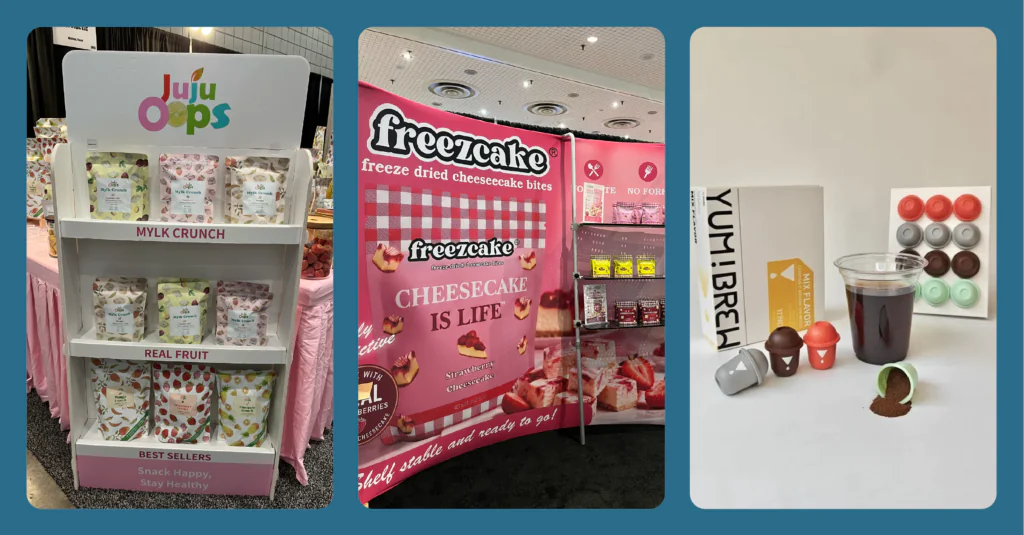
One brand embracing this shift was Juju Oops, which showcased whole freeze-dried fruits, including pineapple, dragon fruit, mango, strawberry, and passionfruit. Instead of cutting the fruit into small pieces, the brand preserves each piece whole, creating a snack that feels more premium while maintaining the fruit’s natural flavor and ingredients.
Brands also extended the concept beyond fruit. FreezeCake demonstrated how freeze-drying can completely transform desserts with its shelf-stable cheesecake bites in flavors like Strawberry, Tiramisu, and Cookies & Cream. By taking a traditionally refrigerated dessert and making it portable without sacrificing its signature taste, the brand showed just how versatile freeze-drying has become.
Even beverages are entering the freeze-dried space. Yumbrew introduced instant freeze-dried coffee made from 100% premium Yunnan Arabica beans that dissolves instantly in either hot or cold water without the need for brewing equipment. Available in flavors like Coconut Latte, Lemonade Americano, Espresso, and Jasmine Americano, the product highlights how freeze-drying is creating greater convenience while maintaining quality and flavor.
Each of these products contributed to a much larger shift in the food industry.Freeze-drying is no longer limited to preserving food; it’s becoming a tool for innovation. Whether it’s whole fruit, indulgent desserts, or premium coffee, brands are using the technology to reimagine familiar products in ways that better fit today’s consumers, who are looking for convenience, portability, and long shelf life without compromising on taste or quality.
The Rise of the Food Accommodation Industry
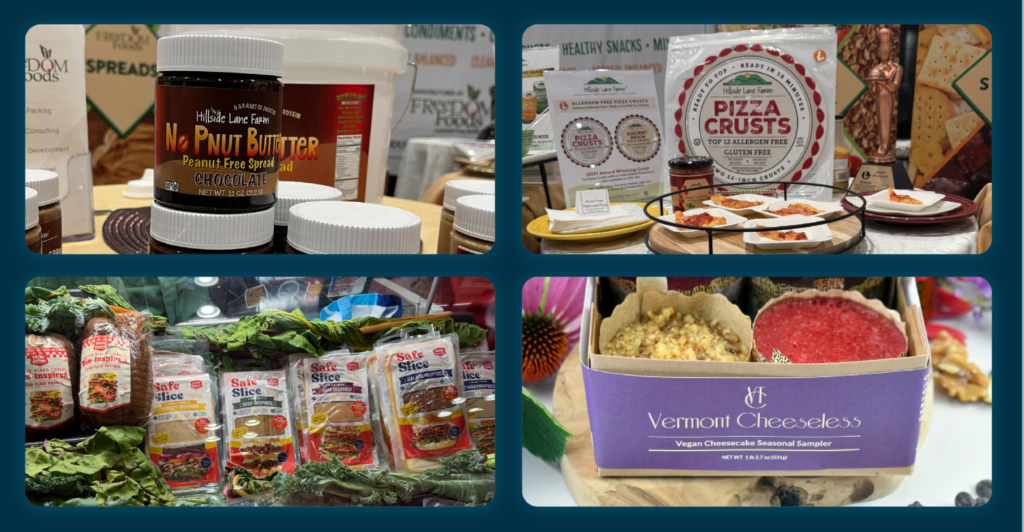
With dietary restrictions remaining a very prevalent issue within the food industry, we’ve witnessed a great amount of products directly targeting food intolerances with simple ingredient swaps. By substituting common allergens with healthier non-irritants, these brands directly target a large demographic of people who struggle to find foods that align with their dietary tolerances. Hillside Lane Farm is a primary example of brands doing food accommodation right. Their No Pnut Butter spread offers a delicious nutty taste and all the same benefits of peanut butter without the risk of an allergic reaction. They go a step further with their gluten-free pizza crusts, which are also free of an additional 12 allergens, including dairy, eggs, nuts, and soy. Their products include a wide variety of gluten-free, peanut-free, and dairy-free products, perfectly fit for a wide range of allergen-susceptible consumers. Similarly, Nikigo, an Asian-style sauce brand, introduces an alternative to the direct product market. It’s a bit of a tongue-twister, but their soyless soy sauce offers a delicious and convincing alternative to soy sauce in flavors such as classic soy, teriyaki, and noodle sauce. With no soy, no gluten, and no sesame, Nikigo battles all three allergens that classic soy sauce consists of, giving those with intolerances a truly delicious and convincing substitute.
Now, the Food Accommodation Industry doesn’t solely target allergens, that’s only one of its many sectors. A large part of this industry is simply about providing customers with healthier options rather than the typical processed products out on store shelves today.
With processed meats being at the top of the world’s most unhealthy foods, Prime Roots took note and supplied the market with Safe Slice: plant-based, meat-inspired deli meat. Crafted from mushrooms, Safe Slice contains no nitrates or celery salt, is GMO-free, and avoids the top nine allergens. They also make an important “Pregnancy safe” callout on their packaging, giving expectant mothers a better-for-you alternative to nitrate-filled deli meats that pose a threat to infant development and birth. Not only are they contributing to rectifying the health detriments of highly processed deli meats, but they are also giving pregnant women an outlet for their deli meat cravings, without the risk.
Ending on a sweeter note, the product that stole the whole show also happened to be a part of the Food Accommodation Industry and that was Vermont Cheeseless’ plant-based and cheeseless cheesecake. Made from a blend of tofu and raw cashews, the cheesecake was exceptionally creamy and flavorful, delivering all the indulgence of traditional cheesecake in a better-for-you dessert. They may have taken the cheese out of cheesecake and replaced it with natural ingredients, but you truly would never know!
Honey, Honey
Looking back on our time at the Fancy Food Show, there was one food in particular that seemed to follow us along every turn we took. We should’ve known right away by the sweet trail of liquid gold running across the floors, but it was the honey industry that seemed to pop up with new and innovative products.
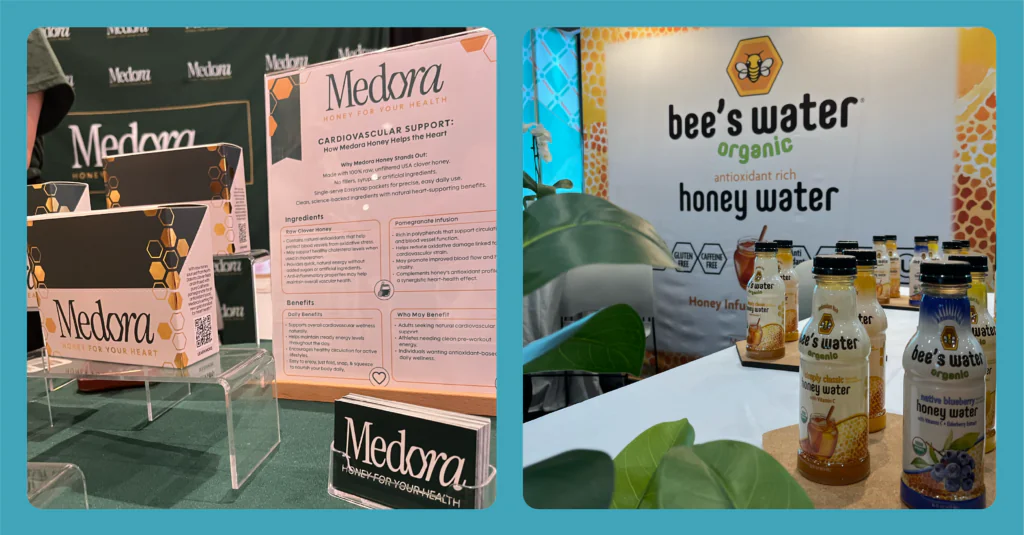
It’s no secret that honey is a major power food filled with tons of health benefits, so that’s why Medora decided to highlight its advantages with its snappable honey pouches. Made with 100% raw, unfiltered clover honey, Medora focuses on cardiovascular health and creating a honey product that is good for the heart. Preportioned and perfect for daily use, their product contains natural antioxidants that protect blood vessels from oxidative stress, as well as provide cardiovascular support due to its infusion of pomegranate. Turning nature’s sweetener into nature’s medicine, this brand invites a whole new perspective on the perks of honey and turns it into its own functional health product.
Similar to the benefits it provides, the list of forms that honey can take is extensive. Brands today are curating new ways to do honey differently, and that’s where Bee Water’s Organic Honey Water comes to play. Rich in antioxidants and Vitamin C, this new beverage offers a refreshing alternative to sugary sports drinks or sodas. With honey providing a concentrated source of natural carbohydrates, Honey Water offers a quick boost of natural energy that is unlike any of the current energy and sports drinks out on the market today. We foresee Honey Water becoming the next leading product in the realm of natural energy beverages in the coming years.
The Brighter & Bolder, the Better
Smith Design is first and foremost a package design agency, so we obviously needed to include our impressions of the package design showcased at FFS. We noticed one genre of design that immediately caught our eyes and begged for attention and that was the packaging that included bright, vibrant palette combinations, paired with big, bold, and organic typography. An additional motif we noticed amongst this genre was the inclusion of illustrations and brand mascots. Pairing each aspect together: color, typography, and illustration, it’s safe to say that these brands had the utmost of personality at the show.
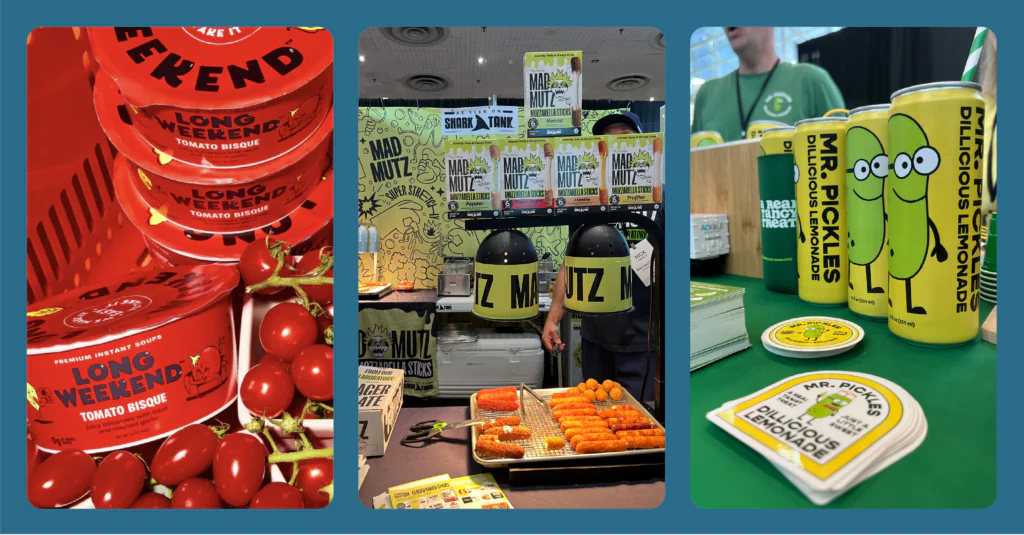
Take a look at Long Weekend – Premium Instant Soups: Each flavor has its own family of illustrated ingredients, each doing a variety of everyday activities. This brand comes to life by simply escaping the ordinary world of packaged soups, encouraging customers to interact and be immersed in the whole experience of eating their soups. Simply by having a calm, cool, and collected personality, it encourages their customers to feel just this same way, making the action of eating that much more experiential. In talking about experiential brands, Mad Mutz is a must! It was one brand that we saw at a distance and had no choice but to get a closer look due to its unique and personality-driven brand identity. With the theme of the brand surrounding a laboratory of all things, it welcomes a world of chaos, silliness, and a little bit of grunge. Their brand identity immediately came to life and shouted right in our faces, ensuring we would never forget them and their delicious mozzarella sticks!
We simply could never forget about Mr. Pickle’s Dillicious Lemonade! Although simpler in design, it packs in just as much personality as the previously mentioned products, all due to its adorable pickle mascot, Mr. Pickles. The unconventional concept of the beverage surely helps in grabbing customers’ attention, but it’s the look and feel of the product that ultimately remains in our minds. So if you’re a fan of unconventional, personality-driven beverages, give Mr. Pickle’s Dillicious Lemonade a try!
Who Doesn’t Love a Little Shine?
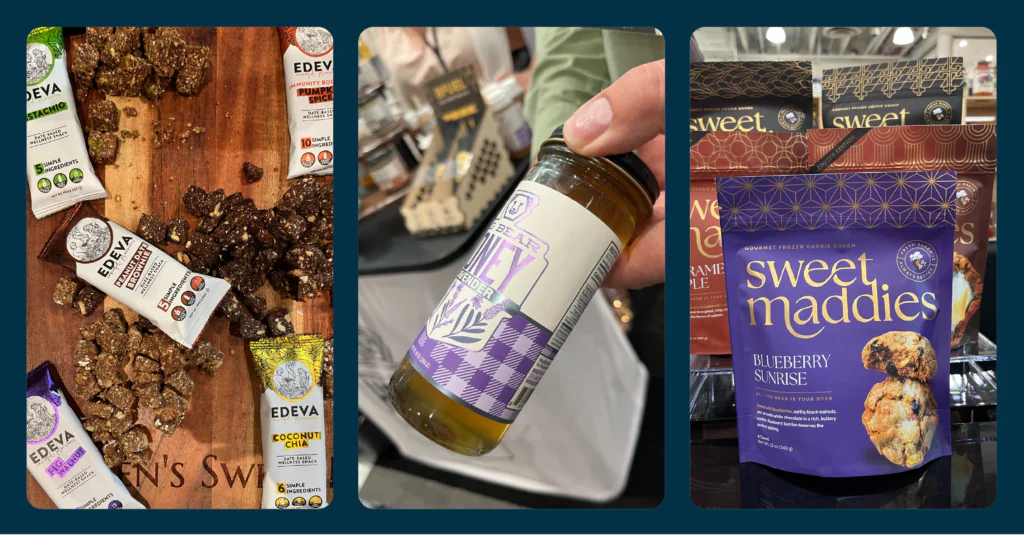
There was a common theme in design that we found pretty difficult to ignore, especially when the light hit it just right. The presence of metallic foil was seen a handful of times across multiple food categories giving every product a subtle but impactful differentiator from their prospective competitors. Just take a look at Edeva, Big Bear Honey, and Sweet Maddie’s and how the light simply illuminates their whole look!
Authenticity Sells
While innovative products and eye-catching packaging initially drew us into many booths, it was the people behind the brands who left the biggest impression. One of the most rewarding parts of attending the Summer Fancy Food Show was having the opportunity to speak directly with founders, family members, and brand representatives, who proudly shared the stories behind their companies. Hearing these histories firsthand made each product feel far more meaningful and demonstrated how powerful authentic storytelling can be in building lasting connections with consumers.
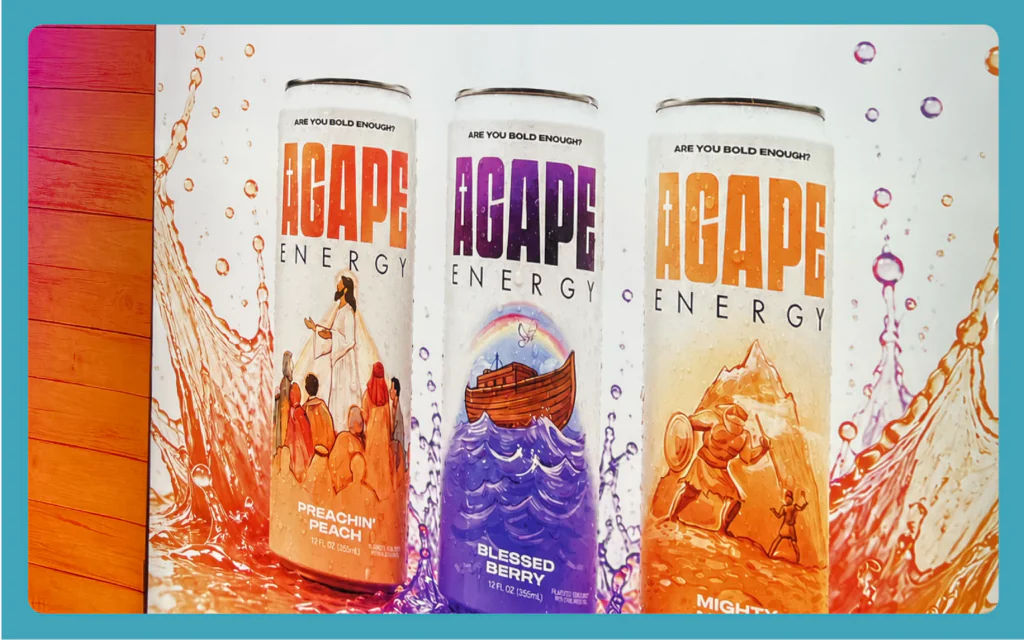
One brand that embodied this approach was Agape Energy. As we spoke with the team, it became clear that they weren’t simply selling an energy drink, they were sharing a mission. Centered around their “316 Mission,” every can is designed to inspire faith and spark conversations through scripture, giving consumers something much bigger than a caffeine boost. Their passion for the brand was evident, making their purpose feel genuine rather than just another marketing message.
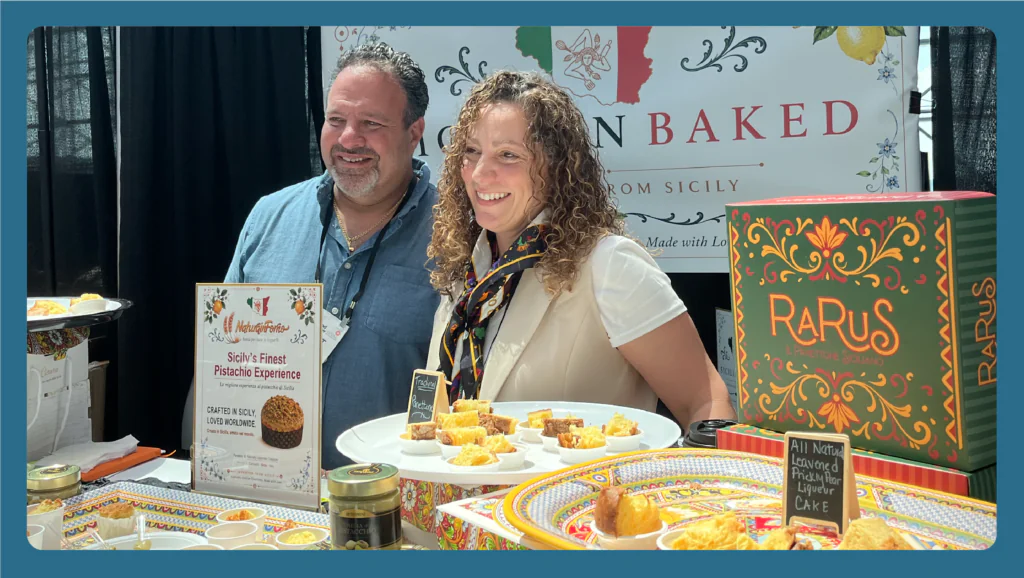
That same sense of passion was especially evident at Sicilian Baked. The family behind the brand welcomed us into their booth and shared the story of bringing authentic Sicilian tradition to the United States through their artisanal panettones. Their elegant packaging immediately reflected the premium quality of the product, but it was after tasting it that everything came together. The panettone was incredibly soft, rich, and flavorful, making it one of the most memorable products we sampled at the show. The combination of exceptional quality, beautiful packaging, and the family’s genuine passion for their craft made Sicilian Baked one of the most memorable brands of all.
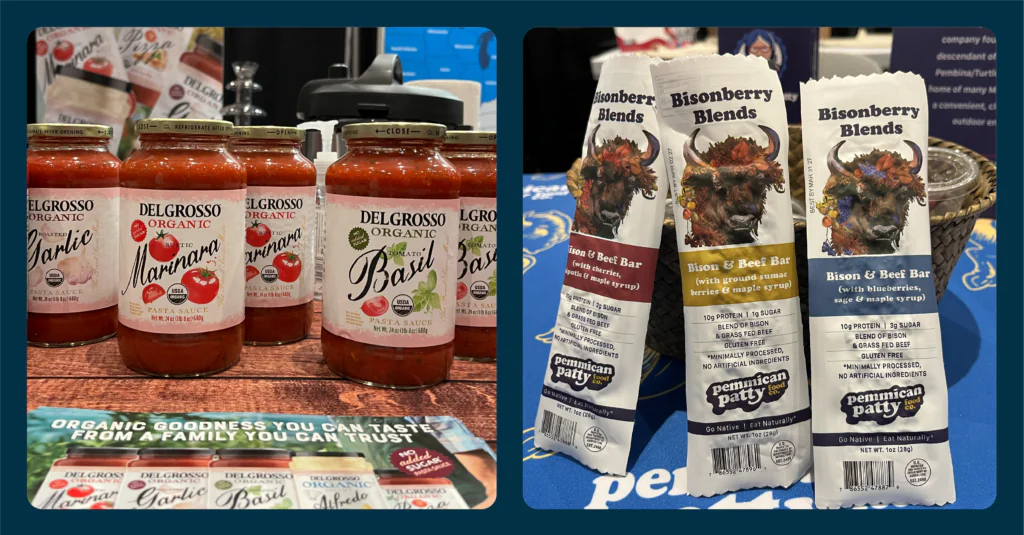
Continuing that theme of family legacy, DelGrosso Foods shared the remarkable history behind America’s oldest family-owned pasta sauce company. As we spoke with the team, it was evident that family remains at the heart of the business. The cousins working the booth proudly shared stories of their family’s history, creating an authentic connection that made the brand even more memorable. Their pride in carrying on the family’s recipes and values was reflected not only in their products but also in the way they welcomed and connected with attendees. It was a reminder that some of the strongest brands are built on genuine family traditions that continue to thrive generation after generation.
Even newer brands recognized the importance of sharing their story. Pemmican Patty Food Co.‘s Bisonberry Blends introduced us to its philosophy of “Go Native, Eat Naturally,” explaining how the brand is inspired by simple, minimally processed ingredients and traditional sources of protein. Their vision is to bring pemmican into the modern day by reimagining the age-old recipe with clean, natural ingredients while preserving its history for future generations. “Rooted in the past, yet tailored for the present”, Pemmican Patty Foods shares the legacy of their ancestors and vibrant culture with consumers, ultimately passing on the story of the Chippewa and Metis people. By taking the time to explain the purpose behind their products, they gave us a deeper appreciation for both the brand and its mission.
Across the show these experiences demonstrated that the strongest brands are built on more than just great products. Authentic storytelling, thoughtful design, memorable packaging, and genuine personal connections all worked together to create brands that stood out in a crowded show floor. When a compelling story is paired with a quality product and a memorable experience, it creates a connection that consumers are far more likely to remember.
Booths That Built Buzz
Despite strong branding and compelling stories being a confounding factor to what draws in customers to a brand, we found that it was the brands that created a full-on experience that stuck in our minds most. Rather than relying solely on product samples or traditional displays, exhibitors transformed their booths into interactive destinations that encouraged attendees to stop, participate, and share the experience with others. In a show filled with nearly 2,500 exhibitors, creating a memorable moment proved to be just as important as creating a memorable product.
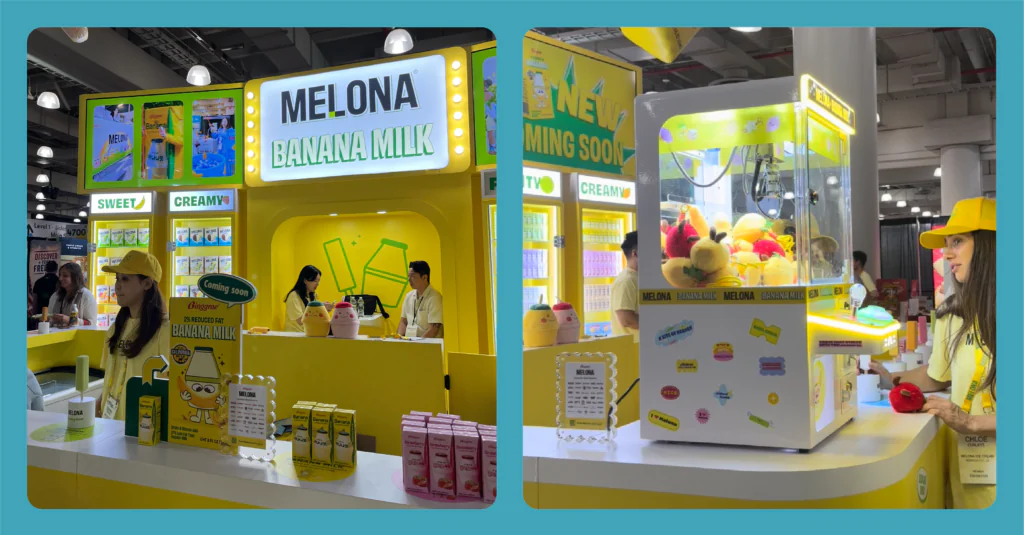
One of the best examples was Melona, whose booth remained busy throughout the day. The vibrant space featured a claw machine filled with prizes and a shopping cart overflowing with its new Banana Flavored Milk. The interactive setup encouraged visitors to engage with the brand rather than simply walk past it, and before long, attendees could be seen throughout the show carrying Melona ice cream bars. That visibility turned visitors into walking advertisements, naturally generating curiosity and drawing even more people to the booth. Combined with Melona’s reputation as America’s best-selling Korean ice cream, the experience reinforced how interactive marketing can strengthen brand recognition long after someone leaves the booth.
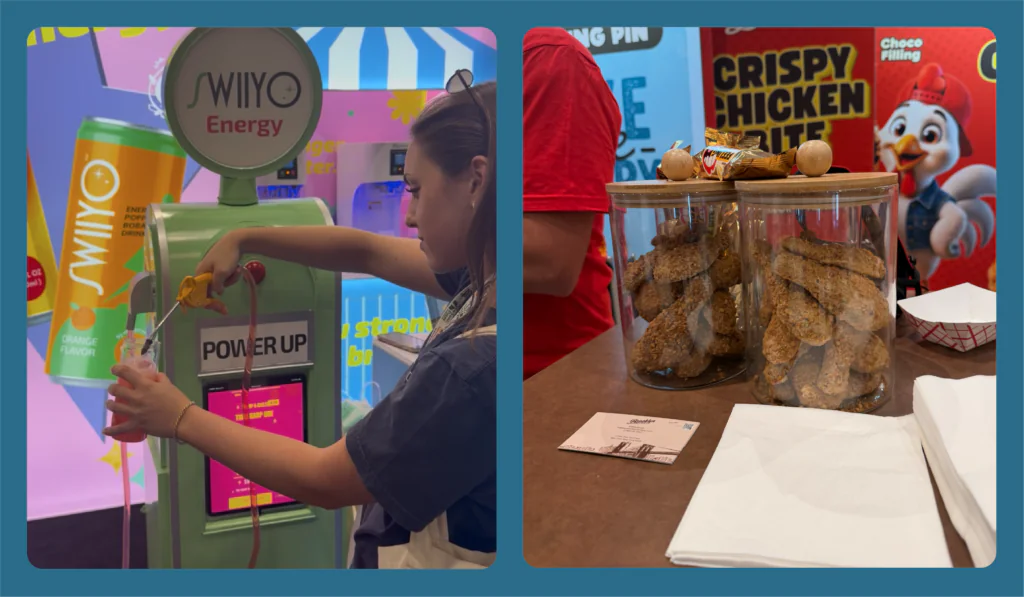
While Melona focused on interactive activities, Brooklyn Bites and Original Gourmet captured attention through surprise and entertainment. Instead of relying on a traditional sampling station, the team created a lively atmosphere around the launch of its viral Crispy Chicken Chocolate Bite. Vendors enthusiastically shouted, “It’s not chicken, it’s chocolate!” as attendees gathered to see what all the excitement was about. The playful surprise of discovering that a realistic-looking fried chicken tender was actually chocolate sparked laughter, conversations, and plenty of photos. It was a simple concept, but one that demonstrated how curiosity and entertainment can become powerful marketing tools.
Swiiyo took experiential marketing in an entirely different direction. Originally rooted in professional boba craftsmanship, the brand has expanded into functional beverages focused on clean energy and beauty. Its booth featured a bright gas station-inspired setup where visitors could “fuel up” their drinks at a life-sized pump as part of the brand’s Power Up Energy Station. Paired with trendy clear cans that showcased the colorful beverages inside, the entire experience reinforced the idea of giving your body clean energy in a fun and memorable way. Rather than simply explaining the product’s benefits, Swiiyo brought its brand message to life through an interactive experience that attendees were eager to participate in.
A common thread among these brands was that successful marketing extends far beyond the product itself. Interactive experiences, thoughtful branding, and creative displays captured attention, encouraged conversation, and gave attendees something worth remembering and sharing. In today’s crowded marketplace, creating an emotional connection through experience can be just as valuable as the product on the shelf, turning a simple booth visit into a lasting impression.
Our Lasting Impression
Attending the 2026 Summer Fancy Food Show was an incredible learning experience and gave us valuable insight into where the food and branding industries are headed. From the rise of functional foods like collagen-infused products and ingredient alternatives to eye-catching packaging, authentic brand storytelling, and interactive booth experiences, it was clear that today’s consumers are looking for products that offer both purpose and personality. Events like the Summer Fancy Food Show continue to inspire Smith Design by keeping the team up to date on emerging trends, helping spark new creative ideas, and strengthening relationships within the food industry. As interns, we had the opportunity to meet people from all over the world, discover innovative products, make meaningful connections, and gain a better understanding of how branding influences the way consumers experience food. We left the show feeling inspired, excited to apply what we learned, and grateful to have been part of such an unforgettable experience.
As summer arrives, we’re all feeling a little more patriotic. America’s 250th celebration is a full-scale cultural moment, and everyone from fashion designers and retail stores to consumer product goods companies are asking the same question: how do we show up for this?
Fashion & Apparel
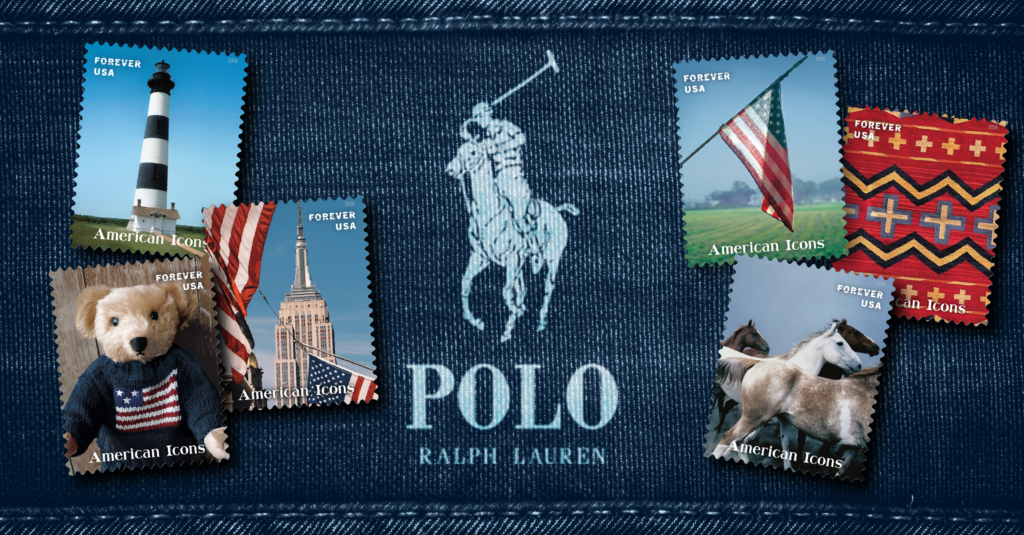
Ralph Lauren, a brand that has built its identity around a certain vision of American style, is here for it. The U.S. Postal Service tapped the label to design a set of commemorative stamps featuring 13 iconic “American” designs that are out now. Clothing brands across the spectrum, from lifestyle labels to military-inspired Grunt Style, are dropping America250 collections spanning tees, hats, and swim gear. Patriotic dressing has never had more options.
Collectibles & Currency
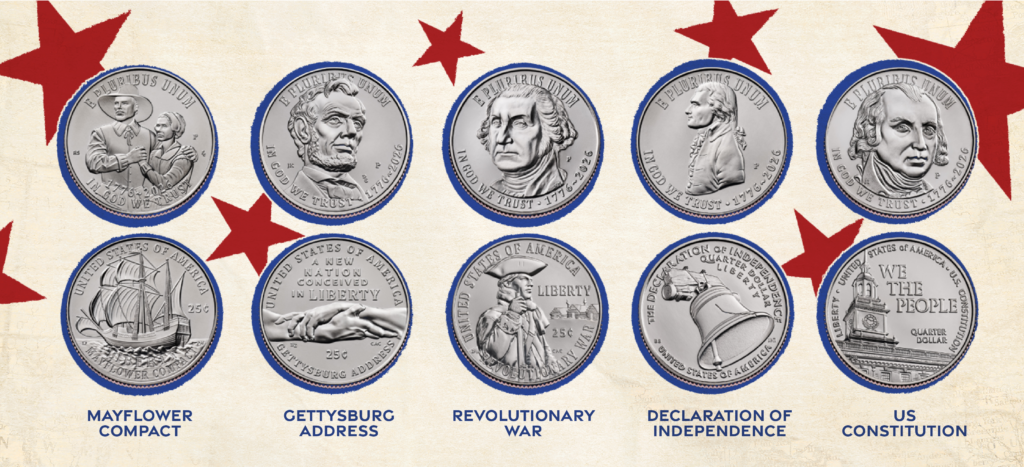
The U.S. Mint redesigned the dime, quarter, and nickel for 2026, each carrying special imagery and the dual dates “1776 ∽ 2026.” Five different quarter designs roll out throughout the year, a slow drip of celebration that keeps the anniversary top of mind well past July 4th. Making literal money a collectible.
Home, Gifts & Novelties
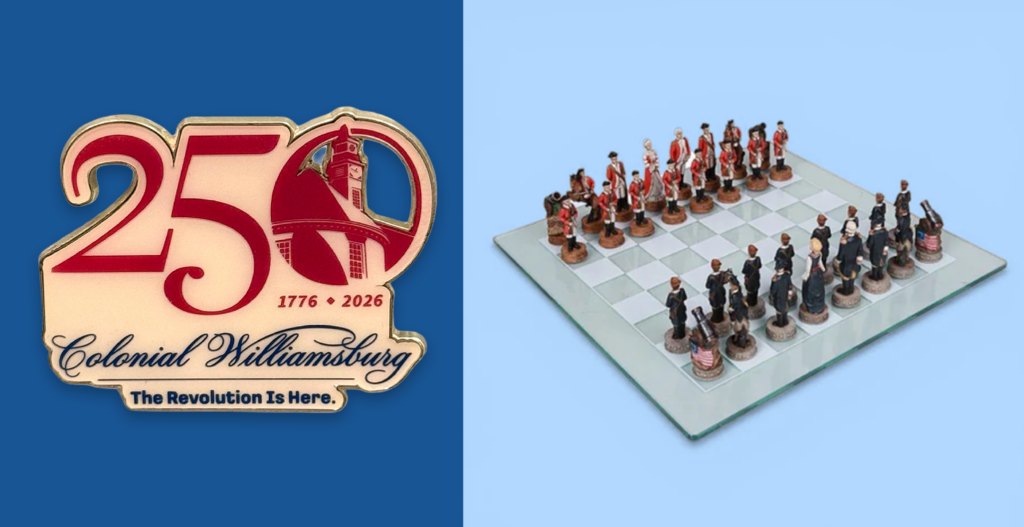
This category is leaning hard into craft and heritage. Colonial Williamsburg launched an exclusive collectibles line marking both the national anniversary and their own centennial year. Mount Vernon is selling a George Washington vs. the Redcoats chess set. Handmade figurines, embroidered clothing, and illustrated books reimagining American fables are also available.
Food & Grocery Got the Memo
Packaging is the only marketing channel that travels home with the consumer, sits on the counter, ends up in recycling bins – and still makes it on someone’s TikTok or Instagram post.
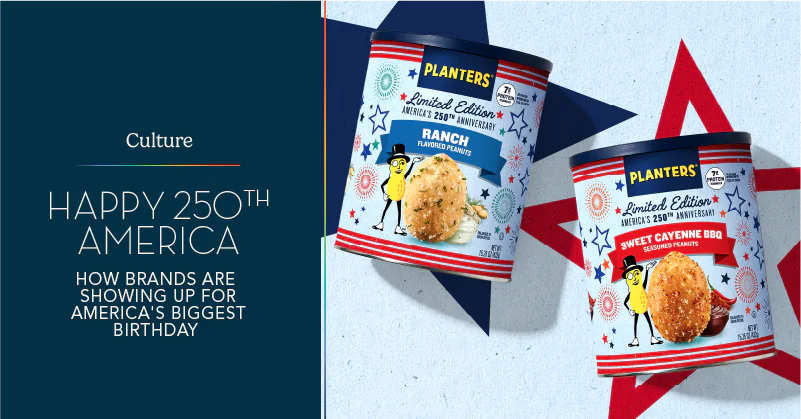
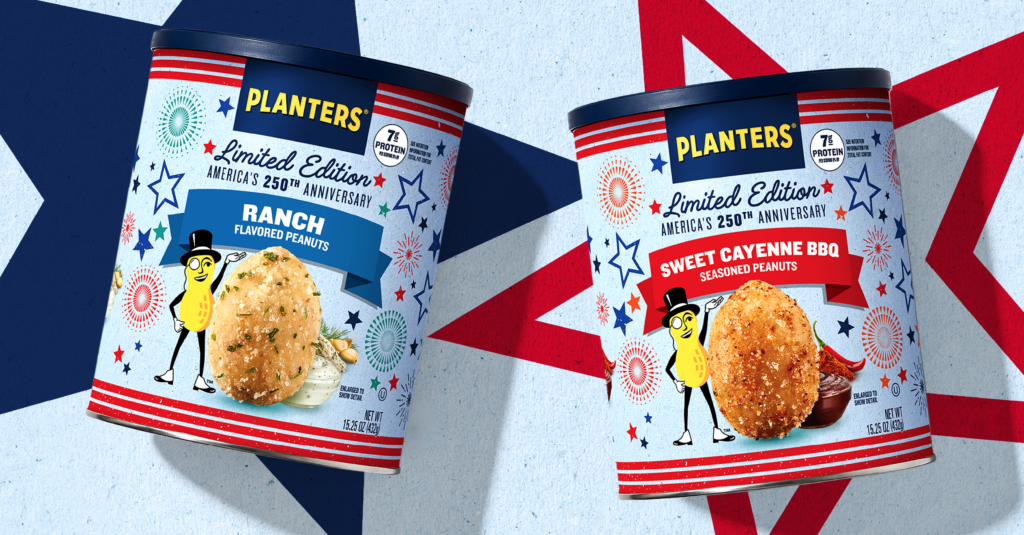
We may be a little biased (Smith Design had the pleasure of designing them), but the Planters limited-edition America’s 250th Anniversary tins nailed it. Mr. Peanut is front and center, showcasing a heroic peanut. The red, white, and blue palette and imagery feel celebratory, a little whimsical, without going generic. Stars, fireworks, and the “Limited Edition” badge do the heavy lifting on occasion, while the can’s iconic format keeps its brand equity intact.
From pocket change to postage stamps to Limited-Edition packages, America250 is showing up across every category and price point. The brands doing it best share one thing: a clear point of view, expressed through the lens of the occasion, not buried under it.
Can’t wait to see how this celebration inspires future LTOs, collaborations, and executions to come. 🇺🇸
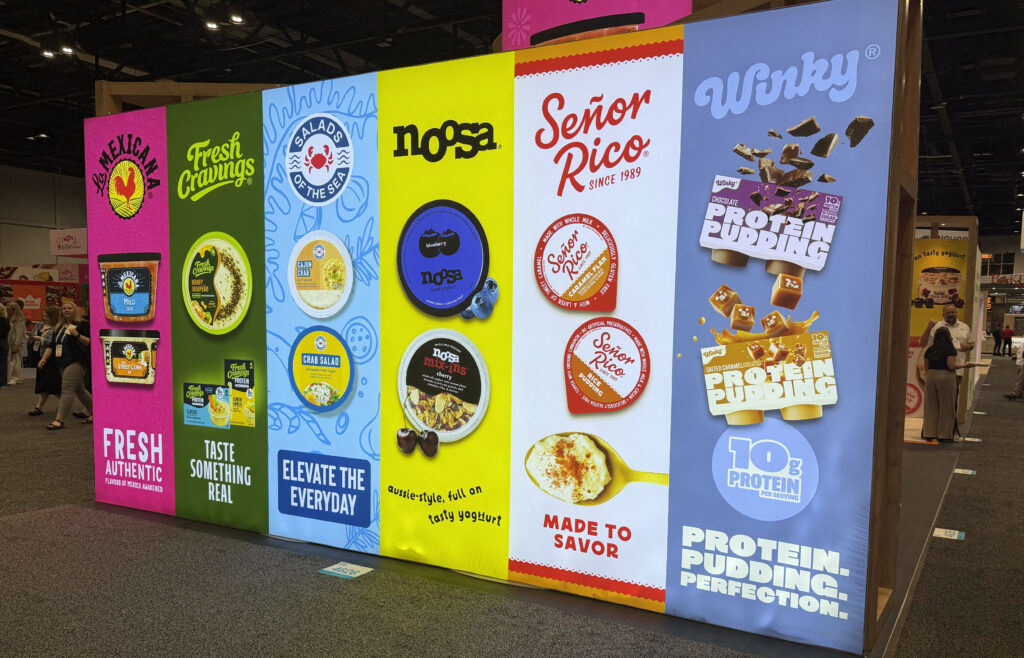
Orlando’s Orange County Convention Center hosted more than 10,000 industry professionals and 1,000-plus exhibitors at IDDBA 2026 this June, and if there was a single through-line across the dairy, deli, and bakery floor, it was this: protein, permissibility, and packaging that does more than hold food. The annual “From Brie to Brioche” trends presentation from 210 Analytics set the table: sustained inflation reshaping (not killing) perimeter sales, a demographic shift toward Gen Z and millennials, and a redefinition of health that now stretches from functional benefits all the way to unapologetic indulgence.
Here’s what caught our attention, from the ingredient innovations driving new formulations to the products on shelves and the packaging designs that bring it all together.
Meal Solutions and the “Mental Load of the Menu”
One of the most resonant ideas from the show came from a shopper quoted in the trends session describing the daily grind of feeding a family: “the mental load of the menu.” That phrase essentially became the strategic brief for the prepared-foods category, and several exhibitors answered it directly.
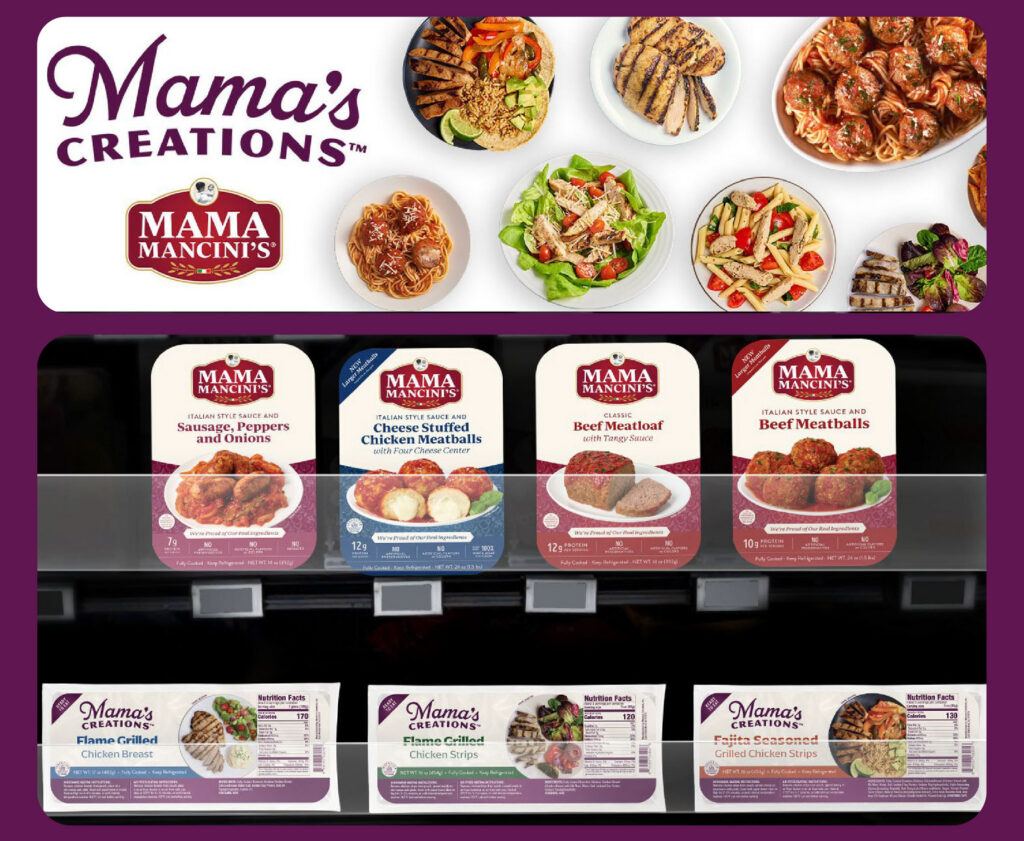
Mama’s Creations leaned hard into flexibility, showcasing new protein formats and globally inspired menu solutions built to support execution across multiple prepared-foods occasions, including hot bar, grab-and-go, and center-of-plate. Boosted by its recent Crown 1 acquisition, the lineup featured an upgraded “No Antibiotics Ever” chicken program (grilled, pulled, and breaded) alongside globally influenced items such as Korean BBQ-style meals and Mediterranean recipes. As CMO Lauren Sella put it, the innovations are “about expanding what our partners can execute, not just what they can carry.” Their pitch of “more variety with less complexity,” including serving-for-one formats alongside family-scale solutions, captured exactly where the deli-prepared category is heading as it cements itself as a genuine restaurant alternative. Deli-prepared has pushed past $31 billion, and the momentum skews young: a third of Gen Z shoppers are buying it more often than a year ago.
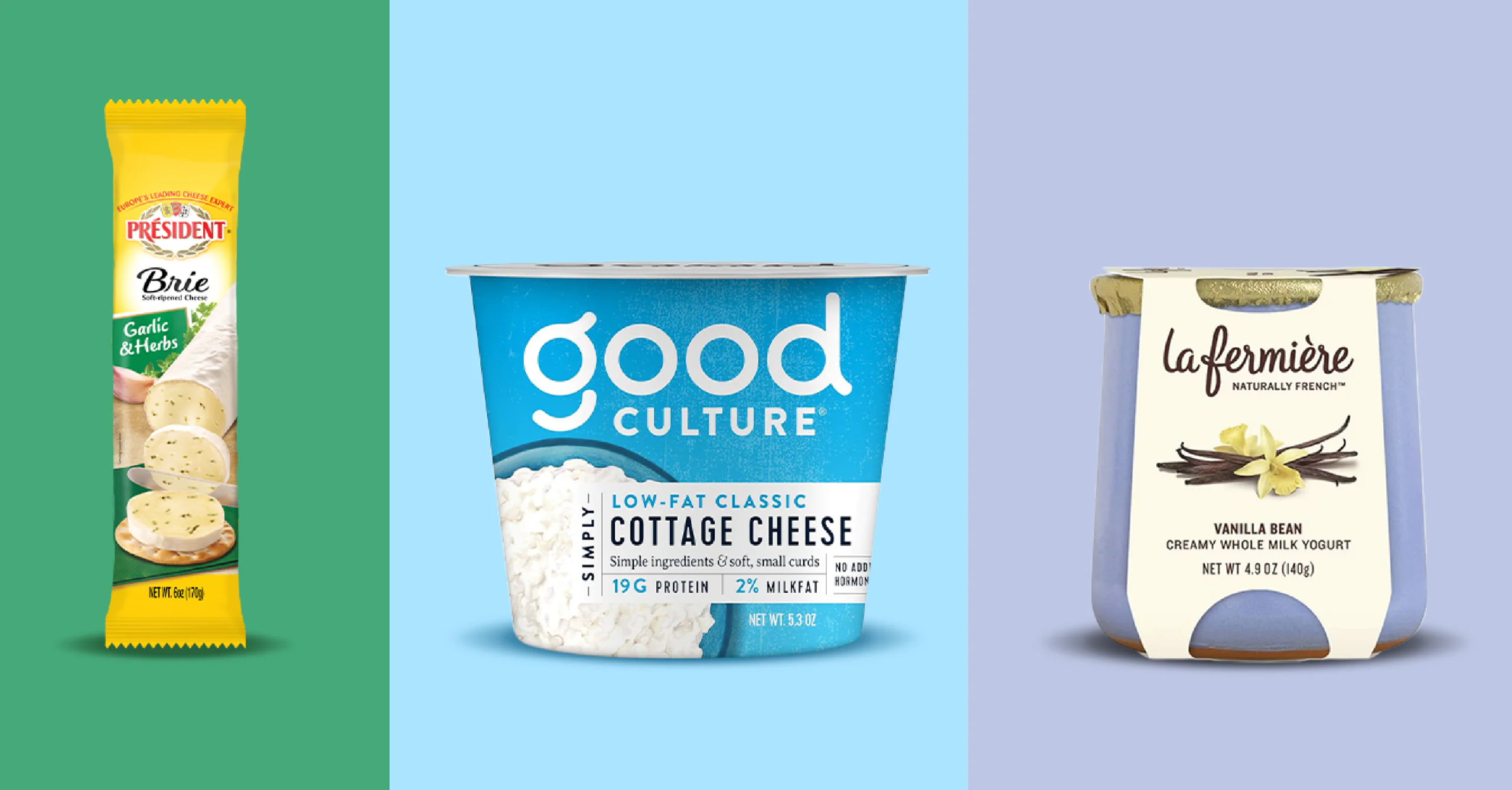
Reser’s leaned into the popularity of “cottage cheese” with its new High Protein Salads made with cottage cheese, translating a social-media-driven idea into a refrigerated perimeter solution. As shoppers look for familiar, protein-dense ingredients that feel both wholesome and versatile, cottage cheese is moving from retro diet food to a modern protein base, and brands are beginning to build full meal solutions around it.
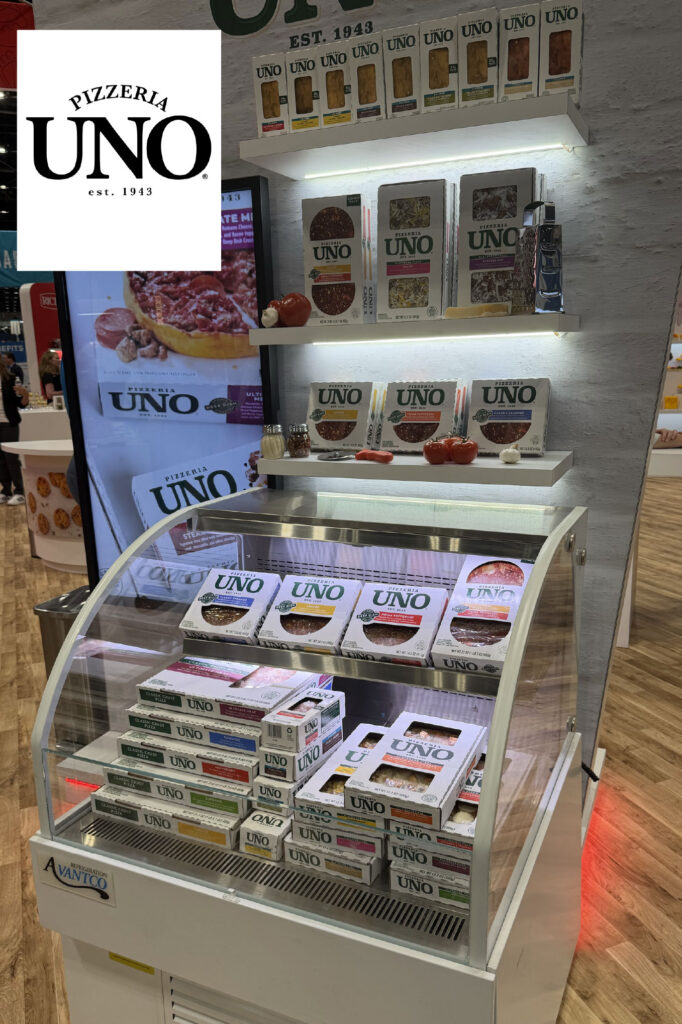
Rich Products built one of the more memorable booth experiences of the show, with continuous live demonstrations and sampling across seven stations. The substantive news, though, was reformulation: new Bettercreme and Buttrcreme icings containing no colors from artificial sources. A meaningful move given that roughly 30% of shoppers now say removing artificial colors is extremely important to them. Rich’s also debuted its newly acquired Pizzeria Uno brand at the show for the first time.
Rise Baking Company rounded out the in-store bakery story, spotlighting clean-label innovations, labor-saving solutions, and trend-forward decorating designed to drive impulse purchases while simplifying execution for understaffed bakery departments. The labor-saving angle is increasingly the quiet differentiator; retailers want indulgence that doesn’t require a full scratch-bakery team to deliver.
The Egg Takes Over: From Wraps to Pasta to Bread
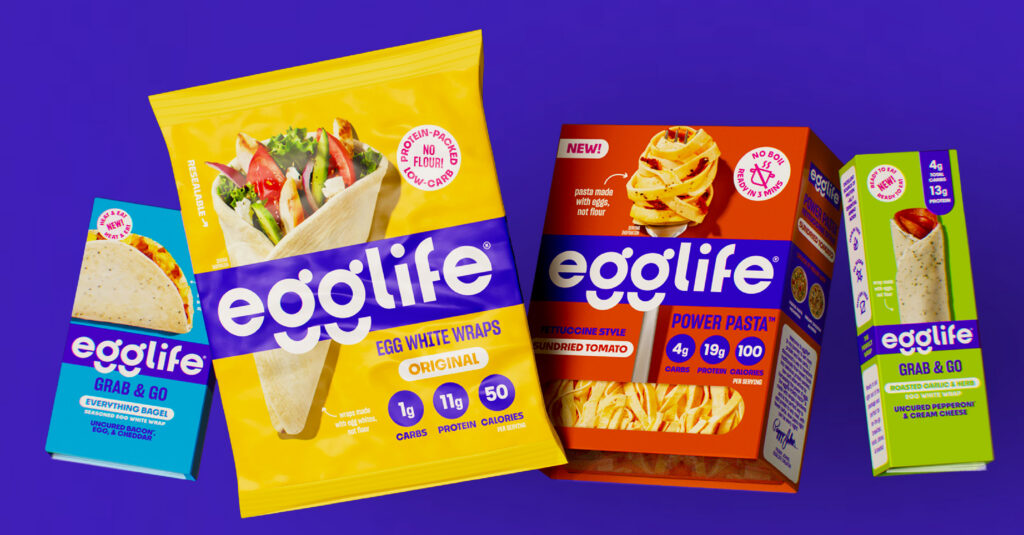
Egglife made the strongest case for where the category is headed. After building a loyal base on its flour-free egg white wraps, the brand has expanded into two new territories: Power Pasta, a first-of-its-kind refrigerated fresh pasta made with eggs instead of flour, and Grab & Go single-serve snacks built from its signature wraps and filled with premium meats and cheeses, delivering 13–16g of protein per pack. The move from a single hero SKU into pasta and convenient snacking is a textbook example of an egg-first brand stretching across the store.
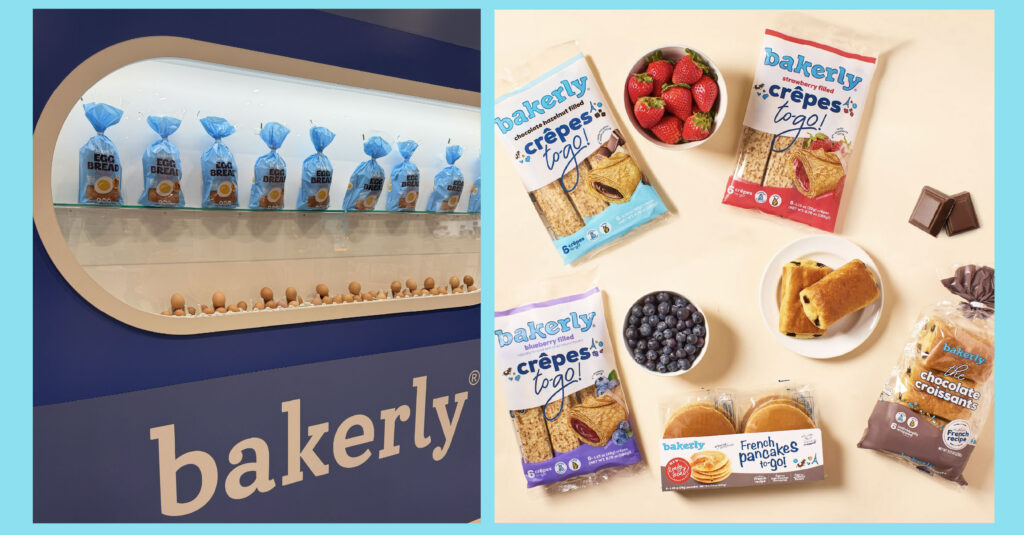
Bakerly brought eggs into the bread and breakfast aisle, with egg-forward breads and pastries that fold high-quality eggs into the formulation for both richness and protein, a reminder that “egg-based everything” now spans breads, pastas, and beyond.
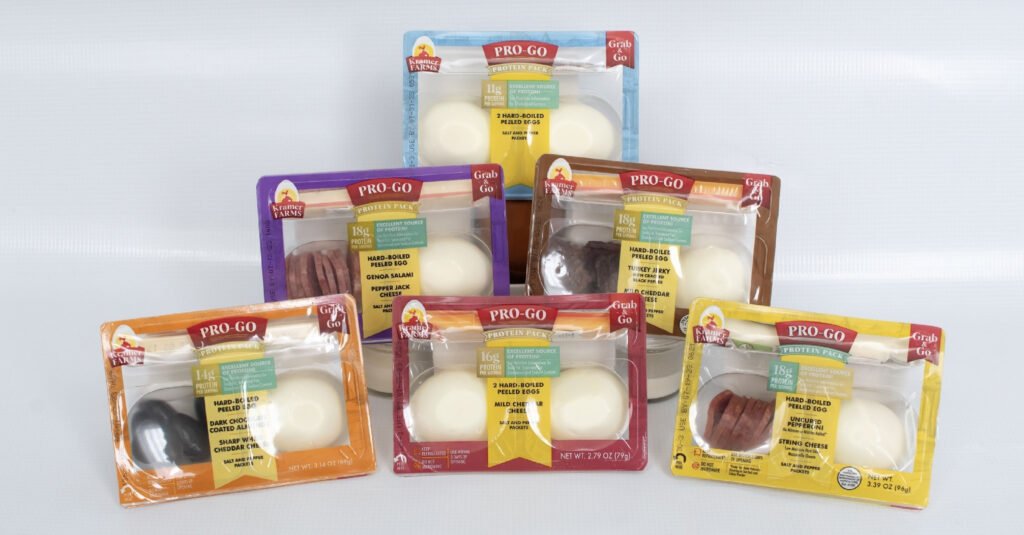
And eggs showed up as a protein booster inside other formats too. Kramer Farms Pro Go Protein Packs added an egg to the familiar meat-and-cheese snack tray, pushing the protein count higher than the meat and cheese could deliver alone, a small but telling sign that the egg has become the go-to lever when a brand wants to put a bigger protein number on the front of pack.
Quail Eggs Elevating Any Dish
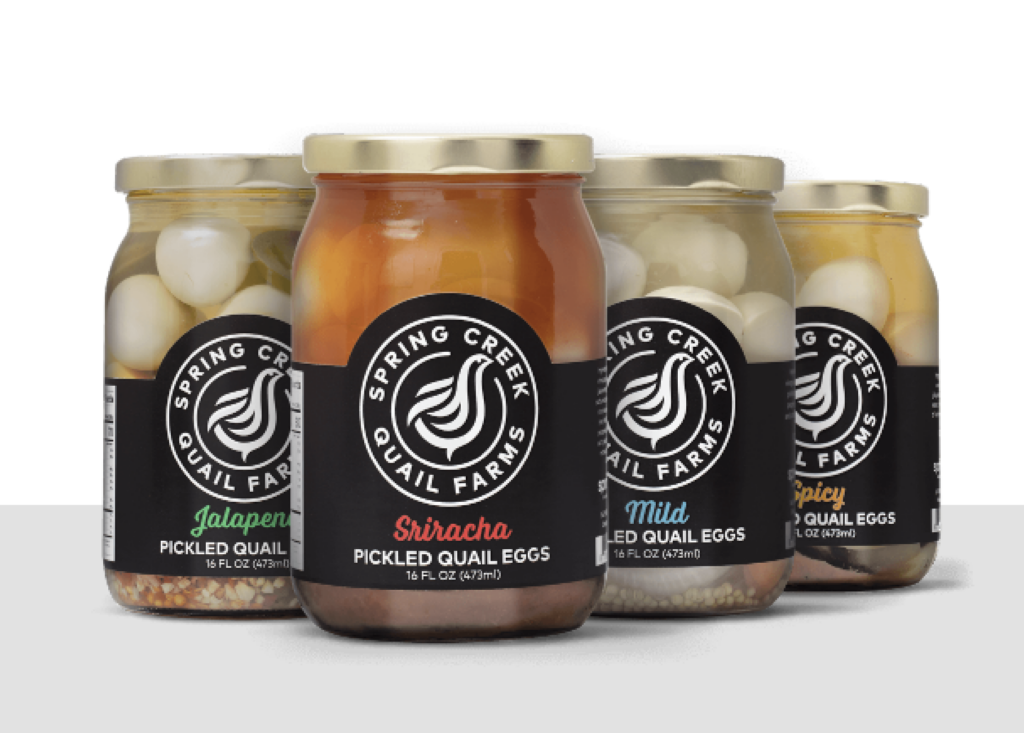
Perhaps the most interesting egg story was the smallest one. Quail eggs appeared in both raw and pickled forms, with brands like Spring Creek and Manchester Farms bringing the once-specialty item into broader distribution. As an added-protein novelty with built-in visual appeal, quail eggs hit several trends at once, protein density, snackable format, and the kind of discovery-driven “try something new” energy that younger shoppers reward.
Seafood Moves into the Refrigerated Convenience Set
A genuinely new shelf story this year: ready-to-eat seafood crossing over into refrigerated convenience. Historically anchored in the frozen and full-service counter, fish is increasingly showing up in grab-and-go formats aimed at the same shopper buying a protein snack or a prepared sandwich.
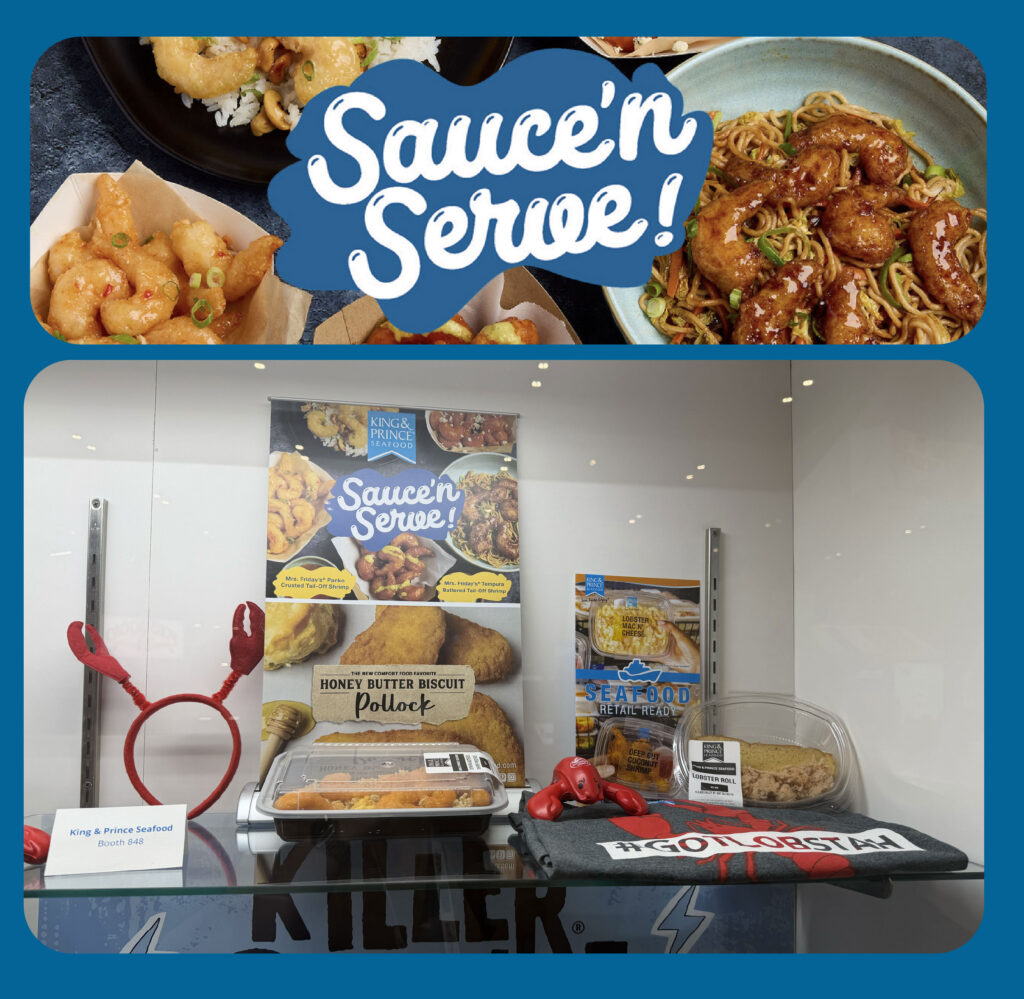
King & Prince Seafood showcased its Sauce ‘n Serve line, pairing seafood with finishing sauces in a format built for speed and minimal prep, bringing restaurant-style seafood into a far more convenient occasion.
Raw Seafoods turned heads with its Grilled Seafood Cups, a single-serve, ready-to-eat format that does for seafood what cup-based snacking has done for everything from overnight oats to protein bowls. It’s seafood reimagined for the refrigerated convenience case, portioned, portable, and approachable for shoppers who’d never think to buy raw fish for a weeknight.
Together these launches signal a meaningful expansion of where seafood lives in the store, and a bet that the protein and convenience tailwinds powering deli-prepared can lift fish too.
Globally Inspired Flavor Goes Mainstream
If protein was the loudest signal, authentic global flavor was the fastest growing one, and it showed up across nearly every category. The trends data backs it up: deli cheese’s best cross-merchandising partners now include naan and specialty pasta, and younger shoppers are driving demand for flavor exploration and multicultural meal inspiration.
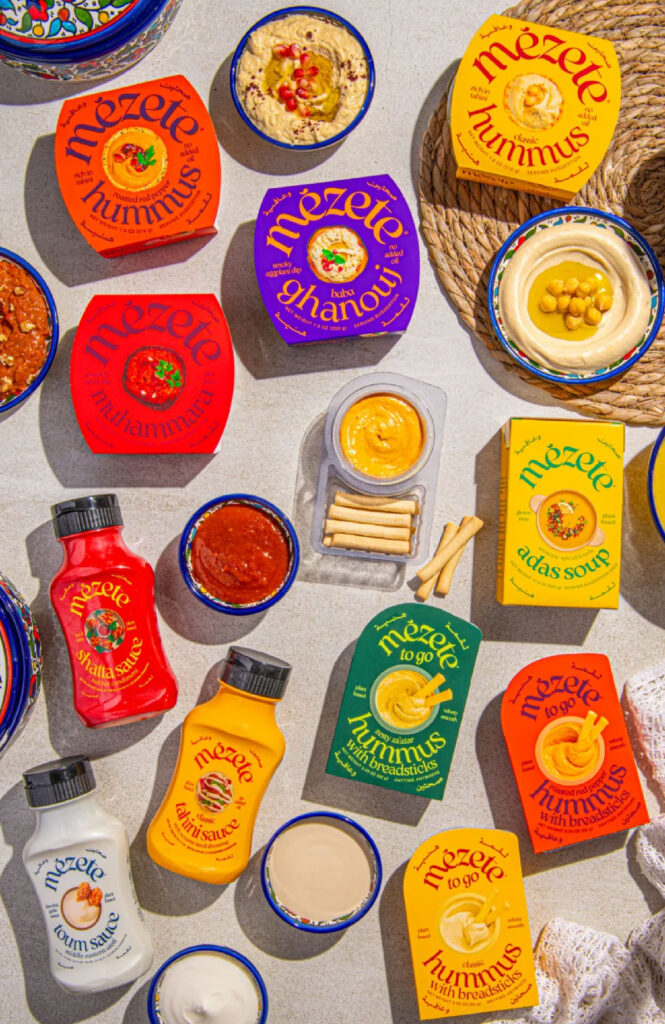
Mezete, the Jordan-based brand making its U.S. push, was a standout, bringing authentic Middle Eastern dips, sauces, soups, and stews, Classic Hummus made with higher tahini levels, Baba Ghanouj, Muhammara, Toum garlic sauce, Shatta chili sauce, and heat-and-eat soups like Adas and a Shakshouka base. The whole lineup is non-GMO Project Verified, vegan, halal, and free of preservatives and added oils, a clean-label, plant-based, and globally authentic package all at once, and a recent Vegan Besties Award winner to boot.
The global thread ran through the meal-solutions players too, Mama’s Creations’ Korean BBQ and Mediterranean recipes, and even into bakery, where bold, globally inspired heat became a recurring note (see St Pierre’s spicy brioche, below). Multicultural flavor is no longer a standalone aisle; it’s a layer being added across the perimeter.
Brioche, Heat, and the Limited-Edition Play
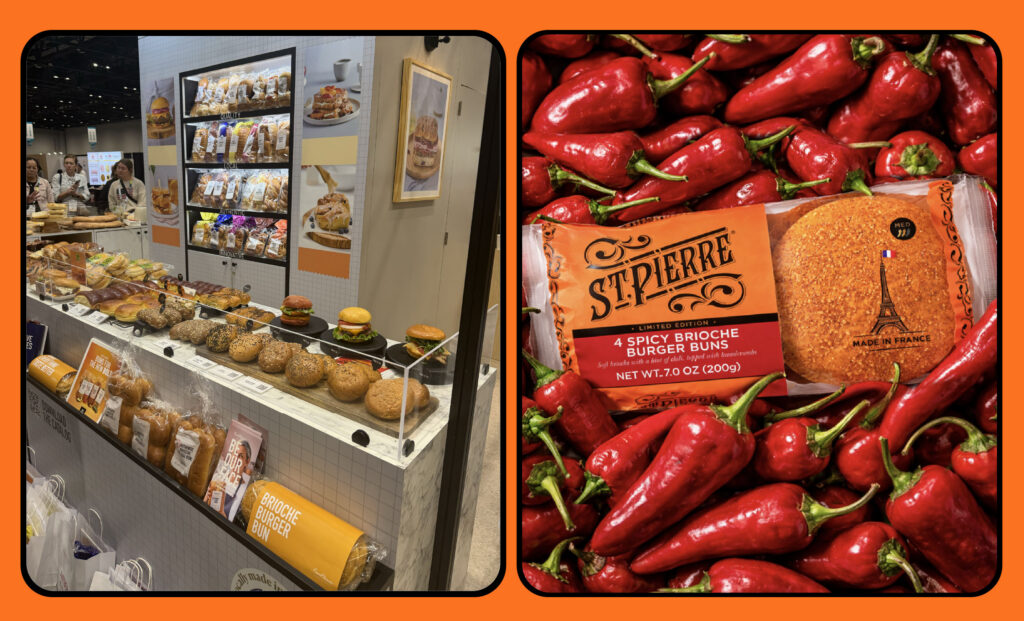
Bakery’s most strategically interesting moment came from St Pierre, the Bimbo Bakeries USA brand that holds roughly 76% share of branded brioche in the U.S. From its “corner of Paris” stand, St Pierre sampled its Spicy Brioche Burger Buns, the brand’s first-ever limited-edition product,blending its signature golden brioche with a gently spiced chili flavor and tapping directly into the bold-global-flavor current. The seasonal 4-pack runs through the end of August, designed to drive incremental summer sales.
Sweet, Savory, and the Power of a Familiar Brand
King’s Hawaiian introduced both sweet and savory bite-sized forms, extending the brand’s signature pillowy profile into snackable, shareable formats that fit entertaining and grazing occasions, squarely in line with the charcuterie and at-home-entertaining trend that continues to grow.
On the bakery side, the show leaned into playfulness and a younger sensibility:
Corso’s Cookies played squarely in the celebration-bakery space, riding the same donut-cake and unboxing-ready momentum driving small bakery categories with gift-able, occasion-driven cookie presentations.
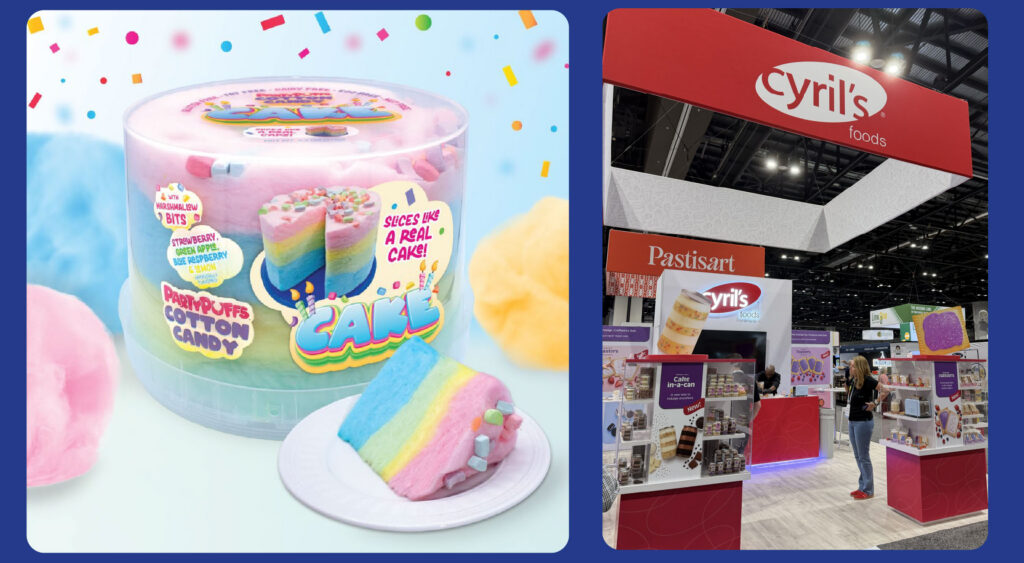
Party Puffs, a separate vendor, stood out for taking the celebration cue in a different direction, a poppable, bite-sized treat format built for shareability and festive merchandising. Where a cookie is a single indulgence, Party Puffs leans into the grazing and party-snacking occasion, offering a colorful, fun-forward profile that merchandises as much as confection as bakery. It’s a good example of how “celebration” at IDDBA 2026 spanned multiple formats rather than a single product type.
Cyril’s brought a youthful, almost toy-like sensibility to food, tapping into the experiential, social-media-friendly energy that increasingly drives discovery among Gen Z shoppers, 55% of whom draw food inspiration from social media.
The Cheese Case Gets Bold: Spice, Spectacle, and the Limited-Edition Drop
If one corner of the show captured the “celebrate taste” mandate most vividly, it was the specialty cheese case, the store’s best cross-merchandising category and one of its strongest performers, with deli cheese dollars up 4%. The innovation here clustered around three ideas: heat, visual spectacle, and the limited-edition launches.
Spice was everywhere. The clearest signal was hot-sauce- and chili-infused cheese moving from novelty to genuine category driver:
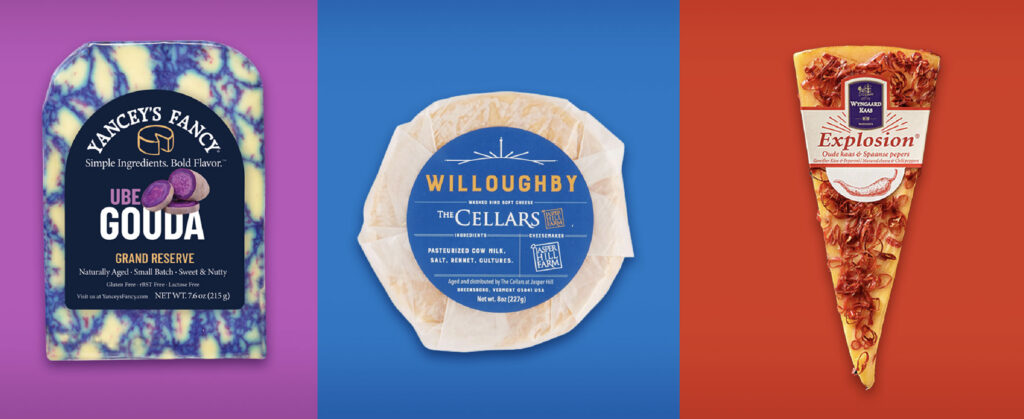
Jasper Hill Farm’s “Fire on the Mountain” Willoughby, a special-edition take on the Vermont creamery’s beloved washed-rind Willoughby, tinted with annatto and hand-washed at the end of cave-aging with Secret Aardvark’s Smoked Reaper hot sauce. The buttery paste mellows the Carolina Reaper burn into what Jasper Hill calls a “middle-of-the-road” lingering heat, a sophisticated way to ride the hot-honey/spicy-everything wave without alienating mainstream palates.
Wyngaard “Explosion” brought the trend in from the Netherlands, a Dutch gouda shot through with chili and pepper flakes for an upfront, fiery kick. Imported spicy gouda is a smart bet on the same bold-global-flavor current running through the rest of the floor.
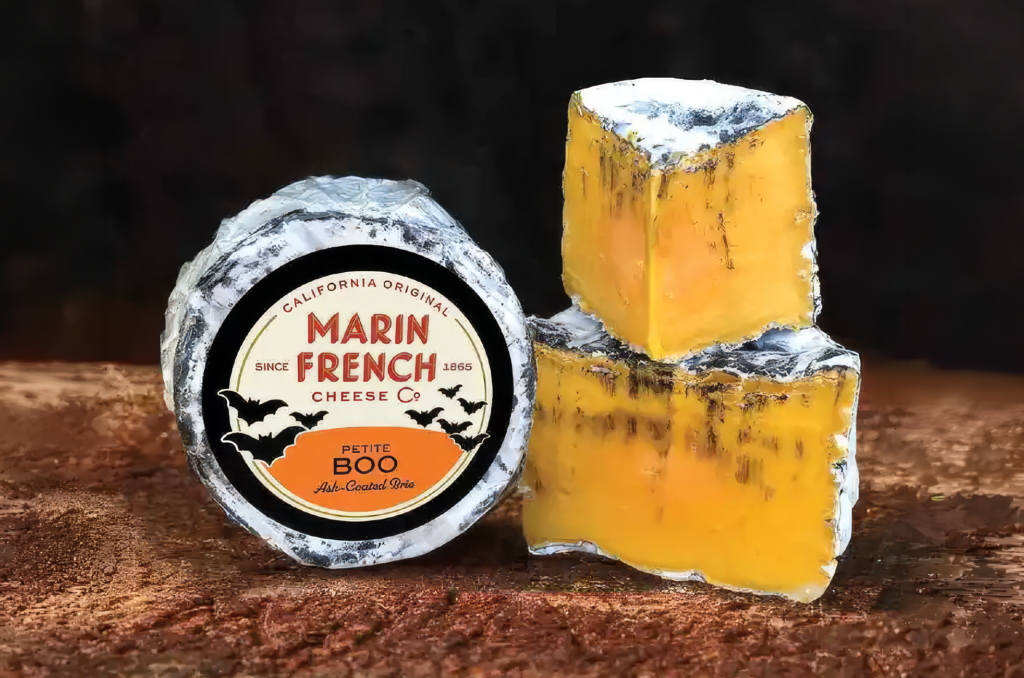
The holiday/seasonal LTO became a merchandising engine.Marin French Cheese Co.’s “Petite Boo” reimagined its rich, earthy Petite Ash as a Halloween “holiday exclusive,”. It’s a clean illustration of how even heritage soft-ripened cheeses are now being dressed for specific calendar moments to drive incremental, time-limited sales.
Charcuterie and Deli Meat: Convenience, Premiumization, and the Entertaining Boom
The charcuterie trend that many assumed had peaked continues to be huge, fueled by protein and at-home entertaining, and the deli-meat majors leaned all the way in.
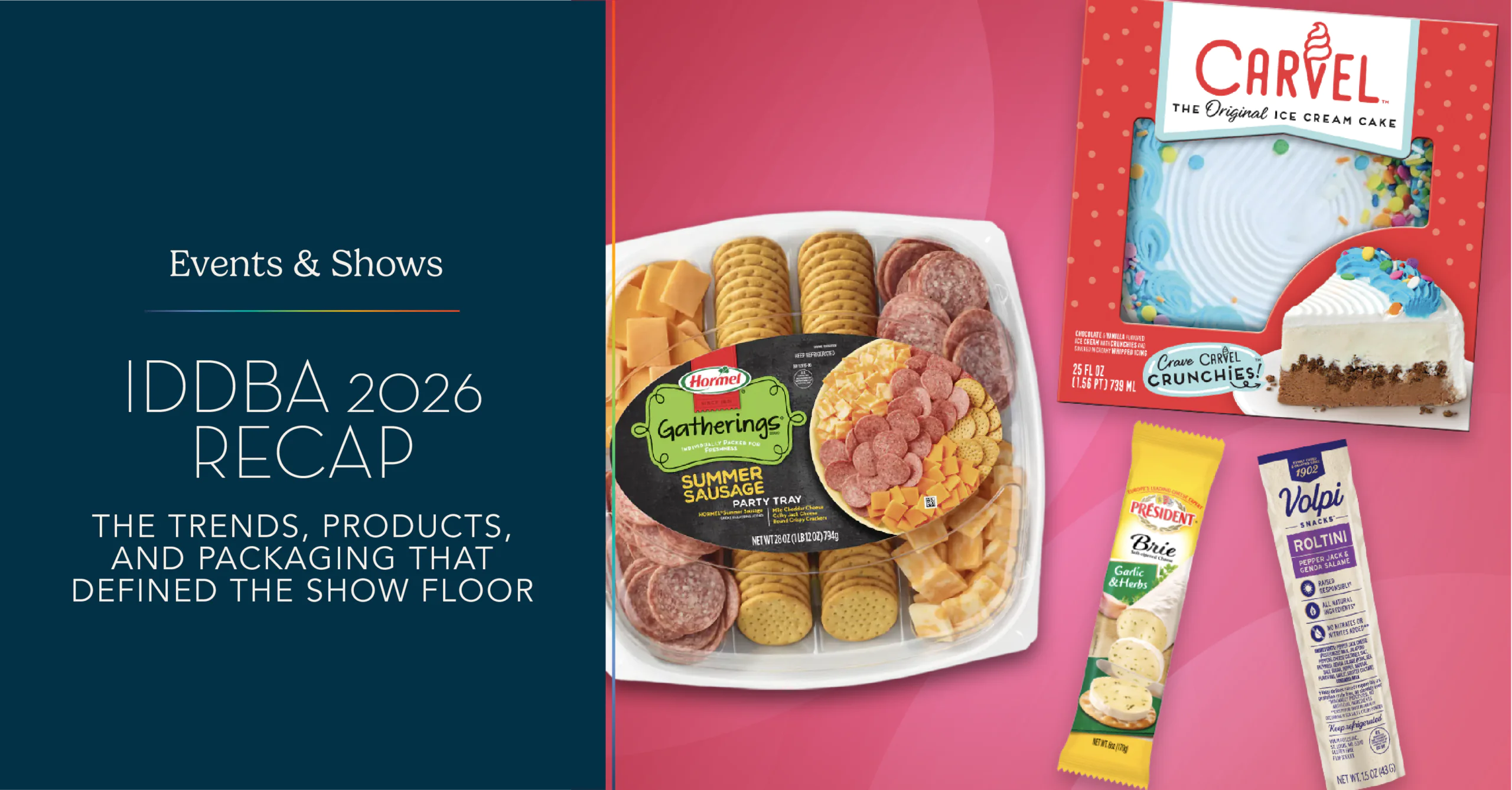
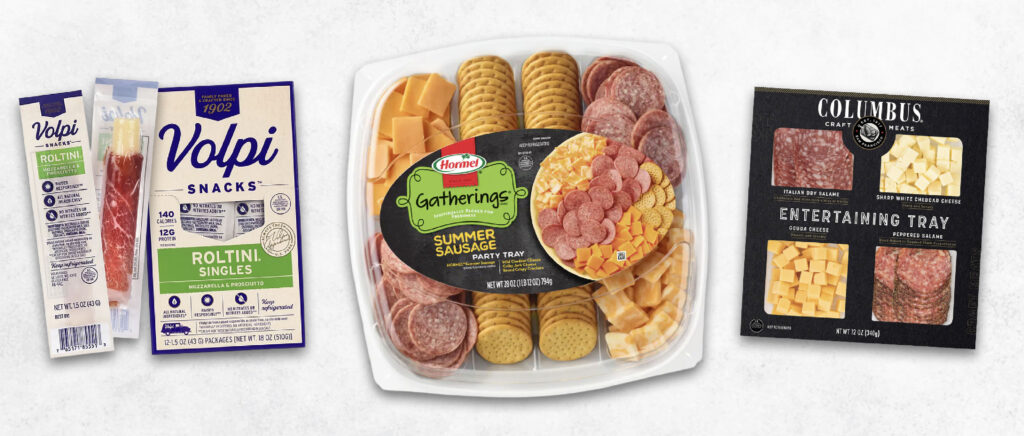
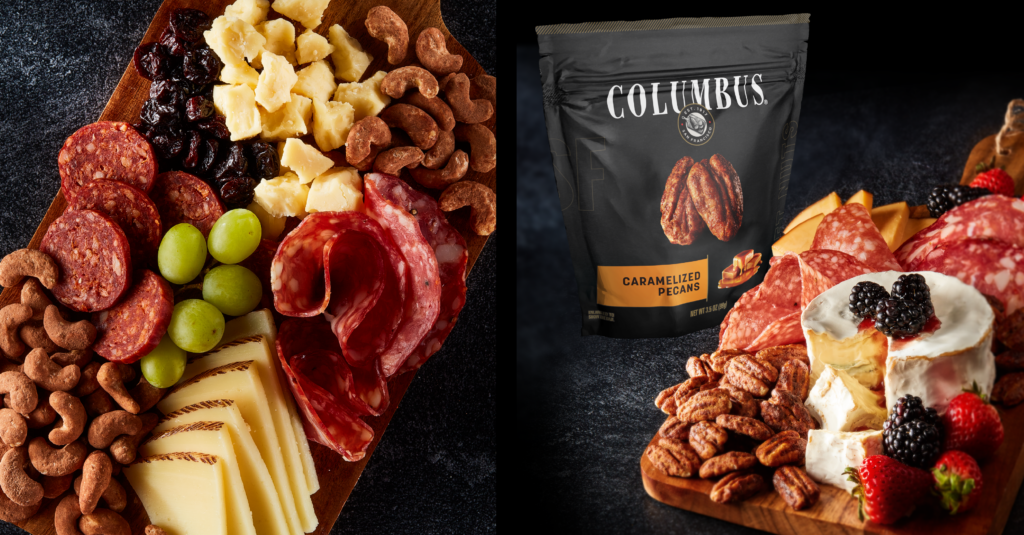
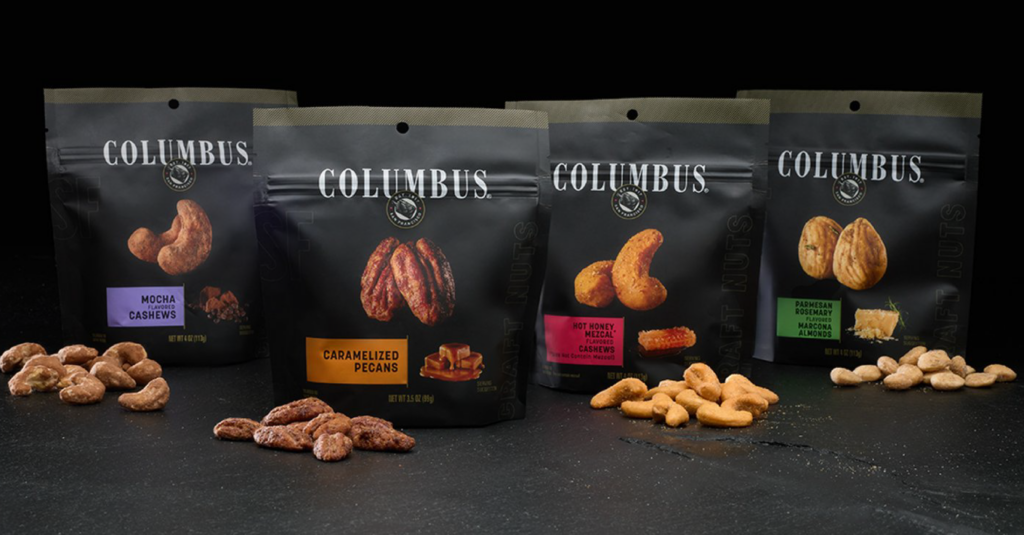
Hormel’s entertaining portfolio was front and center. The Columbus Craft Meats brand rolled out its new Columbus Entertaining Tray, a ready-to-serve charcuterie-and-cheese board pairing its top-selling Italian Dry Salame and Peppered Salame with white cheddar and gouda. Columbus cited that 61% of Gen Z and millennials now use “micro-moments” to gather more frequently, with 86% saying convenience is extremely important, so a zero-prep, no-mess, gluten-free board that wins on convenience and flavor is precisely the answer. The Hormel Gatherings brand continued its run as a snacking-and-entertaining powerhouse, with party and snack trays spanning its Bold and Spicy tray, jalapeño pepperoni and chorizo-style spicy salami balanced with pepper jack and cheddar, built for the rising spice trend, and its new addition Summer Sausage.
Volpi Foods brought the premiumization-meets-convenience story, with a fourth-generation salumeria pushing its craft charcuterie into formats and channels well beyond the deli case. Its Roltini singles (hand-cured meats wrapped around cheese, like Mozzarella & Prosciutto and Pepper Jack & Genoa Salami) and on-the-go Snack Cups and Snack Trays target protein-hungry, convenience-seeking shoppers. Two recent moves underscore the momentum: a nationwide QuikTrip rollout bringing artisanal Roltini to gas-station shelves, and a limited-time “Italian Escape” menu with Blaze Pizza, putting Volpi’s Raised Responsibly prosciutto on the menu at all 250+ locations through late June. Heritage charcuterie brand stretching into both grab-and-go convenience and foodservice without diluting its premium, nitrate-free, humanely-raised positioning.
Several other meat brands brought noteworthy innovation:
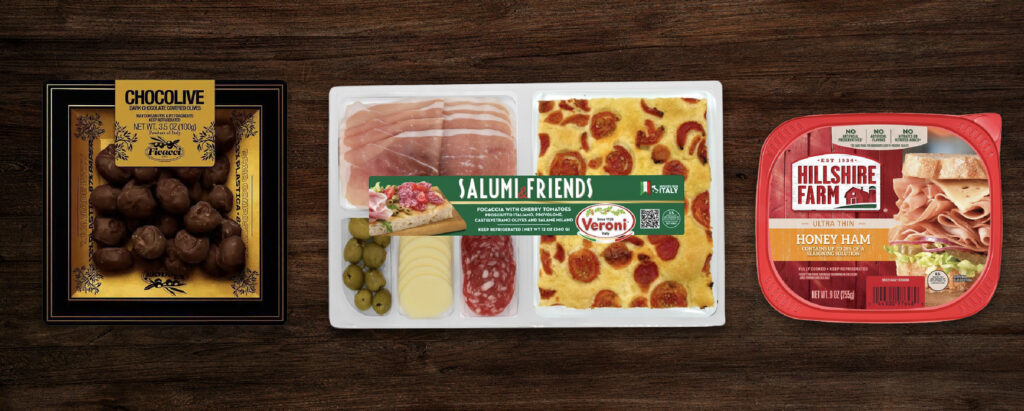
Veroni, the leading imported Italian charcuterie brand in the U.S., debuted Salumi&Friends, billed as the “Ultimate Gourmet Italian Aperitivo Experience,” pairing traditional salumi like Salame Milano and Prosciutto with artisanal Italian focaccia (cherry tomatoes, Castelvetrano olives, provolone), in both 12-oz and 6-oz sizes. It also restyled its Antipasto Italiano platters into a more compact, merchandising-friendly 7-oz format, and brought a food stylist to the booth to build fresh charcuterie and aperitivo presentations, a clear read on the at-home-entertaining and “elevated convenience” trend.
Brooklyn Cured focused on chef-driven salami and sausage, with a major push behind a new bulk beef charcuterie line built specifically for deli counters.
Hillshire Farm (Tyson) brought flavor-forward energy to the everyday lunch-meat aisle with Sandwich Style Lunch Meats in bold new flavors, including Hot Honey Ham (sweet honey plus a chili kick) and Jalapeño Ranch Turkey Breast, a reminder that the hot-honey and bold-flavor currents reshaping specialty charcuterie are now flowing into mainstream sliced deli meat too.
Ficacci Italian olive specialist, reinforced the show’s sustainability-and-structure theme with an expanded lineup of recyclable paper-based trays and platters, including larger multi-compartment formats designed for club and entertaining occasions. As Export Manager David Dottoroni explained in an interview with Deli Market News, the company paired its evolving paperboard packaging with bold new products like CHOCOLIVE (dark chocolate–covered olives) and garlipeño marinated olives, blending gourmet flavor exploration with more sustainable, retail-ready presentation formats built for discovery and entertaining.
Across all of these, the throughline is the same one powering deli prepared: shoppers want restaurant-and-entertaining-quality experiences with grocery-aisle convenience, and the meat-and-cheese players are racing to package exactly that.
The Licensing Craze: Flavors and IP Everywhere
Licensed flavors and branded collaborations were impossible to miss, as established flavor brands extended into adjacent categories and entertainment IP made its way onto packaging.
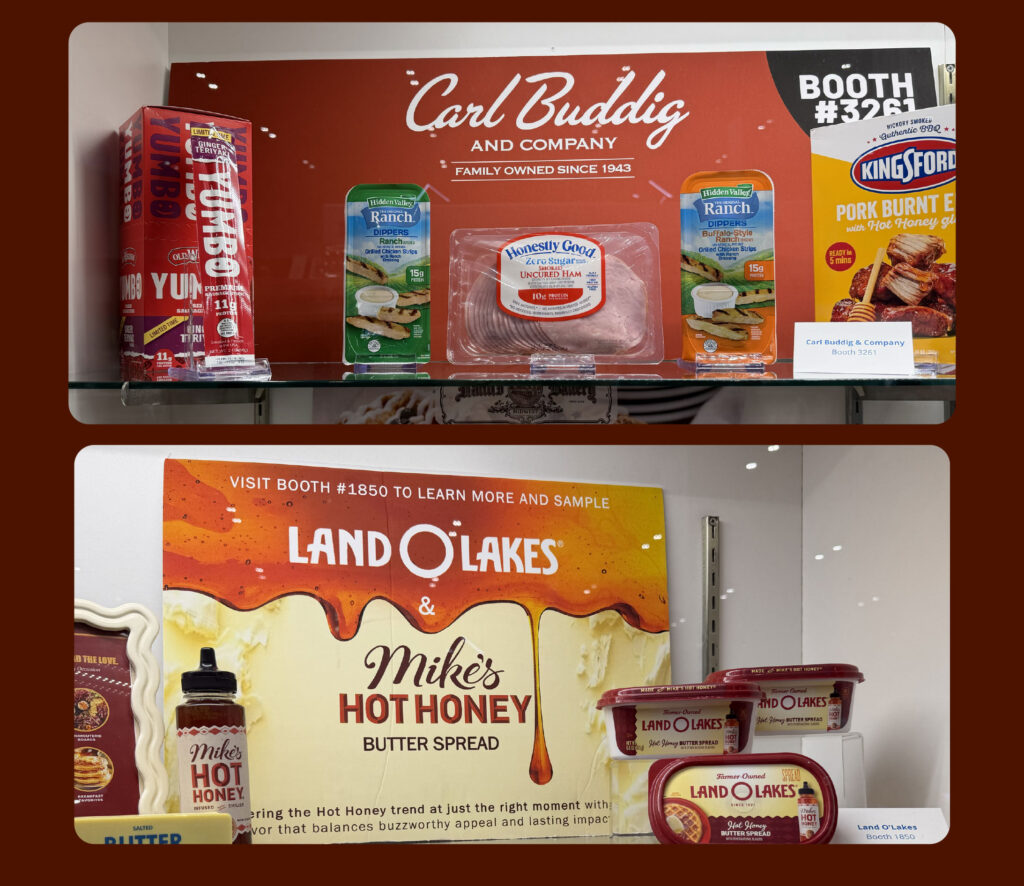
Hidden Valley Ranch officially entered the protein-snack category through a licensing deal with Buddig, which launched the Hidden Valley Ranch-branded chicken dippers, pairing seasoned chicken with the brand’s signature ranch flavor and giving a beloved condiment name a foothold in center-of-plate convenience. Mike’s Hot Honeycontinued its remarkable run as a flavor that gets added to everything, with Land O’Lakes specifically carrying the Mike’s Hot Honey brand into its flavored butter spreads, a clean illustration of how a single breakout flavor brand can now license its way across the perimeter and onto an established dairy staple.
On the entertainment side, Dere Street capitalized on the enduring popularity of Ted Lasso with a biscuit’s product in a “Biscuits with the Boss”-branded box, a nod to one of the show’s running themes: nostalgia, fandom, and pop-culture tie-ins as a way to earn a second look on a crowded shelf.
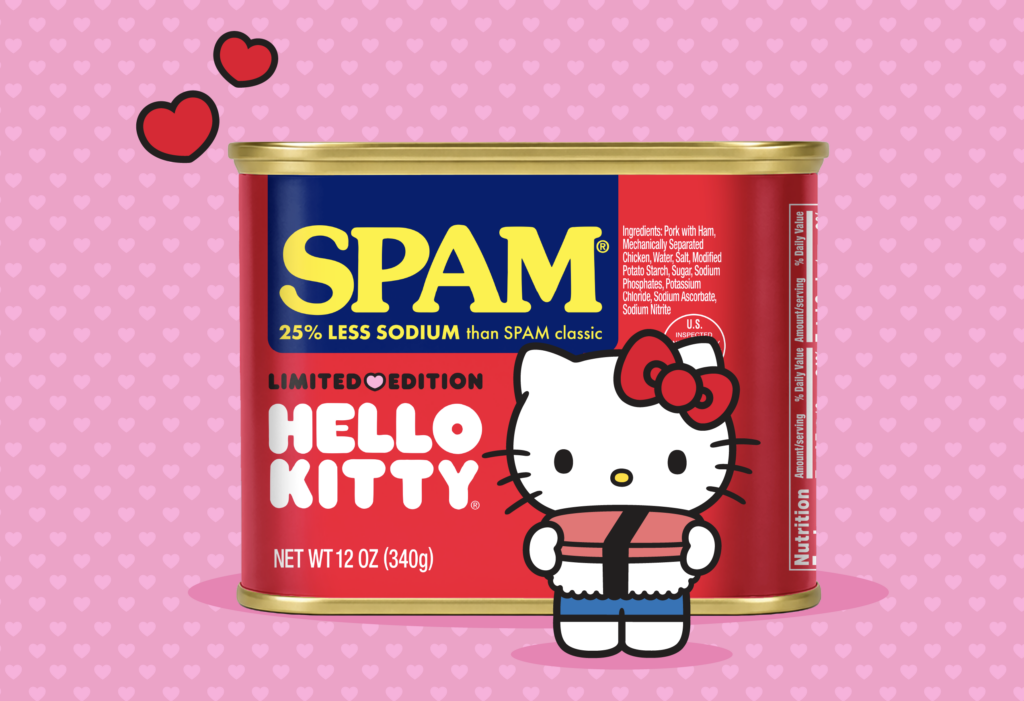
The biggest collectible play, though, came from SPAM. the Hormel brand teamed with Sanrio to launch a limited-edition SPAM x Hello Kitty collectible can, a 25%-less-sodium SPAM can wrapped in a label featuring Hello Kitty holding a SPAM musubi, it anchors a broader “Tour de Sizzle” campaign celebrating global SPAM dishes (Hawaiian musubi, Korean bibimbap, Japanese ramen, Canadian poutine) through an interactive microsite and sweepstakes. The pairing of two multigenerational fan-favorite brands generated immediate social buzz, and it captures three of the show’s biggest currents at once: collectible fandom, globally inspired flavor, and a scarcity-driven limited-edition drop.
Pickled Everything Keeps Growing
The pickle category showed no signs of slowing, and the innovation came through unexpected collaborations and flavor extensions:
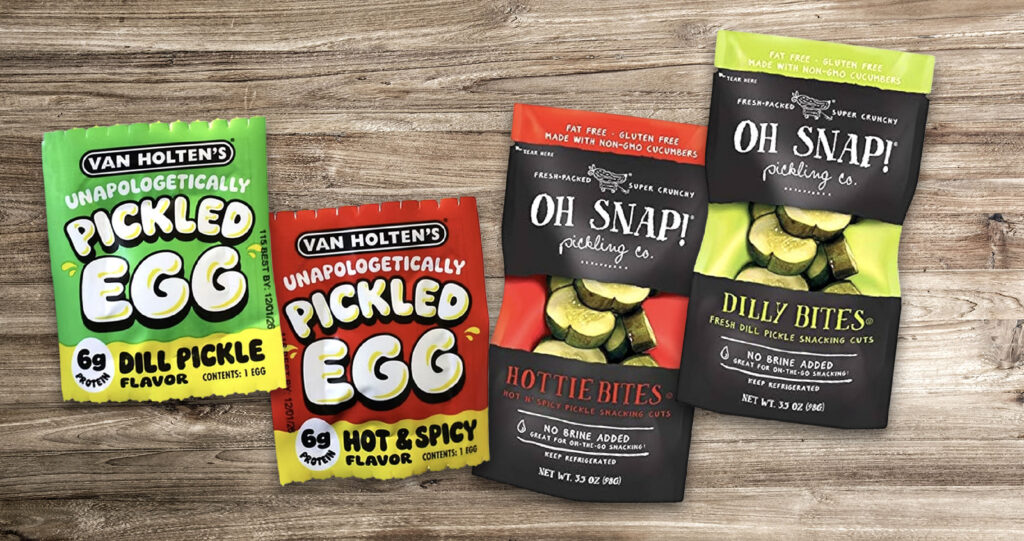
Van Holten’s expanded beyond its iconic Pickle-In-A-Pouch with both a Warheads co-brand, fusing sour-candy fandom with the pickle craze, and a new Dill Pickle–flavored Pickled Egg pouch delivering 6g of protein in a single-serve, shelf-stable format. The move extends the brand from novelty pickle snack into portable protein, reinforcing how the pickled trend is colliding with the high-protein, grab-and-go set.
OH SNAP! continued to expand its portfolio of grab-and-go pickle snacks into new varieties such as Chili Lime, layering on-trend global heat onto a shelf-stable, single-serve format.
Pickled items, including the broader pickled quail egg trend noted above, continue to benefit from the snackable protein and bold-flavor currents running through the whole show.
“No Seed Oils” Becomes a Front-of-Pack Claim
One of the fastest-rising messaging trends at IDDBA 2026 was the “made with avocado oil” / “no seed oils” callout, migrating from a niche wellness talking point to a prominent front-of-pack claim across categories.
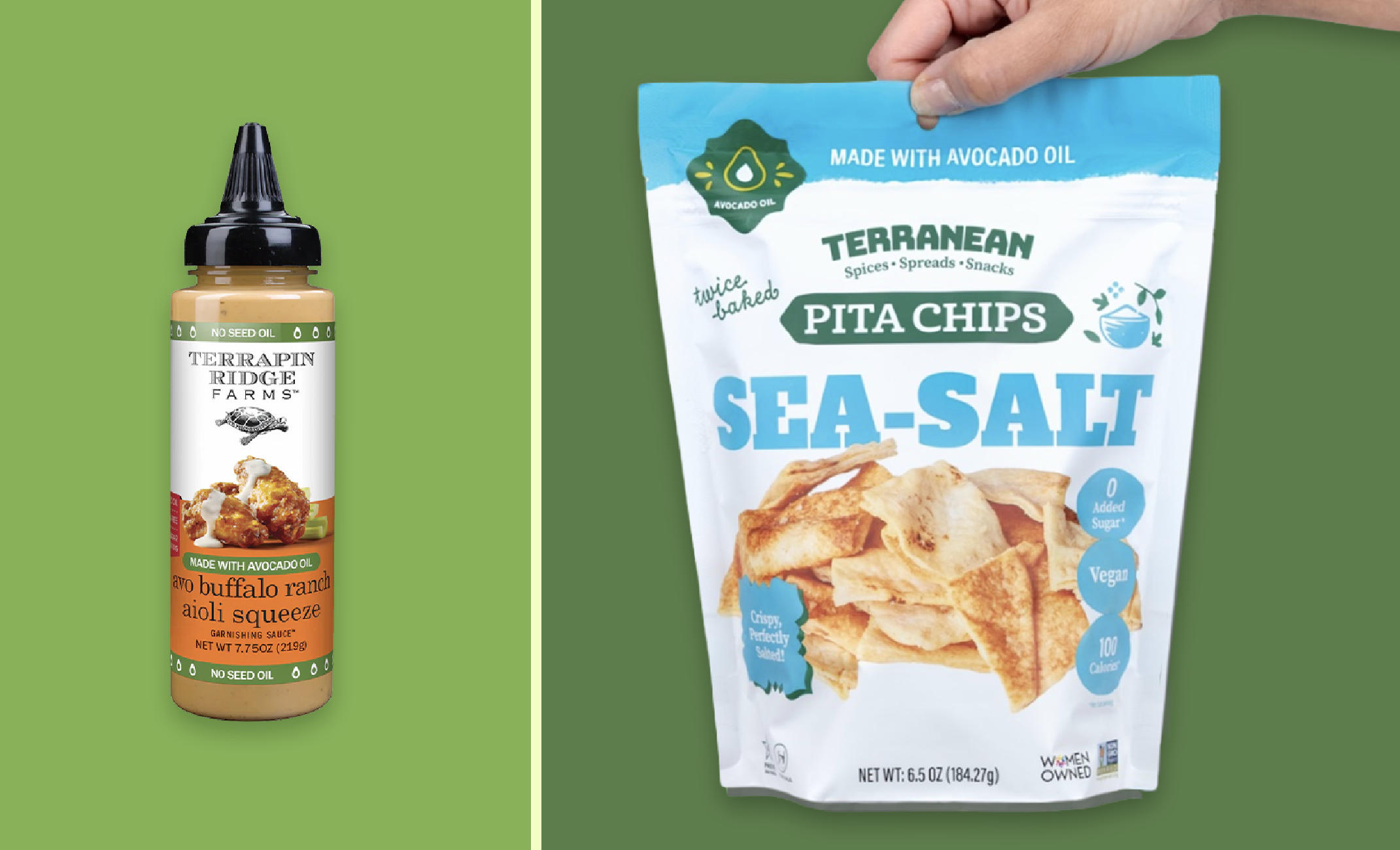
Terrapin Ridge Farms captured it directly with its new No Seed Oil Avo Aioli Squeezes, reformulated with avocado oil in place of seed oils across flavors like Avo Buffalo Ranch and Zingy Garlic, leaning into one of the biggest ingredient conversations in food right now. The trend extends well beyond condiments: snack brands like Terranean The woman-owned food brand announced the debut of its Avocado Oil Pita Chips. Made with authentic pita bread, the double-layered snacks are twice baked and feature Levantine-inspired flavors such as za’atar, sea salt, and cinnamon with date sugar and are completely seed-oil free.
Packaging Innovation: Substrate, Structure, and Provable Sustainability
Packaging earned real billing at IDDBA 2026; the New Product Showcase explicitly spotlighted packaging alongside products and flavors. Two themes dominated the floor: traceable, certified recycled content as the answer to greenwashing scrutiny, and structure as a merchandising lever, not just containment.
Sabert (Booth 2000): The Multi-Substrate Thesis
Sabert’s whole story this year was built around how operators actually buy now, running mixed-substrate programs, with PCR plastic for one SKU, paper for another, and molded fiber pulp where compostability is prioritized. The portfolio on display spanned plastic, molded fiber, and paper, with options covering post-consumer recycled content, compostability, and high-performance formats. Highlights included:
Closed-loop recycled resin via Nuvida, Sabert’s recycling operation and one of the world’s largest processors of food-grade recycled plastic resin, providing traceable supply for recycled-content claims as operators face growing scrutiny on sustainability marketing. This anti-greenwashing, “provably recycled” angle was the standout substrate story.
The r-PRO PCR line (a proprietary polypropylene blend with 25% PCR meeting APR recyclability guidelines).
Certified molded fiber pulp (Pulp Ultra and Pulp Plus, carrying GreenScreen, BPI compostability, and recyclability certifications).
New grab-and-go formats, hinged PET bowls and tubs across PET, paper, and molded fiber, explicitly tied to smaller portions, protein-forward menus, and gut-health items.
Custom-print paper positioned as a branded touchpoint for seasonal LTOs and signature lines.
Lacerta Group (Booth 5050): Structure as Shelf Appeal
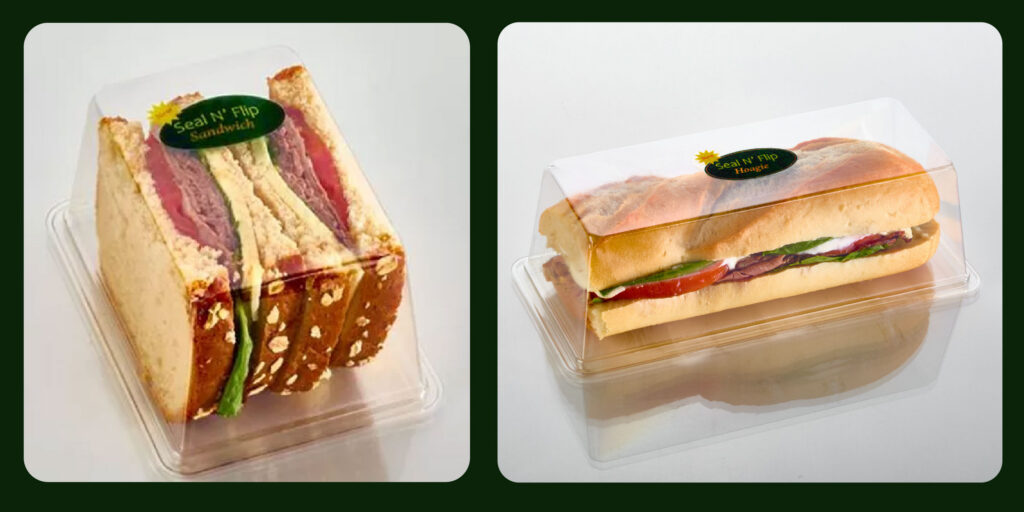
Lacerta’s Seal ‘N Flip was one of the more genuinely novel structural ideas on the floor. It reimagines traditional film lidding by placing it on the bottom, creating a product-forward, vertical display that elevates shelf appeal. The sustainability math is the hook: the design is estimated to reduce packaging costs by up to 25% and cut plastic use by up to 50%, while still delivering tamper-resistance and leak protection. Now in full production after debuting last year, it’s a reminder that packaging structure, not just material, can be a sales driver. Lacerta’s ReCERTA PCR line also recently earned ISO 14021 certification validating its recycled content.
ProAmpac: Fiber-Based Food-to-Go
ProAmpac returned with its fiber-based food-to-go platform, sandwich packs, trays, wraps, and soft packs positioned as a more sustainable alternative to rigid plastic, with flat-packed, automation-ready formats and improved barrier and moisture control to extend shelf life. Following its interpack 2026 emphasis on advanced film-and-fiber technologies and regulatory readiness, expect that compliance-forward framing to keep shaping its retail solutions.
Bizerba (Booth 5418): The Execution Layer
On the labeling and in-store execution side, Bizerba showcased label solutions for branding and compliance, a CSV bread slicer for consistent bakery output, and GLP light systems for efficient weighing and labeling in deli and fresh departments, the often-overlooked operational layer that makes all the new packaging and prepared-foods formats actually work at store level.
The Bigger Picture
A few connective threads tie IDDBA 2026 together. Protein remains the loudest signal;protein-claim units are up 27.5% in deli and a remarkable 80.4% in bakery, with Fiber quickly gaining as much popularity given the rise in GLP-1 users. Eggs (including quail) emerged as the most versatile vehicle for delivering it additional health benefits in breads, convenient grab and go, pickled, and even pastas/handhelds. Convenience keeps expanding into new categories, most notably seafood crossing into the refrigerated grab-and-go set. Entertaining and charcuterie kept climbing, with the deli-meat majors racing to deliver zero-prep, restaurant-quality boards and trays. Global flavor and bold heat became a layer added everywhere, from Mezete’s Middle Eastern dips to Korean BBQ prepared meals to spicy brioche to reaper-washed and chili-studded cheeses. The limited-edition “drop” went mainstream, with St Pierre’s spicy brioche, seasonal cheese LTOs (Marin French’s Petite Boo, Jasper Hill’s collaborations), and the collectible SPAM x Hello Kitty can all borrowing scarcity tactics from fashion and beverage. Indulgence and permissibility coexist with health, with licensed flavors, pop-culture tie-ins, and playful, visually striking formats earning attention while clean-label reformulations (natural colors, no seed oils) quietly reset the baseline. And packaging has become a strategic conversation, with provable recycled content and merchandising-driven structure leading the way.
Walking the show floor with intent matters more than ever. The perimeter is no longer a supporting cast to center-store CPG; it is where most of the category innovation, premiumization, and brand storytelling is happening. Retail prepared foods now replace restaurant occasions for 28% of shoppers, more than double the rate of 2017, and U.S. grocery foodservice has crossed $52 billion in annual sales. So, before we get to Orlando (June 7–9), here is how we’re framing what we expect to see, and what brands in these categories should be doing about it right now.
Three Forces Are Reshaping All Three Categories:
“Value” no longer means cheap. It means earned. Consumers have spent two-plus years tightening grocery budgets, yet they continue to trade-up into premium dairy, prepared deli, and artisanal bakery. The reconciliation is simple: shoppers are spending more intentionally, not less. They want products that deliver functional benefits, sensory rewards, and a story that aligns with their values. The implication for branding is clear: generic premium cues no longer earn the trade-up; specificity does.
Protein is the floor. Fiber is the ceiling. McKinsey reports that 70% of U.S. consumers plan to increase their protein intake in 2026, and dairy is the most preferred source. But the next wave is already cresting: fiber, gut health, and GLP-1-friendly nutrient density. Cottage cheese has grown at a 6.2% CAGR over the last five years. Sourdough product launches are up 31% globally, with another 33% growth forecast for 2026. The on-pack hierarchy is being rewritten, with protein grams, fiber grams, and ingredient transparency increasingly becoming the first things eyes find on the front panel.
Indulgence has been redefined as permission. The cultural rebellion against austerity is real. Consumers want comfort, ritual, and a little luxury, but they want it justified. Mini formats, “everyday charcuterie,” portion-controlled mochi, single-serve specialty cheese, and one-bite cakes. The winning brands are not asking shoppers to choose between health and happiness; they are giving them both, in a smaller, smarter package.
What We’re Watching
In the deli case:
Clean-label proteins move up-market. Shoppers no longer accept “deli meat” as automatically processed. Short ingredient panels, no fillers, and transparent sourcing are commanding premium pricing but only when the packaging signals that promise instantly.
“Everyday charcuterie” graduates from trend to staple. Pre-built boards, snacking kits, and grab-and-go entertaining are pulling occasions out of restaurants and into living rooms. The brand opportunity: packaging that performs both as a grocery shelf unit and a tabletop centerpiece.
Bold flavors, value pricing. Limited-time flavor drops, global-but-approachable profiles (Mediterranean, Korean, smoky-zesty mashups), and a permissive attitude toward novelty, without restaurant-level price tags.
In the dairy aisle:
GLP-1-friendly positioning, done quietly. Smart brands are not calling it out on-pack. They are reformulating for higher protein, lower sugar, and added fiber, and letting the nutritional panel do the talking. Heavy-handed “Ozempic-friendly” claims should be skipped in favor of positive food claims.
Affordable luxury cues in the dairy case. Gold accents, glass and glass-look containers, restrained typography, matte finishes, tactile sleeves. The yogurt set is starting to read like the beauty aisle.
Functional and regenerative as overlapping plays. Probiotic kefirs, A2 milk, grass-fed butter, regenerative-ag stories. Certifications and provenance are increasingly front-of-pack equity.
In the bakery:
The moody palette shift. After years of pastels, the bakery is moving toward charcoal, deep purples, espresso browns, and burnt orange: colors that signal depth of flavor and grown-up indulgence.
Paper is king. Sustainable bakery packaging is consolidating around FSC-certified kraft, glassine windows, water-based barrier coatings, and minimalist single-color printing. The “less ink, more story” school of design is winning the shelf.
What We’ll Be Looking for in Orlando
Structural innovation in single-serve and snacking formats particularly in dairy and prepared deli. Who is solving for portability without sacrificing premium feel?
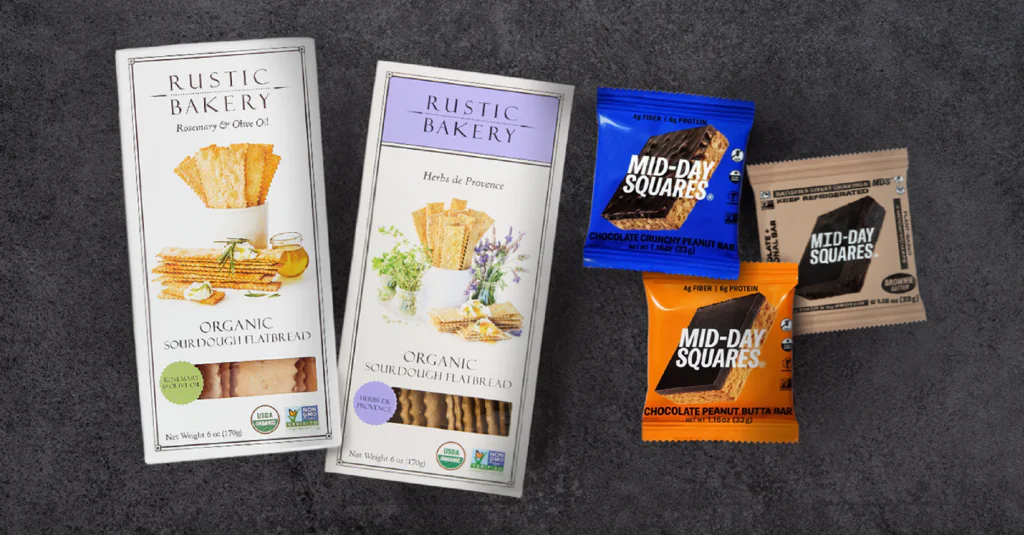
Cross-category convergence. Sourdough crackers in deli charcuterie programs. Cottage cheese in bakery. High-protein desserts. The lines between the three categories are blurring fast.
Sustainability stories that show their work. We’re watching for brands that quantify, certify, and visualize their commitments on-pack.
We will be back after the show with a debrief on what surprised us, who broke through, and the trends worth bringing back to the studio. Until then, if you want a sounding board on how trends translate to your brand’s strategy and packaging, our team would love to connect with you.
There’s a certain energy that happens when emerging CPG founders, marketers, creatives, and operators all gather in the same room. At the Naturally New York Spring Fling, that energy felt especially clear: the better-for-you space is growing up, and its branding is getting bolder.
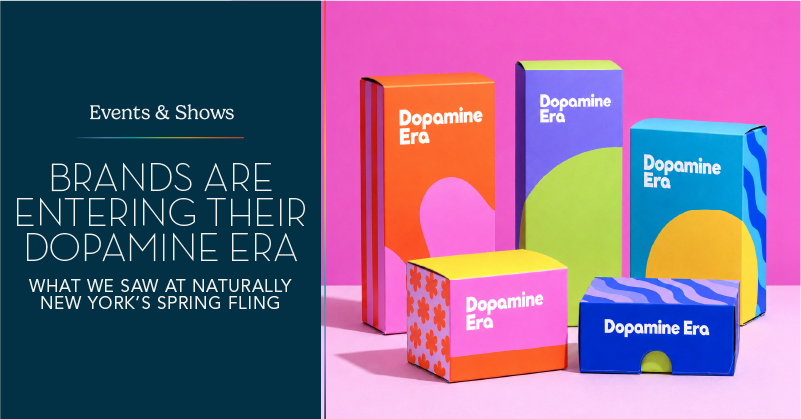
The event itself was refreshingly informal. A bright, upbeat room full of founders sharing products, stories, and ideas. And while every brand had a different point of view, one visual trend kept popping up: Dopamine Packaging.
This mood-first branding is bringing joy to shelves (and directly to consumers). “Dopamine Packaging” seems to be one of the defining visual languages of emerging food and beverage brands.
Bright colors. Optimistic typography. High-energy palettes. Packaging designed not just to inform, but to spark emotion instantly. In a crowded category where consumers make split-second decisions, these brands understand something important: people don’t just buy products anymore. They buy brands that they connect with.
In the better-for-you space specifically, we’re seeing a move away from the sterile, overly clinical wellness aesthetic to brands embracing indulgence, personality, humor, nostalgia, and visual stimulation. A few brands that were showcased really embodied that shift.
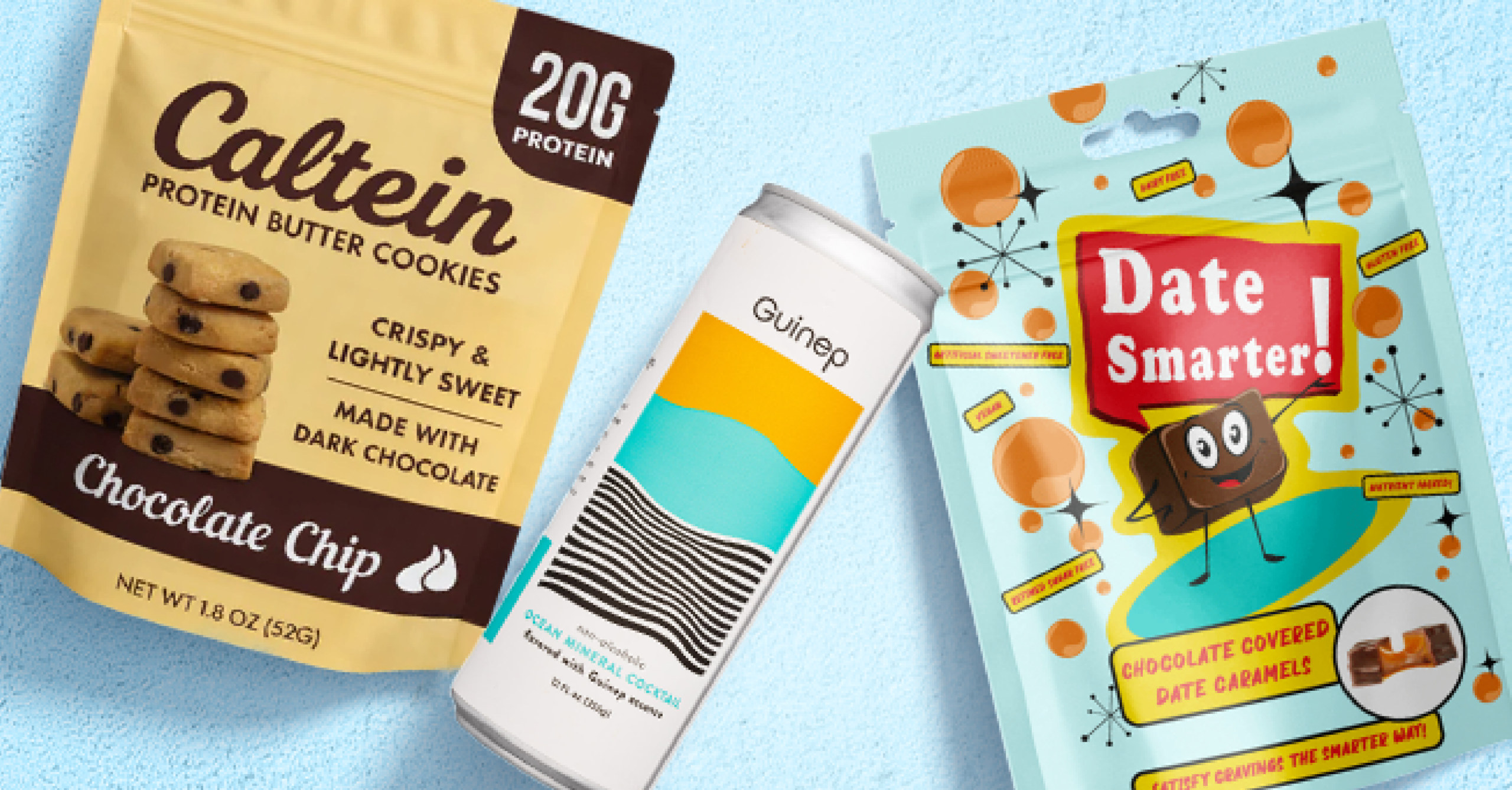
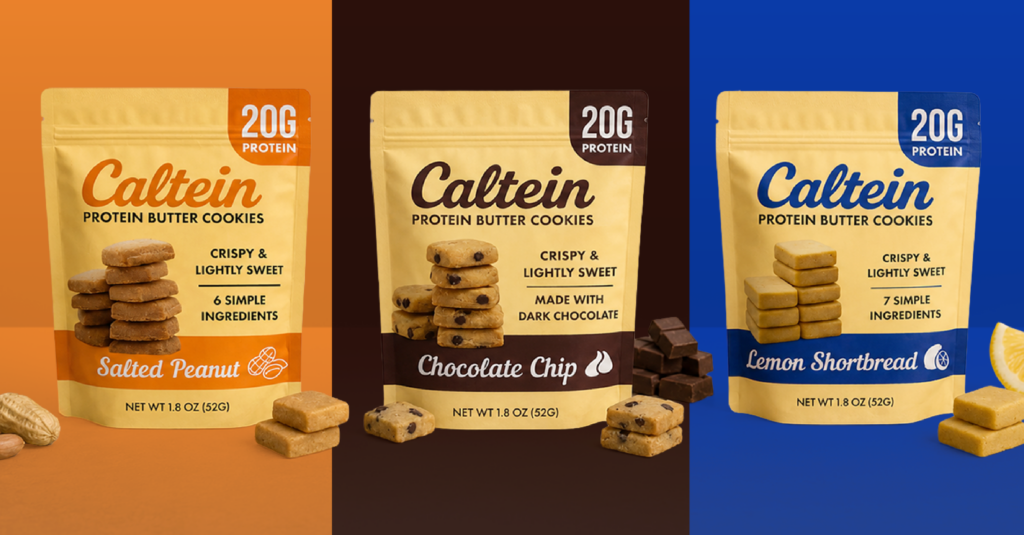
The protein category has historically leaned heavily into performance-first branding: dark colors, aggressive typography, hyper-masculine visual systems. CALTEIN flips that entirely.
Their butter cookie pouches feel nostalgic, playful, and genuinely appetizing, while still communicating functional benefits like high protein and simple ingredients. The warm color palette and retro-inspired typography create a softer, more emotionally driven entry point into the category. This aligns with a broader shift we’re seeing across wellness brands: consumers increasingly want products that feel joyful, not restrictive.
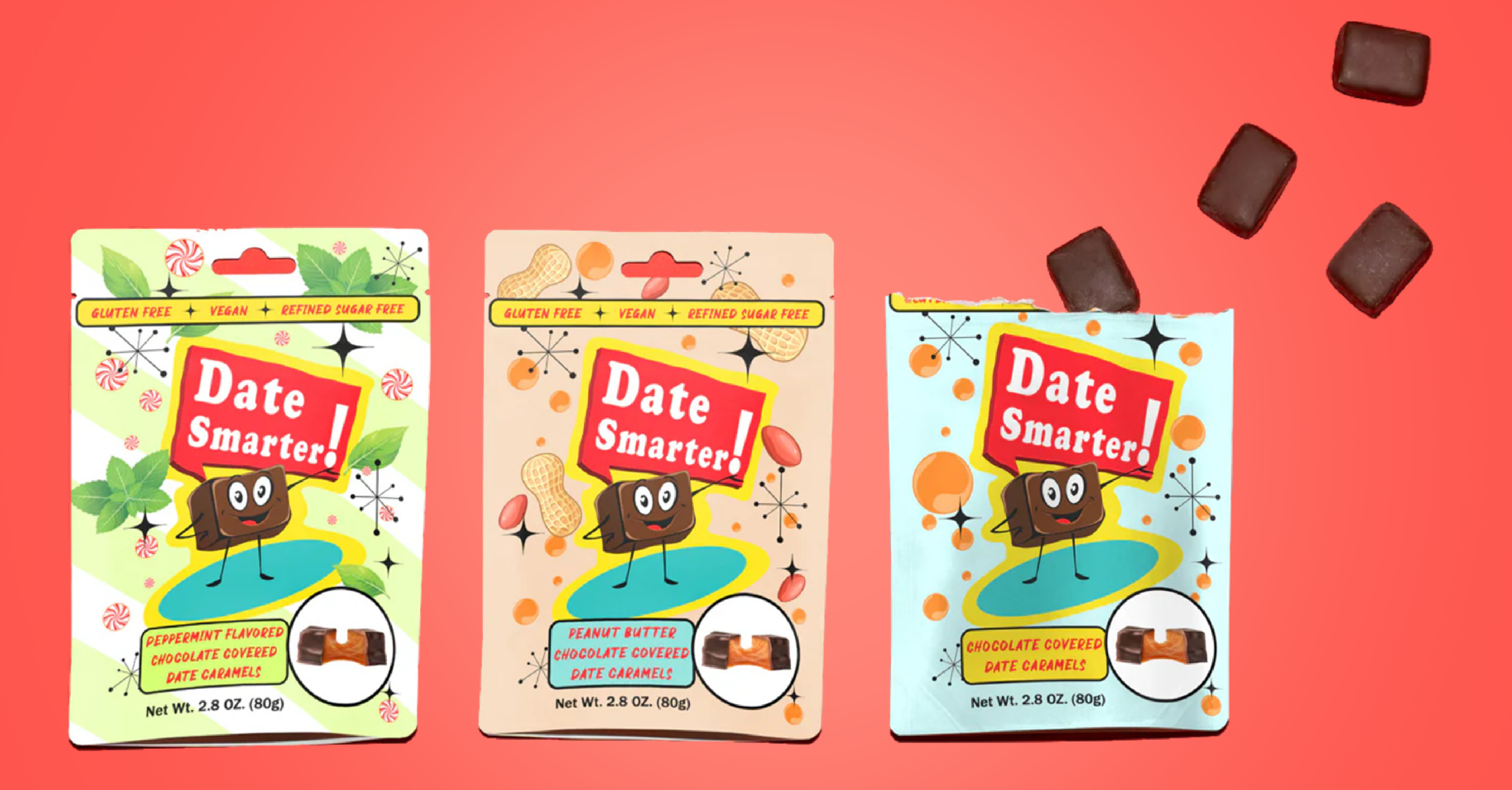
Date Smarter’s packaging leans into vibrant color, kinda-retro inspired illustration, playful callouts, and personality-driven messaging, all while introducing consumers to a healthier snack built around dates. Packaging like this instantly reframes the experience as fun, craveable, and accessible.
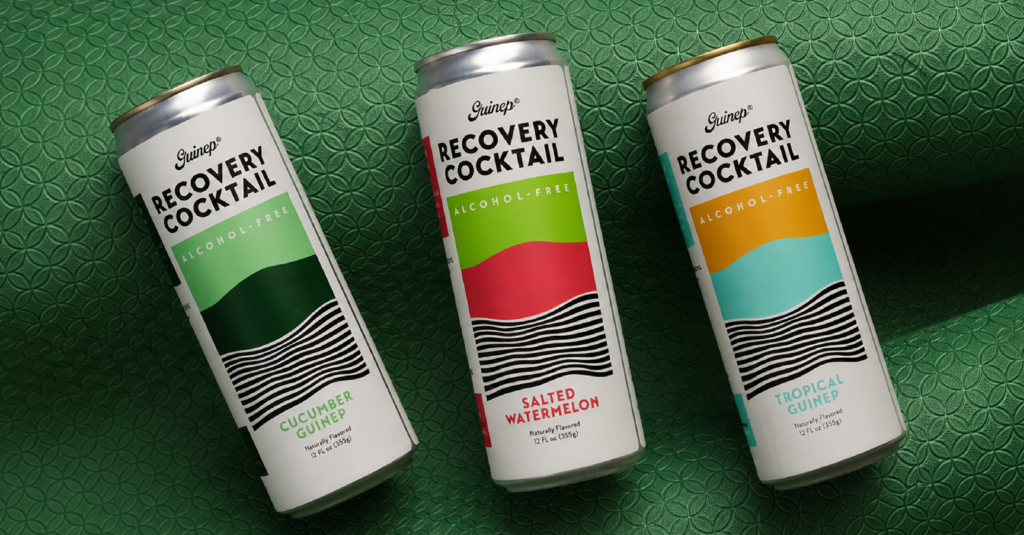
GUINEP took a slightly different approach but still tapped into the same emotional territory through color blocking and bold visual contrast. Their cans feel modern, energetic, and culturally expressive without becoming visually overwhelming.
The best emerging brands today understand that packaging no longer lives only in-store, it lives in TikToks, Instagram Stories, unboxings, and founder content.
All these emerging brands recognize that branding is the product experience.
Packaging has become: a growth tool, a trial driver, a social asset, a positioning strategy, and a way to communicate emotion instantly. And especially in the better-for-you space, brands are finally realizing that wellness doesn’t have to look clinical to feel credible.
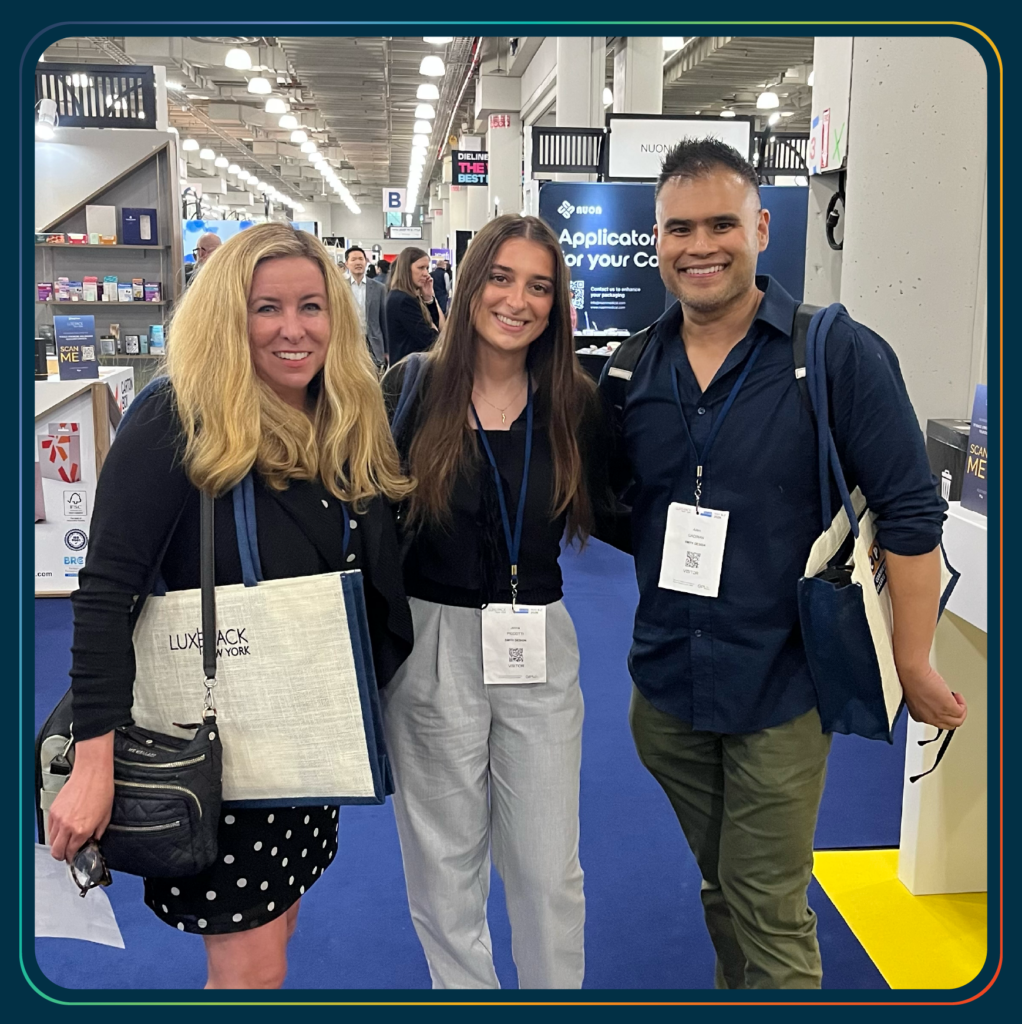
At Smith Design, staying at the forefront of packaging innovation is central to the work we do. Attending LUXE PACK New York provided us with the opportunity to stay at the forefront of luxury packaging.
The Show That Sets the Standard
LUXE PACK New York is the East Coast’s premier B2B trade show dedicated entirely to luxury packaging. Held at the Jacob K. Javits Convention Center over two days, it’s the only event of its kind in the U.S. with over a 20-year legacy. The 2026 edition brought together more than 230 exhibitors from 22 countries, with over 5,200 attendees.
The show connects luxury brands with the suppliers, material specialists, and manufacturers behind high-performing packaging across beauty, fragrance, spirits, wellness, fashion, and fine food. Beyond the exhibit floor, a robust conference program featured panelists from L’Oréal, Shiseido, Estée Lauder, and Unilever, tackling topics from AI-driven design to circular materials and consumer engagement.
LUXE PACK also hosts the Dieline Awards: one of the most prestigious honors in global packaging design. Attending the ceremony and seeing the winning work showcased on the event floor was a highlight. It reinforced something we believe deeply: great packaging design isn’t decoration; it’s a discipline and a genuine competitive advantage for brands.
Design, Detail, and Differentiation
Walking into LUXE PACK, we were immediately met by the level of craft and intentionality on display. Booth setups were immersive and design-forward; exhibitors put as much thought into how they presented themselves as the products they manufacture. From embellishment innovations like double hot-stamping to mono-material paper boxes with structural pop-up details, the show floor was an incredible view of where premium packaging manufacturing is headed.
Sustainability and Other Hot Topics
LUXE PACK New York 2026 featured a wide range of expert-led panel discussions. Sustainability and circular materials emerged as recurring themes across nearly every session. Three sustainable topics stood out:
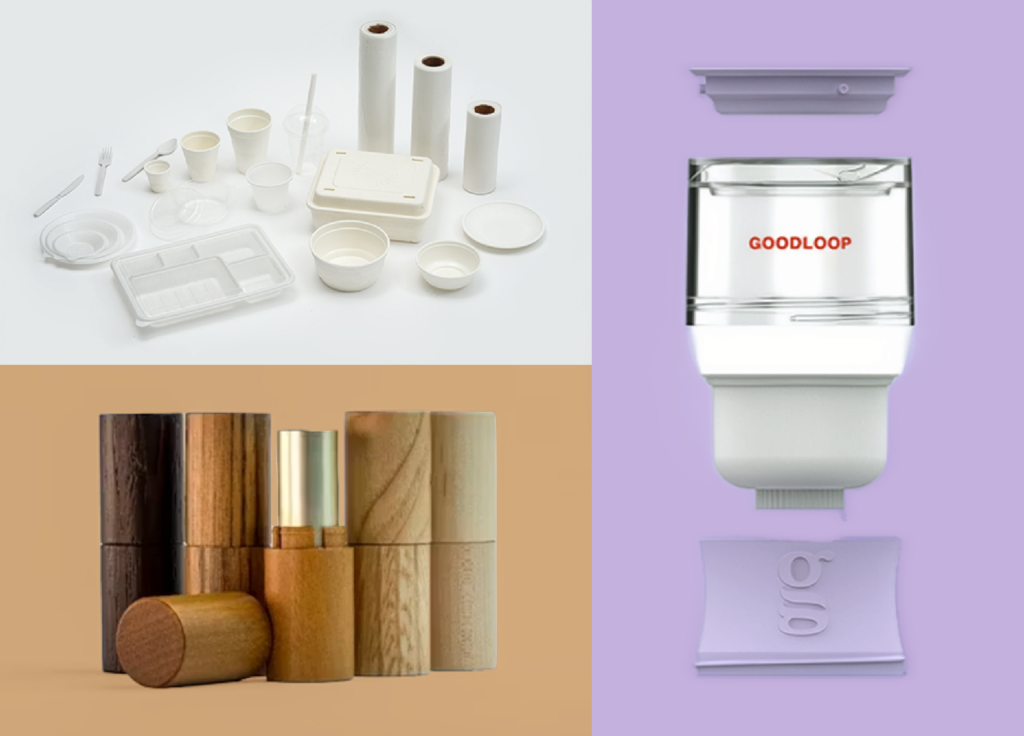
Mono-material packaging uses a single material across an entire component (think an all-aluminum mascara tube), allowing it to be recycled without disassembly. Driven in part by increasing global regulatory pressure, mono-material design is becoming a core strategy for circular packaging.
Grastic is a high-gloss, plastic-free material developed by NABLE as a sustainable alternative for prestige packaging. Designed to replicate the tactile feel and visual appeal of traditional plastic, it is fully biodegradable and compostable.
Refillable packaging systems continue to gain momentum across beauty, fragrance, and spirits categories. Designed for repeated use, these systems pair durable outer packaging with replaceable inner cartridges or refills, helping brands reduce material consumption and packaging waste while reinforcing long-term customer loyalty and premium positioning.
The immersive “Per(fume)-form” installation was a show highlight, driving home the idea that fragrance packaging isn’t just a vessel; it’s part of the experience itself. Materials that protect the formula while offering a tactile, premium unboxing moment are central to how fragrance brands differentiate at the point of sale and beyond.
Personalized fragrance and packaging experiences emerged as a growing area of innovation, with several discussions exploring how AI and consumer data are shaping the future of luxury product design. A standout keynote from Alex Wiltschko, CEO of Osmo, focused on “olfactory intelligence,” using AI to translate human behavior, emotion, and preference data into customized fragrance and packaging insights. The conversation highlighted how brands are beginning to explore more individualized, data-driven consumer experiences across both scent creation and packaging design.
The Bigger Picture
The conversations at LUXE PACK reinforced a broader shift: the luxury packaging industry is rethinking what packaging is fundamentally for. Sustainability is no longer a nice-to-have; it’s the baseline expectation, driven by both consumer values and tightening regulations. And as materials become more sophisticated, the relationship between design and manufacturing is getting closer. The best packaging work happens when creative vision and production reality are aligned from day one, and that’s something we’re deeply attuned to at Smith Design. As an Ecovadis-certified agency, we bring that same commitment to sustainability, actively guiding our clients toward materials, processes, and structures that reduce environmental impact without compromising on the packaging experience they expect.
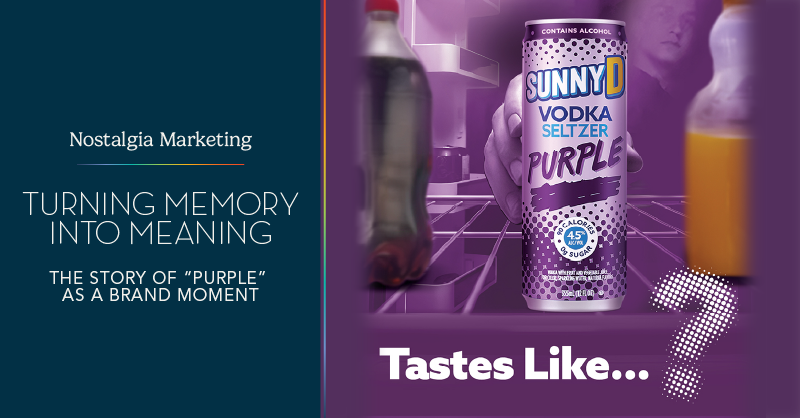
Some of the most powerful brand moments don’t start with something new; they start with a memory. SunnyD identified an innovation opportunity by tapping into a reference that had already been part of culture for decades and launched its long-anticipated “Purple” flavor.
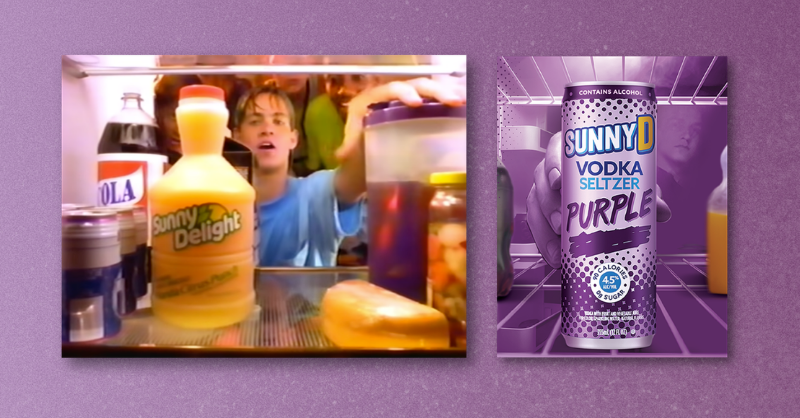
The reference dates back to a well-known 1990s commercial where a refrigerator full of drink options included the now-famous line, “purple stuff.” While the moment was brief, it stuck in viewers’ minds and quickly became part of the brand’s cultural footprint.
By bringing “purple stuff” to life through SunnyD’s latest launch of their Vodka Seltzer RTD beverage named Purple, the result wasn’t just a new product launch, but a moment of recognition for audiences who grew up with the reference.
Nostalgia remains one of the most effective tools in marketing because it resonates with people, creates immediate familiarity, and piques their interest. When people recognize something from their past, there’s no need to introduce it or explain it – the connection is already there.
This approach has become increasingly common as brands revisit recognizable elements from the 1990s, from the return of Dunkaroos, which came back after years of fan demand, to the revival of Floyd D. Duck across Bubble Yum’s social channels. By reintroducing familiar products and characters, these brands tap into shared cultural memory while also introducing those references to younger audiences encountering them for the first time.
The difference often comes down to how that nostalgia is applied. Forced nostalgia often tries to recreate moments too literally, relying on imitation rather than meaning. Authentic callbacks work differently; they take something that already exists in culture and give it new context, allowing audiences to complete the story themselves.
That’s what made this moment for SunnyD Vodka Seltzer work. The reference to “purple stuff” was already recognizable and understood, rooted in a 1990s cultural moment. It carried a kind of multi-generational awareness, resonating with those who grew up with it, while sparking interest through new eyes experiencing it for the first time. It also created a built-in curiosity. “What does purple taste like?” became part of the appeal, turning a long-standing joke into a real question people finally had the chance to answer.
Building Cross-Channel Campaigns from Cultural Relevance
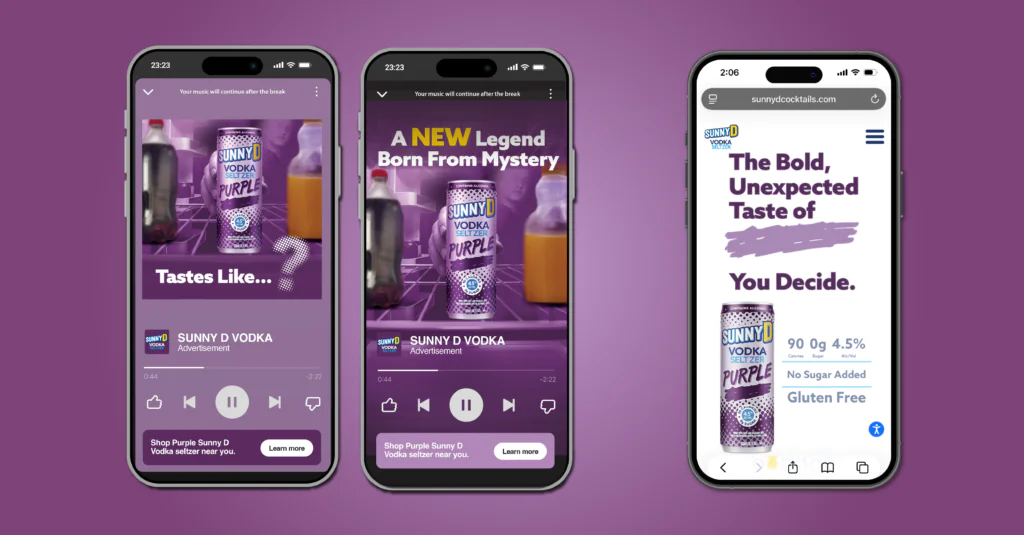
Because the idea was rooted in a cultural reference that already carried meaning, the real challenge became ensuring the campaign could live consistently across every place consumers might encounter it. In today’s digital landscape, the strength of a campaign concept depends on how seamlessly it can translate without losing its recognizability. That is where we came in.
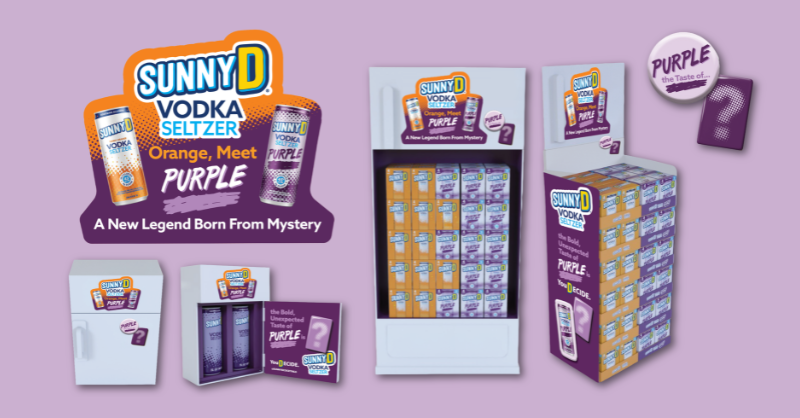
The Smith Design team helped the campaign come to life across a full ecosystem of touchpoints. We developed digital assets that carried the core “purple” idea into e-commerce, the brand website, Instacart, paid digital advertising, Spotify audio, trade advertising, and on in-store POS materials. In just three days, the campaign generated 117 million impressions, including 4.2 million from Walmart and Instacart display and 135.6K from Spotify ads, two key areas where we created digital assets for the campaign.
The goal wasn’t to reinvent the idea at every step, but to maintain consistency, so whether someone encountered it on their phone, in a store, or while streaming music, it felt like part of the same story.
Where Memory Becomes Experience
At its core, the SunnyD Vodka Seltzer Purple campaign launch shows how powerful it can be when brands don’t try to invent meaning but instead build from something that already exists in culture. Purple wasn’t created in the moment; it was something people already knew.
By turning that shared reference into a real product and a full campaign, the idea moved from memory to experience. And for audiences, that shift is what made it stick, not just seeing it again, but finally getting to experience it.
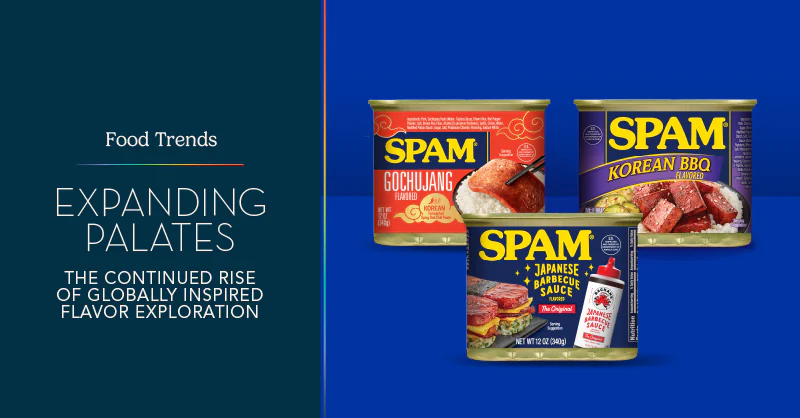
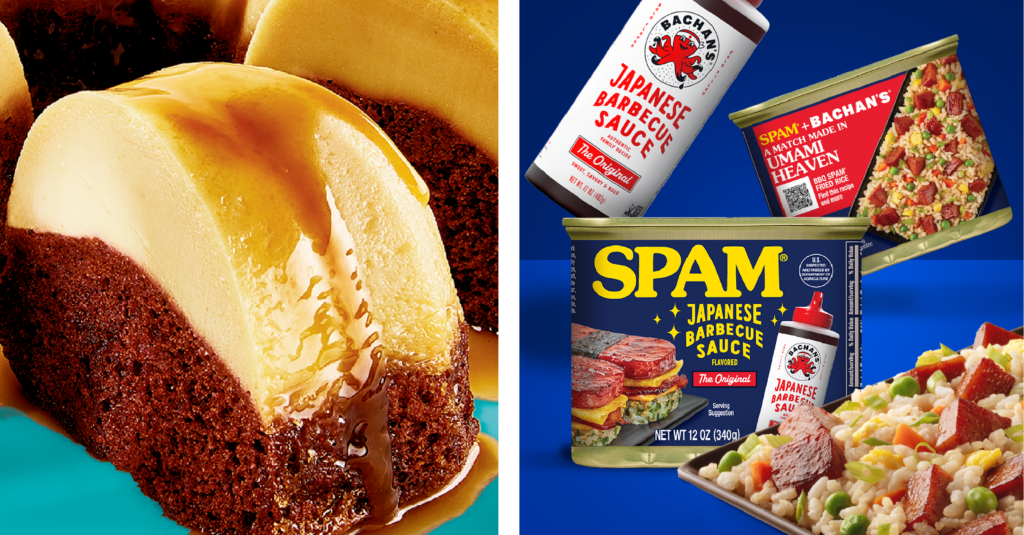
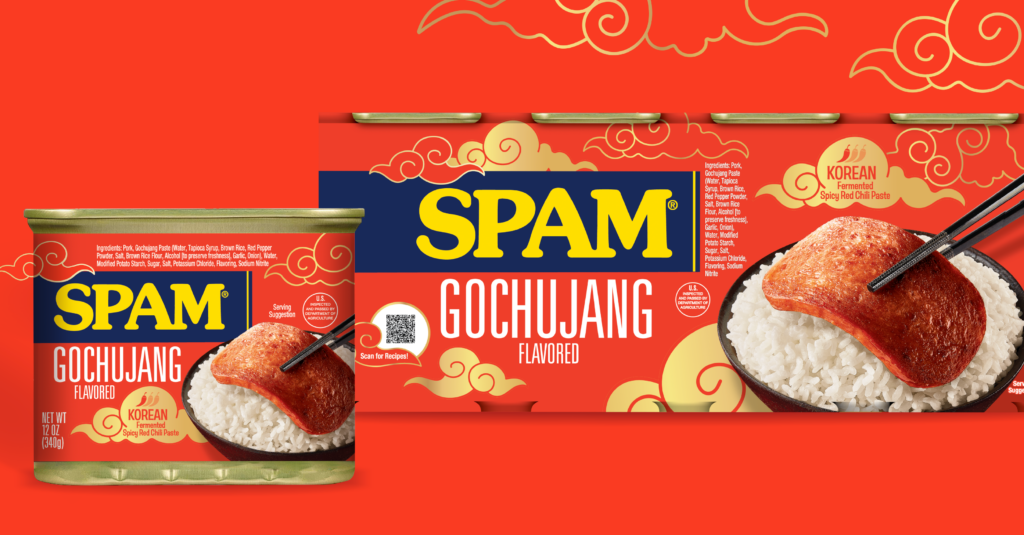
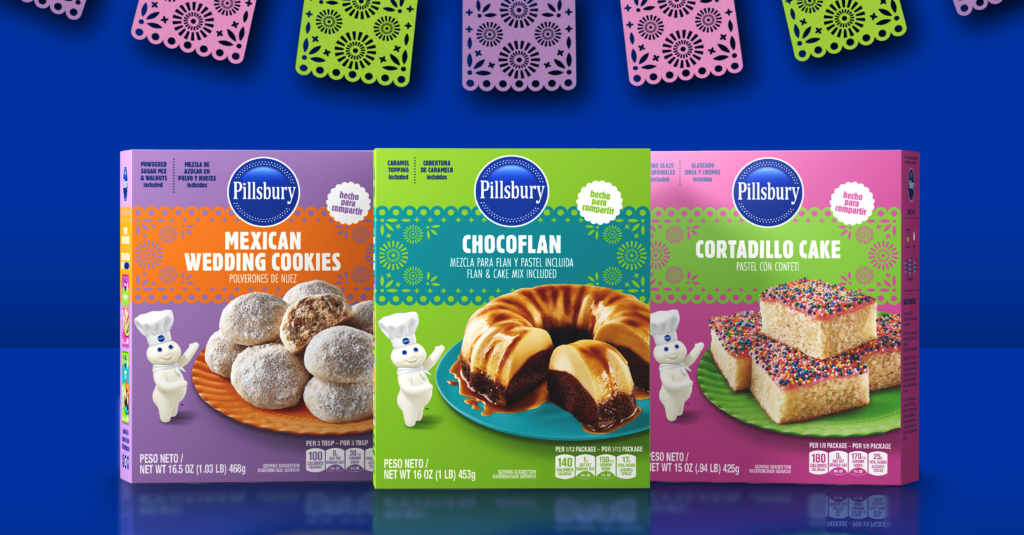
As Millennials and Gen Z continue expanding their palates, global flavors have become integral to their culinary experiences. Both generations grew up surrounded by diverse global cuisine, and for Gen Z, global food is more than just about taste; it’s an immersive experience that combines authenticity, culture, and emotional connection. This shift towards adventurous eating reflects a desire for more sophisticated palates as a way to enhance their culinary explorations. As retailers and brands respond to this growing interest, the availability of unique and complex flavors is expanding across various food and beverage categories. From snacks to drinks, options are becoming increasingly diverse, catering to audiences eager for new taste sensations.
Traditional brands that have historically relied on American flavor profiles are now expanding their horizons by embracing globally-inspired varieties. This shift allows them to connect with the adventurous tastes of Millennials and Gen Z while staying aligned with ever-evolving culinary trends.
Where Flavor Innovation Meets Authentic Design
But flavor innovation alone isn’t enough. As shelves become more crowded with globally inspired offerings, package design plays a critical role in signaling authenticity, communicating flavor cues, and inviting consumers to explore something new. Color palettes, typography, patterns, and imagery all work together to evoke cultural inspiration while maintaining a brand’s own visual equity. When done thoughtfully, packaging becomes a gateway, helping consumers quickly understand unfamiliar flavors and feel confident trying them.
SPAM has long held a meaningful place in Asian American food culture, where it’s been embraced across generations in dishes like musubi, fried rice, and other comfort-driven fusion meals. Recent limited-time offerings continue to build on that cultural connection, blending familiar pantry staples with globally inspired flavors to celebrate community and culinary creativity. A recent collaboration between the SPAM brand and Bachan’s Japanese Barbecue Sauce brings this idea to life, combining two pantry staples rooted in Asian American food culture into a single, umami-rich experience inspired by a pairing fans have been creating at home for years.
The SPAM Japanese Barbecue Sauce flavored variety, made with Bachan’s Original Japanese Barbecue Sauce, delivers a savory balance of sweet, garlicky, and soy-forward notes while celebrating Japanese American culinary traditions. Smith Design partnered with the SPAM team to help shape the packaging for this collaboration, translating the bold flavor fusion into a package design system that feels culturally informed, modern, and shelf-ready.
The launch of SPAM Gochujang, inspired by the popular Korean condiment, is another example of this trend. This limited-edition variety combines spicy, sweet, smoky, and umami elements, making it a great addition to any occasion. Smith Design also had the pleasure of collaborating with SPAM to shape the visual aesthetic of this product, ensuring it resonates with Korean heritage and aligns with the essence of gochujang sauces found in adjacent categories. This focus on design not only elevates the product’s appeal but also creates a deeper connection with consumers seeking immersive culinary experiences.
Beyond globally inspired heat and fusion, brands are also finding growth in traditional Hispanic flavors rooted in nostalgia, cultural pride, and the comfort of home. Consumers are gravitating toward offerings that feel authentic and emotionally resonant, creating a compelling opportunity for brands to expand into heritage-driven spaces with credibility and warmth. This insight guided our recent partnership with Pillsbury Baking and Hometown Foods to launch a new line of Hispanic Recipe baking mixes.
Following an in-depth cultural and visual audit and market analysis, we helped translate deeply familiar flavors into a modern retail experience that feels both genuine and accessible. The resulting packaging for Mexican Wedding Cookies, Chocoflan, and Cortadillo Cake blends vibrant, culturally inspired color palettes and patterning with photography that evokes homemade indulgence. The design honors time-tested recipes while staying true to Pillsbury’s playful, trusted brand voice, creating a bridge between tradition and contemporary shelf appeal.
Flavor Communication to Cultural Storytelling
As interest in global flavors continues to grow, packaging is evolving from simple flavor communication to storytelling. Whether highlighting regional ingredients, showcasing flavor mashups, or using design to convey heat, sweetness, or spice, brands have an opportunity to turn global inspiration into a compelling shelf presence. The result is packaging that doesn’t just describe the product, it sparks curiosity and encourages discovery.
Functional beverages continue to evolve, and a new dual-focus trend has emerged, with drinks that support both cognitive wellness and visible beauty. Consumers are no longer satisfied with single-purpose beverages; they want products that enhance how they feel and how they show up in daily life. Expo West 2026 highlighted this shift, revealing brands that combine wellness benefits, flavor, and lifestyle-focused experiences to redefine what drinkable function can be.
From Single Benefit to Integrated Wellness
Five years ago, functional beverages were largely defined by a single promise: energy, hydration, immunity, or digestion. Bold ingredients like adaptogens, probiotics, and nootropics dominated.
Today, the category is moving toward integrated wellness. Hydration incorporates broader mineral profiles. Energy is expected to feel balanced and sustainable. Magnesium has emerged as a key ingredient, supporting stress response, recovery, and overall equilibrium.
Consumers also evaluate flavor, design, and experience alongside efficacy. The most successful brands integrate benefits seamlessly, providing a daily ritual that fits naturally into modern lifestyles.
Trends in Action at Expo West
Expo West 2026 made these shifts tangible. Leading brands no longer focus on single ingredients. They combine multiple benefits into cohesive, everyday experiences.
Everyday wellness is evolving. Drinks now blend adaptogens, nootropics, and hydration with lifestyle benefits. Classic formats are being reimagined. Soda-inspired beverages feature functional ingredients and bold, nostalgic flavors. Protein is increasingly incorporated to support satiety and sustained energy. Bright, fruit-forward flavor combinations make functional benefits approachable and enjoyable.
Together, these trends reinforce a key insight: success is no longer defined by one ingredient. It comes from how well benefits, flavor, and experience are integrated.
Brain + Beauty: A Defining Shift
A major emerging trend is the convergence of cognitive wellness and beauty. Consumers no longer see these areas separately. Stress affects skin. Hydration impacts both mental clarity and appearance. Recovery, sleep, and overall balance influence how people feel and present themselves.
Magnesium plays a central role in this shift. Traditionally associated with relaxation and muscle function, it now supports calm, recovery, and overall balance. These benefits influence both cognitive clarity and visible well-being. In this way, magnesium bridges brain and beauty, connecting internal wellness with external expression.
At Smith Design, we recently partnered with Accelerated Manufacturing Solutions (AMS) to launch ELOS, a functional sparkling water brand that officially debuted at Expo West 2026. From the beginning, we worked end to end: naming guidance, brand positioning, visual identity, packaging, and comprehensive brand guidelines.
Our process began with a deep dive into the beverage category and broader wellness landscape. We analyzed competitors, consumer motivations, and emerging cultural signals to identify strategic opportunities for differentiation.
Smith Design collaborated closely with AMS to shape every aspect of the brand:
Naming: We explored potential brand names and strategies, ultimately landing on ELOS, a modern, flexible identity designed to grow with the category
Brand Positioning: We defined a promise of refreshment paired with everyday wellness benefits, expressed through a bold, rebellious personality. Large hyper-liquified fruit graphics signal energy, edge, and shelf presence
Visual Identity and Packaging: Design systems communicate premium refreshment while reflecting the playful, bold spirit of ELOS
Brand Guidelines: Comprehensive guidelines ensure consistency across packaging, marketing, and future product extensions
The initial product delivers a lightly sparkling beverage with magnesium, electrolytes, essential vitamins, and fruit-forward flavor. ELOS is designed as a flexible brand platform capable of evolving with trends, flavors, and consumer expectations.
By combining functionality with flavor, design, and experience, ELOS reflects the future of integrated wellness beverages and the Brain + Beauty movement.
Looking Ahead
Expo West 2026 confirms a clear trajectory for the category: integration is key. Consumers want products that deliver benefits, enjoyment, and balance, seamlessly woven into everyday rituals.
The brands that will lead combine credible wellness claims with strong identity, thoughtful design, memorable flavors, and compelling storytelling. ELOS demonstrates this evolution, pairing wellness, flavor, and personality in a way that feels current, forward-looking, and fully integrated.
For brands and partners, the takeaway is clear. Success comes from building platforms designed to evolve alongside consumers, where integrated wellness, enjoyment, and experience define the next chapter of functional beverages.
Brand extension is no longer a cautious step into closely related categories. Today, brands are making bolder, more visible leaps, sometimes logically, sometimes provocatively, into new spaces in pursuit of relevance, growth, and cultural momentum. In an era defined by fast-moving trends and fragmented consumer attention, expanding beyond the core can feel like a necessary survival strategy. Yet recent launches reveal a critical tension: not every stretch is embraced. Some feel like natural evolutions of what a brand already represents, while others ignite confusion, skepticism, and even backlash across social platforms. The question is no longer whether brands can stretch, but when that stretch feels authentic, and when it crosses the line into cultural dissonance.
A recent and highly visible example is Beyond Meat’s move into the functional beverage space. For some consumers, the launch signaled innovation and a broader lifestyle platform built around plant-based nutrition. For others, it felt disconnected from what Beyond Meat has historically stood for: meat alternatives grounded in food science, sustainability, and savory meal occasions. The polarized reaction underscores a growing challenge in modern brand strategy. Consumers expect brands to evolve, but only if that evolution aligns with the mental model they already hold. When the connection is unclear, even well-intentioned innovation can feel forced or opportunistic.
In contrast, several recent brand extensions demonstrate how stretching can succeed when rooted in clear brand logic and occasion relevance. Columbus Meats’ expansion into premium nuts felt intuitive because it extended the same world of craft, quality, and elevated snacking that the brand already owned. Premium nuts naturally fit into charcuterie boards, entertaining moments, and upscale grazing occasions—spaces where Columbus already had cultural permission to play. Rather than redefining the brand, the move simply broadened how and when consumers could interact with it.
Similarly, Farm Rich’s expansion from frozen appetizers into frozen breakfast built upon its existing equity in comfort, convenience, and freezer-aisle familiarity. Breakfast was not a reinvention but a natural adjacency, allowing the brand to show up at a new daypart while delivering the same promise of easy, crowd-pleasing food. Skippy’s launch of PB Bites followed a comparable logic. By translating its strongest equity, iconic peanut butter taste, and nostalgic appeal, into an on-the-go snacking format, Skippy responded to modern consumption behavior without abandoning its core identity. This was not a leap into a new category as much as a format evolution, meeting consumers where their routines had shifted.
Boar’s Head’s recent entry into indulgent dessert dips may be the boldest example, yet it still remains grounded in the brand’s long-standing reputation for premium, deli-counter craftsmanship. By reframing its role from strictly savory to “premium entertaining,” Boar’s Head expanded into a new emotional territory while staying true to its values of quality and indulgence. The move widens its relevance at social gatherings, extending the brand beyond meats and cheeses into dessert moments without eroding its upscale positioning.
Across these successes, three strategic principles consistently emerge. First, effective brand stretches expand existing occasions rather than inventing entirely unrelated ones. Columbus did not jump into soda; it deepened its presence in snacking and entertaining. Skippy did not become a wellness brand; it stayed in the snack lane and simply made peanut butter more portable. Beyond Meat, by contrast, entered a beverage category defined by different emotional and functional expectations, creating friction between what consumers knew the brand for and what it was suddenly offering.
Second, successful extensions leverage true brand equity, not just brand awareness. They draw from taste cues, trust, quality signals, and the emotional role a brand already plays in consumers’ lives. When Farm Rich entered breakfast, it carried forward its promise of easy comfort food. When Boar’s Head entered the dessert dips market, it leaned into premium indulgence and special-occasion appeal. Extensions fail when they rely solely on logo recognition without translating the brand’s deeper story into the new category in a meaningful way.
Finally, the most successful stretches feel additive rather than opportunistic. Today’s consumers are highly attuned to trend-chasing, especially in saturated spaces like functional beverages and wellness products. Without a clear narrative bridge, Beyond Meat’s move risked being interpreted as a business maneuver rather than a brand evolution. By contrast, Skippy PB Bites addressed a real, practical need: peanut butter without the spoon, making the extension feel purposeful and consumer-driven rather than reactive.
As categories fragment and consumption moments multiply, brand stretching will only accelerate. But the brands that win will not be the ones that stretch the farthest; they will be the ones that stretch with coherence. The difference between opportunity and polarization lies in narrative continuity—whether a new product feels like a natural next chapter or an unrelated side quest. When a brand extension expands an existing role, honors core equities, and solves a genuine consumer need, it builds relevance and long-term growth. When it breaks the mental contract consumers have with the brand, it risks becoming a headline instead of a strategy. In today’s culture, visibility may spark conversation, but authenticity is what sustains trust—and trust remains the most powerful currency a brand can carry into any new category.
The functional beverage market is entering its next phase of growth, one defined not only by efficacy but also by experience. As consumers increasingly look to drinks for energy, calm, focus, hydration, and gut health, these products are becoming integrated into daily rituals rather than treated as occasional supplements. Functional beverages are now staples for consumers seeking holistic wellness solutions. However, as the category becomes increasingly crowded, differentiation is no longer driven solely by ingredients. According to NielsenIQ and Euromonitor, the number of functional beverage launches has surged across various channels, resulting in a proliferation of similar claims and formats. In this environment, branding, packaging, and marketing clarity have become the primary drivers of trust, trial, and repeat purchase.
Branding: From Functional Claims to Confident Guidance
Consumers today are highly informed—but also increasingly skeptical. FMCG Gurus reports that shoppers want functional benefits, but they do not want to “decode” labels to understand them. This places new pressure on brands to act as guides, not just product providers. Mintel highlights that transparent, educational messaging is now table stakes, particularly for ingredients like adaptogens, nootropics, probiotics, mushrooms, and cannabinoids. Successful brands are simplifying complex science into clear, benefit-led language, using terms like “calm,” “focus,” “restore,” and “unwind,” while offering deeper education through secondary panels, QR codes, and digital extensions. WGSN further notes a shift toward reassuring familiarity: pairing emerging ingredients with well-known nutrients (such as magnesium, B vitamins, or electrolytes) helps lower the barrier to trial.
From a brand strategy standpoint, this means:
Clear brand architecture that ladders products to moments or outcomes
A confident, authoritative tone that educates without overwhelming. Replace ambiguity with confidence and truth.
Consistent language across packaging, paid media, and owned channels
Packaging: Designing for Shelf Clarity and Sensory Appeal
While functionality drives consideration, flavor ultimately drives purchase. Mintel identifies taste as the top attribute consumers associate with functional beverages, ranking above health benefits. Beverage Marketing Corporation reinforces this insight, noting that repeat purchase is overwhelmingly tied to flavor satisfaction. Packaging must strike a careful balance by clearly and quickly communicating function, while simultaneously evoking flavor, enjoyment, and sensory reward—positioning the product within the realm of “permissible wellness,” where it feels indulgent yet justified. This has led to packaging systems that borrow cues from premium food, beauty, and even spirits categories.
Design trends include:
Rich, flavor-forward color palettes paired with clean benefit callouts
Elevated typography and restrained layouts that signal credibility
Ingredient photography or illustration that suggests natural origins and taste
We see a growing role for high-quality, in-house photography in enhancing flavor appeal and trust, especially in categories where taste can feel abstract. Products that look delicious feel less medicinal and more lifestyle-oriented. For brands targeting the sober-curious or alcohol-alternative consumer, WGSN highlights a shift toward cocktail-inspired aesthetics featuring glass cues, botanical illustrations, and ritual-driven design, positioning functional drinks as social, rather than solitary.
Marketing: Occasion-Based, Ritual-Driven, and Social by Design
Functional beverages are no longer confined to “me time.” Mintel & Nielsen both report that nearly 60% of consumers want to see functional drinks offered in bars and restaurants, signaling a major expansion in usage occasions. By 2027–28, the report predicts these beverages will become commonplace at concerts, fitness studios, sporting events, and sober-curious social spaces. This shift has significant implications for marketing strategy, as brands seeing the strongest growth are those that anchor products to moments, not just benefits. People are looking for products that focus on morning productivity and rituals, midday stress relief or hydration resets, and even winding down or alcohol replacement occasions. Marketing that highlights when and how to drink, rather than just why, helps consumers integrate functional beverages into their daily lives. Social content, sampling programs, and experiential activations are increasingly centered on shared moments, positioning these drinks as connectors rather than utilities.
For functional beverage brands, success begins by leading with flavor and reinforcing it with function. Taste is what captures attention at shelf, while clear, educational messaging is what builds trust and confidence over time. Consumers want products that deliver on health benefits, but they are far more likely to engage when those benefits are framed through an enjoyable, craveable experience. Clear benefit communication, evocative visuals, and credible design cues must work together to quickly convey value, differentiate from competitors, and signal quality in a crowded set. At the same time, brands must simplify the science, making complex ingredients and formulations easy to understand without undermining authority or credibility.
The functional beverage category is rich with opportunity, but it is also increasingly unforgiving. The brands that will win are those that treat brand strategy and packaging not as decoration, but as strategic tools that translate function into desire. When flavor, function, and education work in harmony, functional beverages transcend claims and become part of culture.
References
Mintel, Functional Drinks – US – 2024
NielsenIQ, Beverage Category Insights
Euromonitor International, Health & Wellness Drinks
WGSN, Food & Drink Trend Forecasts
FMCG Gurus, Consumer Attitudes to Functional Nutrition
Back-to-school shopping is one of the biggest retail holidays of the year. In 2019, consumers spent more than $26 billion in their shopping to stock up for the school year. Like so many traditions impacted in 2020, the usual back-to-school scramble felt different this year. Supply lists shifted to include Chromebooks, teaching easels, and kid-sized desks, as parents are doing their best to make their home an efficient learning space.
Technology needs of the online classroom drove sales up, for an estimated total of $33.9 billion. Online retail sales are seeing an unsurprising increase across all industries, and school supplies have been no exception. 70% of parents and students have shifted to buying supplies online due to COVID-19.
Retail brands that typically see a surge in demand during the back-to-school season had to pivot their tried-and-true strategies to meet the suddenly changing needs of their consumers. These brands now have to support their consumers in a different way. Going forward, they have to determine and communicate how their products can fit into our new virtual, homebound routines.
Positioned as “communication essentials”, Bic is a brand that has become fundamental to back-to-school supplies. In a time of changing communication structures, they have an opportunity to build trust in their consumer base by striving to remain the go-to supplies for learning, despite the shift to virtual classrooms. For example, their Evolution® pencils are sturdy and long-lasting, and could be positioned to parents as perfect for stocking up shelves with supplies that won’t need constant replacing.
Tasked with finding hands-on activities that encourage creativity and provide a break from the screen, parents are purchasing supplies like Softee Dough. Softee Dough recently launched a new look for their modelling clay kits. The new design stands out both on shelf and digitally, a necessity in this era of increased online shopping.
In addition to school supplies, parents have been looking for quick and easy snack options for their kids at home. Snacks that kids can access independently during their virtual lessons are in high demand. Skippy’s mess-free peanut butter in their new squeeze pouch is convenient for snacking between online assignments.
This back to school season brought attention to the need for nimble and flexible brand strategies. With the holiday season quickly approaching, brands will need to apply learnings from this fall to their holiday retail strategies.
For help navigating the ever-changing world of consumer trends, subscribe to our newsletter or reach out to our team below.