The pet food industry has shifted significantly in the last decade. Owners are increasingly reading nutrition labels more closely: asking where ingredients come from and looking for pet food options that feel closer to real food.
The Rise of Cold-Pressed Dog Food
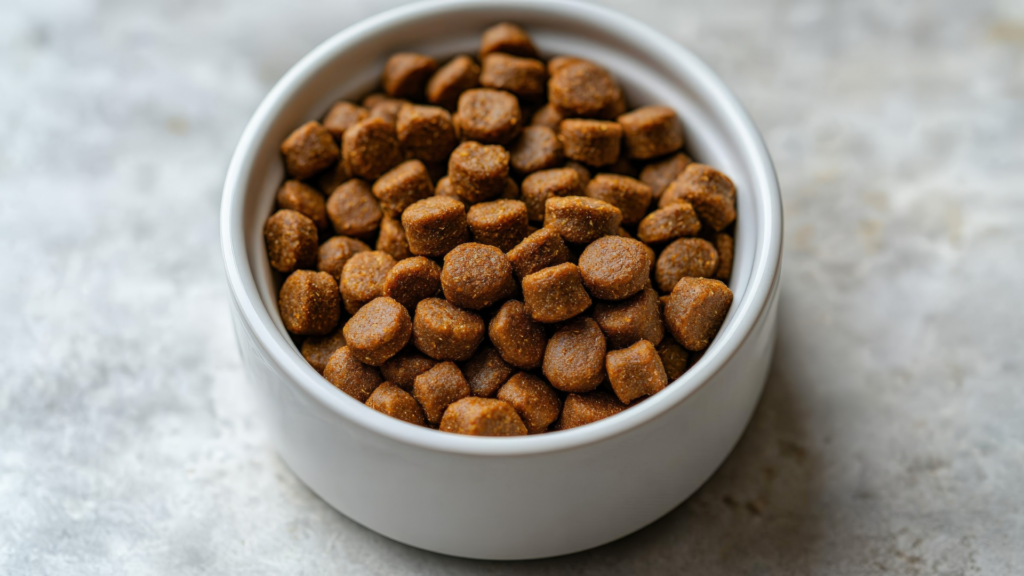
This shift has paved the way for processing methods that previously had little presence in the pet food aisle. Originating in Germany and the Netherlands in the early 2000s, cold-pressed dog food is one of these methods, made by combining ingredients with water and pressing them into pellets at low temperatures rather than cooking them at high heat. This gentler process helps preserve more of the food’s natural nutrients and flavor, and the pellets break down faster once a dog eats them, making it easier to digest.
These qualities are just the starting point. Cold-pressed food comes with a range of other benefits for pups:
Gentler on sensitive systems: The minimal processing makes it a great choice for puppies, senior dogs, and dogs prone to stomach sensitivity.
Dry and shelf-stable: Cold-pressed food stores the same as traditional kibble in that it doesn’t need refrigeration or freezer space, all while delivering some of the same nutritional advantages associated with raw diets.
Pairs well with raw feeding: Because it breaks down at a similar rate, some owners use it alongside raw food or in its place when convenience matters.
Supports skin and coat health: Many owners report a softer coat and fewer skin issues after switching.
Better energy levels: Owners often notice more consistent energy throughout the day rather than spikes and crashes.
For pet food brands, cold-pressed represents a chance to expand into a category that’s still relatively new to most consumers. The opportunity isn’t just in offering the product; it’s in explaining what makes the process and benefits different, and doing so clearly enough to stand out in a category that’s becoming more premium and crowded.
Many pet owners don’t know what separates cold-pressed from freeze-dried, air-dried, or traditional kibble, so brands need to communicate the process itself, often before a shopper ever picks up the bag on shelf.
Why That First Glance Matters
Nextrition, one of our past clients that is now within the cold-pressed space, describes the cold-pressed process as delivering food that’s “up to 30% more nutrient-dense than traditional kibble.” (Pet Age). They’ve also noted that even picky eaters, dogs that have rejected fresh, freeze-dried, and air-dried options, often respond well to cold-pressed food specifically, which they attribute to how much of the ingredients’ natural flavor survives the process.
That kind of response from dogs is one thing. Getting a shopper to notice the difference before the food ever reaches a bowl is another challenge entirely, and it’s the exact challenge we took on with another brand: Supreme Source.
Bringing Cold-Pressed to Shelf with Supreme Source
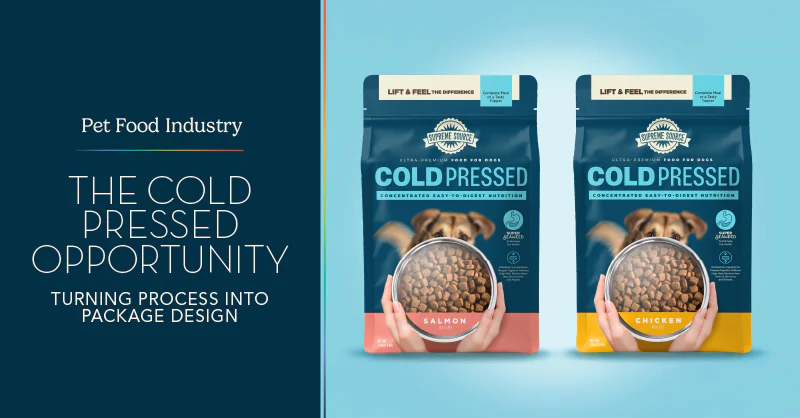
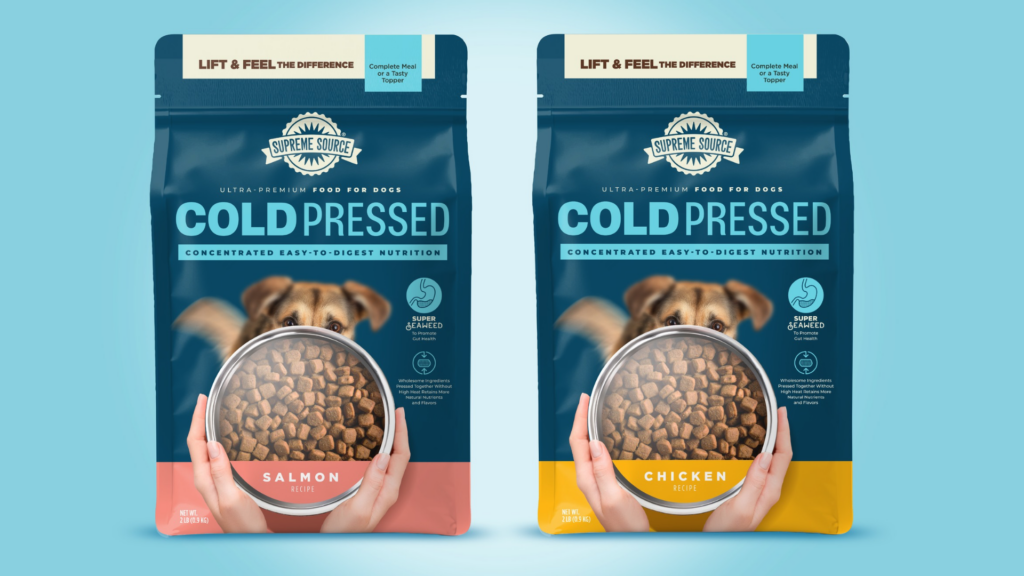
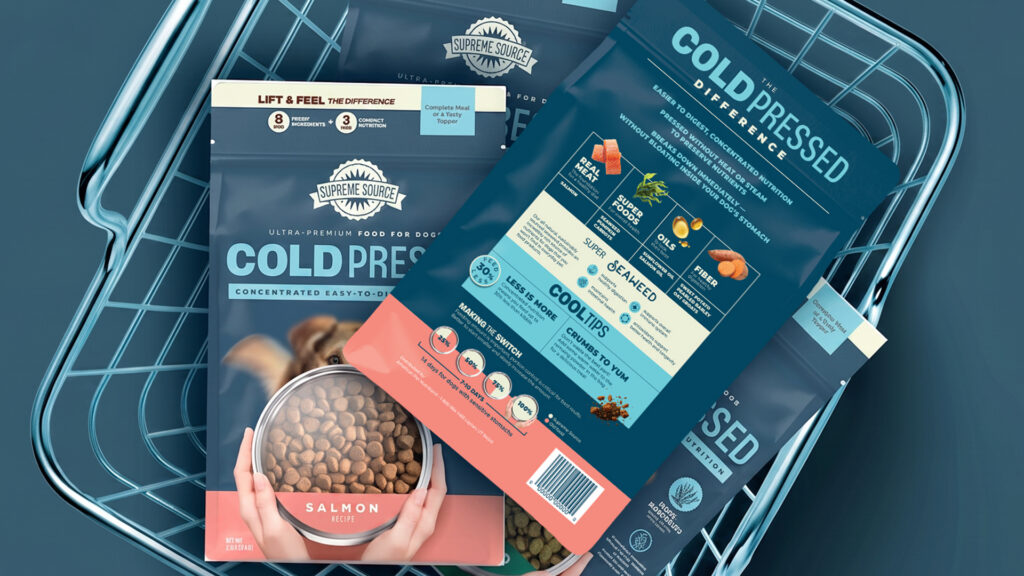
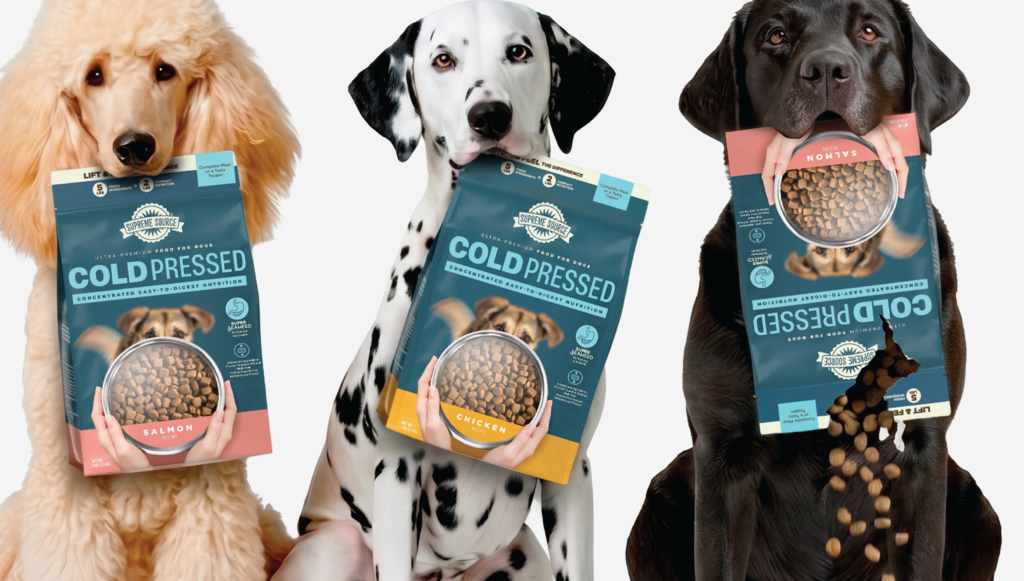
For Supreme Source’s new cold-pressed line, the goal was to make the format instantly understandable in the few seconds a shopper actually spends looking at a shelf. Our team explored multiple directions before landing on an approach that balanced shelf standout with premium credibility and felt distinct within Supreme Source’s existing portfolio. Cold-pressed reads as a confident and intentional choice, rather than a term shoppers have to stop and decode.
In addition, the viewing window became the centerpiece of that strategy, putting the product on display so the food makes its own case. Ingredient callouts, like seaweed and mushrooms for digestive health, are visible enough to inform without cluttering a design built to communicate faster.
Check out our full Supreme Source case study below:
Cold-pressed is still early in its growth, but that won’t last long. As more brands move into the space, shoppers will have more options to compare and less patience for packaging that doesn’t quickly explain what sets one product apart from the next. Right now, a lot of the education still falls on the brand itself, since most consumers don’t yet have a baseline understanding of what cold-pressed means, the way they do with terms like “freeze-dried.”
That gap is an opportunity for brands willing to invest in it, but it won’t stay open forever. As awareness grows and more competitors enter the category, cold-pressed will likely follow the same path as other formats: what once needed a full explanation on pack will eventually become a term shoppers recognize at a glance. The brands that get the story right now, while there’s still room to define what cold-pressed means to a new customer, will have a real head start in how pet parents come to understand and trust the format.
Smith Design helps CPG brands turn complex stories into packaging that makes sense at shelf.
Business takeaways from the 2026 NextUp Leadership Conference by Jill Weible
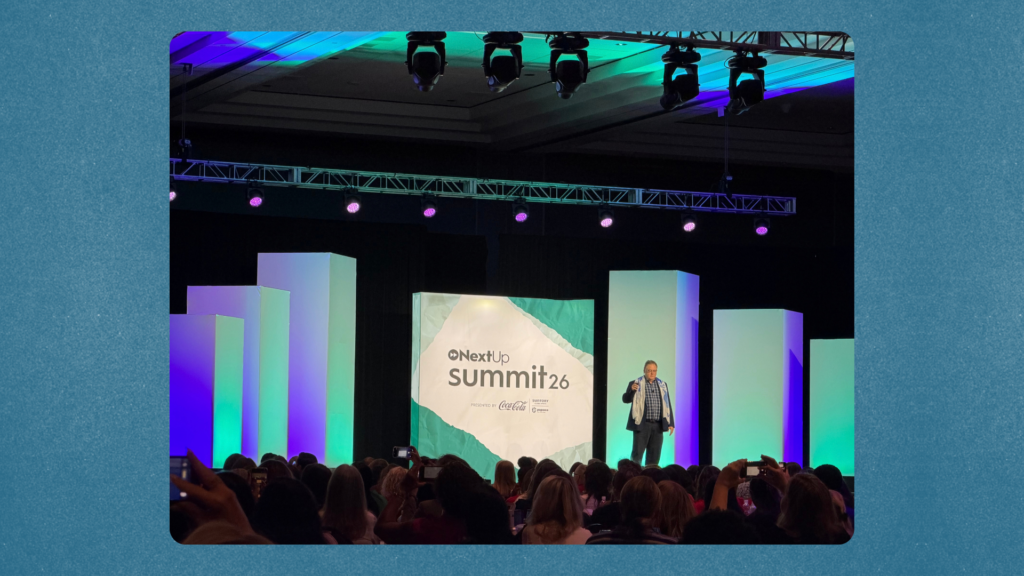
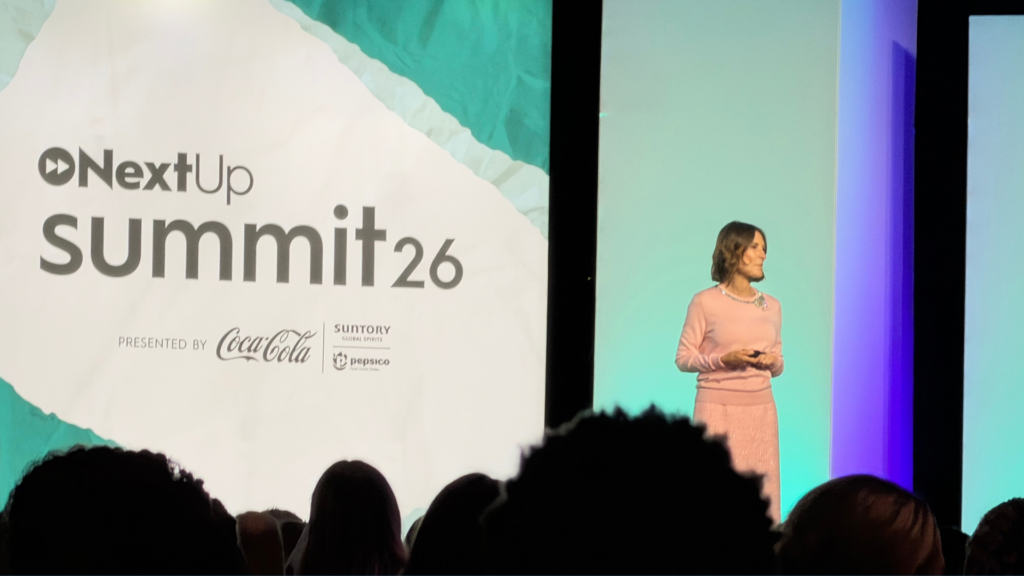
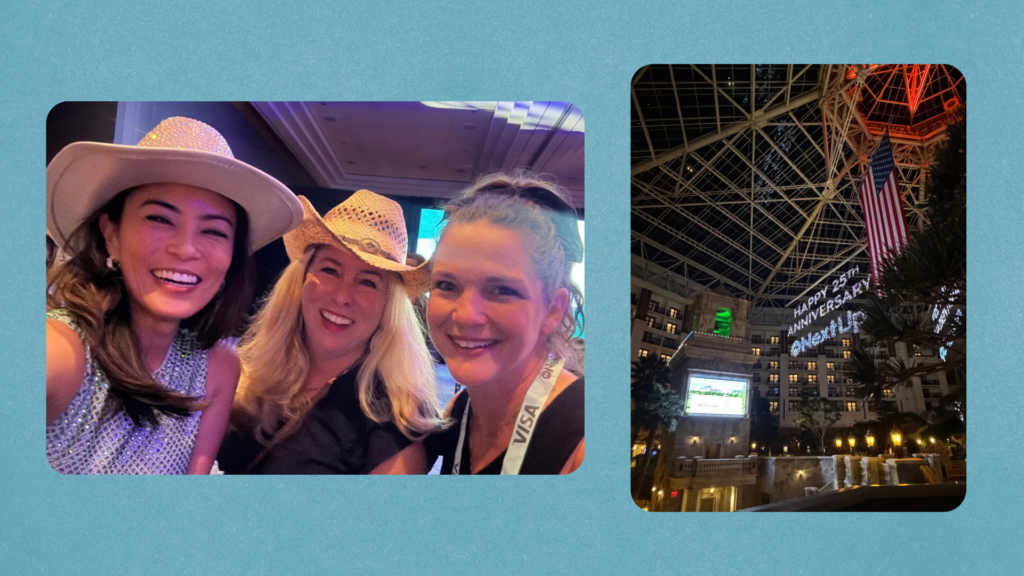
The 2026 NextUp Leadership Conference brought together over 1,000 leaders from across the consumer-packaged goods and retail industries to celebrate the organization’s 25th anniversary and explore what it takes to lead through change.
Over three days in Grapevine, Texas, one message surfaced repeatedly: Strong leadership is no longer simply about navigating the business in front of us. It requires understanding what is changing around us, determining what should remain constant, and building the organizational confidence to act before all the answers are clear.
The conference covered a wide range of topics, but three sessions offered particularly relevant lessons for businesses and leaders: Build-A-Bear’s story of resilience and transformation, Visa’s perspective on the economy, and Suzy Welch’s approach to purpose-driven leadership.
The Build-A-Bear Transformation: Evolving the Business While Staying True to the Brand
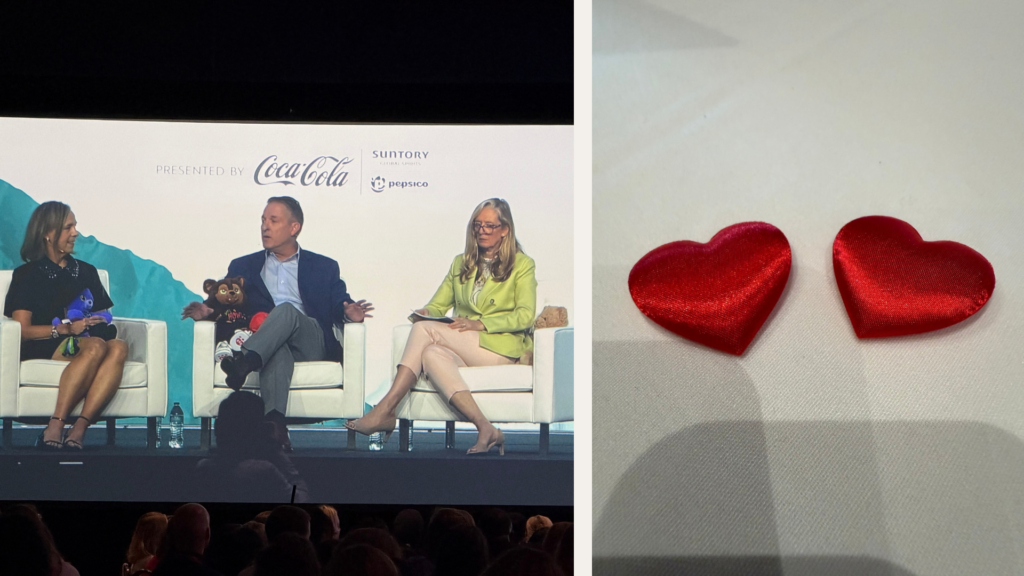
Nicola Johnson, Global Consumer Industry Leader at Deloitte and former NextUp board member, led a conversation with Build-A-Bear executives Chris Hurt and Kim Utlaut about the company’s transformation.
Build-A-Bear’s original business model was closely tied to the American shopping mall. As mall traffic declined during the early and mid-2010s, the company faced a fundamental challenge: How could it continue delivering an experience built around physical participation when consumer behavior and retail itself were changing? In response, they launched a multi-year turn around plan that included rethinking its store footprint, its consumers, and where the Build-A-Bear experience could live.
The pandemic intensified their challenges and vulnerability. In response, Build-A-Bear accelerated e-commerce, buy online and pick up in-store, curbside service, and other ways to reach consumers beyond its traditional locations. But the company’s response went much further beyond adding new sales channels.
Build-A-Bear’s leaders stepped back and asked broader strategic questions:
What can we control, and what is the opportunity within the challenge?
Who are our consumers today?
What motivates them?
Where else could the Build-A-Bear experience live?
How can we attract new audiences without losing the people who already love the brand?
Those questions opened new avenues for growth. Build-A-Bear expanded into tourism destinations, cruise ships, Great Wolf Lodge locations, and pop-up experiences while strengthening the connection between its physical and digital channels. Partnerships with cultural properties such as the NFL, Marvel, and Super Mario also helped the company engage broader and increasingly adult audiences.
The most important lesson is that transformation does not have to mean abandoning what made a brand successful. Build-A-Bear did not walk away from the emotional experience at the heart of its business. It found more places, partnerships, and occasions through which that experience could be delivered.
Nostalgia has become one of the brand’s most valuable growth assets. A consumer who built a bear as a child can return years later to build a bear with their own children. An adult fan can also enter through entertainment, sports, gaming, or collecting. The company recognized that its brand was not confined to a specific age group. It was built around an enduring emotional experience.
That distinction matters. Brands can become so focused on reaching a new demographic that they dilute the meaning that made them valuable in the first place. Build-A-Bear demonstrates that the stronger strategy is often to reinterpret a brand’s core equity for new audiences rather than replace it.
Its international expansion, now in 37 countries, with the number of markets reportedly doubling in two years, also shows how a clearly understood emotional proposition can travel across cultures. As the company puts it, “A bear hug is understood in every language.”
The business takeaway
When market conditions disrupt a business model, leaders should separate the brand’s enduring value from the way that value has traditionally been delivered. Channels, formats, and consumer entry points can change while the central emotional promise remains intact.
Economic Resilience: Look Beyond the Headline
Wayne Best, Chief Economist at Visa, offered a broader view of the forces influencing consumer behavior and business decision-making.
His central argument was that the U.S. economy is more resilient than many headlines suggest. Inflation, interest-rate volatility, and uneven consumer confidence continue to create pressure, but headline sentiment does not always reflect the full economic picture.
For business leaders, that is an important reminder: Decisions should be grounded in multiple sources of evidence rather than the prevailing narrative alone. Economic uncertainty can cause companies to become overly defensive, delaying investment or innovation precisely when opportunities may be emerging.
Best also shared a striking perspective on AI adoption. According to the data he presented, 76% of C-suite executives reported saving four or more hours through AI during the previous week, compared with only 14% of workers. Whether that gap reflects differences in access, training, job responsibilities or expectations, it points to an important organizational challenge. Leaders may be experiencing AI as a meaningful productivity tool while much of the workforce has yet to see the same benefit.
The real measure of successful AI adoption is not the number of tools a company introduces. It is whether those tools make work measurably better across the organization. That requires understanding where employees lose time, designing AI around actual workflows, providing appropriate training, and evaluating the quality of the output. All of these factors must be considered while incorporating AI effectively, not simply the speed at which it is produced.
If productivity gains remain concentrated at the executive level, companies risk creating a disconnect between leadership’s enthusiasm for AI and employees’ everyday experience of it.
Best’s discussion of wealth transfer also illustrated how demographic and economic trends can create new consumer occasions. He shared that 28% of grandparents have taken their grandchildren on a trip without their parents, while 35% plan to take a “skip-gen” trip in the next three years. This trend reflects a broader shift in how wealth is being shared: not only through inheritance, but through experiences created in the present.
That has implications for brands across travel, hospitality, financial services, food, entertainment, and retail. Generational change is influencing not just who spends, but who participates in the purchase, who benefitsfrom it, and what kind of value the experience is expected to create.
The business takeaway
Economic data becomes more useful when businesses translate it into behavioral implications. Leaders should ask how changes in technology, wealth, and generational relationships are reshaping purchase occasions, not simply whether consumer spending is rising or falling.
Purpose as a Leadership Discipline
Author, leadership expert, and NYU Stern professor Suzy Welch brought the conversation from organizational transformation to individual decision-making.
Her “Becoming” methodology encourages people to evaluate career and life choices through a deeper set of questions: Who am I? What am I good at? What matters most to me? And does this opportunity align with the person I am becoming?
Although the framework for Suzy’s methodology is personal, it has clear business relevance. Organizations frequently evaluate talent through past performance and immediate business needs. Employees often make decisions in similar terms: Is this a promotion? Does it increase my compensation? Is it the logical next step?
Those questions matter, but they do not always reveal whether a role is aligned with someone’s strengths, values, and longer-term direction. When those factors are ignored, organizations can promote strong performers into roles that do not suit them, lose talented people who cannot see a meaningful path forward, or mistake upward movement for genuine development.
Purpose is sometimes treated as a softer leadership topic, but it has practical consequences for engagement, retention, and decision-making. Leaders who understand what motivates their people can build more individualized development paths and make better use of the talent already within the organization.
Welch’s methodology also reinforces the importance of self-leadership. Senior leaders spend significant time guiding teams and setting the direction of the business, but they also need to periodically reconsider whether their own skills, priorities, and definitions of success are evolving.
The business takeaway
Career development should not be treated as a predetermined ladder. The best leadership conversations connect organizational needs with an individual’s strengths, motivations, and future direction.
What I’m Taking Back to the Business
The three sessions addressed very different subjects, and together they created a useful leadership framework.
First, protect the enduring value of the brand while remaining flexible about how and where it is expressed. Build-A-Bear’s transformation shows that a company can modernize its model without losing its emotional center.
Second, examine the behavior beneath the data. Economic conditions, AI adoption, and demographic shifts matter most when leaders understand how they shape the real choices consumers and employees make.
Third, approach leadership and talent decisions with greater intentionality. Businesses are stronger when people understand not only what they are working towards, but why it fits their strengths and aspirations.
The conference reinforced that leadership is not about having certainty in an uncertain environment. It is about knowing what must remain true, recognizing what needs to change, and having the discipline to move forward thoughtfully.
That is what it means to be “Built to lead what comes next.”
The grocery aisle has always been a battleground for attention. But the battlefield has expanded. Today, a package doesn’t just need to pop off a shelf; it needs to stop a scroll, survive image compression, and be worthy of a 15-second video. Social media has fundamentally changed what “good packaging” means, and brands that understand this are winning. Here are five ways it’s happening.
1. Packing Protein
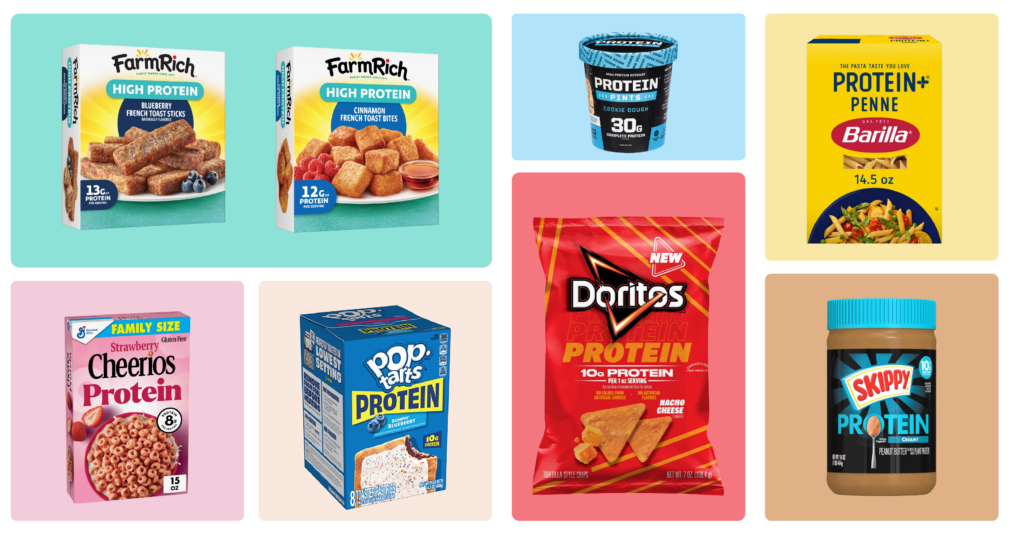
Protein water. High-protein Doritos. Protein ketchup. A decade ago, these would have sounded like a fever dream. Today, they’re just Tuesday at the grocery store, and fitness influencers on TikTok, Instagram, and YouTube deserve a lot of the credit.
The protein obsession has forced a rethink of packaging strategy across the industry. Some brands are simply moving protein claims from the back panel to the front, turning what used to be a nutritional footnote into the hero of the design. Others are launching entirely new protein-forward SKUs, recasting familiar products as performance foods and reaching new consumer segments in the process. Cereals like Cheerios and even ice cream like Protein Pints have started borrowing the visual language of protein bars and sports drinks, leaning into a performance aesthetic that would have felt out of place five years ago.
At Smith Design, we’ve helped brands capitalize on this shift, in some cases by simply refreshing brand lineups to highlight the macro nutrient on pack to help consumers get the information they need to reach their protein goals. In other cases, we’ve helped brands go a step further, such as our design of Farm Rich’s high-protein breakfast line of French Toast Sticks.
Trend to watch: Fibermaxxing. With more than 95% of Americans not getting the amount of fiber recommended by the FDA, and a new awareness of the importance of gut health, fiber is getting greater attention on social media. Expect packaging to respond.
2. Collaborations and Limited-Edition Flavor Drops
Social media runs on novelty. Even a brand’s most loyal fans can experience “like fatigue” after seeing the same product photo a thousand times. The solution the industry landed on? Borrow a page from luxury fashion: collaborate, drop, and repeat.
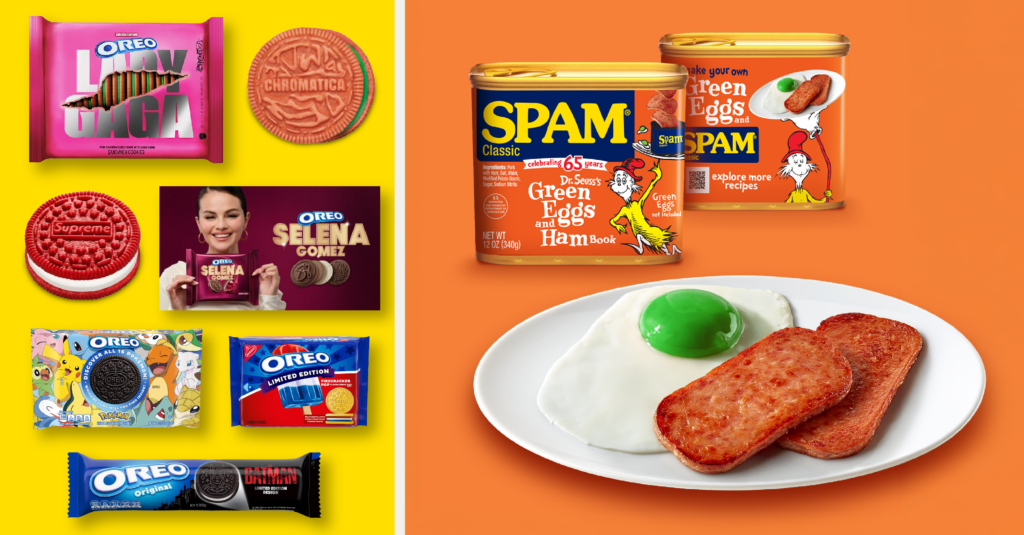
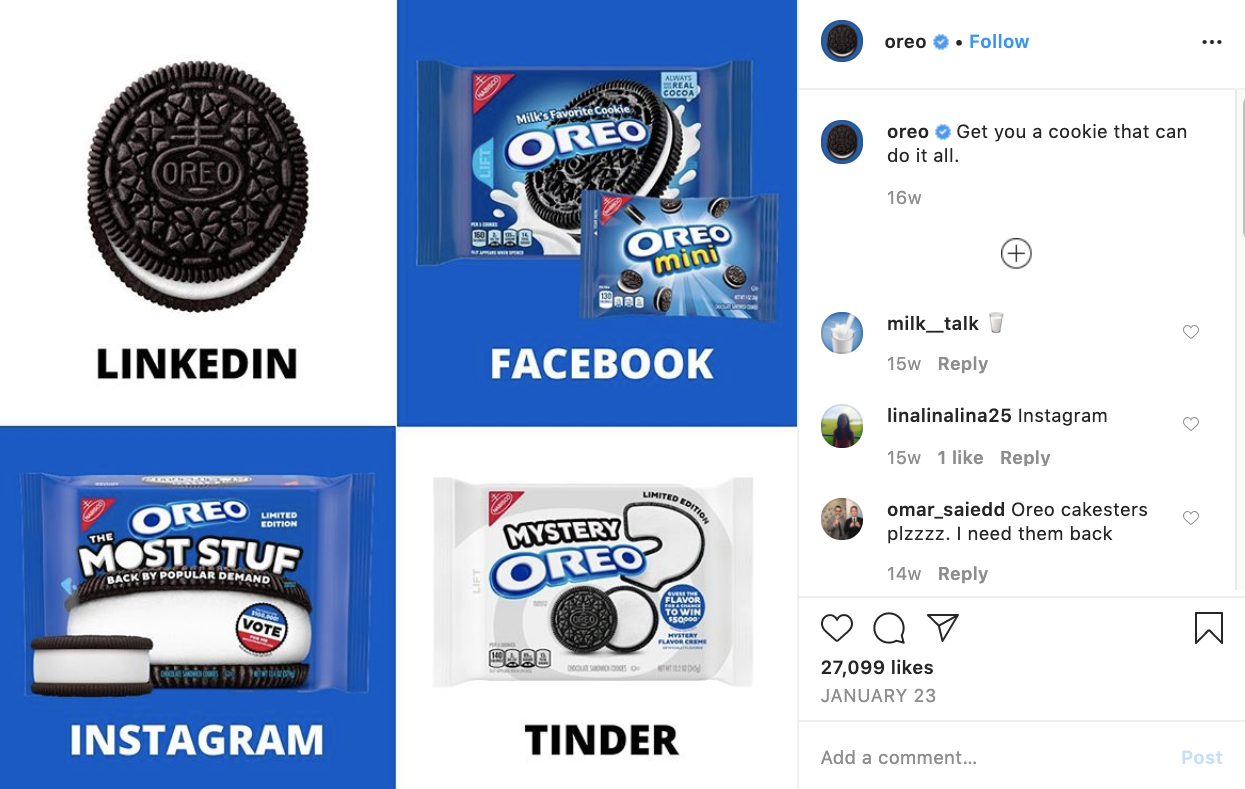
Oreo has become a gold standard. Its collabs have spanned streetwear (Supreme), music (BTS, Lady Gaga’s Chromatica album, Post Malone, Blackpink), gaming (Super Mario Brothers), and beverages (Coca-Cola). Novelty flavors (Candy Corn, Red Velvet, and a Hot Chicken Wing cookie launched in China) keep the brand perpetually buzzy.
Pepsi did it with Peeps (marshmallow-flavored soda, naturally). And then there’s the Crocs x KFC collab: shoes covered in fried chicken imagery that looked like an absurdist art project straight out of Bushwick. Packaging collabs can get incredibly idiosyncratic, funny and personal too, which helps a brand build a personal connection with fans. That was the case when Popsicle collaborated with influencer Jake Shane, who famously loves red Popsicles (but not orange ones) to create a package of All Cherry Jake Shane Popsicles, which racked up millions of views when Shane revealed the packaging.
For packaging designers, collaborations are genuinely exciting; they create space to break from brand guidelines and let two distinct visual voices remix into something neither brand could pull off alone.
Our team has had the opportunity to participate in a lot of fun collaborations and flavor mashups. Last year, we designed Green Eggs and Spam in celebration of the 65th anniversary of the Dr. Seuss classic (and we continue to design all sorts of fun flavors for Spam, and Spam stans online are appreciative!). Popsicle found magic by teaming up with both Disney and Jolly Rancher. The packaging becomes the announcement, the conversation starter, and the collectible all at once.
Trend to watch: Limited-time and seasonal flavors expanding well beyond snacks and chips into categories like condiments, dairy, and beverages.
3. Designing for the 6-Inch Screen
Which came first: bold, flat packaging design or the dominance of user-generated content on social feeds? At this point, it doesn’t matter; they reinforce each other completely.
Winning on shelf used to be the only visual battleground that mattered. Now the 6-inch phone screen is the new storefront, and it plays by different rules. Gradients, beveled type, intricate illustrations, thin serif fonts (sorry, Garamond!) and glossy finishes don’t always survive image compression to 72 ppi very well. A delicate serif typeface that looked refined in print can become illegible as a 200×200 pixel Amazon thumbnail or when it’s being held by a UGC creator for 2 seconds in front of a phone camera. Dainty and detailed simply doesn’t perform on camera.
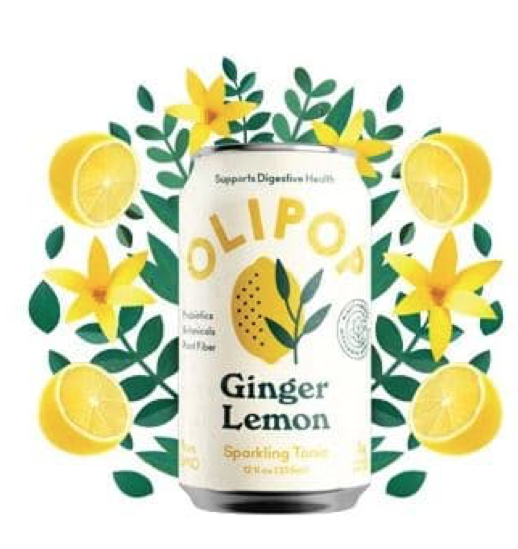
What does work: fewer words, heavier fonts, bolder colors, higher contrast. If a UGC creator holds your product up for three seconds on TikTok, your design needs to read instantly. Brands like Oatly and Olipop have mastered this: their packaging is flat, bold, and playful enough to function as content on its own.
Some brands go further by specifying matte over gloss finishes so ring lights and camera flashes don’t blow out their type. Others, like Magic Spoon, use maximalist color-blocking to ensure they’re unmistakable even at thumbnail size. The throughline: packaging design is paying attention to how the design works onscreen as well as on shelf.
Trend to watch: Have we hit maximum color-maxxing? Brands like Olly and Magic Spoon have used saturated, high-contrast palettes to dominate visual real estate across both digital and physical retail, but we might be seeing a reaction in the other direction, with some brands (like Huel) maximizing white space while others, like the sardine brand Fishwife, are leaning into patterning while keeping the bold color.
4. Packaging as Performance: The Unboxing Era
Beauty brand Glossier was at the forefront of unboxing on social media; its signature pink bubble-wrap pouches were designed to be shared, and they were. Unboxing videos have since become their own content genre, complete with trending audio, quick cuts, and influencers who turn the ritual of opening a package into a mini-drama worth watching.
Some on-trend brands have taken notice and started designing for the reveal. Liquid Death is a standout example: its shock-value branding and irreverent copy make it feel like merch from a heavy metal band you love. Including actual merch inserts makes customers feel like members of a club, and gives them something to post about. The collector’s edition 11-pack collaboration with Spinal Tap sold for $1,100 each. Yes, that’s 11 cans of water.
The principle extends beyond DTC brands. Lego and Tiffany have both reinvented the advent calendar into a premium unboxing event. Graza, the olive oil brand, built viral moments around its distinctive squeeze-bottle design that made people want to demonstrate it on camera. Layered packaging — nested boxes, interior messages, double-sided printing with a bold callout on the underside — rewards the consumer who opens it and gives influencers something to discover.
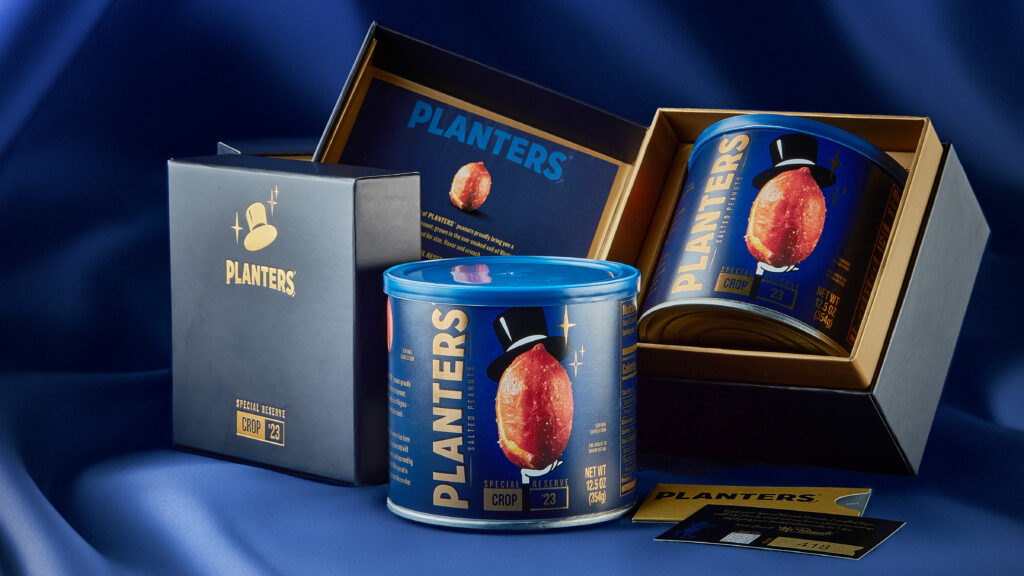
Here at Smith Design, we helped Planters approach this with the limited-edition release of its Special Reserve Peanuts, designing an unboxing experience that felt sensory and elevated, appropriate for a product that deserved to feel special.
Trend to watch: Keepsake packaging: designs worth holding on to (and keeping on a desk or shelf), giving brands perpetual visibility in creators’ backgrounds. Glossier’s pink pouches are reused as travel organizers and get quick recognition even without obvious logos. In Europe, Nutella jars are designed to be turned into drinking glasses and tumblers.
5. The Social Backlash Effect
No honest conversation about social media’s influence on packaging design would be complete without talking about the flip side: the public verdict, delivered instantly and at scale.
Before social media, a brand could roll out a redesign that would sit on store shelves for years before enough consumer complaints filtered through to signal that something was wrong. Today, the feedback loop is measured in hours.
When Cracker Barrel attempted to modernize its logo in 2025, fans took to TikTok and X within days, framing the change as a betrayal of the brand’s nostalgic identity. The company reversed course within a week. Jaguar’s 2025 rebrand generated a different kind of controversy: a polarizing reaction that some argued was a calculated play for visibility, even if the design itself divided opinion.
The lesson most brands have taken from moments like these: move carefully. The risk of getting it wrong publicly (and immediately) has made incremental “refreshes” far more appealing than full rebrands. In an era when consumers feel personal ownership over the brands they love, packaging changes are never just a design decision. They’re a public statement, and the public is always watching.
At Smith Design, we help CPG brands navigate all of this: from trend-driven redesigns to full brand overhauls.
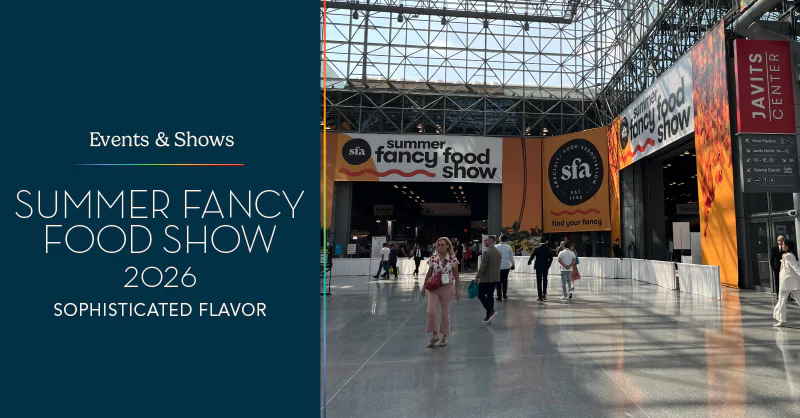
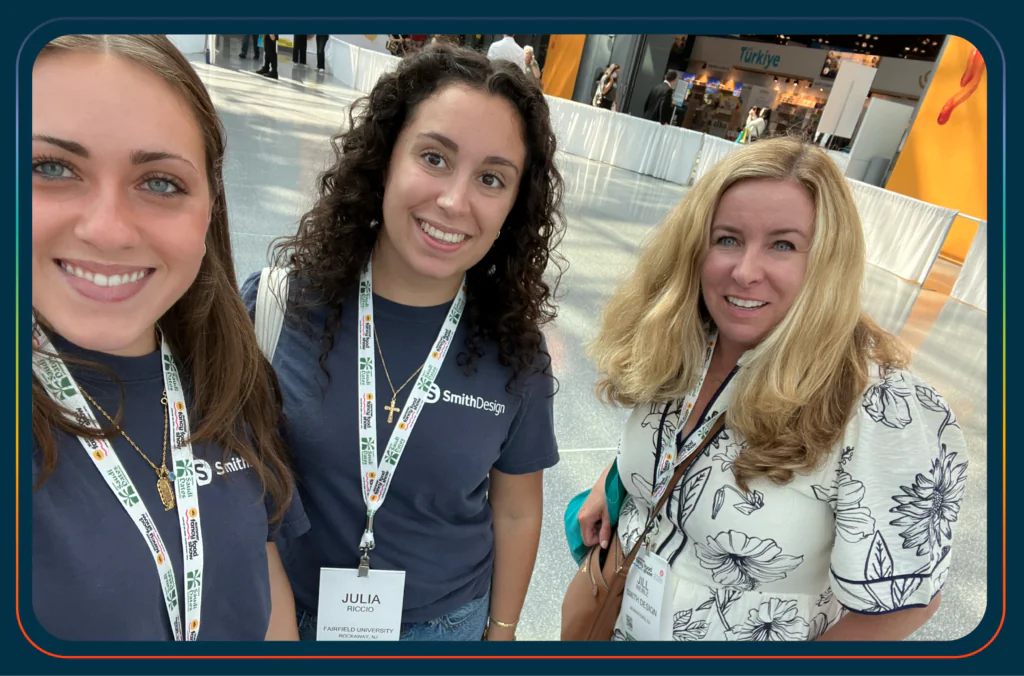
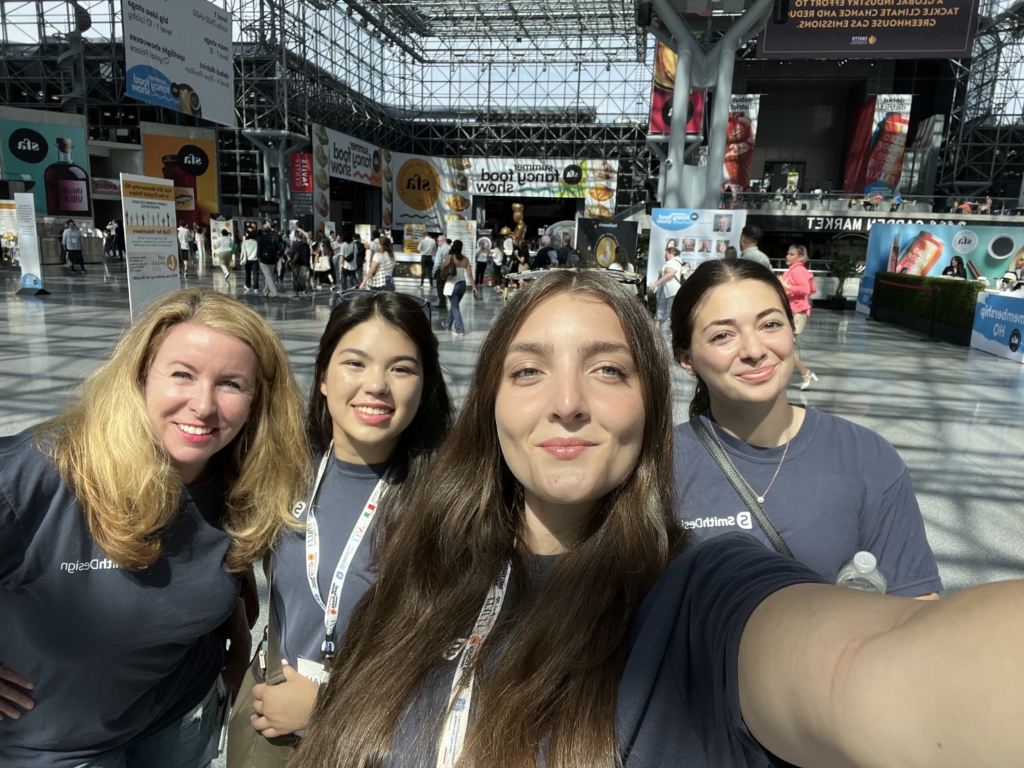
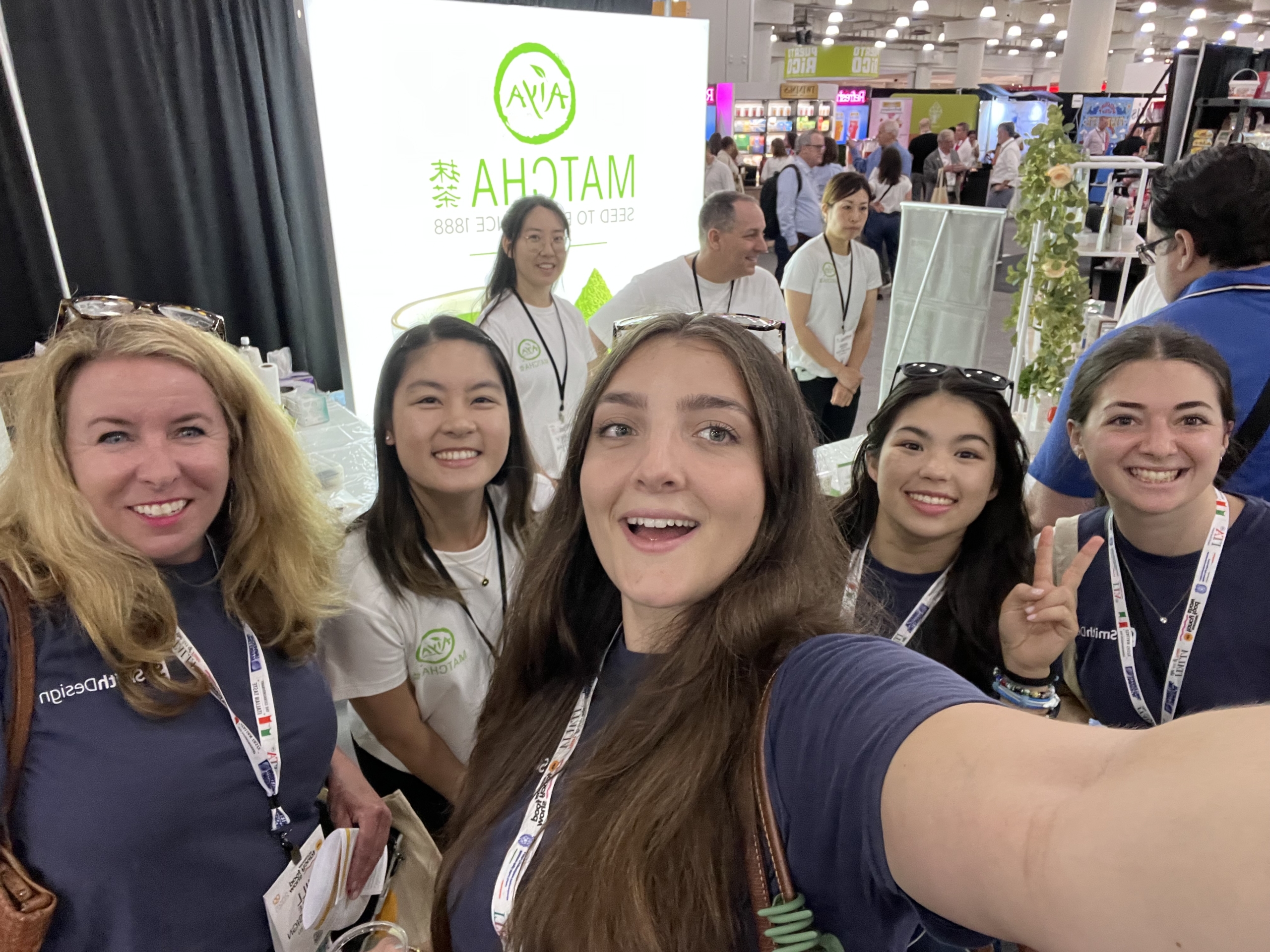
Every year, Smith Design sends a few of their own to SFA’s Summer Fancy Food Show in NYC to observe the hottest new food products of 2026. This year, Smith Design had the pleasure of attending two out of the three days of the food show where we had the opportunity to track the newest trends in food and packaging! This year’s attendees were Jill Weible, Senior Client & Business Growth Development Manager, and two of Smith’s Summer Interns Julia (Marketing Intern) and Miranda (Design Intern). Come along with us and learn what the fanciest foods of 2026 are!
The Future of Functional Foods
It’s no secret that we’ve entered a global health awareness era in recent years, with millions of products providing healthier choices and benefits to consumers. As we walked through nearly 2,500 booths, we noticed an exponential boom in better-for-you food products, many of which included incredible amounts of protein and fiber, solutions to dietary restrictions, as well as ingredient substitutions, which we foresee changing the game of the food industry forever.
Collagen Goes Mainstream
One of the most interesting health trends at this year’s Summer Fancy Food Show was seeing collagen move beyond the supplement aisle and into everyday foods. Once primarily associated with powders and wellness drinks, collagen is now being incorporated into familiar snacks and pantry staples, making it easier than ever for consumers to add it to their daily routines. Instead of asking people to take another supplement, brands are finding creative ways to build collagen into foods they already enjoy.
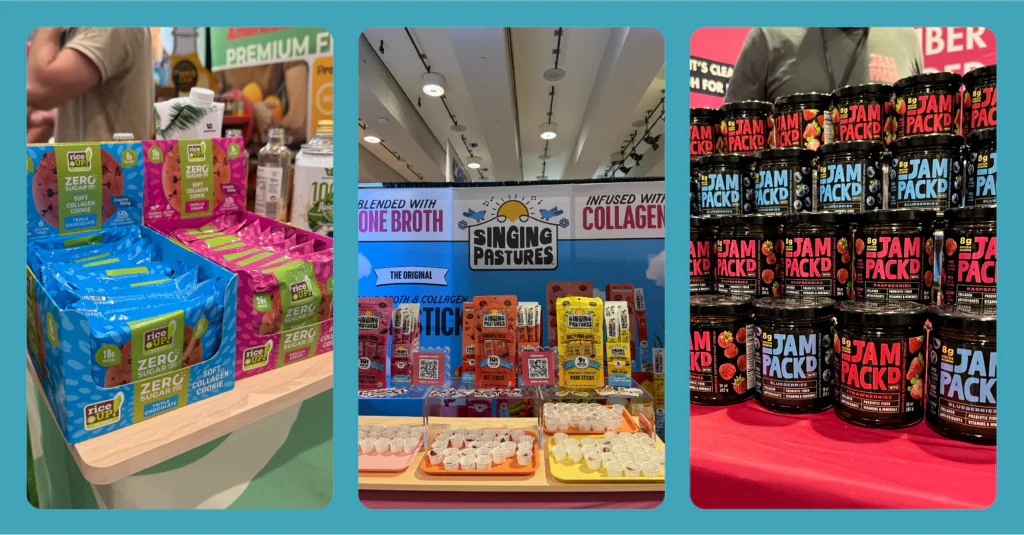
One example was Rice Up, which transformed the trend into a sweet treat with its soft collagen cookies. Each cookie delivers 18 grams of protein and 8 grams of grass-fed collagen while remaining gluten-free, high in fiber, and free of added sugar. Building on the idea that functional ingredients don’t have to sacrifice flavor, Singing Pastures incorporated collagen into its slow-cooked meat sticks by blending them with nutrient-rich bone broth. Made with grass-fed beef and pasture-raised pork, the sticks provide 9–10 grams of protein while emphasizing clean, responsibly sourced ingredients.
The trend didn’t stop at snacks either. Jam Pack’d reimagined a pantry staple by infusing its strawberry, raspberry, and blueberry spreads with collagen, 8 grams of protein, prebiotic fiber, antioxidants, vitamins, and minerals. Marketed as a “complete superfood spread,” the jam contains no added sugar, no artificial ingredients, and low net carbs, proving that even traditional foods are being reinvented with added functional benefits.
Together, these products painted a clear picture of where the industry is headed. Collagen is no longer being marketed as a specialty supplement reserved for smoothies and powders, instead, it’s becoming an everyday ingredient that fits naturally into consumers’ lifestyles. This shift reflects the broader movement toward functional foods that combine convenience, clean ingredients, and wellness, allowing consumers to support their health without changing the way they eat.
The Freeze-Dried Revolution
Another trend that continued to gain momentum at this year’s Summer Fancy Food Show was the evolution of freeze-dried foods. Once known mainly for camping snacks and dried fruit, freeze-drying is now being used across a wide range of food and beverage categories to create products that are convenient, shelf-stable, and full of flavor. Brands are proving that the technology can preserve taste and texture while extending shelf life, opening the door for entirely new product innovations.
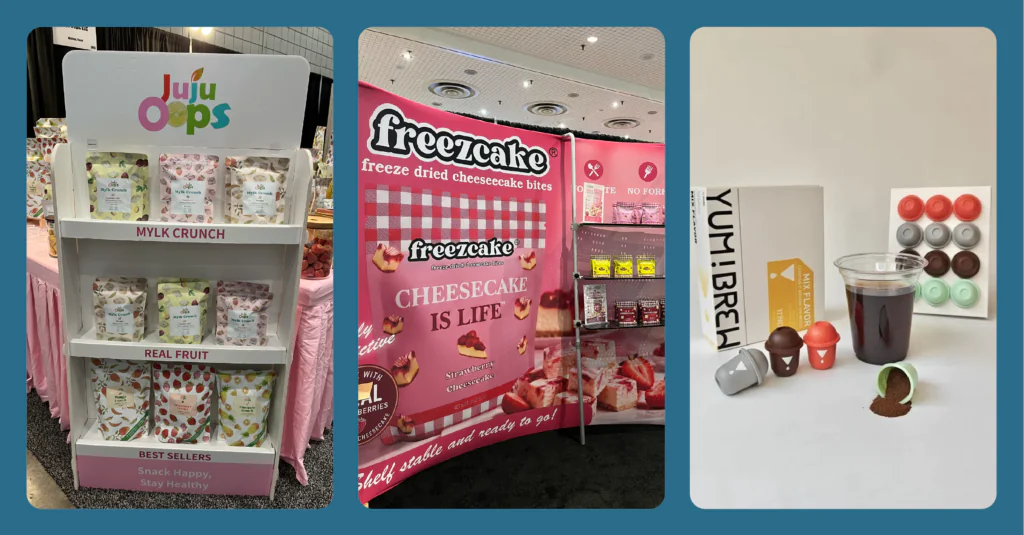
One brand embracing this shift was Juju Oops, which showcased whole freeze-dried fruits, including pineapple, dragon fruit, mango, strawberry, and passionfruit. Instead of cutting the fruit into small pieces, the brand preserves each piece whole, creating a snack that feels more premium while maintaining the fruit’s natural flavor and ingredients.
Brands also extended the concept beyond fruit. FreezeCake demonstrated how freeze-drying can completely transform desserts with its shelf-stable cheesecake bites in flavors like Strawberry, Tiramisu, and Cookies & Cream. By taking a traditionally refrigerated dessert and making it portable without sacrificing its signature taste, the brand showed just how versatile freeze-drying has become.
Even beverages are entering the freeze-dried space. Yumbrew introduced instant freeze-dried coffee made from 100% premium Yunnan Arabica beans that dissolves instantly in either hot or cold water without the need for brewing equipment. Available in flavors like Coconut Latte, Lemonade Americano, Espresso, and Jasmine Americano, the product highlights how freeze-drying is creating greater convenience while maintaining quality and flavor.
Each of these products contributed to a much larger shift in the food industry.Freeze-drying is no longer limited to preserving food; it’s becoming a tool for innovation. Whether it’s whole fruit, indulgent desserts, or premium coffee, brands are using the technology to reimagine familiar products in ways that better fit today’s consumers, who are looking for convenience, portability, and long shelf life without compromising on taste or quality.
The Rise of the Food Accommodation Industry
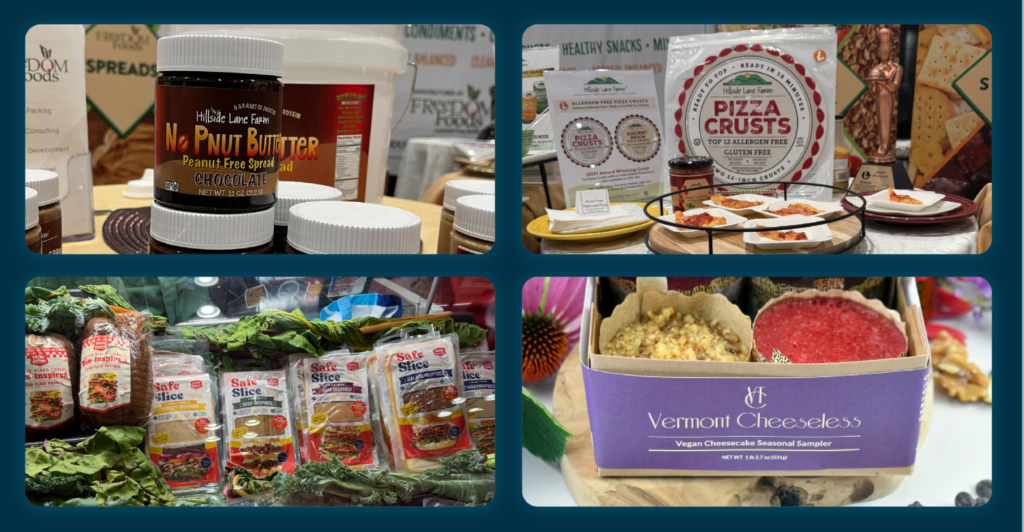
With dietary restrictions remaining a very prevalent issue within the food industry, we’ve witnessed a great amount of products directly targeting food intolerances with simple ingredient swaps. By substituting common allergens with healthier non-irritants, these brands directly target a large demographic of people who struggle to find foods that align with their dietary tolerances. Hillside Lane Farm is a primary example of brands doing food accommodation right. Their No Pnut Butter spread offers a delicious nutty taste and all the same benefits of peanut butter without the risk of an allergic reaction. They go a step further with their gluten-free pizza crusts, which are also free of an additional 12 allergens, including dairy, eggs, nuts, and soy. Their products include a wide variety of gluten-free, peanut-free, and dairy-free products, perfectly fit for a wide range of allergen-susceptible consumers. Similarly, Nikigo, an Asian-style sauce brand, introduces an alternative to the direct product market. It’s a bit of a tongue-twister, but their soyless soy sauce offers a delicious and convincing alternative to soy sauce in flavors such as classic soy, teriyaki, and noodle sauce. With no soy, no gluten, and no sesame, Nikigo battles all three allergens that classic soy sauce consists of, giving those with intolerances a truly delicious and convincing substitute.
Now, the Food Accommodation Industry doesn’t solely target allergens, that’s only one of its many sectors. A large part of this industry is simply about providing customers with healthier options rather than the typical processed products out on store shelves today.
With processed meats being at the top of the world’s most unhealthy foods, Prime Roots took note and supplied the market with Safe Slice: plant-based, meat-inspired deli meat. Crafted from mushrooms, Safe Slice contains no nitrates or celery salt, is GMO-free, and avoids the top nine allergens. They also make an important “Pregnancy safe” callout on their packaging, giving expectant mothers a better-for-you alternative to nitrate-filled deli meats that pose a threat to infant development and birth. Not only are they contributing to rectifying the health detriments of highly processed deli meats, but they are also giving pregnant women an outlet for their deli meat cravings, without the risk.
Ending on a sweeter note, the product that stole the whole show also happened to be a part of the Food Accommodation Industry and that was Vermont Cheeseless’ plant-based and cheeseless cheesecake. Made from a blend of tofu and raw cashews, the cheesecake was exceptionally creamy and flavorful, delivering all the indulgence of traditional cheesecake in a better-for-you dessert. They may have taken the cheese out of cheesecake and replaced it with natural ingredients, but you truly would never know!
Honey, Honey
Looking back on our time at the Fancy Food Show, there was one food in particular that seemed to follow us along every turn we took. We should’ve known right away by the sweet trail of liquid gold running across the floors, but it was the honey industry that seemed to pop up with new and innovative products.
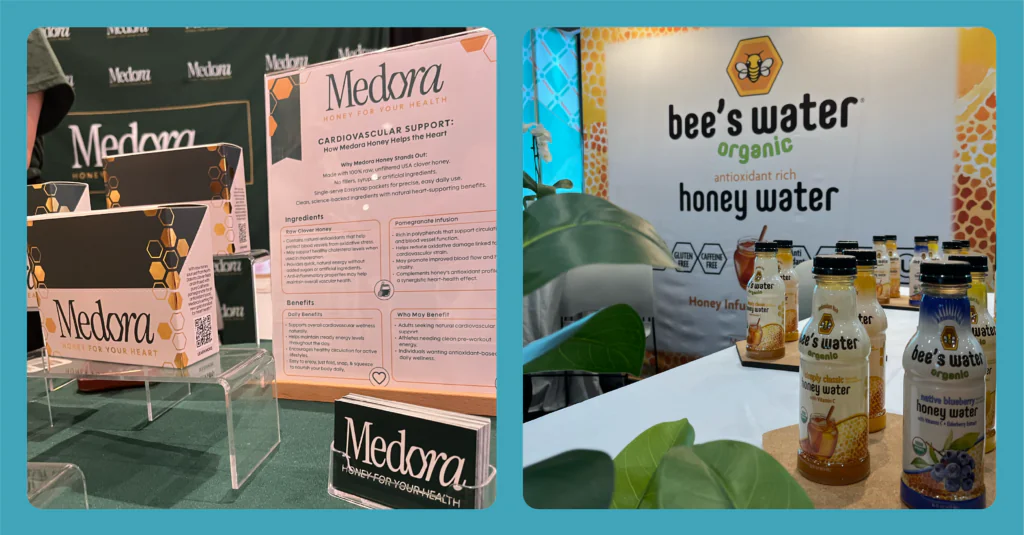
It’s no secret that honey is a major power food filled with tons of health benefits, so that’s why Medora decided to highlight its advantages with its snappable honey pouches. Made with 100% raw, unfiltered clover honey, Medora focuses on cardiovascular health and creating a honey product that is good for the heart. Preportioned and perfect for daily use, their product contains natural antioxidants that protect blood vessels from oxidative stress, as well as provide cardiovascular support due to its infusion of pomegranate. Turning nature’s sweetener into nature’s medicine, this brand invites a whole new perspective on the perks of honey and turns it into its own functional health product.
Similar to the benefits it provides, the list of forms that honey can take is extensive. Brands today are curating new ways to do honey differently, and that’s where Bee Water’s Organic Honey Water comes to play. Rich in antioxidants and Vitamin C, this new beverage offers a refreshing alternative to sugary sports drinks or sodas. With honey providing a concentrated source of natural carbohydrates, Honey Water offers a quick boost of natural energy that is unlike any of the current energy and sports drinks out on the market today. We foresee Honey Water becoming the next leading product in the realm of natural energy beverages in the coming years.
The Brighter & Bolder, the Better
Smith Design is first and foremost a package design agency, so we obviously needed to include our impressions of the package design showcased at FFS. We noticed one genre of design that immediately caught our eyes and begged for attention and that was the packaging that included bright, vibrant palette combinations, paired with big, bold, and organic typography. An additional motif we noticed amongst this genre was the inclusion of illustrations and brand mascots. Pairing each aspect together: color, typography, and illustration, it’s safe to say that these brands had the utmost of personality at the show.
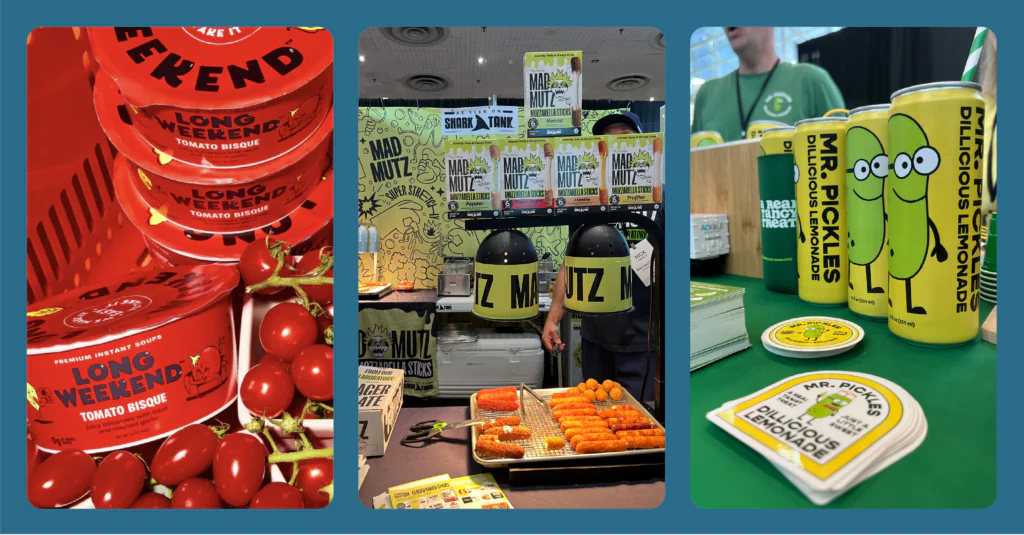
Take a look at Long Weekend – Premium Instant Soups: Each flavor has its own family of illustrated ingredients, each doing a variety of everyday activities. This brand comes to life by simply escaping the ordinary world of packaged soups, encouraging customers to interact and be immersed in the whole experience of eating their soups. Simply by having a calm, cool, and collected personality, it encourages their customers to feel just this same way, making the action of eating that much more experiential. In talking about experiential brands, Mad Mutz is a must! It was one brand that we saw at a distance and had no choice but to get a closer look due to its unique and personality-driven brand identity. With the theme of the brand surrounding a laboratory of all things, it welcomes a world of chaos, silliness, and a little bit of grunge. Their brand identity immediately came to life and shouted right in our faces, ensuring we would never forget them and their delicious mozzarella sticks!
We simply could never forget about Mr. Pickle’s Dillicious Lemonade! Although simpler in design, it packs in just as much personality as the previously mentioned products, all due to its adorable pickle mascot, Mr. Pickles. The unconventional concept of the beverage surely helps in grabbing customers’ attention, but it’s the look and feel of the product that ultimately remains in our minds. So if you’re a fan of unconventional, personality-driven beverages, give Mr. Pickle’s Dillicious Lemonade a try!
Who Doesn’t Love a Little Shine?
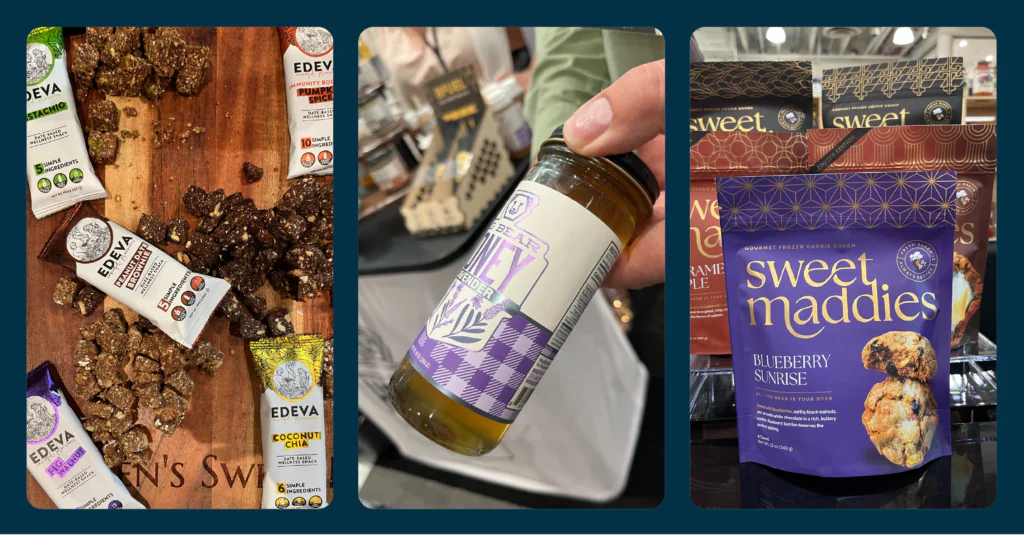
There was a common theme in design that we found pretty difficult to ignore, especially when the light hit it just right. The presence of metallic foil was seen a handful of times across multiple food categories giving every product a subtle but impactful differentiator from their prospective competitors. Just take a look at Edeva, Big Bear Honey, and Sweet Maddie’s and how the light simply illuminates their whole look!
Authenticity Sells
While innovative products and eye-catching packaging initially drew us into many booths, it was the people behind the brands who left the biggest impression. One of the most rewarding parts of attending the Summer Fancy Food Show was having the opportunity to speak directly with founders, family members, and brand representatives, who proudly shared the stories behind their companies. Hearing these histories firsthand made each product feel far more meaningful and demonstrated how powerful authentic storytelling can be in building lasting connections with consumers.
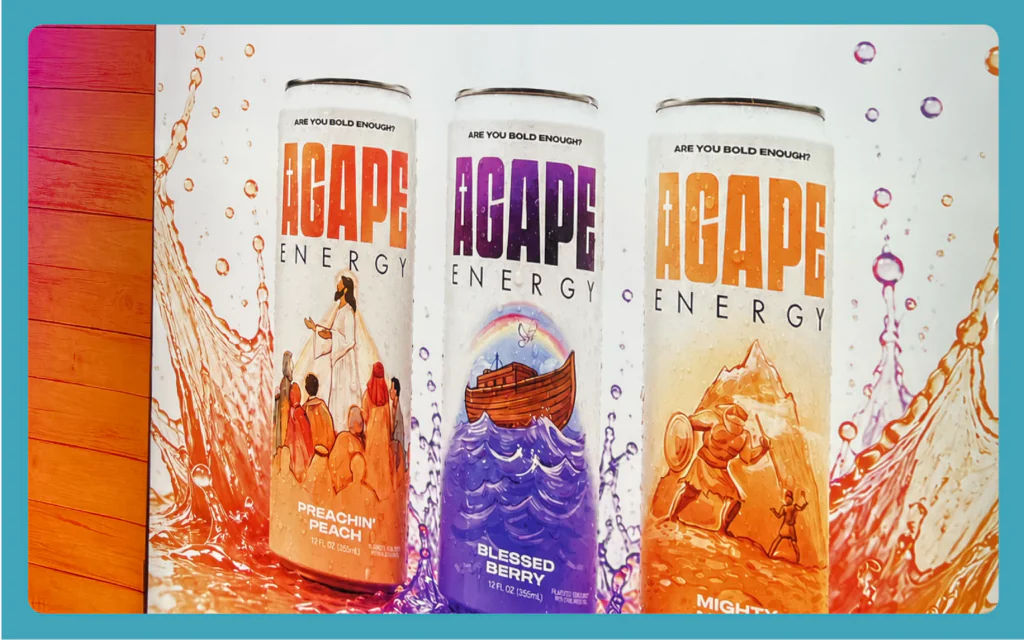
One brand that embodied this approach was Agape Energy. As we spoke with the team, it became clear that they weren’t simply selling an energy drink, they were sharing a mission. Centered around their “316 Mission,” every can is designed to inspire faith and spark conversations through scripture, giving consumers something much bigger than a caffeine boost. Their passion for the brand was evident, making their purpose feel genuine rather than just another marketing message.
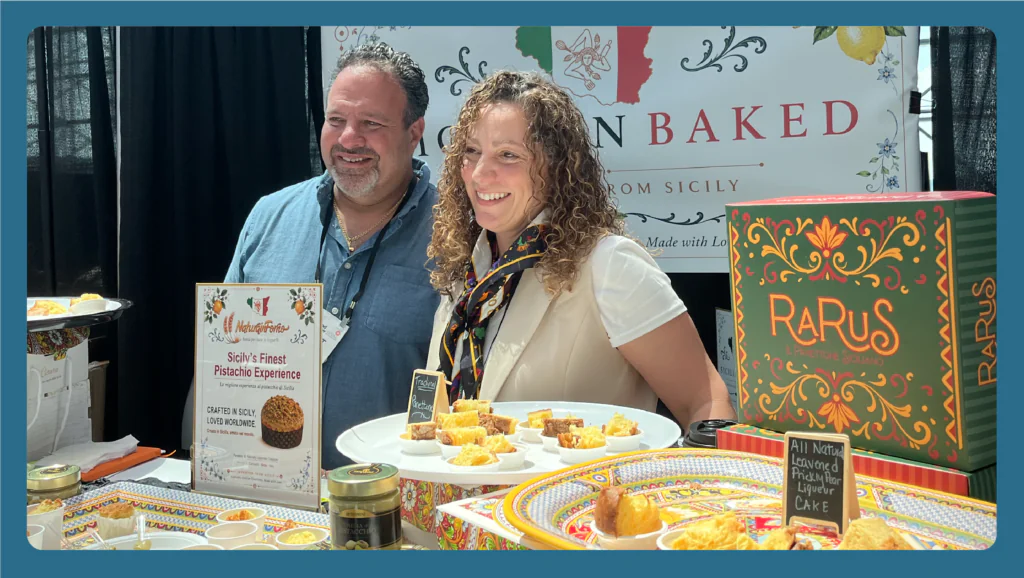
That same sense of passion was especially evident at Sicilian Baked. The family behind the brand welcomed us into their booth and shared the story of bringing authentic Sicilian tradition to the United States through their artisanal panettones. Their elegant packaging immediately reflected the premium quality of the product, but it was after tasting it that everything came together. The panettone was incredibly soft, rich, and flavorful, making it one of the most memorable products we sampled at the show. The combination of exceptional quality, beautiful packaging, and the family’s genuine passion for their craft made Sicilian Baked one of the most memorable brands of all.
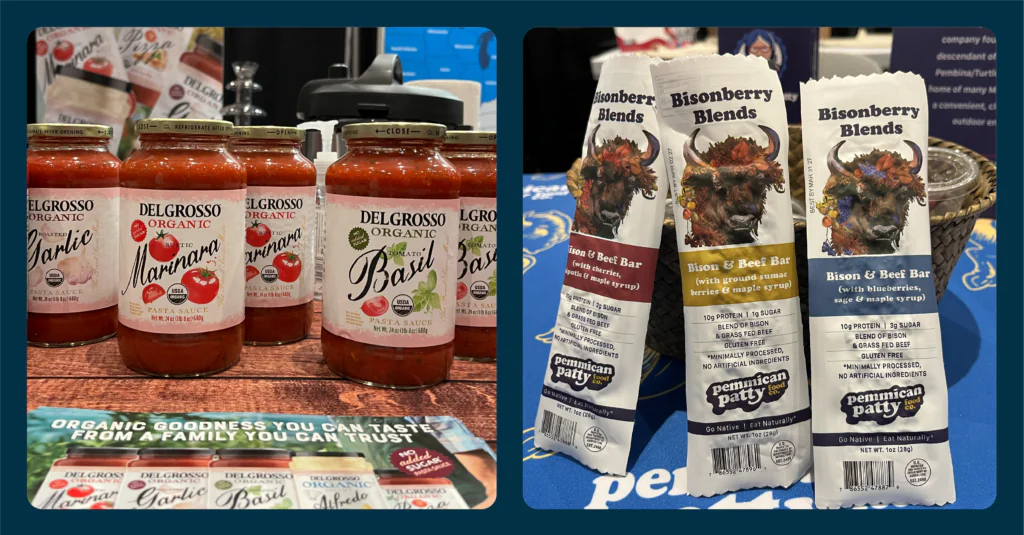
Continuing that theme of family legacy, DelGrosso Foods shared the remarkable history behind America’s oldest family-owned pasta sauce company. As we spoke with the team, it was evident that family remains at the heart of the business. The cousins working the booth proudly shared stories of their family’s history, creating an authentic connection that made the brand even more memorable. Their pride in carrying on the family’s recipes and values was reflected not only in their products but also in the way they welcomed and connected with attendees. It was a reminder that some of the strongest brands are built on genuine family traditions that continue to thrive generation after generation.
Even newer brands recognized the importance of sharing their story. Pemmican Patty Food Co.‘s Bisonberry Blends introduced us to its philosophy of “Go Native, Eat Naturally,” explaining how the brand is inspired by simple, minimally processed ingredients and traditional sources of protein. Their vision is to bring pemmican into the modern day by reimagining the age-old recipe with clean, natural ingredients while preserving its history for future generations. “Rooted in the past, yet tailored for the present”, Pemmican Patty Foods shares the legacy of their ancestors and vibrant culture with consumers, ultimately passing on the story of the Chippewa and Metis people. By taking the time to explain the purpose behind their products, they gave us a deeper appreciation for both the brand and its mission.
Across the show these experiences demonstrated that the strongest brands are built on more than just great products. Authentic storytelling, thoughtful design, memorable packaging, and genuine personal connections all worked together to create brands that stood out in a crowded show floor. When a compelling story is paired with a quality product and a memorable experience, it creates a connection that consumers are far more likely to remember.
Booths That Built Buzz
Despite strong branding and compelling stories being a confounding factor to what draws in customers to a brand, we found that it was the brands that created a full-on experience that stuck in our minds most. Rather than relying solely on product samples or traditional displays, exhibitors transformed their booths into interactive destinations that encouraged attendees to stop, participate, and share the experience with others. In a show filled with nearly 2,500 exhibitors, creating a memorable moment proved to be just as important as creating a memorable product.
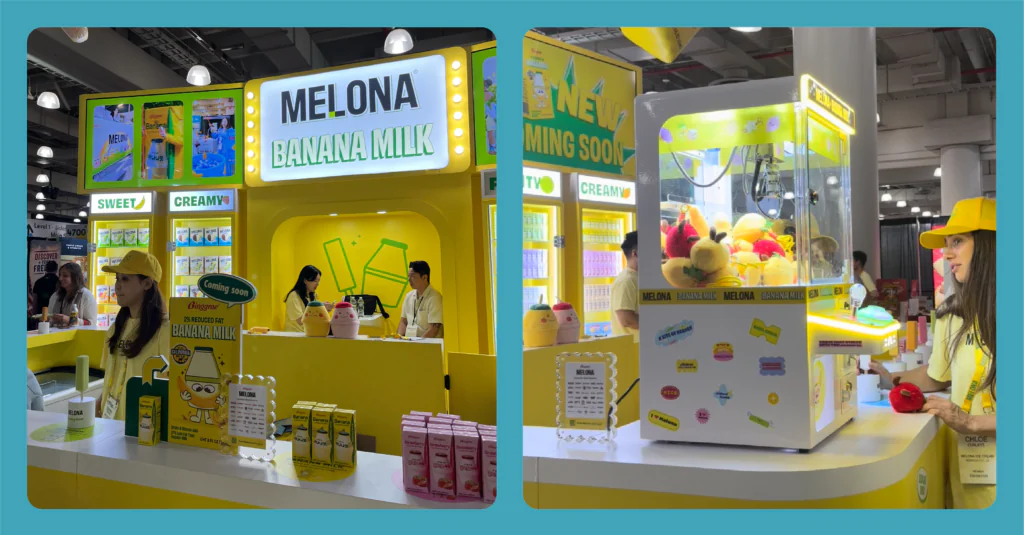
One of the best examples was Melona, whose booth remained busy throughout the day. The vibrant space featured a claw machine filled with prizes and a shopping cart overflowing with its new Banana Flavored Milk. The interactive setup encouraged visitors to engage with the brand rather than simply walk past it, and before long, attendees could be seen throughout the show carrying Melona ice cream bars. That visibility turned visitors into walking advertisements, naturally generating curiosity and drawing even more people to the booth. Combined with Melona’s reputation as America’s best-selling Korean ice cream, the experience reinforced how interactive marketing can strengthen brand recognition long after someone leaves the booth.
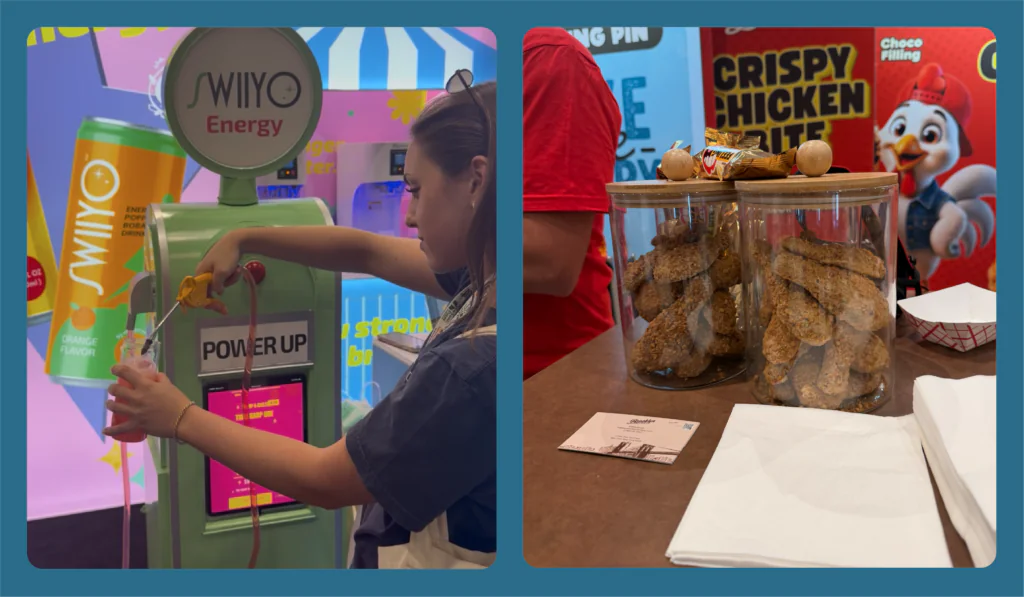
While Melona focused on interactive activities, Brooklyn Bites and Original Gourmet captured attention through surprise and entertainment. Instead of relying on a traditional sampling station, the team created a lively atmosphere around the launch of its viral Crispy Chicken Chocolate Bite. Vendors enthusiastically shouted, “It’s not chicken, it’s chocolate!” as attendees gathered to see what all the excitement was about. The playful surprise of discovering that a realistic-looking fried chicken tender was actually chocolate sparked laughter, conversations, and plenty of photos. It was a simple concept, but one that demonstrated how curiosity and entertainment can become powerful marketing tools.
Swiiyo took experiential marketing in an entirely different direction. Originally rooted in professional boba craftsmanship, the brand has expanded into functional beverages focused on clean energy and beauty. Its booth featured a bright gas station-inspired setup where visitors could “fuel up” their drinks at a life-sized pump as part of the brand’s Power Up Energy Station. Paired with trendy clear cans that showcased the colorful beverages inside, the entire experience reinforced the idea of giving your body clean energy in a fun and memorable way. Rather than simply explaining the product’s benefits, Swiiyo brought its brand message to life through an interactive experience that attendees were eager to participate in.
A common thread among these brands was that successful marketing extends far beyond the product itself. Interactive experiences, thoughtful branding, and creative displays captured attention, encouraged conversation, and gave attendees something worth remembering and sharing. In today’s crowded marketplace, creating an emotional connection through experience can be just as valuable as the product on the shelf, turning a simple booth visit into a lasting impression.
Our Lasting Impression
Attending the 2026 Summer Fancy Food Show was an incredible learning experience and gave us valuable insight into where the food and branding industries are headed. From the rise of functional foods like collagen-infused products and ingredient alternatives to eye-catching packaging, authentic brand storytelling, and interactive booth experiences, it was clear that today’s consumers are looking for products that offer both purpose and personality. Events like the Summer Fancy Food Show continue to inspire Smith Design by keeping the team up to date on emerging trends, helping spark new creative ideas, and strengthening relationships within the food industry. As interns, we had the opportunity to meet people from all over the world, discover innovative products, make meaningful connections, and gain a better understanding of how branding influences the way consumers experience food. We left the show feeling inspired, excited to apply what we learned, and grateful to have been part of such an unforgettable experience.
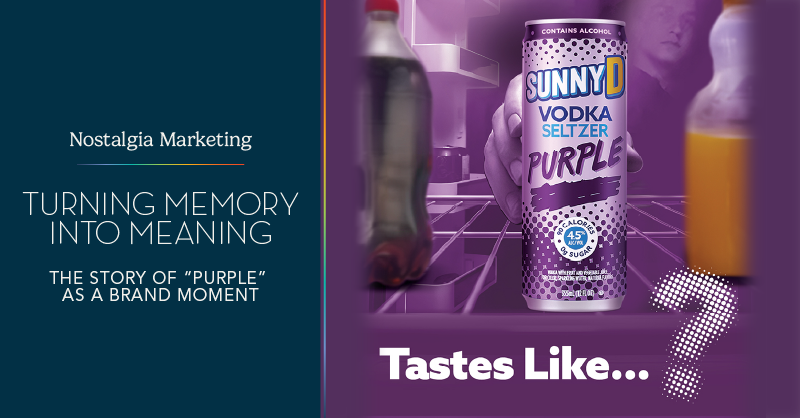
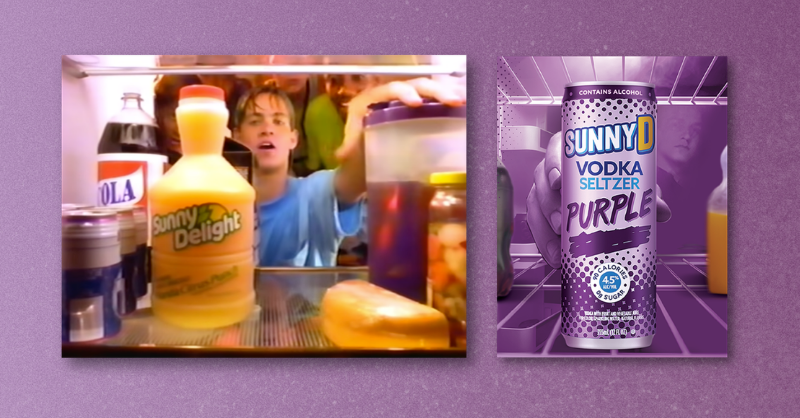
Some of the most powerful brand moments don’t start with something new; they start with a memory. SunnyD identified an innovation opportunity by tapping into a reference that had already been part of culture for decades and launched its long-anticipated “Purple” flavor.
The reference dates back to a well-known 1990s commercial where a refrigerator full of drink options included the now-famous line, “purple stuff.” While the moment was brief, it stuck in viewers’ minds and quickly became part of the brand’s cultural footprint.
By bringing “purple stuff” to life through SunnyD’s latest launch of their Vodka Seltzer RTD beverage named Purple, the result wasn’t just a new product launch, but a moment of recognition for audiences who grew up with the reference.
Nostalgia remains one of the most effective tools in marketing because it resonates with people, creates immediate familiarity, and piques their interest. When people recognize something from their past, there’s no need to introduce it or explain it – the connection is already there.
This approach has become increasingly common as brands revisit recognizable elements from the 1990s, from the return of Dunkaroos, which came back after years of fan demand, to the revival of Floyd D. Duck across Bubble Yum’s social channels. By reintroducing familiar products and characters, these brands tap into shared cultural memory while also introducing those references to younger audiences encountering them for the first time.
The difference often comes down to how that nostalgia is applied. Forced nostalgia often tries to recreate moments too literally, relying on imitation rather than meaning. Authentic callbacks work differently; they take something that already exists in culture and give it new context, allowing audiences to complete the story themselves.
That’s what made this moment for SunnyD Vodka Seltzer work. The reference to “purple stuff” was already recognizable and understood, rooted in a 1990s cultural moment. It carried a kind of multi-generational awareness, resonating with those who grew up with it, while sparking interest through new eyes experiencing it for the first time. It also created a built-in curiosity. “What does purple taste like?” became part of the appeal, turning a long-standing joke into a real question people finally had the chance to answer.
Building Cross-Channel Campaigns from Cultural Relevance
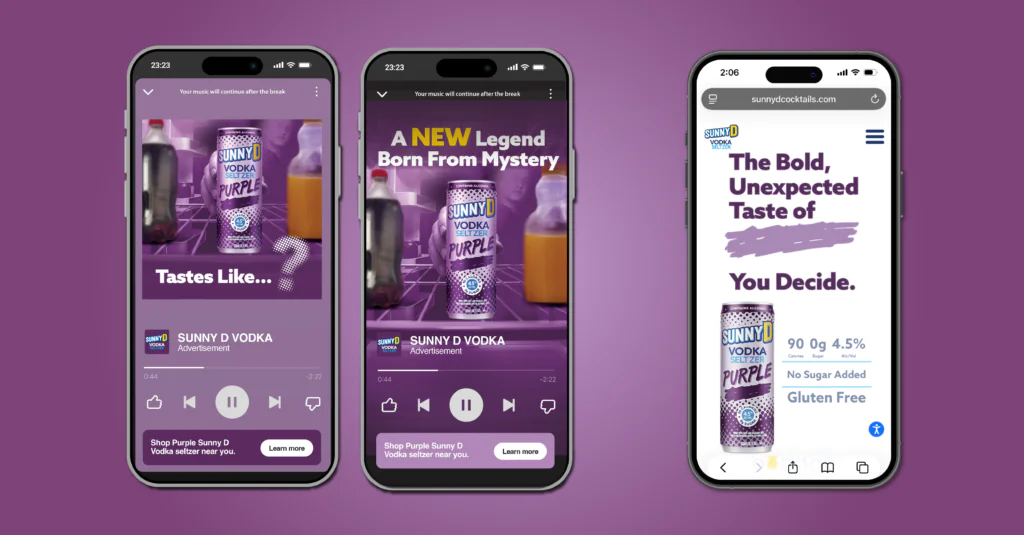
Because the idea was rooted in a cultural reference that already carried meaning, the real challenge became ensuring the campaign could live consistently across every place consumers might encounter it. In today’s digital landscape, the strength of a campaign concept depends on how seamlessly it can translate without losing its recognizability. That is where we came in.
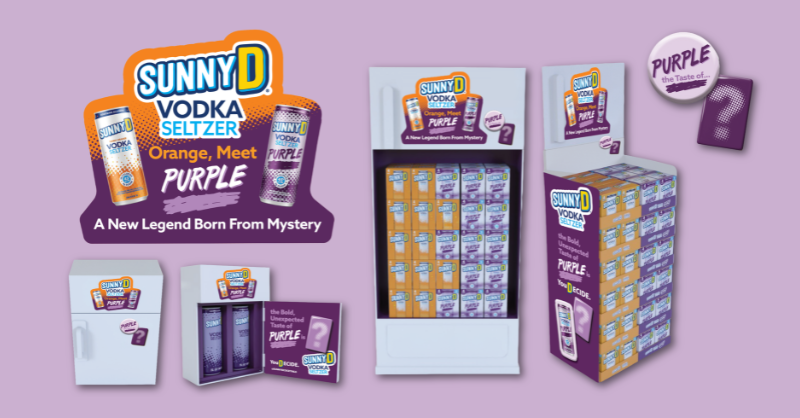
The Smith Design team helped the campaign come to life across a full ecosystem of touchpoints. We developed digital assets that carried the core “purple” idea into e-commerce, the brand website, Instacart, paid digital advertising, Spotify audio, trade advertising, and on in-store POS materials. In just three days, the campaign generated 117 million impressions, including 4.2 million from Walmart and Instacart display and 135.6K from Spotify ads, two key areas where we created digital assets for the campaign.
The goal wasn’t to reinvent the idea at every step, but to maintain consistency, so whether someone encountered it on their phone, in a store, or while streaming music, it felt like part of the same story.
Where Memory Becomes Experience
At its core, the SunnyD Vodka Seltzer Purple campaign launch shows how powerful it can be when brands don’t try to invent meaning but instead build from something that already exists in culture. Purple wasn’t created in the moment; it was something people already knew.
By turning that shared reference into a real product and a full campaign, the idea moved from memory to experience. And for audiences, that shift is what made it stick, not just seeing it again, but finally getting to experience it.
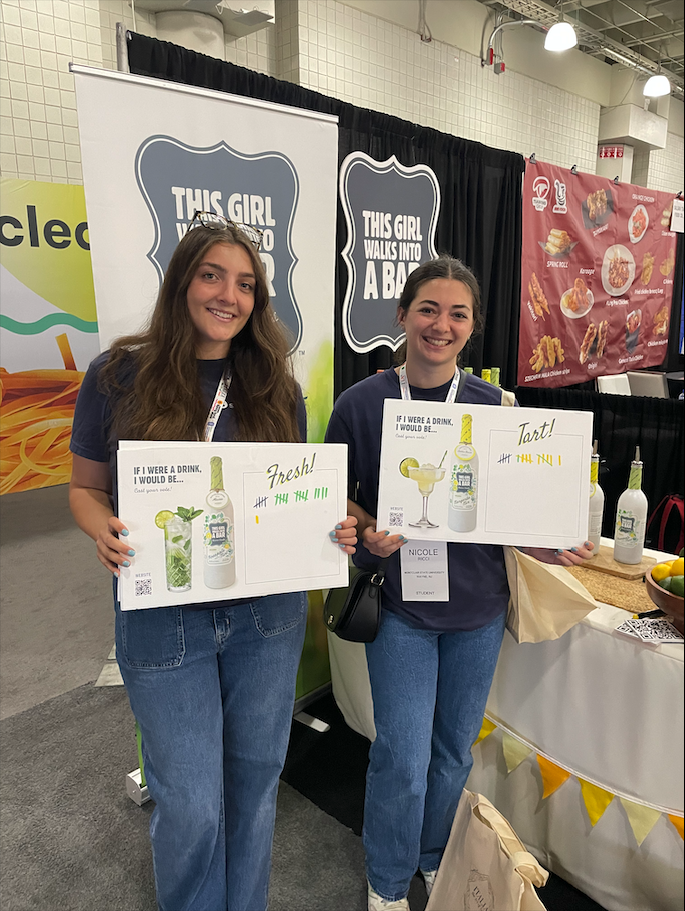
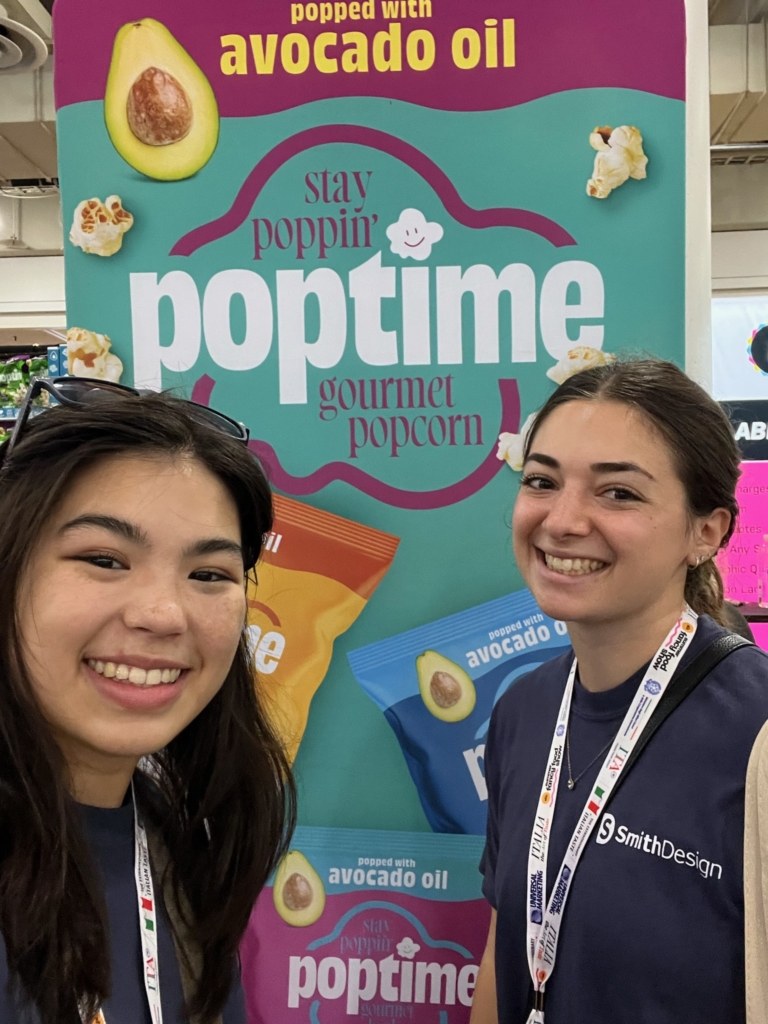
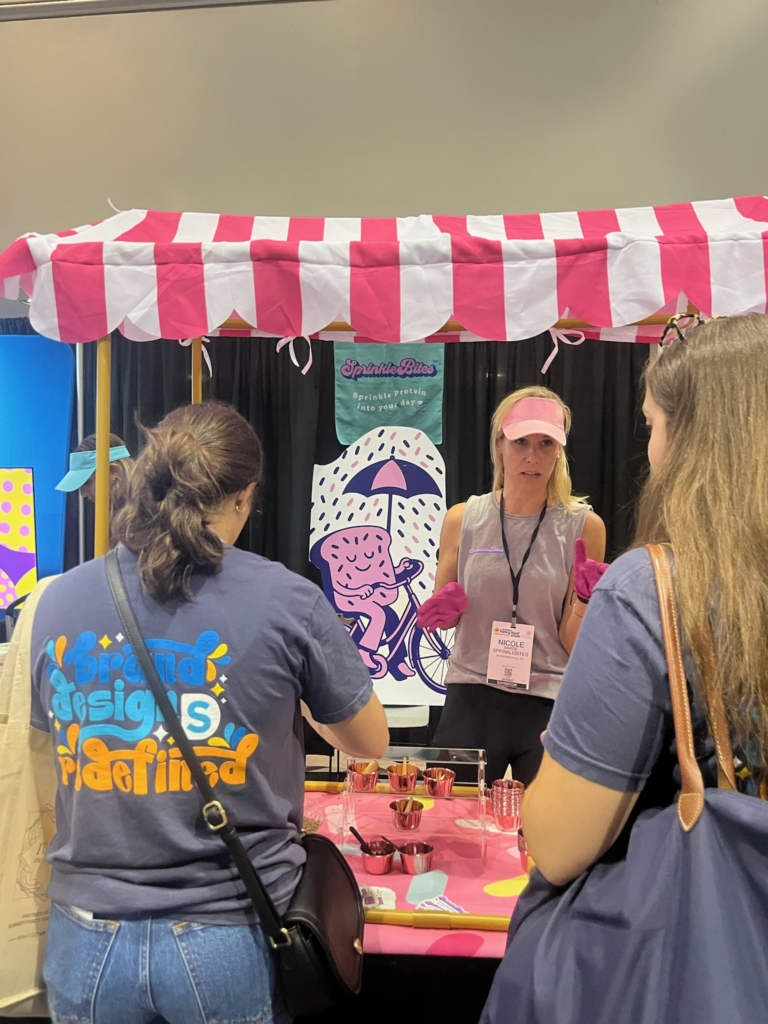
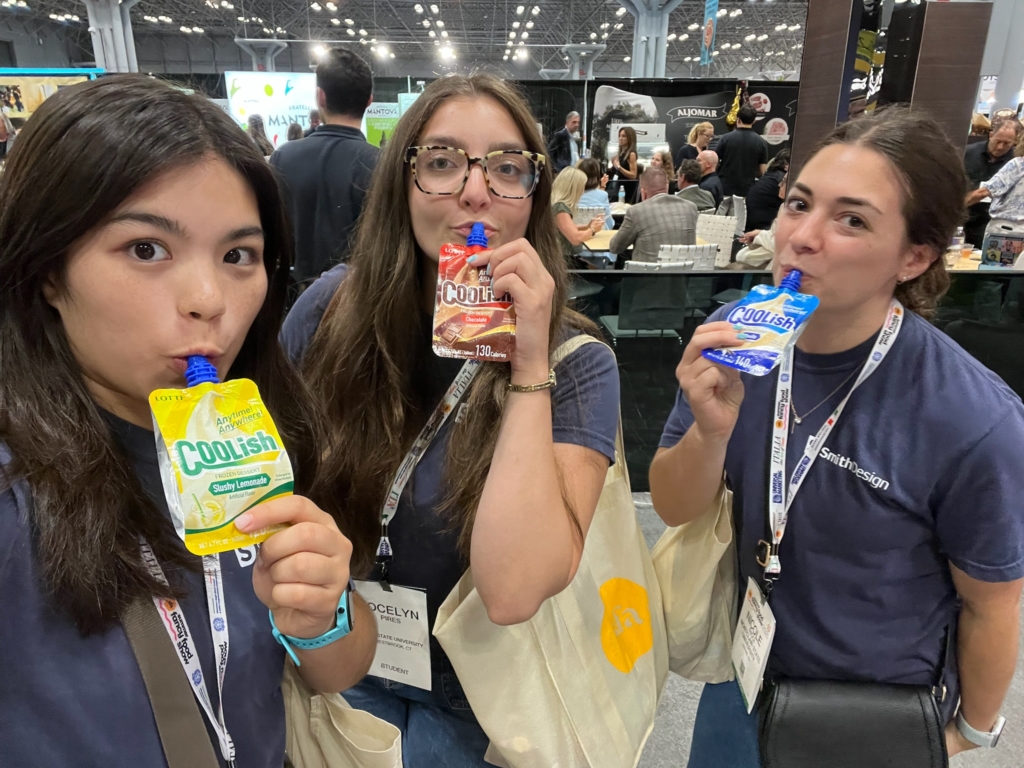
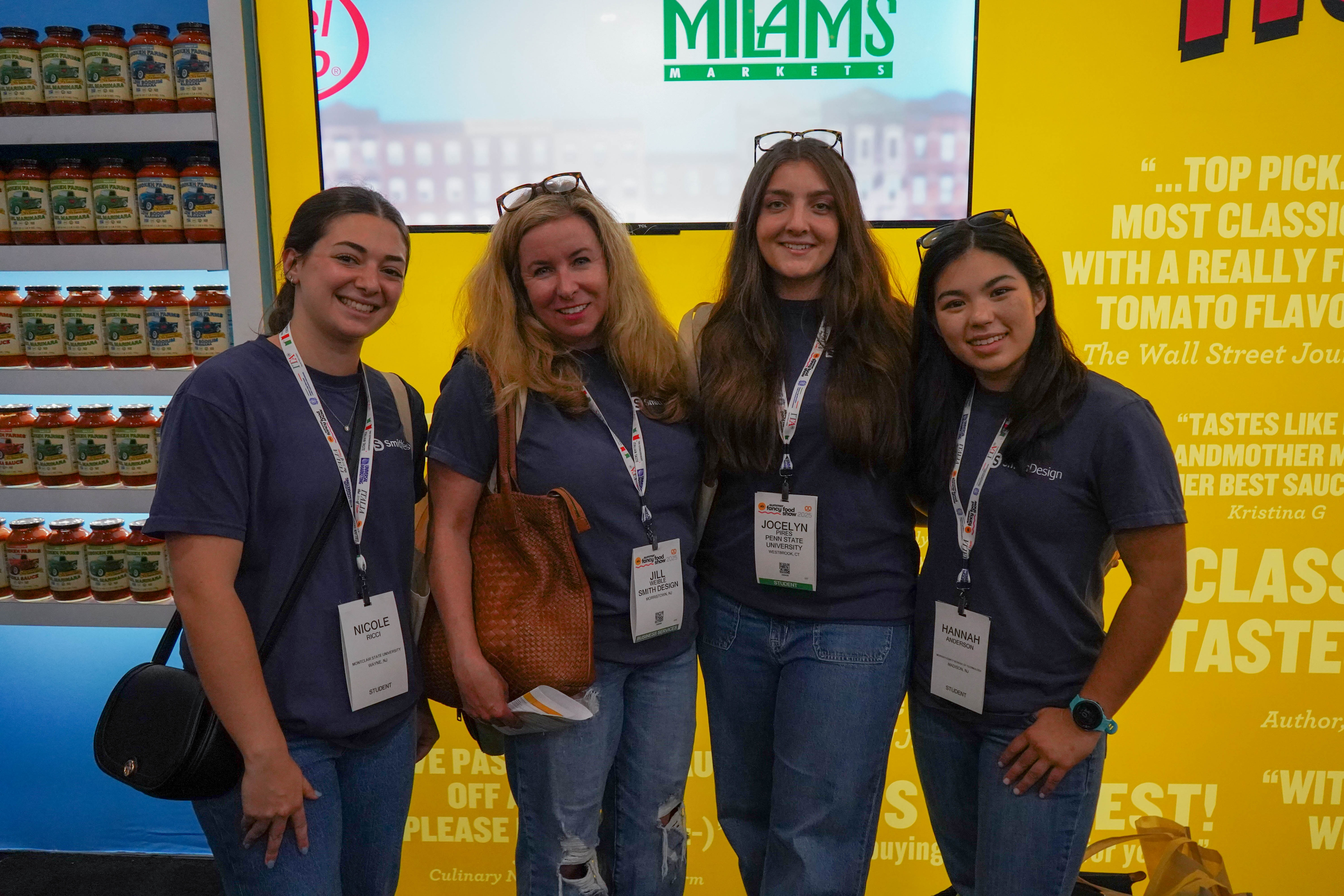
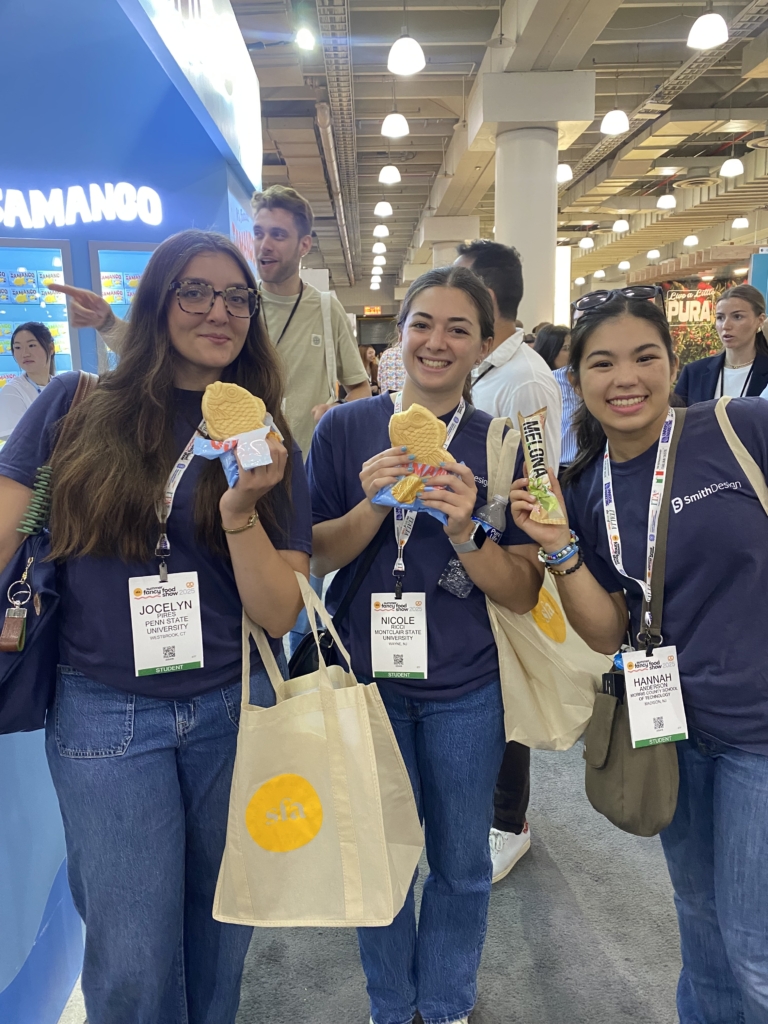
This year’s SFA Summer Fancy Food Show was stocked with delicious treats, hot new products, and over 2,500 innovative, beautifully designed, eye-catching booths. Four of Smith Design’s own were able to attend: Senior Client & Business Growth Development Manager, Jill Weible, and our three summer interns, Hannah, Jocelyn, and Nicole.
THE ADVENTURE BEGINS
We started the day by meeting up at the front of the Javits Center! Jill briefed us on our game plan and, after picking up our own special name badges, we headed to the first floor ready to stuff our tote bags full of samples to bring back to the office! With over five thousand booths to go visit, we made sure to bring our best walking shoes and prepared to fill our brains (and bellies) with a whole lot of food knowledge.
Booth by booth, we were able to see so many different foods, snacks, drinks, and desserts! Some have been around for decades, centuries even; others were brand new, fresh takes on treats we had never seen before! By talking with the diverse group of exhibitors, we were able to learn about new technologies, flavor combinations, business collaborations, and find out what is, or will be, trending now!
A SPICY KICK
There was no shortage of heat at SFA’s Summer Fancy Food Show, and we’re not just referring to the weather. Spice was one of the most popular trends among this year’s exhibitors. After prior Fancy Food Shows helped launch Mike’s Hot Honey into the stratosphere, hot honey was an incredibly popular ingredient in various products, especially marinara sauce.
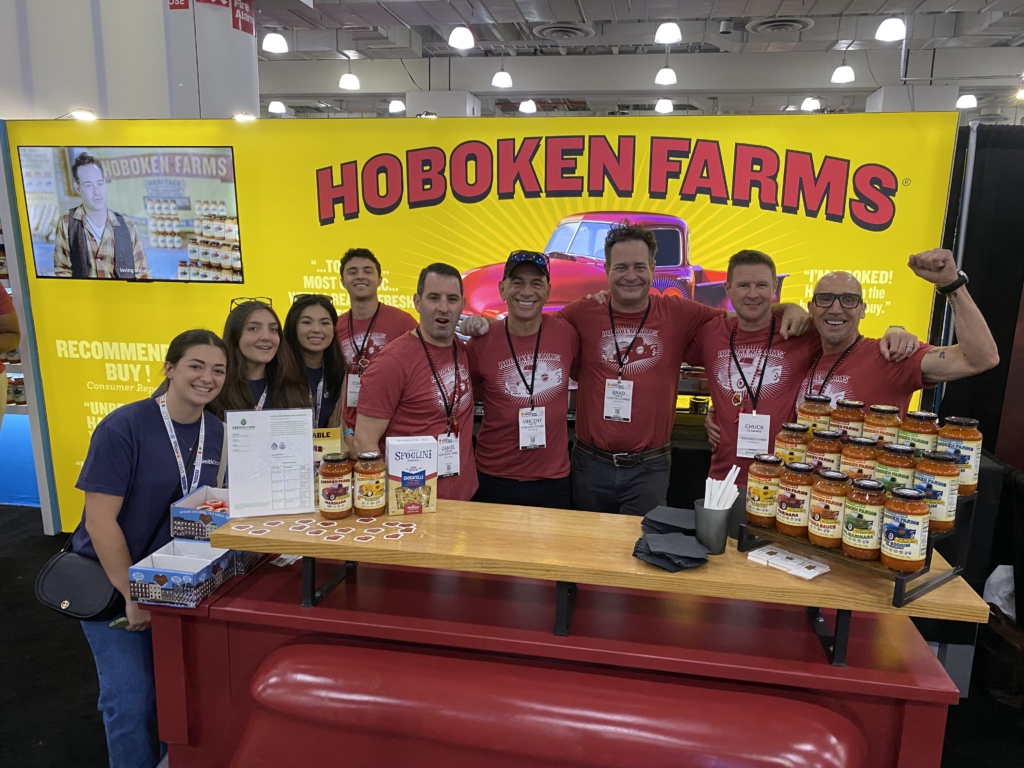
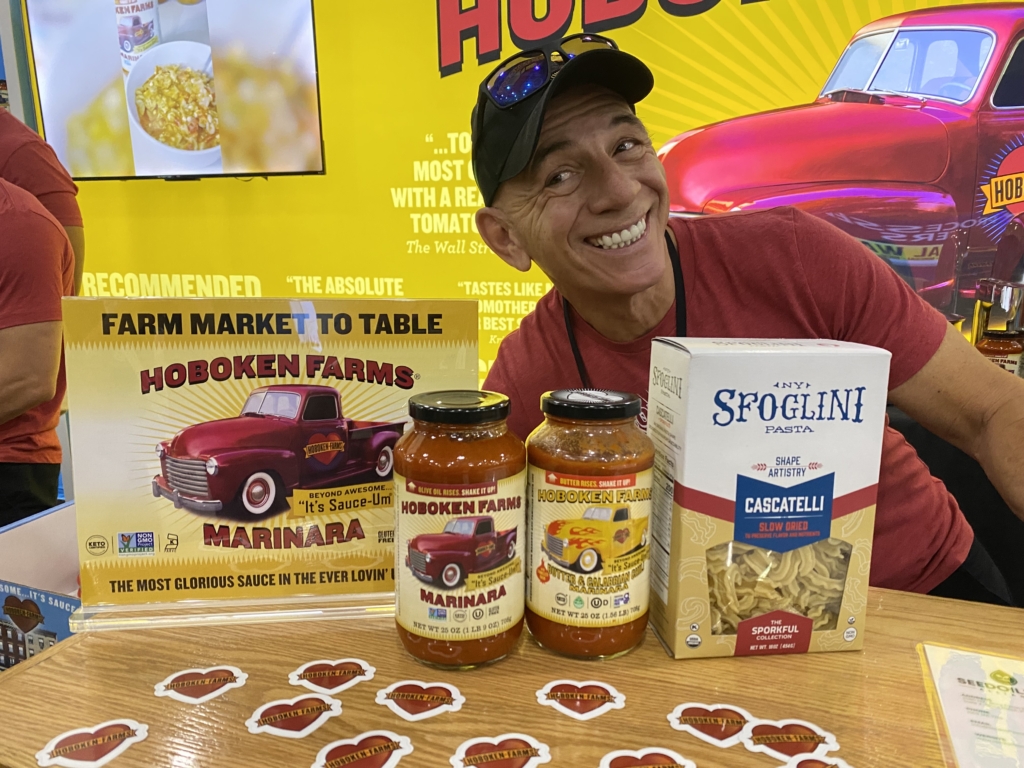
Speaking of Spice, our friends at Hoboken Farms launched a spicy, new sauce flavor – Butter & Calabrian Chili Marinara. We spent some time at their truck-themed booth watching their Yo-Yo master perform and sampling the new sauce cooked up by Brad.
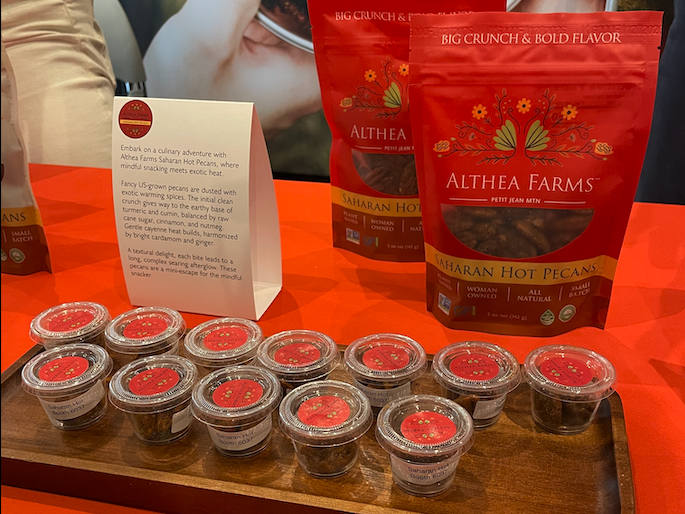
Our taste buds were on fire all day after trying everything from Saharan Hot Pecans at Althea Farms, Rondele Mango Habanero Cheese at Lactalis, the adorably designed Noodletown Sesame Noodles with Chili Crisp at Acecook, and Maazah’s fresh Cilantro Chutney sauce.
ALTERNATIVES FOR EVERYONE
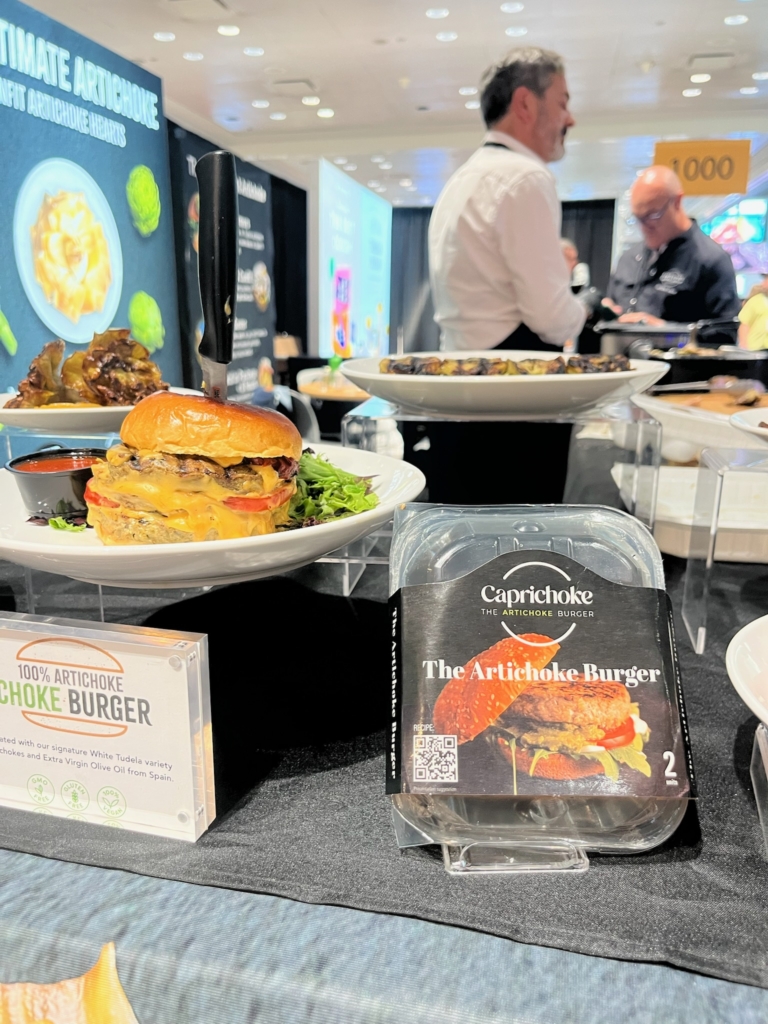
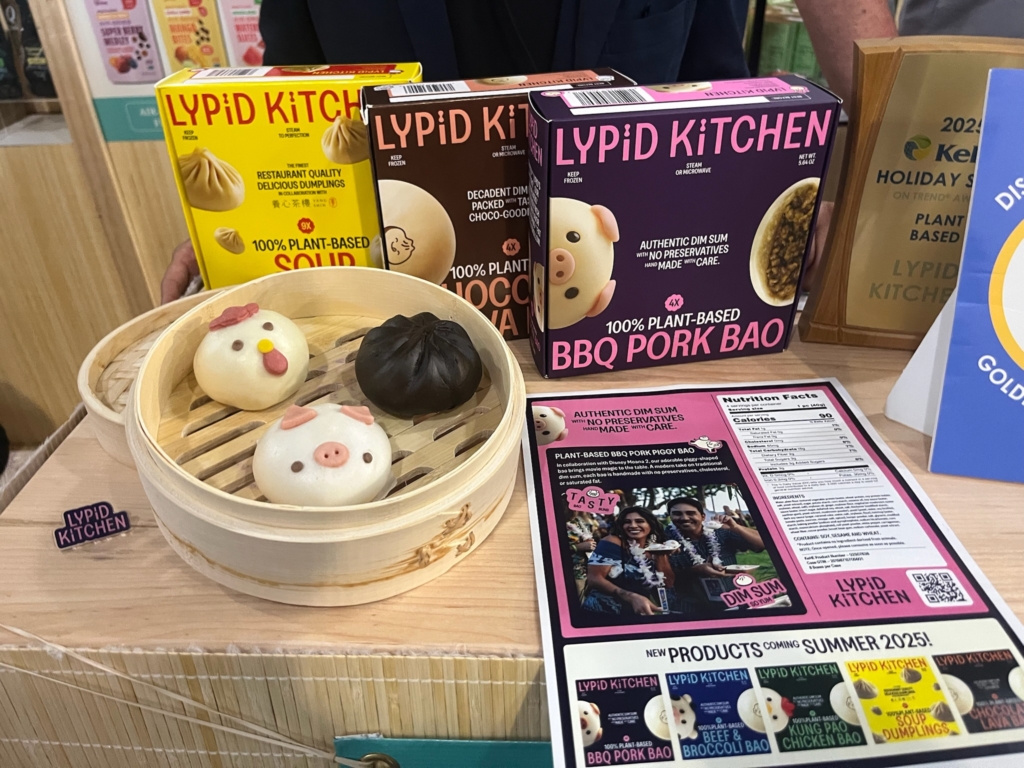
If one thing was clear at this year’s show, it’s that the food industry is in the midst of an accommodating age. We tried a huge variety of alternative products, some highlights being The Ultimate Artichoke’s artichoke burgers, Natural Heaven’s heart of palm pasta, Prime Shrimp’s shrimp burger, and Bezi Labeneh’s tangy cream cheese alternative. We even sampled protein sprinkles at Sprinkle Bites, which was one of the most innovative products we tried at the show.
In addition to offering different ingredients and regionally-inspired flavors, many of the alternative products were also created to accommodate health and dietary preferences. These packages were sprinkled with claims of being high in protein and fiber and low in fats, sugar, and carbs.
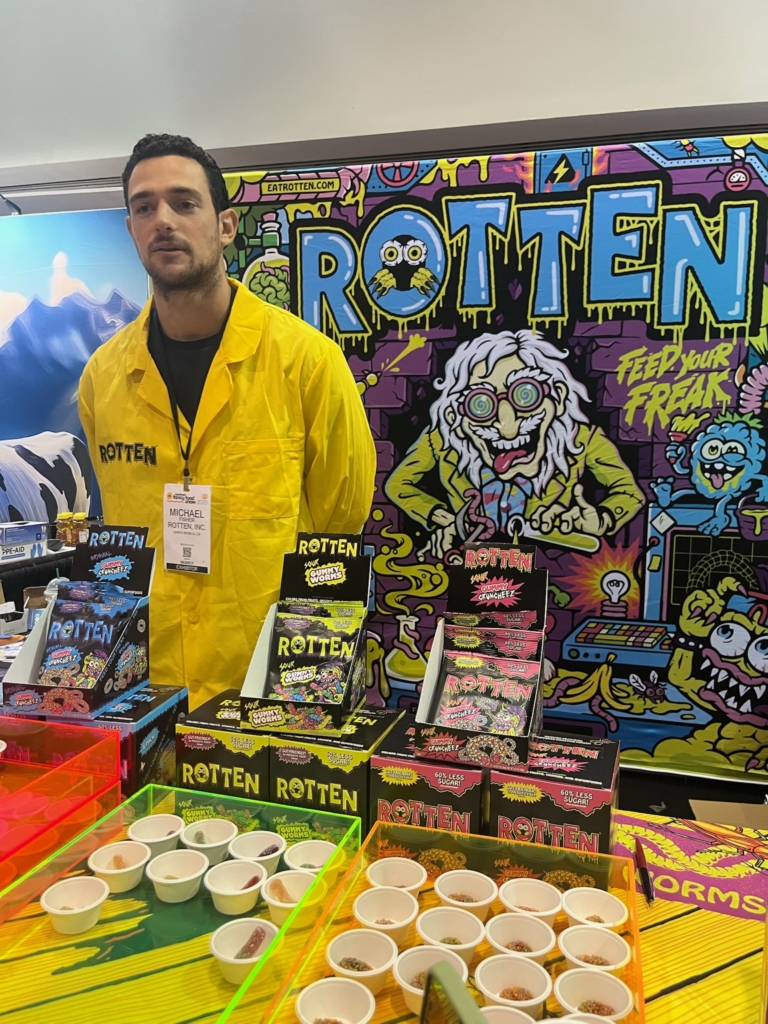
Continuing on with the health theme, another major trend we noticed at Fancy Food was the abundance of products highlighting the inclusion of prebiotics. Visiting “Rotten Candy”, a new brand that ironically produces healthier alternatives to classic gummy candies, felt like stepping into a mad scientist’s laboratory with their neon, nostalgic illustrations. We sampled their unbelievable gummy candies that also happened to be packed with prebiotics and offer 60% less sugar than leading gummy brands.
EASE & CONVENIENCE
One of our favorite micro-trends we observed was convenient, on-the-go packaging. We also saw lots of individually packaged snacks with portioned servings. Lotte’s Coolish Frozen Desserts came in squeezable pouches, bringing all the fun of ice cream, without the drippy mess.
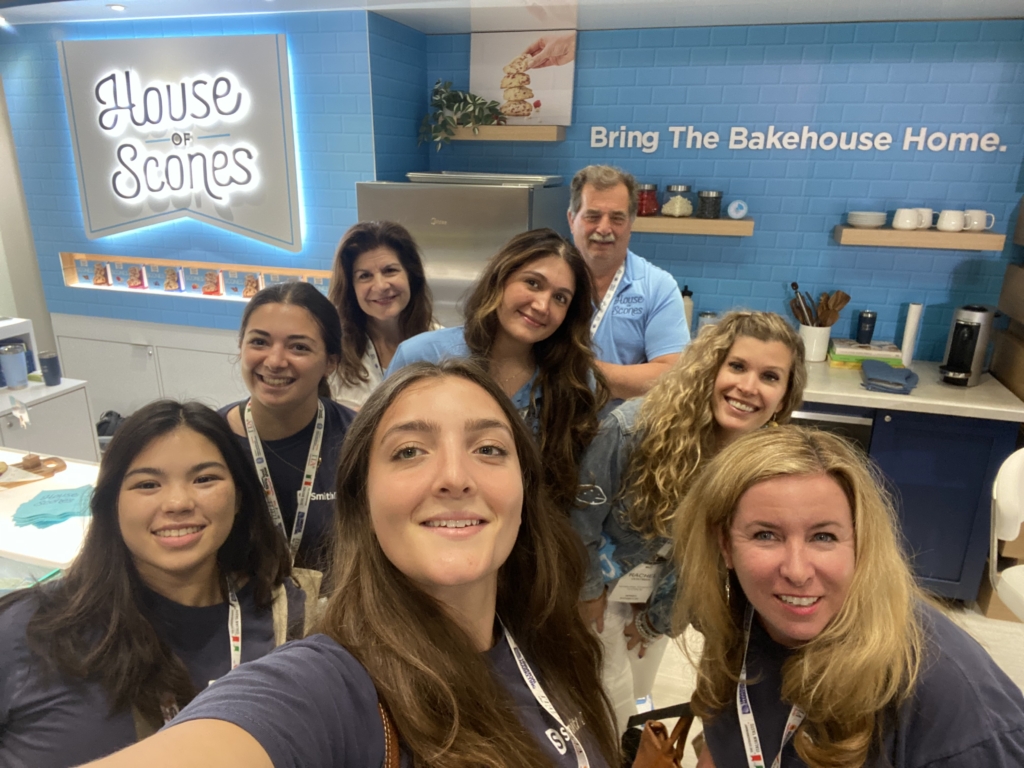
Many brands introduced new products offering a gourmet flavor experience at home. King Arthur Baking Company was serving fresh, hot biscuits straight from the oven with strawberry rhubarb jam and melted butter using their Buttermilk Biscuit Flour Blend. We also enjoyed visiting House of Scones, sampling their delicious scones and seeing Smith Design’s polished branding and package designs on display. These brands and their standout products offered a thoughtful cooking and eating experience, in addition to their delicious taste.
RAINBOW OR REFINED?
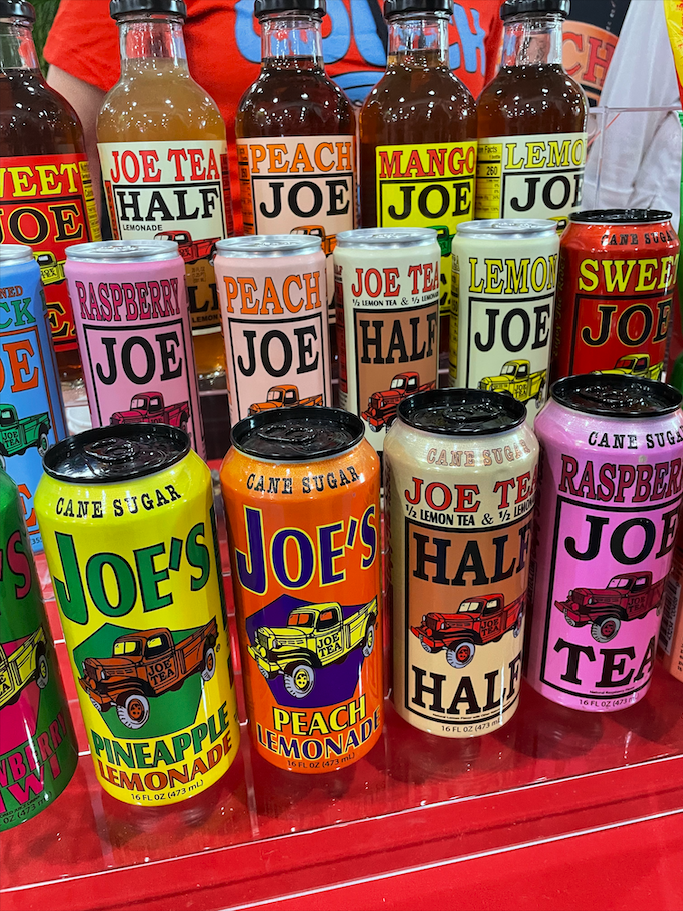
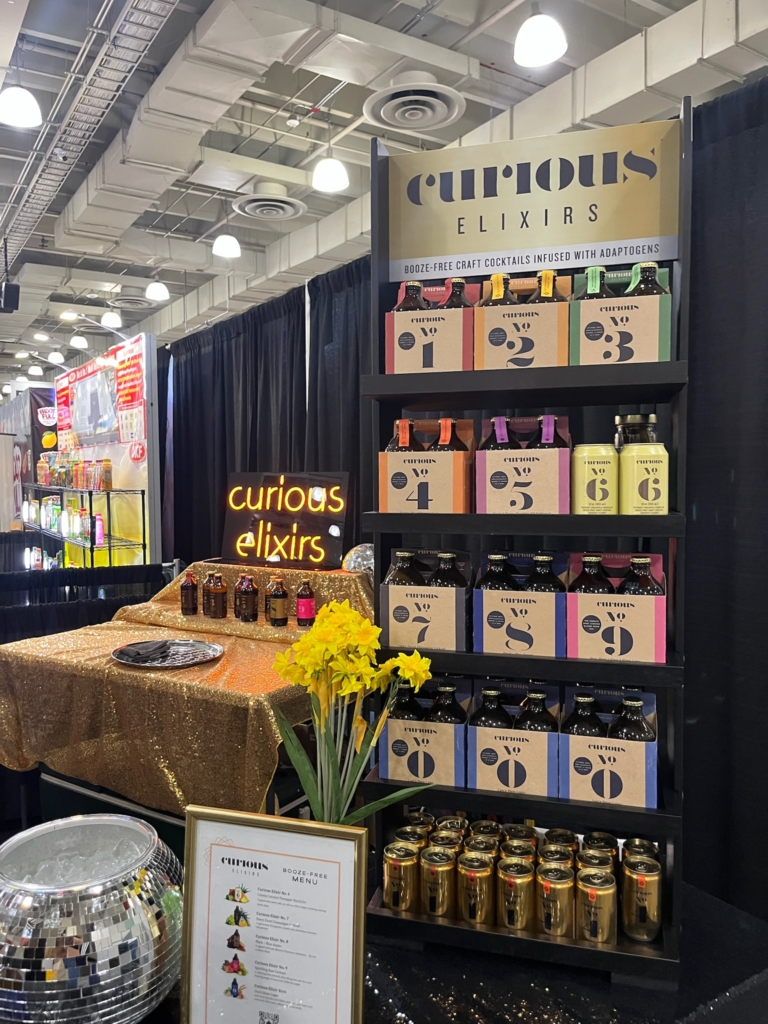
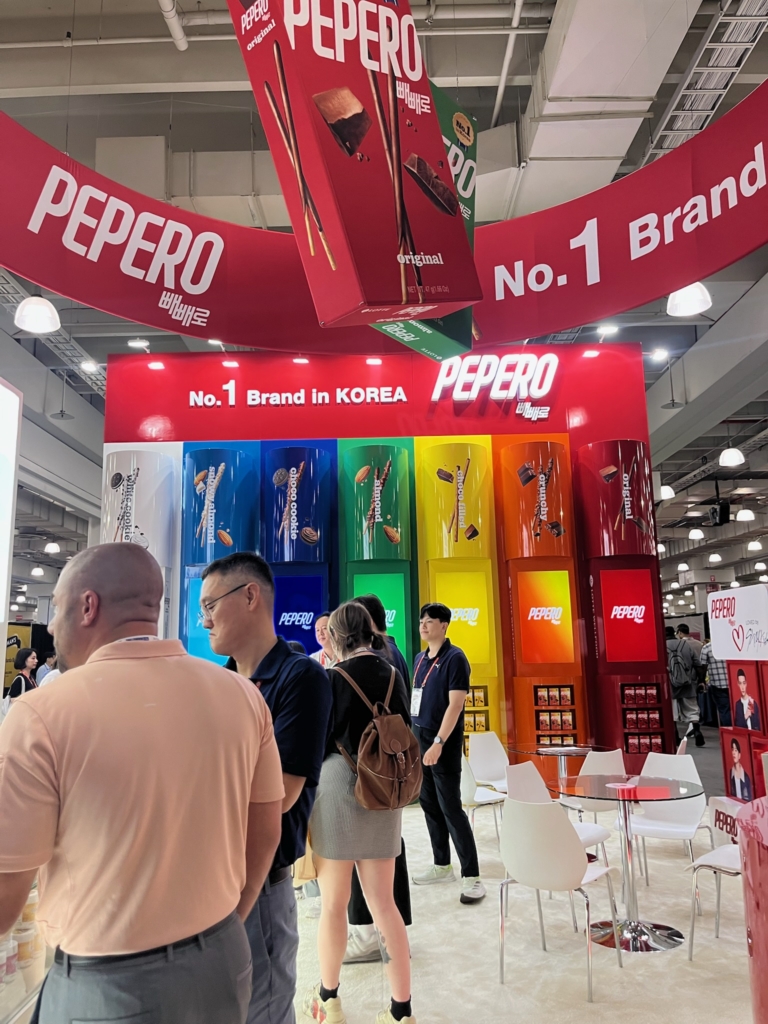
Rather than sticking to a particular brand color, many brands have been leaning into the rainbow aesthetic. These brands remain anchored by their wordmarks and logos, with different rainbow shades for every flavor. Curious Elixirs, Joe Tea and Pepero were standout booths because of their punchy, multi-colored packaging.
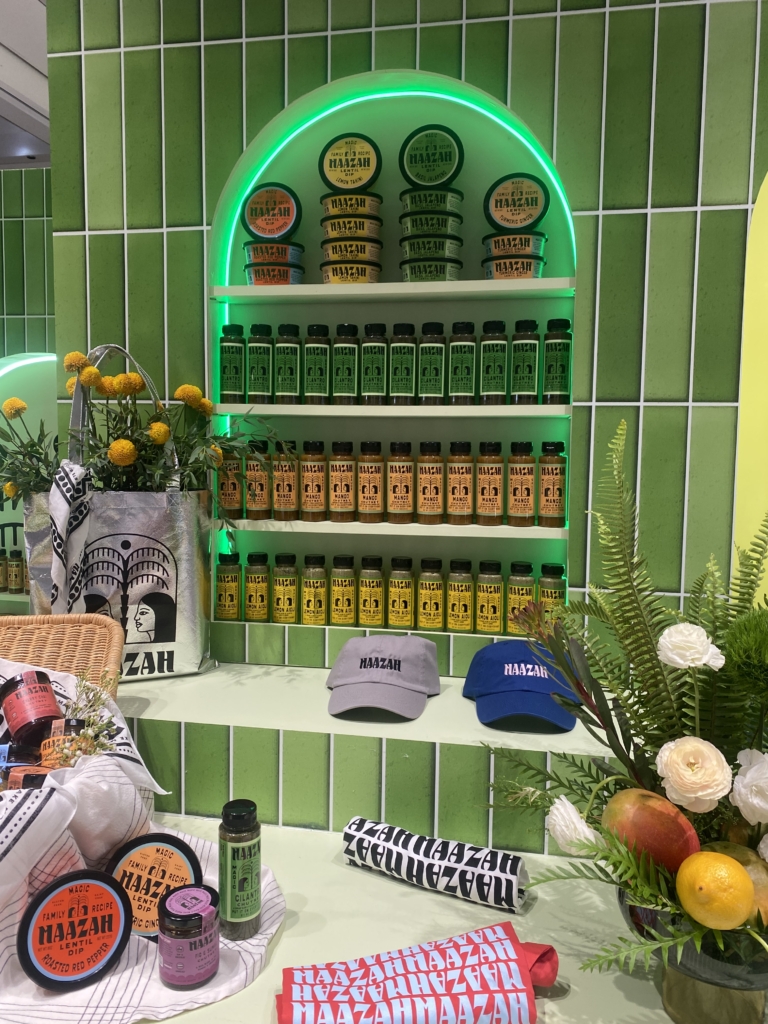
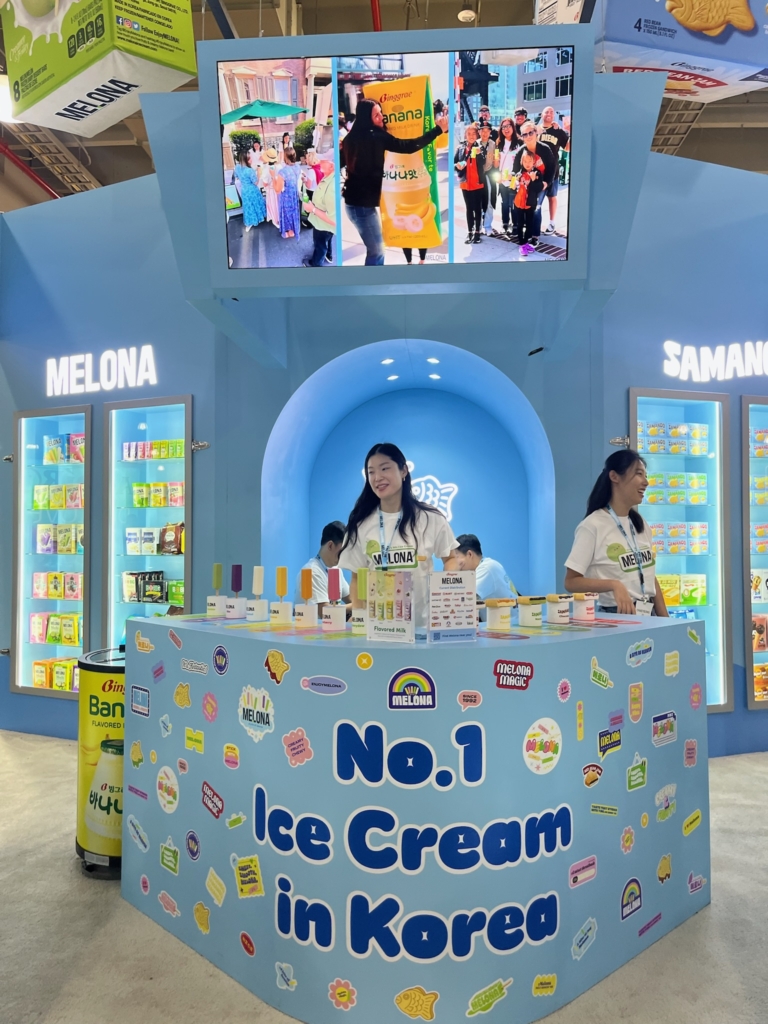
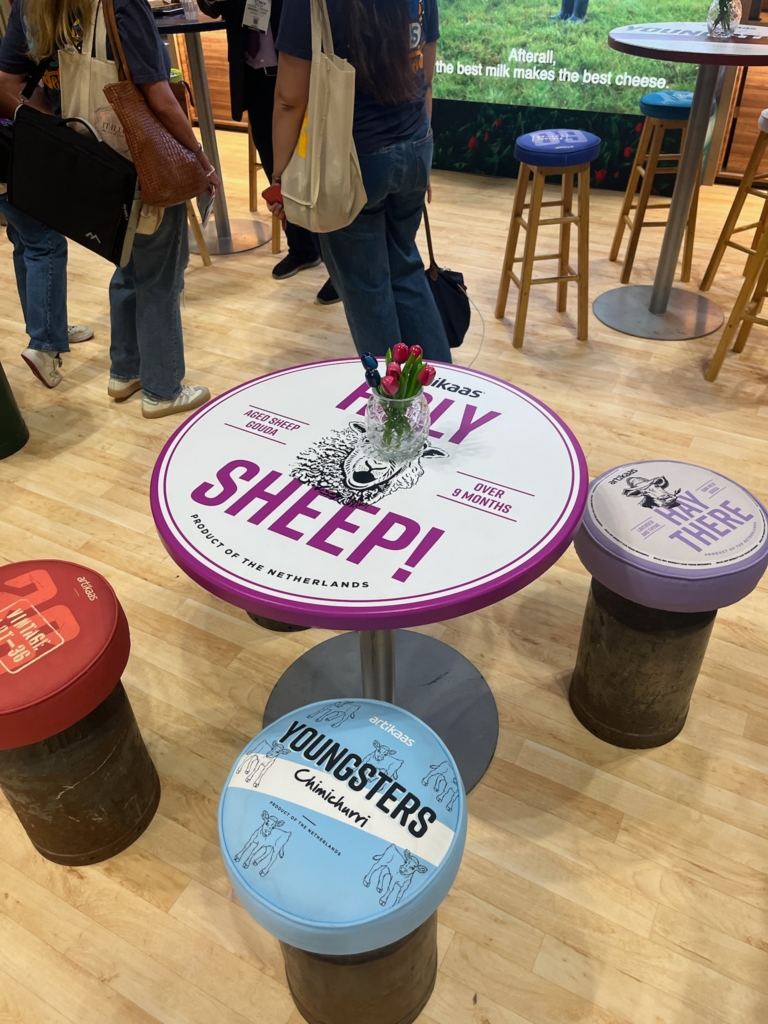
Monochromatic color schemes could be equally effective for some brands. We loved Melona’s icy blue booth, tricked out with neon signs and colorful stickers, which perfectly complemented their Taiyaki Ice Cream sandwiches. Artikaas leaned into the “cheesy” theme, their tables and barstool cushions adorned with their clever cheese wheel designs. Maazah’s soothing, green-tiled booth felt like an oasis in the chaos of the Javits Center. Their chutneys and lentil dips were tasty paired with a full charcuterie spread.
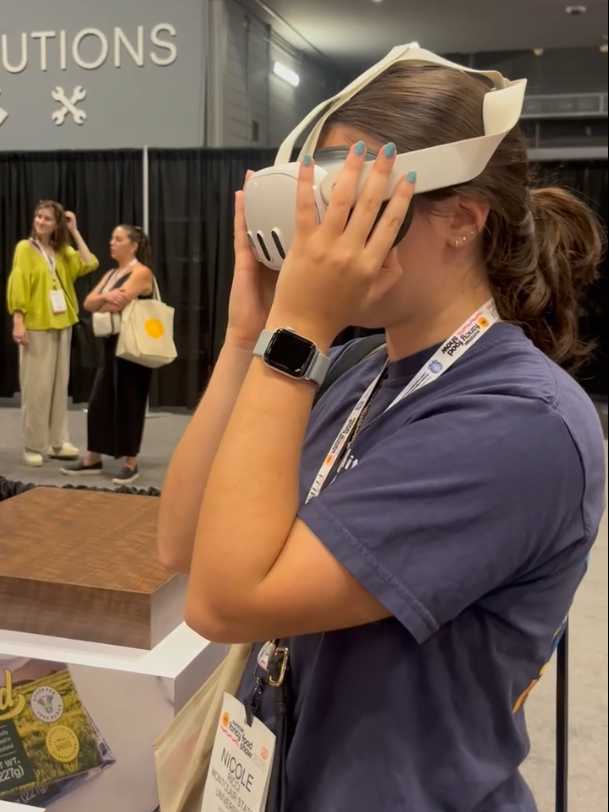
Highlights: – Visiting our clients and seeing their fabulous booths and new product innovations – Learning the stories behind products – Josephine’s Cookies, history of Twinings – Westgold VR headset – we could almost taste the grass! – Ornate tinned fish – Sprawling charcuterie spreads – Easting samples 😉
There was so much to see and do at the show. We learned so much and will cherish this experience forever. We were able to see how much work goes in behind the scenes to get the products we use and eat every day to the shelves and left the center inspired and ready to apply our newfound knowledge in our work.
After a long day at Fancy Food, we made our way back to New Jersey with overflowing totes, satisfied appetites, packed camera rolls, and even a brand-new pizza board. Here’s to another great year at SFA’s Summer Fancy Food Show!
In an era of fragmented attention and fast-moving trends, brand mascots can no longer rely on nostalgia alone but must be actively designed for relevance. Driven by shifts in consumer behavior, digital marketing strategies, and the rise of parasocial relationships in online culture, they have evolved dramatically from static product icons to dynamic social media personalities.
As influencer culture grew in popularity, marketers recognized the value of authentic content and forming emotional connections with their audience. A mascot helps a brand cut through the noise, standing out using humor, sarcasm, or irreverence while still being “on brand.” Even better, because they’re not real people, mascots are flexible digital assets that can respond to trends quickly and don’t need costly influencer contracts. They become nimble, multi-platform brand representatives capable of driving engagement, merchandising, and emotional connection.
Mr. Peanut and The Jolly Green Giant
Smith Design worked with some long-standing mascots, notably Mr. Peanut and the Jolly Green Giant, helping to evolve their presence on packaging and social media.
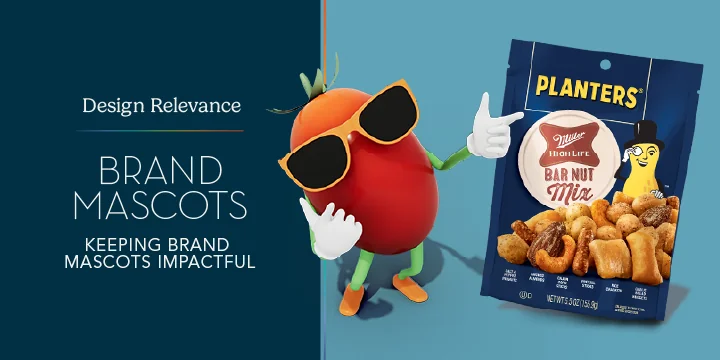
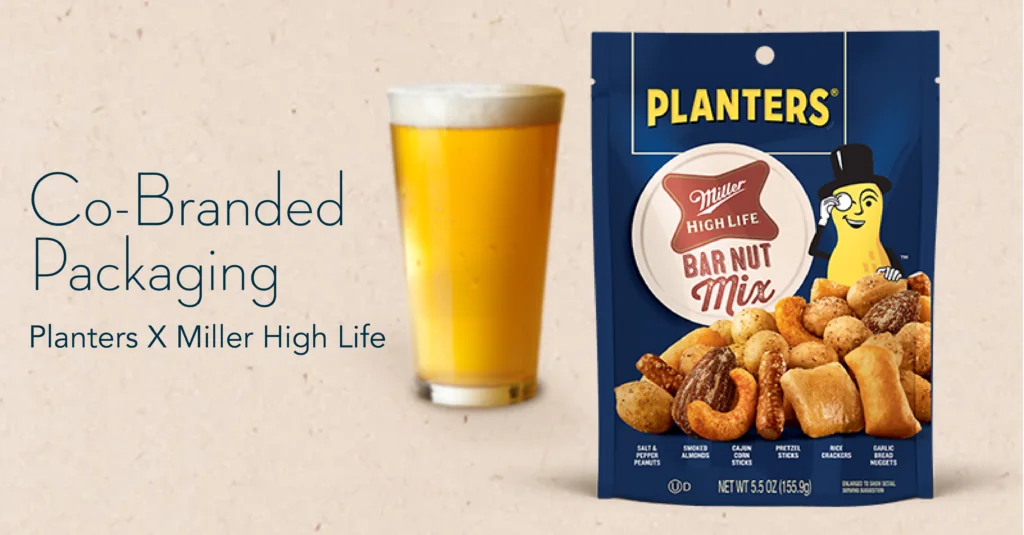
We created the cobranded visual identity and shot the food photography for the Mr. Peanut × Miller High Life Bar Nut Mix, a campy and clever collaboration between two century-old brands that appealed to Millennials and Gen Xers who appreciate retro-kitsch, especially regarding their favorite snacks.
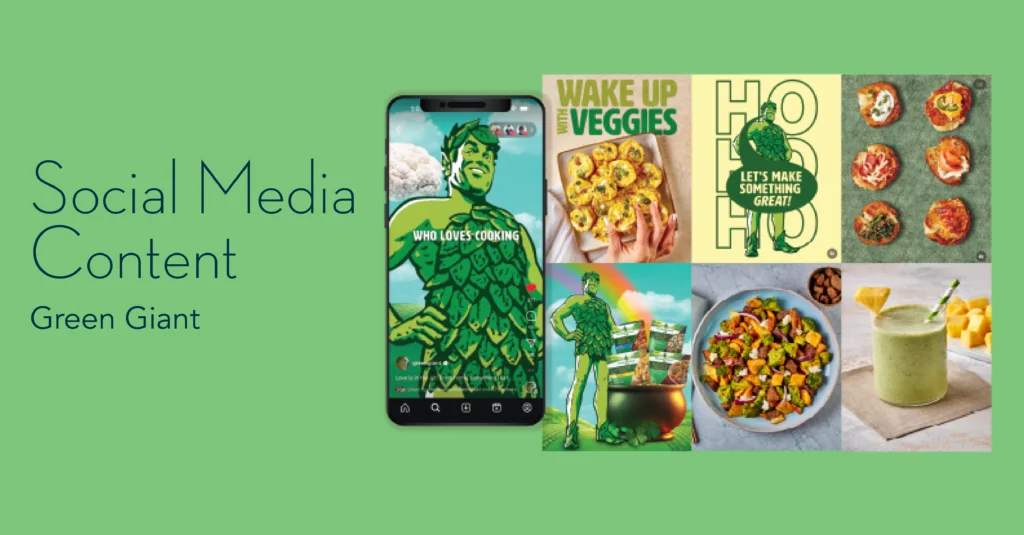
In creating content for Green Giant’s social media, Smith Design focused on posts that allow the Giant to participate in social media trends while retaining his strong, silent persona. One trending post jumped on the “looking for a man” trend and proved one of the brand’s most popular posts. Audiences recognized the trend and appreciated the nod to pop culture.
A Tomato is Born: Designing a Character That Works
Today’s mascots have human-like quirks, backstories, and even relatable drama. Think Duo, Duolingo’s sassy owl, known for chaotic shenanigans like sending threatening reminders to keep up with learning streaks, flirting with celebrities, dancing in public, and office antics.
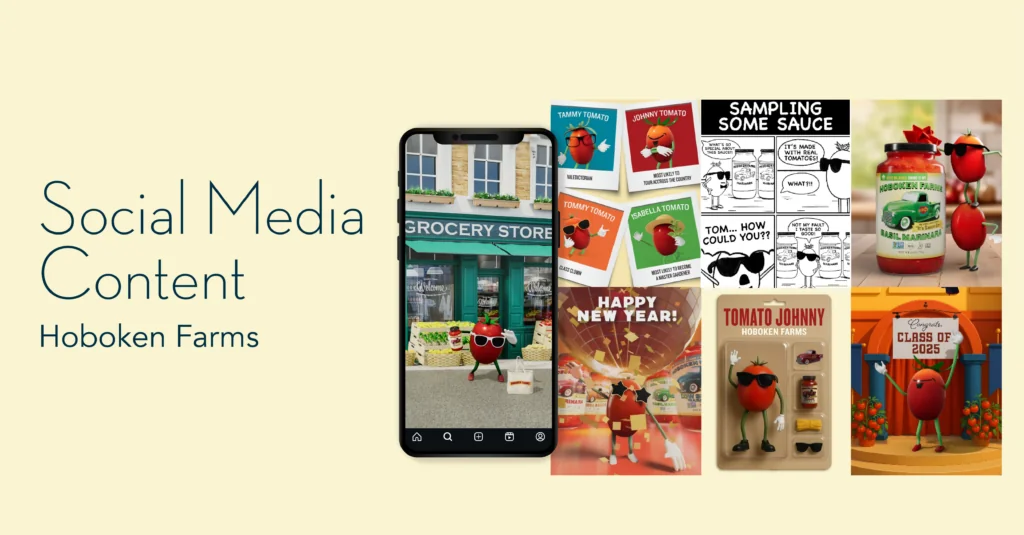
Smith Design embraced the opportunity to create character-focused, relatable, organic social media content for sauce company Hoboken Farms. The brand had no pre-existing mascot in this case, but Smith made a band of unofficial mascots to breathe fresh air into their social media content.
Consequently, a quartet of anthropomorphized Roma tomatoes have become “regulars” on the brand’s social media feed. They’ve gone dancing for New Year’s Eve, announced grocery store partnerships, and even graduated college. As 3D animated representatives, they’re easygoing and adaptable to the task.
And when Smith creatively pivoted them to participate in the popular AI “action figure” trend, they spawned personalities of their own, complete with signature accessories representing each of Hoboken Farms’ four varieties of sauce. Tammy, Tommy, Johnny, and Isabella Tomato are now a part of the sauce’um Hoboken Farms gang, and we’re excited to see what they do next!
If you’re looking to give your brand a representative, an enhanced voice, or even a little extra charisma, let’s chat. At Smith Design, we have vast experience in working with heritage brand mascots as well as inventing fresh, new characters that truly stand out. Whether you’re envisioning a cheeky character, a clever sidekick, or a mascot with undeniable swagger, we’re here to help your brand make a lasting impression. Let’s create something that gets noticed and keeps people talking.
Whether you’re a designer or a brand marketer, this blog offers insights that can help you harness the power of Visual Generative AI. Maximize agility with faster turnaround times and cost efficiency with “GenAI”.
AI has rapidly evolved from a niche area in computer science into a transformative force across various industries, particularly graphic design. Visual GenAI enables machines to perceive, interpret, and act on visual data similarly to how humans do, but the implications of this technology extend far beyond mere image recognition.
GenAI – New Developments
The recent conversations surrounding GenAI focus on developments in AI image synthesis such as Firefly, Runway, DALL-E, Midjourney, and Flux, which have accelerated automated creativity.
The integration of GenAI in graphic design has evolved from basic automation tools to sophisticated generative systems, significantly impacting the creative process by streamlining repetitive tasks, generating design ideas, and enhancing image manipulation, allowing designers to focus more on conceptualization and high-level decision-making.
The future of AI in graphic design likely includes even more advanced customization, personalized design experiences, and the ability to seamlessly integrate diverse data sources into visual outputs, further blurring the lines between design and data analysis.
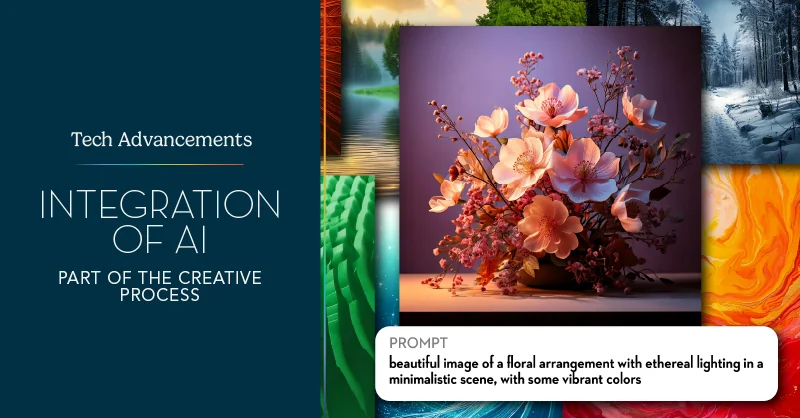
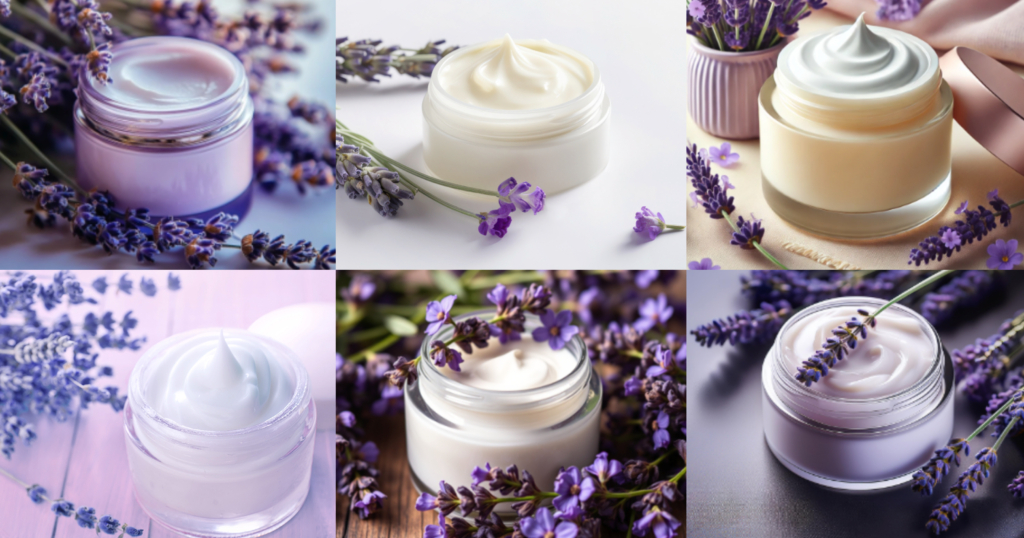
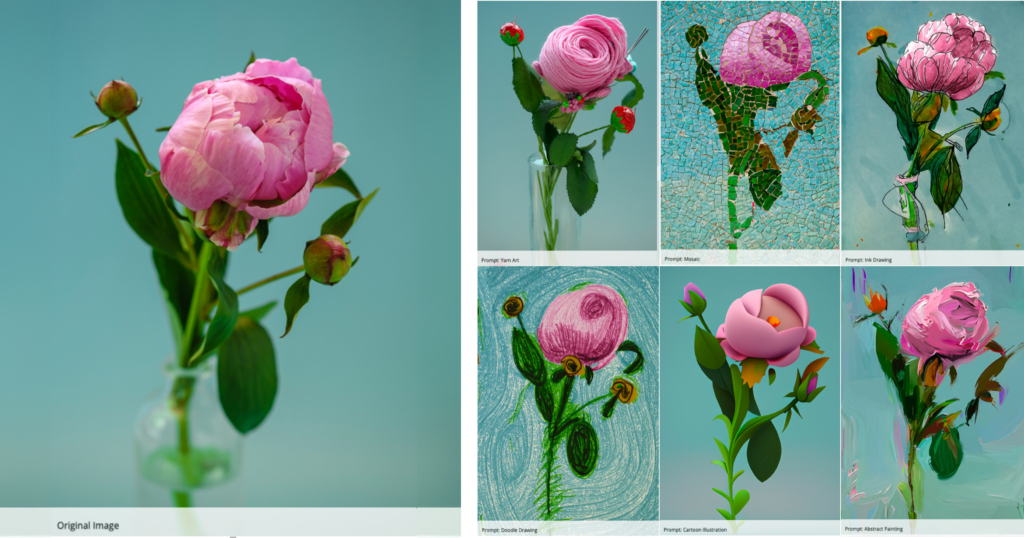
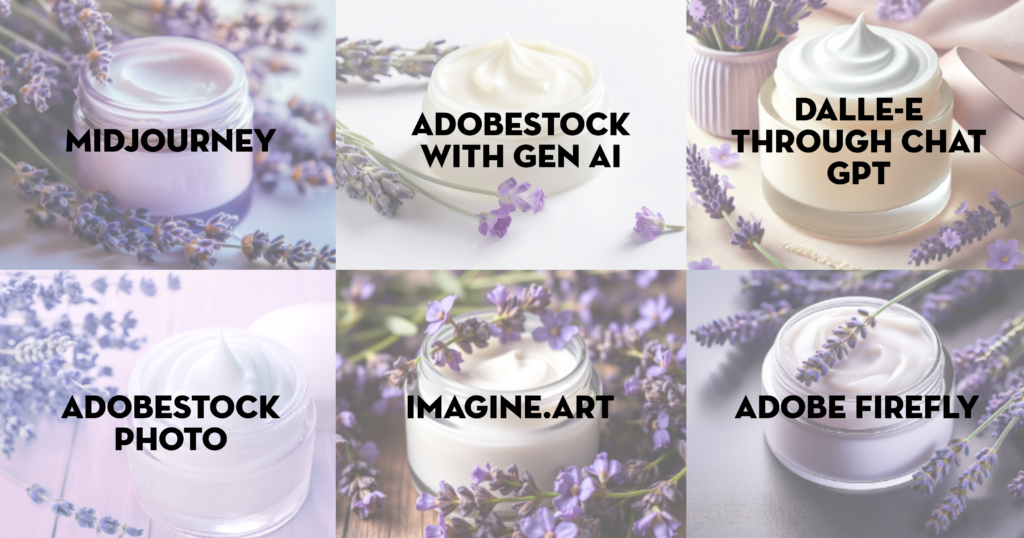
Guess Which Images Are Made With AI?
Stay tuned for the answer revealed further down in the blog…
GenAI – Governance
In mid-October Smith Design sent three representatives to the Adobe MAX 2024 conference in Miami Florida. They returned with a wealth of new knowledge, including how Adobe is paving the way for GenAI governance by implementing content credentials and using only permitted content. Adobe takes responsible innovation in the age of GenAI very seriously. Their leadership positioning and commitment to thoughtful AI innovation is an example for other GenAI development models. A diverse Adobe AI Ethics Review Board oversees training, testing, and the review process to ensure accountability, responsibility, and transparency. Click here to learn more about our learnings from the Adobe Max conference: https://smithdesign.com/blog/adobe-max-2024-recap/
With an everchanging landscape, the GenAI risk and governance stakeholders in different organizations will need to diligently oversee the responsible use of GenAI by mitigating potential biases, security threats, and ensuring safety and ethical practices.
Drive Efficiency and Enhance the Creative Process Using AI as a Tool
As we are weeks away from entering the last year of Q1 in the 21st Century, several key trends converge to reshape the industry. Advancements in machine learning, natural language processing, and computer vision are driving these trends, making AI more accessible and powerful than ever before. Designers who embrace these technologies will equip themselves to meet the demands of an increasingly digital and personalized world in the 21st century Q2 and beyond.
Think of the process of using AI as spit balling ideas, image swipe sessions, or post-it sketch storms with your team, during the beginning phase of design. How might you use AI to generate ideas, or use it in your workflow?
You can use AI to:
Enhanced Creative & Visual Briefs: Generate unique design concepts that designers may not have considered. AI can assist designers in providing fresh perspectives to spark creativity.
Efficiency and Speed: Quickly generate designs or concepts, significantly reducing turnaround times. This speed can be crucial in meeting tight deadlines.
Customization: Tailor designs based on specific prompts, enabling a high degree of personalization.
Cost-Effectiveness: Streamline the design process, especially for preliminary concepts and prototypes, making it more affordable than traditional research methods.
Exploration of Styles: Mimic various artistic styles and genres, allowing designers to experiment with different looks and feel without needing to master each style individually. AI programs enhance efficiency and creativity by quickly generating ideas and automating repetitive tasks. It can also help with style references, material reference, consumer types, objects, materials, conveying idea/context, design language, packaging types, photography language, etc.
Consistency: Maintain design consistency across various projects by adhering to predefined style guidelines and parameters.
Accessibility: For those without advanced design skills, or the ability to verbally communicate their vision, AI tools can provide a way to create professional-looking designs with minimal expertise.
Data-Driven Insights: Analyze trends and patterns to inform design decisions.
Experimentation: Assist in testing and iterating on multiple design concepts quickly, helping designers find the best solution without extensive manual effort.
Support for Collaboration: Facilitate collaborations by providing a shared platform where team members can generate and refine design ideas together.
And now for the answers!
Conclusion
As AI continues to advance, its impact on graphic design and marketing will only grow. By integrating these technologies into their workflows, designers can unlock new levels of creativity and efficiency. The future is bright for those willing to embrace the possibilities that AI brings to the table.
Want to learn more about how to successfully navigate using AI as a tool for inspiration and efficiency? Fill out the form below to be one of the first to receive our more extensive white paper that is in development. Please add that you are interested in the GenAI white paper.
Smith Design also offers Educational Seminars where we host webinars and live or streamed events on trending topics. Please fill out the form to connect and to learn more.
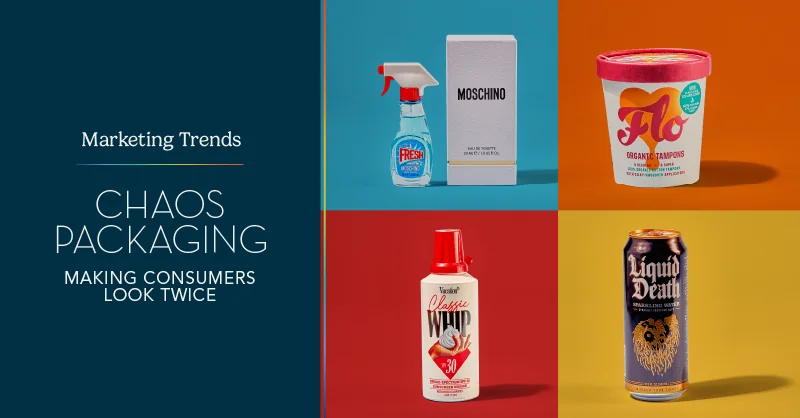
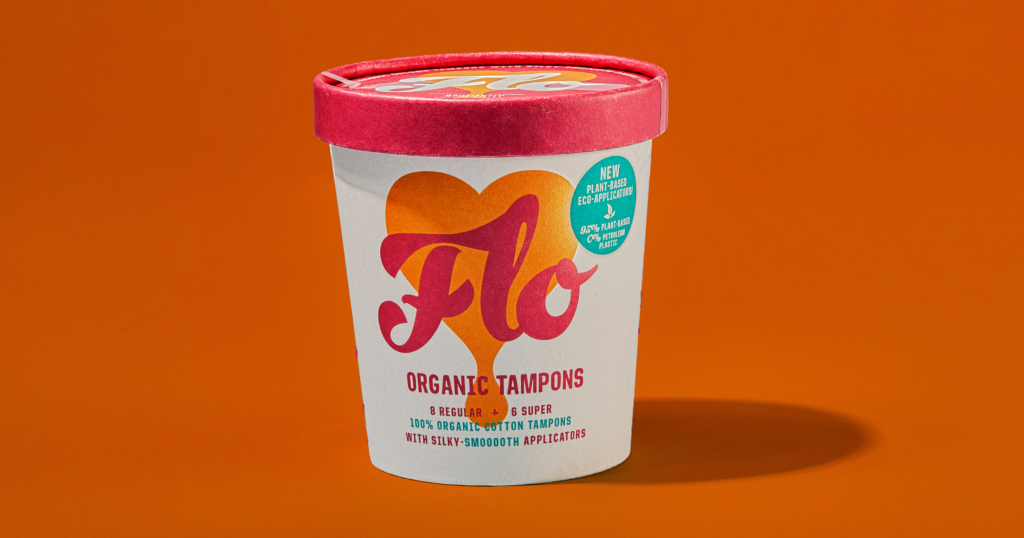
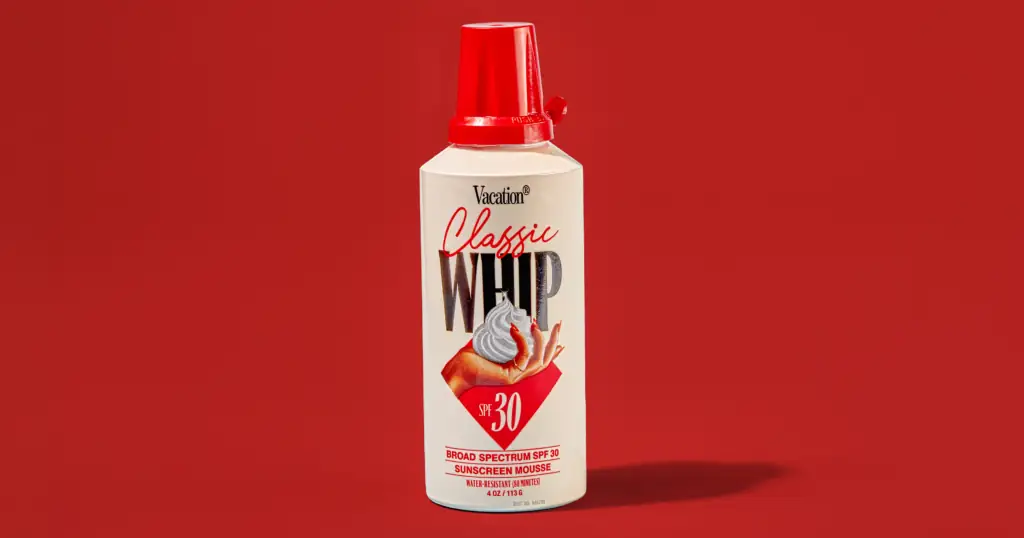
In today’s world of retail, consumers crave uniqueness, surprise, and a touch of rebellion – and the latest packaging trend, aptly called “chaos packaging,” brings all these elements to the forefront. Chaos packaging, a phenomenon that continues to gain traction on TikTok and recently spotlighted by The Wall Street Journal, embraces an unorthodox approach by selling products in containers that are unconventional to their category. Think tampons packaged in what looks like ice cream containers or water in tallboy cans traditionally used for beer. This outlandish packaging taps into our curiosity and challenges the norms of what packaging “should” be, prompting many to wonder: How far will this trend go, and what could be next?
Small Startups Disrupt the Shelves
The chaos packaging trend began with small startup brands that, due to limited budgets, needed to stand out against larger competitors. Without funds for extensive advertising, these companies had one primary promotional tool – their packaging. Rather than using conventional packaging that might get lost on shelf, they adopted surprising, playful forms, and in many cases, they used stock packaging to keep costs down. By placing their products in non-standard containers, these brands caught the eye of consumers in a shockingly fresh and economical way.
Influencers Fuel the Chaos Packaging Craze
Social media influencers continue to play a significant role in amplifying chaos packaging. This past summer, the Vacation brand sunscreen went viral. This sunscreen packaged in a whipped cream container really whipped up a frenzy of social posts!
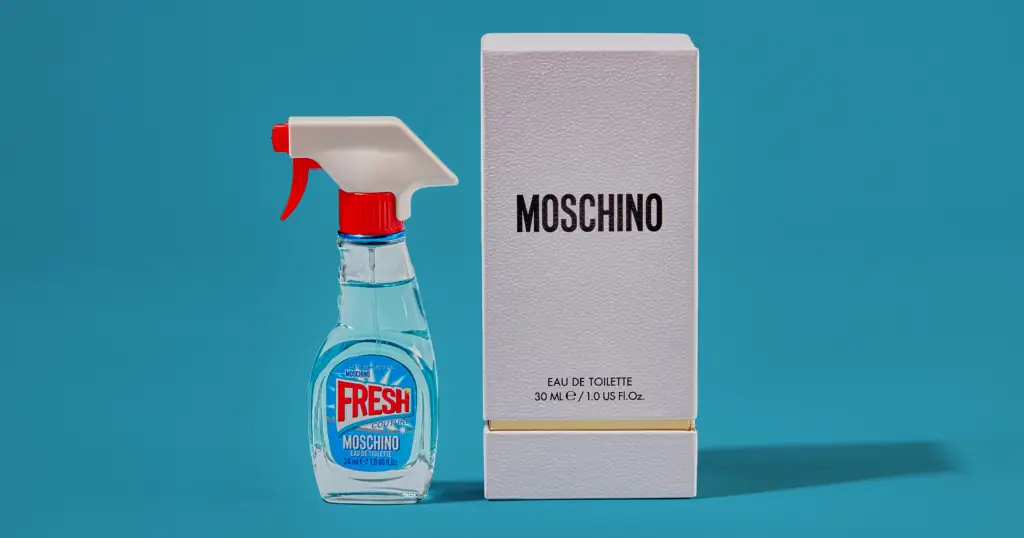
Another standout example comes from Moschino, a perfume brand beloved by influencers. The perfume’s outer box appears plain, but inside, the bottle resembles a surface cleaner’s trigger spray bottle – an unexpected twist that shocks and delights.
A Mini Bit of Nostalgia
The Moschino perfume’s packaging may remind Gen Z and Gen Alpha of the “mini-brand” and “unpacking” trends that flooded YouTube in the past decade. Videos of unboxing surprise toys, mystery eggs, and miniatures sparked fascination and surprise, a sentiment chaos packaging now revives. In a news segment about chaos packaging that recently aired on a Philadelphia station, one of the news anchors stated that the Moschino brand is like the answer to Gen Z growing up. Brands actually become mini-brands!
What’s Next for Packaging Trends?
With chaos packaging capturing attention, the natural question is: What’s next? The idea of a “surprise element” in packaging has deep roots in consumer culture, from cereal box toys to Happy Meal surprises. As brands look for the next big thing, candy and personal care sectors may continue to experiment with innovative shapes and formats, perhaps pushing the boundaries further than ever.
Consider the rising trend of using tackle boxes for candy storage or the popularity of unusual shapes and vessels in beauty stores like Sephora and Ulta. As a medium, packaging is transforming into an experience itself, inviting consumers to interact, play, and share their finds with friends and followers.
Sustainability Meets Chaos: A New Frontier
As brands push the envelope with chaos packaging, sustainability remains a crucial priority for all packaged goods. Both CPG companies and packaging manufacturers are researching and innovating with eco-friendly packaging options.
An example of sustainable packaging innovation is the in-mold labeling (IML) technology for plastic containers. With the IML manufacturing process, the labels are fused to the containers, allowing for easier recyclability because the packaging is a single material. Yogurt cups, primarily made with IML packaging, could inspire chaos packaging in unexpected categories. Imagine beauty products such as face masks or an exfoliator sold in yogurt containers! IML yogurt cups can also be used as packaging for foods in the snacking category, from dried fruits and nuts to chips and dips.
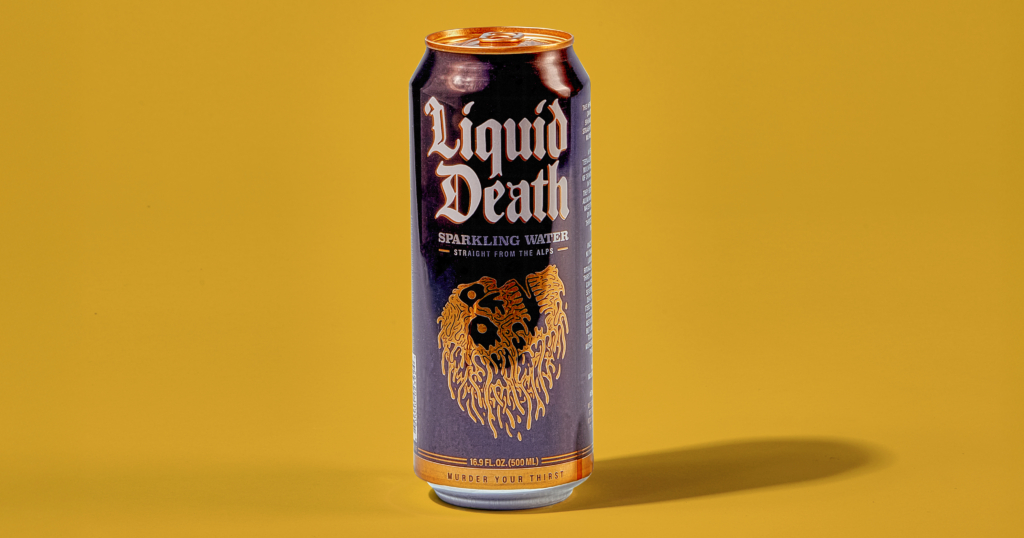
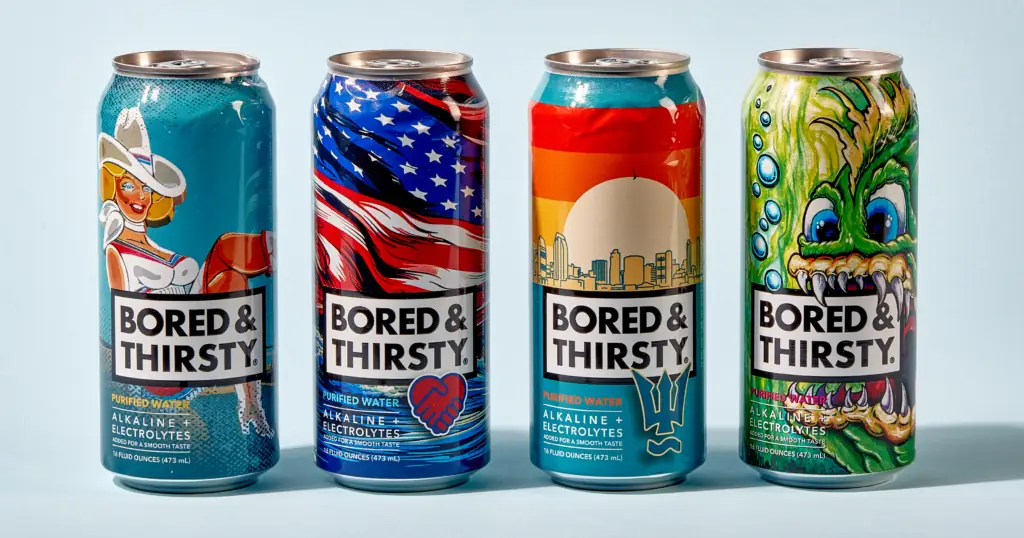
Aluminum is perhaps the most sustainable material on earth as it is highly recyclable. A current trend we observed is water being packaged in aluminum cans. As previously mentioned, Liquid Death water is pretty disruptive as it looks like beer in an aluminum tall boy can. Another fun example of water being packaged in cans is Bored & Thirsty water which has a plethora of wild designs with one consistent simple and clean logo. These designs allow the consumer to make a statement as they enjoy their water!
The future and evolution of packaging, if not chaotic, then certainly fun and sustainable
The chaos packaging trend signals a shift in consumer expectations, with brands redefining traditional forms. As brands innovate, there’s no telling how far they’ll take this trend and how packaging will evolve. Consumer packaging will continue to be a canvas for creativity, tapping into consumers’ love for surprise, fun, and perhaps even a bit of nostalgia – all while adapting to a more sustainable world.
Looking for ideas for your brand’s packaging?
You have come to the right place for inspiration, creativity, and brand strategy!
At Smith Design, we continue to research and immerse ourselves in trends and solutions across different categories. We’d love to hear from you!
Please fill out the form below with your contact information, and we will schedule a consultation.
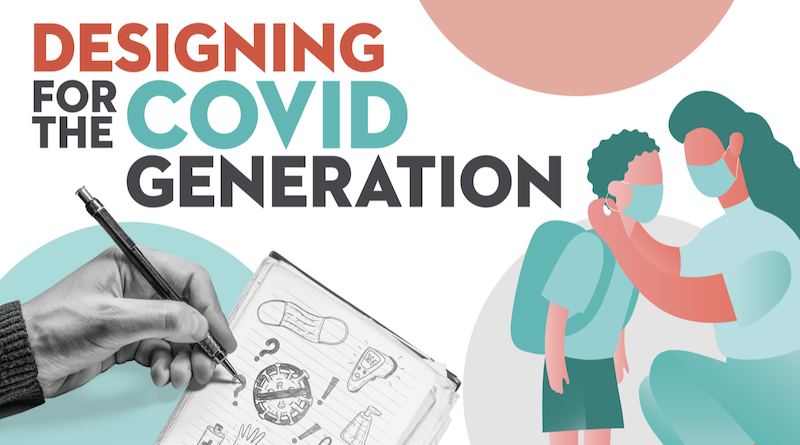
Designing meaningful products and experiences for kids carries unique challenges, and this has never been more true than for “Generation C”, the millions whose early formative years have been defined by living through the pandemic.
Despite the hardships of the last year, Gen C have proven themselves to be remarkably resilient. Whether it’s getting back up after a skinned knee, learning to read facial expressions under a mask, or even making friends over Zoom, there is no doubt that this cohort will continue to adapt and thrive in the post-pandemic world.
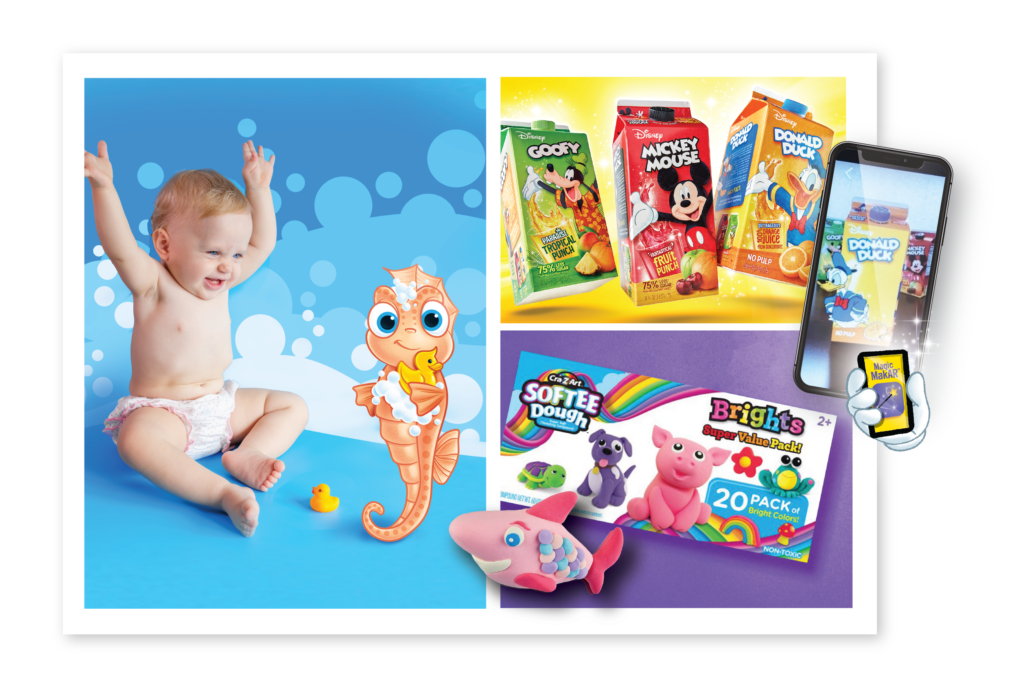
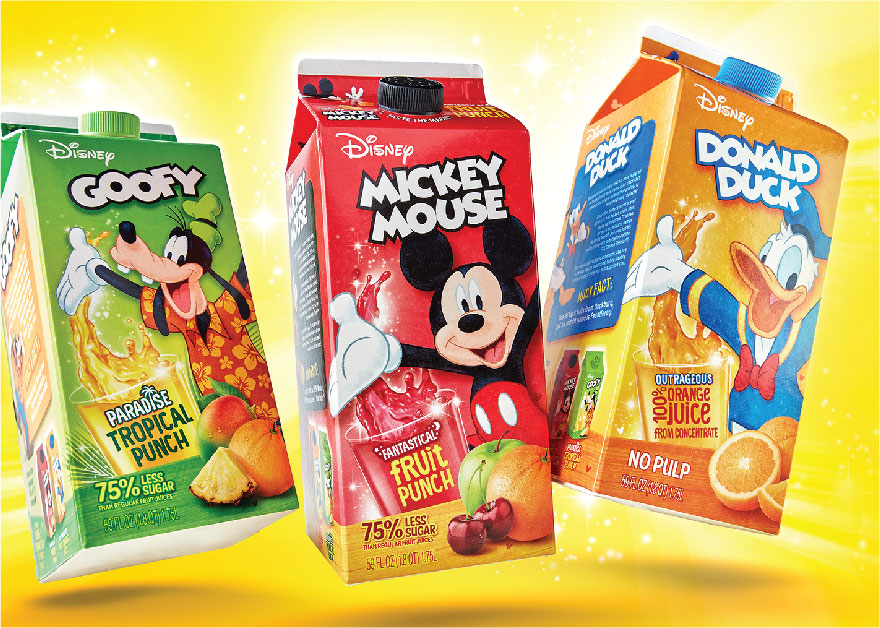
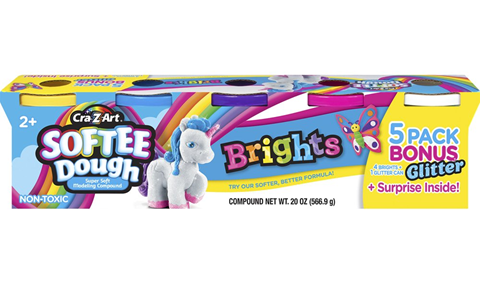
Throughout the past year and beyond, we’ve partnered with brands to find new ways to create engaging and memorable brand experiences, from custom characters for Dial that make washing up more fun, to an AR experience with Florida’s Naturals that livens up the breakfast table, to a brand world for Softee Dough that encourages endless, device-free imagination.
As Gen C prepares to re-enter the “normal” world they will do so with a perspective unlike any generation that’s come before them. In this new landscape, brands will have the opportunity to rethink ways to make meaningful connections, whether through online experiences that cater to Gen C’s digital fluency, innovative products that inspire play and creativity, or something new entirely.
Even as we welcome our clients and collaborators back into the studio, we’re excited to continue to offer the flexibility of remote photoshoots! Over the past year, we’ve honed our process to offer an engaging and attentive experience with our in-house photo team and studio, all without the time or expense of traveling to the set. Check out the below or get in touch to learn more about how we’re bringing the set to you!
The post-covid retail landscape will become increasingly integrated, with brands leveraging both the widespread adoption of online shopping as well as a renewed interest in experiential brick & mortar offerings. With more consumers resuming a hybrid online and in-store shopping model, consistency is essential, as is understanding the nuances unique to each platform.
Design is a key tool in bridging the digital, in-store and at-home experiences that are crucial to brand experience. When approaching creative development, we look to create a universal, extractable elements that can function across platforms to create an engaging brand world.
Build Trust by Bringing Products to Life
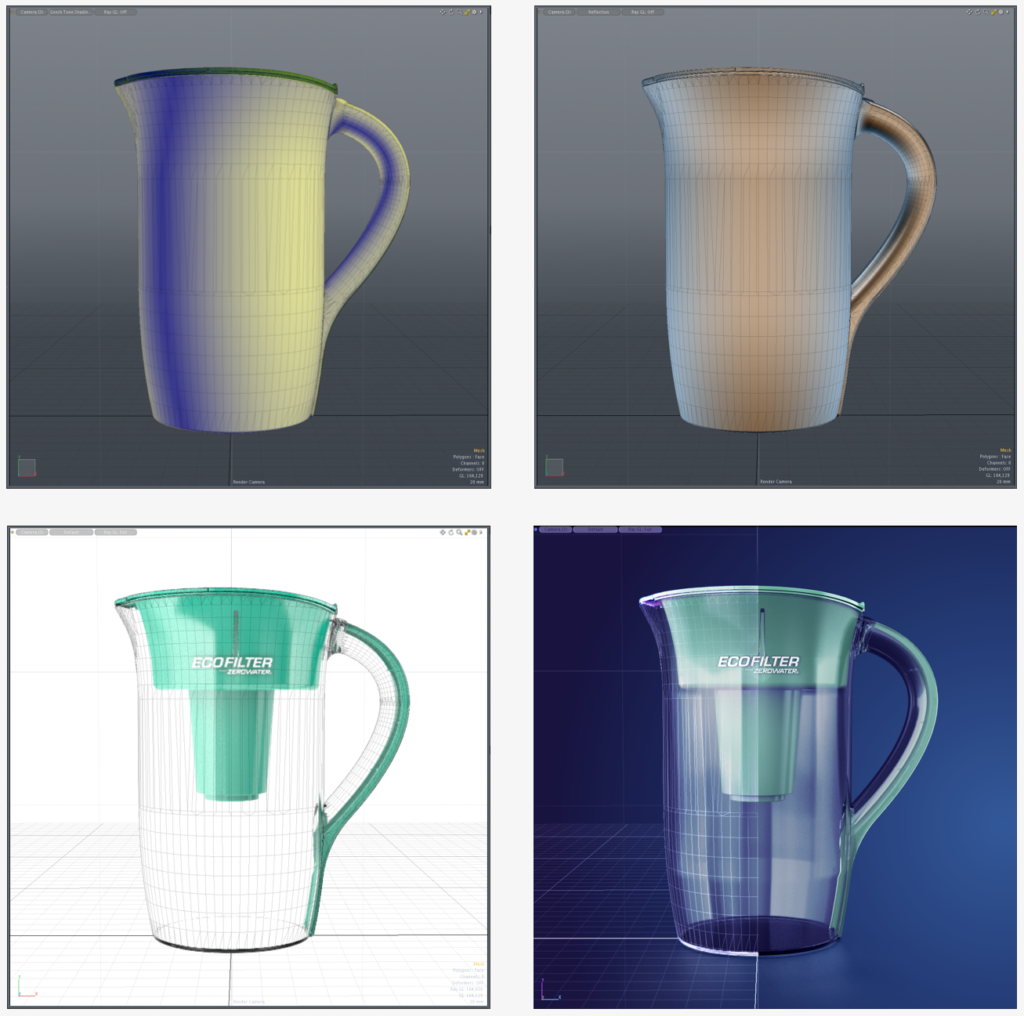
We’ve all been duped by products showing up differently than advertised. Keeping digital assets in line with the reality of the physical products builds brand trust and gives consumers confidence in purchasing new brands and products online. Luckily, innovations in digital media, such as 3D wireframing, can create a bridge between the physical reality of a product and its digital translation to e-commerce.
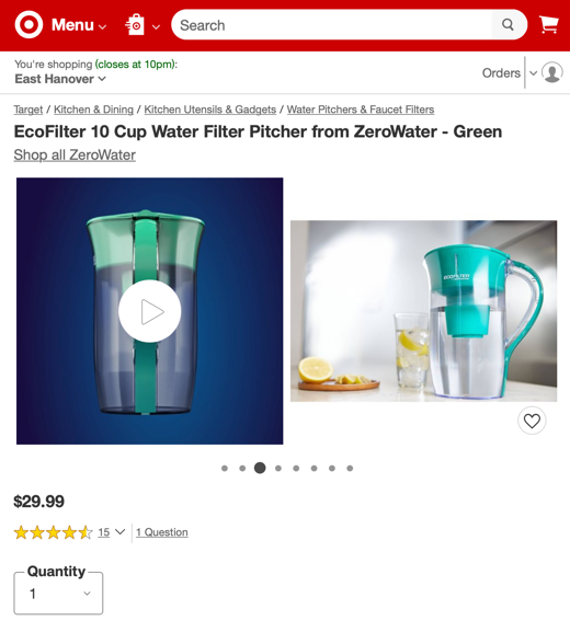
When ZeroWater developed the innovative EcoFilter, they had the opportunity to launch the new product exclusively online before expanding their presence in-store. A combination of photography, video and 3D renderings provided the assets needed for a successful virtual launch. Quality wireframing enabled consumers to get a wholistic, accurate view of the product, helping to build trust and drive purchase intent. Technical videos featuring live product demonstrations ensured a seamless customer journey from discovery to purchase. By unifying the online and in-hand product experience, shoppers were given the tools and the confidence to engage with the brand every step of the way.
Prioritize Packaging
Packaging is an anchor for a brand’s story. It is the consumer touchpoint with the highest physical interaction, living on in people’s homes far beyond any marketing campaign. We’ve mentioned the necessity of having compelling digital content, but it’s also essential that the packing experience be just as delightful and, most importantly, consistent to the look and feel of other touch points. A sleek and on-trend digital presence coupled with outdated packaging creates dissonance and can take consumers out of the brand experience. Packaging also serves as a billboard for the brand at shelf and at home; distinctive packaging, especially when disruptive to the category, is a key driver of overall brand recognition and awareness. In addition to primary packaging, shippers and even SIOC (ship in its own container) provide additional opportunities to bridge the gap and create tangible, memorable experiences.
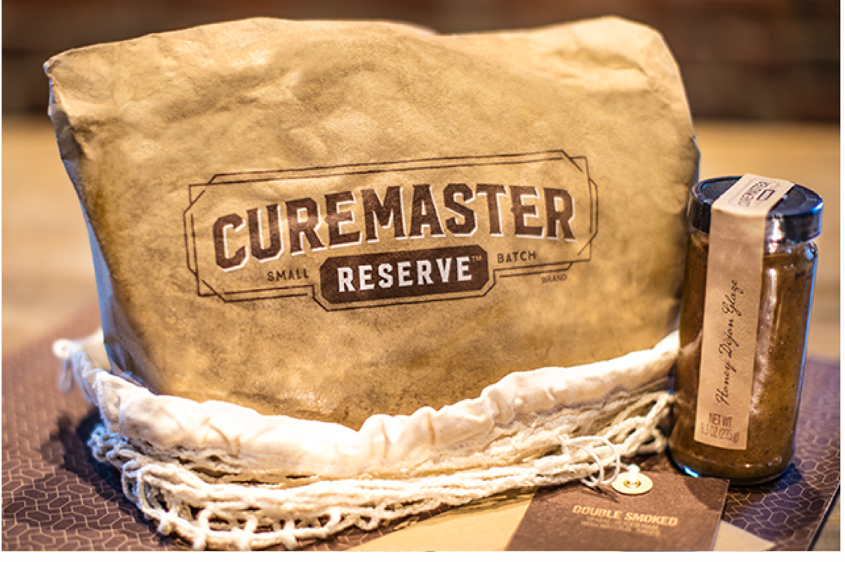
Curemaster Reserve was looking to introduce a new, artisanal ham with elevated flavor varieties to the e-commerce space. As this was to be the first Hormel brand to launch exclusively via e-commerce, Smith was asked to create a unique, super-premium packaging and unboxing experience. The unveiling included a custom designed shipping box and inner package. The recipient envelope with grommet fasten detail housed recipes, cooking information and a personalized letter from The Curemaster.
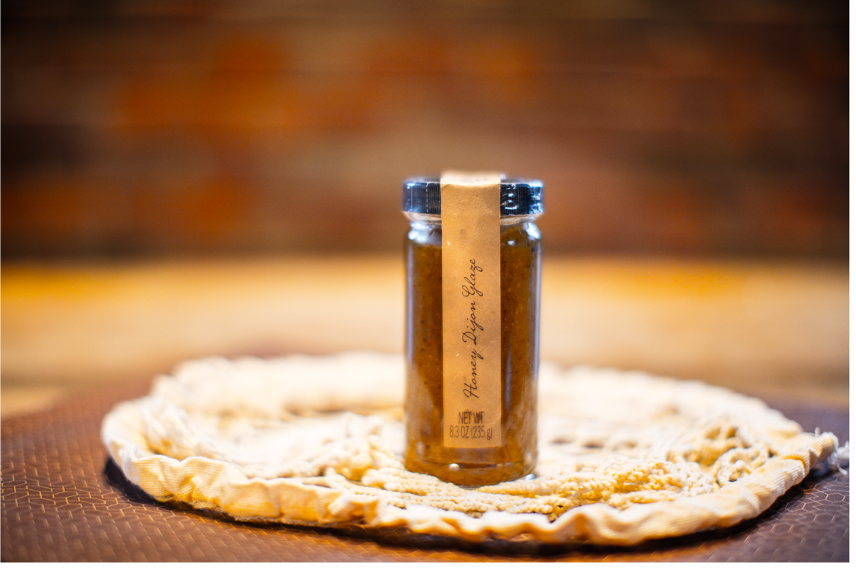
Within the box, details like the hangtag, a reusable net bag and a custom printed paper wrap added to the overall authenticity of the product while reinforcing the Artisan Mastery positioning.
Expanding Brand Experience to the Retail Environment
More people than ever before embraced online shopping during the pandemic, and many will continue to enjoy the added convenience and expanded product selection it affords. That said, consumers will also be looking for enticing brick and mortar experiences that can engage and entertain in ways that digital offerings can’t. Retail activations are one way that brands can capture attention and continue the dialog “IRL”. We’ve partnered with brands including Reese’s and Green Giant to create eye-catching in-store brand activations to compliment digital initiatives and reach new demographics.
Looking Ahead
The changes of the last year will have lasting impacts on consumer habits. Expectations for online, in-store and at-home experiences are higher than ever, and brands should be prepared to meet them. Those who embrace and leverage the omnichannel experience will emerge as leaders in the post-pandemic market.
Check out the video below for more on our omnichannel capabilities. Interested in learning more about how to prepare your brand for the Omnichannel Experience? Let’s talk!
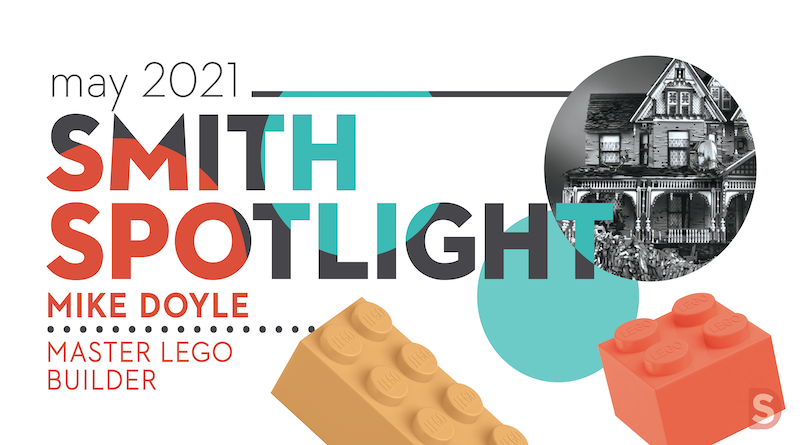
It probably goes without saying, but Smith Design is full of creatives. In our new Smith Spotlight blog series, we’re highlighting the talents of our team and their endeavors outside of our studio. Follow along to get to know the people who make Smith Design awesome.
Our first Smith Spotlight goes to our LEGO Master, Mike Doyle!
Mike’s journey to LEGO master began with a family trip to LEGOland. After exploring the park, he began to wonder about the artistic possibilities of LEGO. A quick search online showed him there are many LEGO artists building amazing pieces of art with LEGO, and he became inspired to create artful pieces himself.
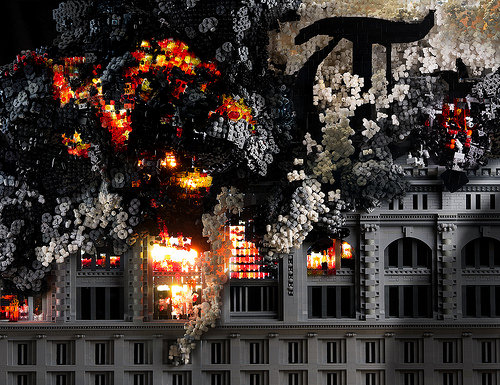
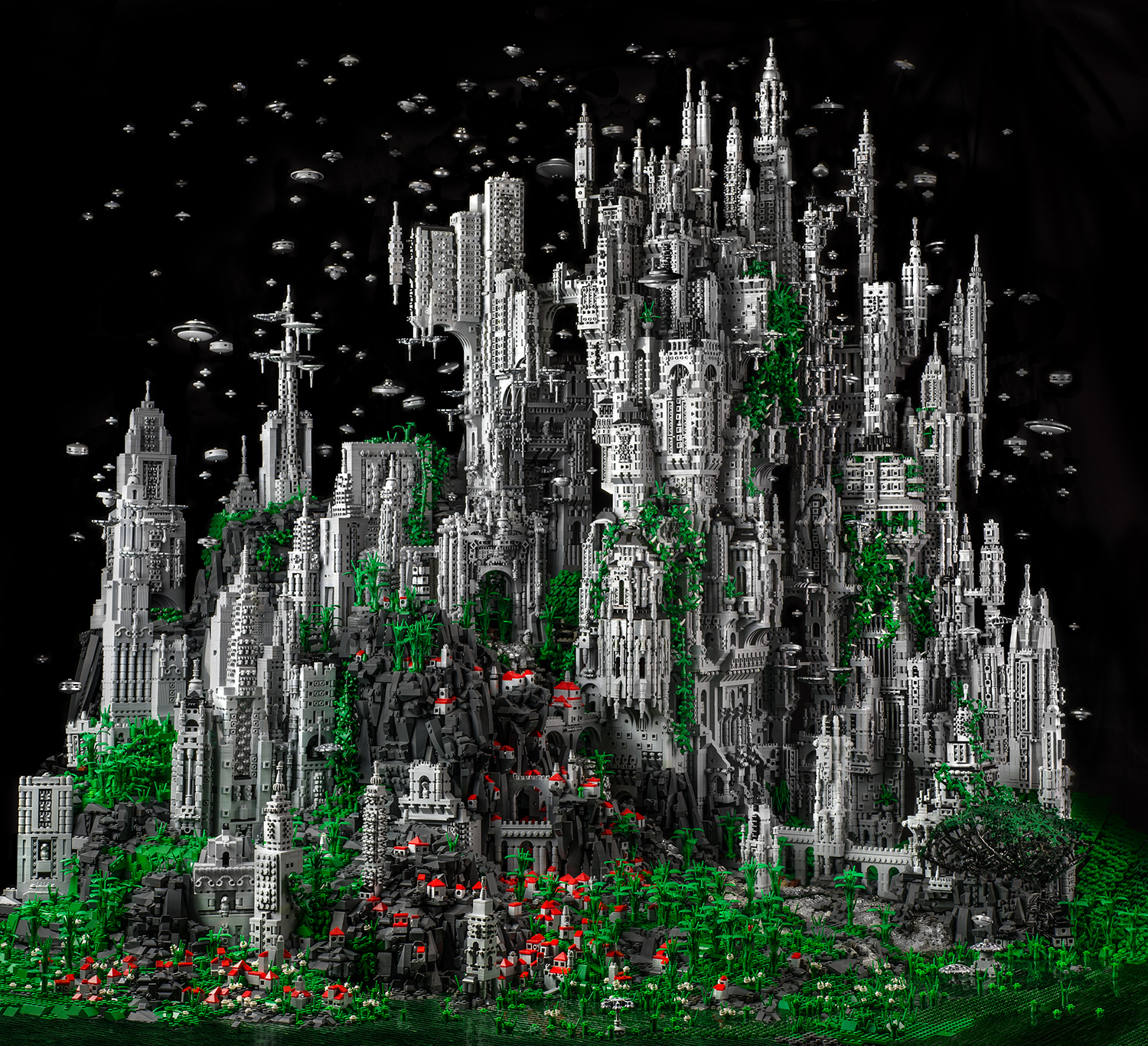
Through his builds, Mike wanted to elevate LEGO to fine art. Many of his pieces combine grayscale bricks, a stunning contrast to the typical primary colors people tend to associate with LEGO. Inspiration for his builds came from real life structures and settings, and often reflect social & cultural events.
What makes his builds unique is their organic nature. Despite the angular mechanics of the bricks, his builds flow with life, even simulating houses falling apart or the flames of an explosion (with no glue involved). The more pieces he built, the larger the pieces became, some getting to be 6 feet high. He has sold prints of his builds all over the world.
What Mike Doyle creates with LEGO has the power, mystery, pain, and intrigue that so many try to capture with more accessible forms of media. He creates deep worlds using something so innocent and unassuming that the medium in itself creates a fascinating juxtaposition: innocence with destruction, old and new, imagination versus reality.
His work with LEGO gave him the opportunity to give back to his community. He hosted children’s programs where he led workshops on creating detailed houses with LEGO. At the end of the workshop, the kids put their houses together to create one large neighborhood of unique homes. He also enjoyed speaking about the art at museums and libraries throughout the country. His art has been showcased at museums such as the Morris Museum in New Jersey and the Cincinnati Art Museum.
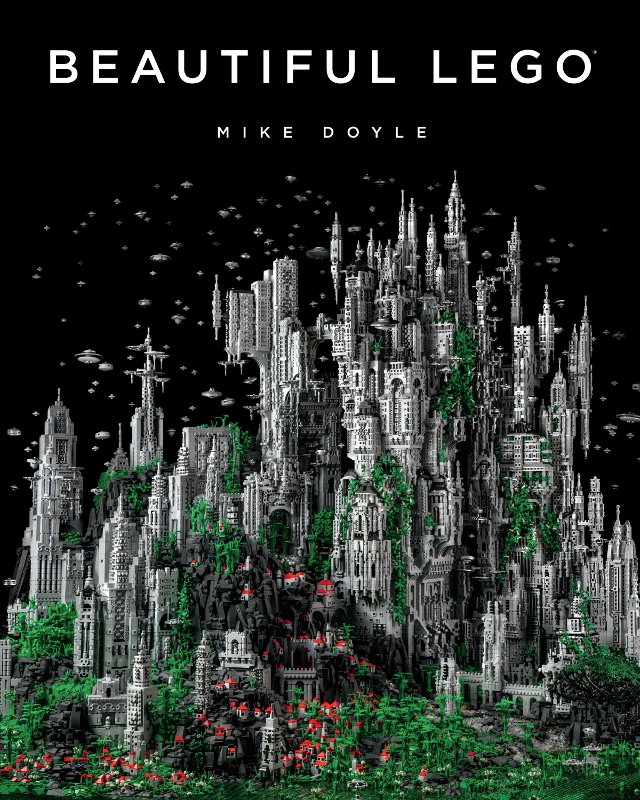
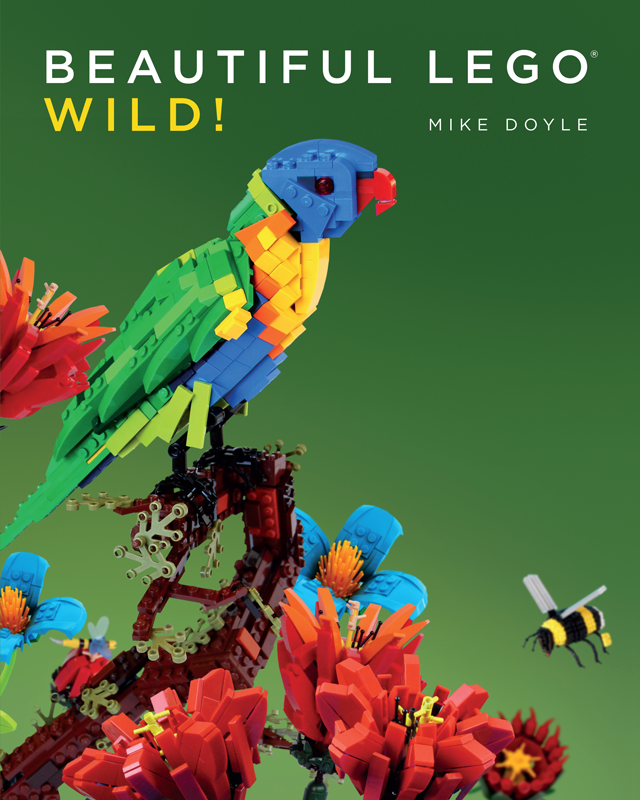
Mike has published 3 LEGO books that feature both his work and work by other artists – Beautiful LEGO, Beautiful LEGO 2 Dark, and Beautiful LEGO Wild. He describes the books as a “celebration of LEGO”, and he was glad to see the joy the books brought others, both for the readers and for the artists featured. These books, described by The Los Angeles Times as “one man’s quest to prove LEGO can be art”, can be purchased here.
Through his experience in creating LEGO art, Mike has learned to appreciate “taking the ordinary and making it extraordinary”. He discovered how to change the nature of things into something more. He applies this framework to all of his creative endeavors.
Some ask if LEGO brick-building is Art. To me, that is like asking is sculpting with clay, Art. Well… it could potentially be. Anything, absolutely anything can be made into Art in the right hands, even the ‘child’s toy’ LEGO. In the end, bricks are a medium, like oil paint or clay or pixels on a screen. It’s what you do with them that matters.
Mike Doyle
Mike has been a Smith Designer for about 5 years. Now a Design Director, he began his career with Smith as a freelancer before joining the team full time. The Smith team often looks to him for guidance in seeing the big picture, and we all appreciate his work ethic, expertise, and wit!
At Smith Design, giving back is at the heart of our actions. In 2020, it was an honor to be a part of incredible causes and campaigns that provide support to those in need and advocate for progress on important issues.
Earlier this year, we partnered with multiple organizations to bring relief to those impacted by COVID-19. Through the #EN95 Campaign, on our social media channels we brought attention to the need for PPE and encouraged donations of masks, money, blood, and food to assist the medical community and their patients.
We pulled together as a team to provide support for the responders on the front line of COVID-19. We worked with FLAG, Front Line Appreciation Group, to create Flag Fuel Boxes. These Fuel Boxes provided food and words of encouragement for front line and essential workers. Members of our team and their families purchased and packed these care packages and wrote personal notes for these unsung heroes. Together, we completed 172 boxes! We can’t thank our frontline workers enough for all that they have done throughout these challenging months.
To continue to drive awareness of CDC guidelines and to help #StopTheSpread, our design team created graphic PSAs for the #HelpByDesign campaign. This initiative brings messages of hope during this time of uncertainty throughout lockdowns, restrictions, and social distancing. The campaign is run by the group Known Unknown, a global community of designers. Participating in this campaign helped connect us with designers all over the world and proves the importance of visual communication as a unifying tool in times of crisis.
In support of the fight against systemic racism, Smith Design made contributions towards the organizations Black Lives Matter and Color of Change. Through our social media network, we strived to bring attention to these additional organizations that seek to dismantle the injustices and inequalities perpetuated by racism:
This holiday season, Smith Design proudly supported our troops via Trees for Troops. Our donation of 10 trees meant free farm-grown Christmas Trees were provided to United States Armed Forces members and their families across all branches of the military. Visit treesfortroops.org to learn more about their program that delivers “the spirit of Christmas to military families – one Christmas Tree at a time”.
Believe it or not, the #1 requested item in homeless shelters is socks. Knowing this crucial shortage during the winter months ahead, we donated 900 pairs of socks to people in need, including our local shelter.
Our team was excited to participate in LEGO’s #BuildToGive initiative, a campaign that donates sets of LEGO to children in need for every LEGO ornament shared online with the hashtag. It was a joy to create the ornaments for a good cause, with our teams’ very own LEGO Master leading the way.
In a year of uniquely challenging circumstances, we have strived to push kindness and caring forward through these giving back initiatives. We look forward to continuing to support these and other great causes in 2021. Here’s to another year of compassion, optimism, altruism and teamwork!
Nonprofit organizations face a unique challenge when it comes to branding. Nonprofits are inherently rooted in emotions, and capturing that essence in a brand can be difficult. There is temptation to shy away from branding efforts and allow the mission and values of the organization to speak for themselves. However, strategic branding is critical in a competitive climate for funding, attention, and volunteers. Due to shifting consumer expectations, for-profit brands have been engaging more and more in values-driven marketing, further emphasizing the need for nonprofit organizations to build a strong, cohesive brand that defines their identity and increases recognition.
For example, Girl Scouts is a nonprofit that has greatly benefited from restructuring their brand over time. As a result, Girl Scouts avoids becoming stagnant in a fast-paced landscape. Their branding aims to capture the holistic Girl Scout experience. Their logo represents confidence, empowerment, and unity. The trefoil and the three faces within it tie back to the Girl Scout’s three-part promise. Their extensive brand guidelines ensure this essence is captured in all of their initiatives and communications. Thanks to these branding efforts, most people have an understanding of the organization’s mission and goals.
As a part of their branding initiatives, Local Minds, a UK-based organization that provides mental health services, developed a logo that beautifully encompasses the goal of their programs. The scribble to the left illustrates the mental state people can find themselves in when dealing with a mental health issue. The scribble is smoothed out nicely to write out “mind”, representing the transition to a healthy mind.
The American Heart Association updated their mission and logo in 2018 to modernize their brand and better reflect their main objective, “to be a relentless force for a world of longer, healthier lives”. Their brand guidelines consolidate the organization’s positioning under a clear message: “life is why”. All of their communication touchpoints are related to this message and their mission. The simplification of their branding and messaging keeps their organization current and engaging, without losing the strength of their heritage.
It is important to recognize that many smaller nonprofit organizations do not have the same branding and marketing budget as larger organizations. However, there are many cost-effective options for nonprofits to seek out help with their branding and marketing initiatives. At Smith Design, we’re always excited to support nonprofit missions through our pro bono strategic branding and design efforts.
The Nevada Blind Children’s Foundation, an organization dedicated to providing essential educational and extracurricular activities for children who are visually impaired, partnered with us during the opening of their new Children’s Learning Center. We developed a logo for the center that utilized core brand equities while differentiating the center as a unique initiative. We also designed a branded booklet for the foundation’s After School Programs & Events.
God’s Creatures Ministry reached out to us for assistance with a challenge they were facing in the development of their branding. Their mission relates to Noah’s Ark, providing a safe place for all species, but they were struggling with how to fully capture this nurturing spirit in a logo. With this goal in mind, we explored brand colors, ark shapes, and various animal illustrations before creating the final logo.
As Marty Neumeier explains, a brand is “not what you say you are, it’s what they say you are.” A strategic nonprofit brand approach should communicate the mission, differentiate the organization, motivate the team, and promote engagement with new and current supporters. Through this process, thought leadership is attainable for nonprofits of all sizes.
Through insight-driven strategic branding, a unique and ownable positioning can inspire meaningful communications across all touchpoints. For help with nonprofit branding efforts and navigating the ever-changing world of consumer trends, reach out to our team below.
Back-to-school shopping is one of the biggest retail holidays of the year. In 2019, consumers spent more than $26 billion in their shopping to stock up for the school year. Like so many traditions impacted in 2020, the usual back-to-school scramble felt different this year. Supply lists shifted to include Chromebooks, teaching easels, and kid-sized desks, as parents are doing their best to make their home an efficient learning space.
Technology needs of the online classroom drove sales up, for an estimated total of $33.9 billion. Online retail sales are seeing an unsurprising increase across all industries, and school supplies have been no exception. 70% of parents and students have shifted to buying supplies online due to COVID-19.
Retail brands that typically see a surge in demand during the back-to-school season had to pivot their tried-and-true strategies to meet the suddenly changing needs of their consumers. These brands now have to support their consumers in a different way. Going forward, they have to determine and communicate how their products can fit into our new virtual, homebound routines.
Positioned as “communication essentials”, Bic is a brand that has become fundamental to back-to-school supplies. In a time of changing communication structures, they have an opportunity to build trust in their consumer base by striving to remain the go-to supplies for learning, despite the shift to virtual classrooms. For example, their Evolution® pencils are sturdy and long-lasting, and could be positioned to parents as perfect for stocking up shelves with supplies that won’t need constant replacing.
Tasked with finding hands-on activities that encourage creativity and provide a break from the screen, parents are purchasing supplies like Softee Dough. Softee Dough recently launched a new look for their modelling clay kits. The new design stands out both on shelf and digitally, a necessity in this era of increased online shopping.
In addition to school supplies, parents have been looking for quick and easy snack options for their kids at home. Snacks that kids can access independently during their virtual lessons are in high demand. Skippy’s mess-free peanut butter in their new squeeze pouch is convenient for snacking between online assignments.
This back to school season brought attention to the need for nimble and flexible brand strategies. With the holiday season quickly approaching, brands will need to apply learnings from this fall to their holiday retail strategies.
For help navigating the ever-changing world of consumer trends, subscribe to our newsletter or reach out to our team below.
In 2018, growth of the plant-based market had reached $4.6 billion. It is predicted to grow to $85 billion over the next 10 years. This rise can be attributed to growing concerns for health, sustainability, and animal welfare, especially among Gen-Z and Millennial consumers.
The increase in popularity is also due to improvements of the products themselves. With developments in technology and manufacturing, plant-based meat alternatives are getting better and better at mimicking the texture and taste of real meat, becoming more appealing to general consumers, not just health-conscious shoppers.
With these meat-free options becoming mainstream, many large brands have developed their own plant-based innovations. Burger King embraced the trend with their Impossible Whopper. This new take on the classic Whopper was one of their most successful product launches, attributing to one of their best quarters in recent years.
SKIPPY®, Farm Rich, and Green Giant also expanded into the plant protein space, partnering with Smith Design to develop effective brand identities and packaging designs.
Green Giant’s Harvest Protein Bowls are frozen meals that pack 12g-14g of plant-based protein punch. The packaging communicates the plant-based point of difference, appealing to the growing number of consumers interested in easy incorporation of natural, healthy foods into their diets.
One of SKIPPY®’s newest products features their well-loved peanut butter with the added benefit of plant protein, in a unique, squat jar that helps consumers avoid “peanut butter knuckles”. We ensured that the label demonstrates a visual connection to iconic SKIPPY® equities, while clearly communicating the enhanced protein offering. The innovation is already generating buzz in the category.
When Farm Rich extended their wholesome portfolio with a line of plant-based snacks and appetizers, we were careful to develop a brand identity that differentiates these from the core line of products while staying true to established equities. The details in the handwritten font subtly emphasize the plant-based offering and work with the whitewashed wood background to indicate naturalness. We targeted health-conscious consumers through the photography, pairing healthy sides with the meat-free products.
The demand for plant-based protein sources has already had a powerful impact on product innovation, and its growth won’t be slowing down anytime soon.
For help navigating the ever-changing world of consumer trends, subscribe to our newsletter or reach out to our team below.
In this blog series, we shine a light on women trailblazers in the design industry – women who have earned a Wikipedia page (or are likely to very soon). You might not know them by name, but definitely by their work and influence on the design world as a whole.
This month, we’re highlighting Yesenia Perez-Cruz, an accomplished designer, speaker, and author. Yesenia Perez-Cruz is a great role model for women and people of color who are interested in design and technology. Her drive towards innovation and passion for inclusivity make her a strong leader in this traditionally male, white industry.
Initially Perez-Cruz, who came to the US when she was 5 years old, thought she would grow up to be a writer. Her time was spent at this early age reading books as a way to teach herself English. Reading and writing became the foundation for her creative curiosity and that self-motivated drive can be attributed to her success today. A graphic design course in her senior year of high school changed all that and led to her acceptance to the design program at Drexel University.
It was here that Perez-Cruz first became interested in web and user interface design and, eventually, more specifically, UX design.
UX design, simply put, “refers to any interaction a user has with a product or service”. Her work in UX puts her on the forefront of innovations which consumers experience first-hand and in real time. Her inclusive mindset ensures that technology is designed responsibly with all humans in mind, creating a seamless, positive interaction for all end users.
In her current role as Senior UX Manager at Shopify, she’s noted that her love of writing now plays a bigger role in her career than she expected with UX design presenting an opportunity to tell an interactive story. Her work, visually stunning as well as highly functional, has earned her street-cred awards like Rad Girl’s 2015 Designer of the Year and a Webby.
Winner of the 2012 Webby in “Celebrity/Fan” category
She is especially passionate about the relationship between technology and design, providing audiences with applicable inspiration for their own work. In her book, “Expressive Design Systems” she explores the ways in which design systems can elevate design and innovation, and how to avoid becoming stifled by processes.
Perez-Cruz, a self described introvert, travels the world as a speaker at conferences and events, sharing her expertise and passion but also as a way to advocate for inclusivity and for women of color in the highly competitive design/tech world.
In an interview with The Great Discontent, she explained “When I was going to conferences for the first time, I never saw people on stage who looked like me—there weren’t a lot of women or Latinas. I realized that if I wanted to see more Latinas on stage, I’d have to push myself to get up there. I hope that others will be inspired by that.”
Yesenia Perez-Cruz’s viewpoint is one we should all pay attention to. Through her own self advocacy and inclusive approach, she hopes to encourage others to pursue a similar path.
COVID-19 will undoubtedly leave an unprecedented impact on the world. All industries and business markets will be affected, even the digital landscape.
However, budget cuts are impacting digital campaigns and partnerships. In order for companies to weather the current situation, many budgets have been reduced and reworked. Marketing budgets have come under more detailed scrutiny than ever, so paying for sponsored content partnerships tends to get deprioritized. Influencers have been reducing their rates to try and continue partnerships with brands, but unfortunately, many campaigns have been paused or cancelled, despite the positive metrics.
With the increase in social media usage and the quickly accelerating growth of e-commerce, brands across all categories shouldn’t dismiss sponsored content as a valuable marketing strategy in a post-COVID-19 world. There is now an opportunity for brands and influencers to create a more authentic connection with each other and with their audiences. Sponsored partnerships are being approached openly and honestly, parameters being laid out with an understanding of the difficulties COVID-19 has caused. As Later points out, influencers are able to approach brands with reduced pricing for sponsored campaigns and content, creating partnerships that may not have happened before. If your brand is considering starting or refreshing an influencer marketing campaign, now might be the perfect time to solidify plans.
Great examples of brands successfully utilizing social media channels and influencer partnerships, even during this time of new challenges, are found in the tool industry. Many brands of tools partner with influencers on social media, who use and review their products in their professions. Their opinion is reliable because these influencers actually use these products on jobsites. They naturally relate to the brands’ target audience, building community and trust, while encouraging others in their field to try the products they recommend. This digitally connected network of influencers and audiences will continue to drive positive results for the partnered brands, especially with the ongoing rise of e-commerce.
In addition to reevaluating existing partnerships and developing new ones, there is an opportunity to reframe content to be more effective in the changing world. Recently, sponsored content through a filtered lens has been losing its charm on audiences. In an analysis of the fashion magazine industry, The Times asked “In a world where toilet paper is hard to come by, is there a place…for magazines selling dreams of luxury?” This question applies to influencers and their content as well. Influencers will be more successful with their sponsored content if their voice is honest and reliable. Consumers crave authenticity. Audiences, especially from Generation Z (who make up the majority of Instagram users), will respond well to content that does not feel disconnected from reality.
The perspective of influencer marketing has to change from “don’t you want to be like me?” to “I am just like you”. Now more than ever, people want to feel comforted by honesty, authenticity, and familiarity. Campaigns that achieve this will connect with their target audiences and earn brand loyalty.
Emma Chamberlain, a YouTuber and influencer who is especially popular with Gen Z, has built her entire personal brand around authenticity, often taking it to the extreme with her content. Her content is so real and relatable that it makes her followers feel like they are on the inside of a private joke with her.
Another example of successful authenticity is fitness influencer Katrina @collegecleaneating. She posts engaging content, opening up about relationships, mental health, and body positivity struggles she’s experienced on her fitness journey. Her approachable, empathetic digital presence has earned her about 650,000 followers on Instagram and differentiates her profile from other fitness accounts that rely heavily on perfection. When she shares sponsored content, her followers are ready to engage and inherently trust her opinion.
As the world moves forward and marketing teams are faced with many decisions, influencer marketing shouldn’t be overlooked. With the right content, partnerships, and strategy, influencer marketing is a powerful tool that B2C brands can use to leverage the rising popularity of e-commerce, build brand loyalty, drive traffic to websites, and ultimately increase digital sales. Questions about developing effective brand and digital marketing strategies? Contact us below.
In this blog series, we shine a light on women trailblazers in the design industry – women who have earned a Wikipedia page (or are likely to very soon). You might not know them by name, but definitely by their work and influence on the design world as a whole.
Maira Kalman is a renowned artist and writer. She was born in Tel Aviv, Israel and moved to NYC when she was a young girl, where she continues to reside. She was married to the famed graphic artist Tibor Kalman for 18 years until his death in 1999. They founded the agency M & Co together and were highly successful, blending illustration, typography and imagery to create iconic art for prestigious institutions, including the National Audubon Society and MOMA, and covers for the acclaimed Interview magazine.
After the birth of their children, Maira took a new, independent path that led her to become a design legend in her own right.
Over the course of her career, she has written and illustrated books for both children and adults that feature her playful take on the world. Her style perfectly captures the whimsical and wise, combining a naive style with a sage’s vision. As a storyteller, which is how she refers to herself, her careful use of language and image work together to capture the eccentric, intelligent way Kalman herself views the world and her appreciation for society, history, and the humorous aspect of life.
She was commissioned to illustrate the iconic design bible “The Elements of Style” in 2005, which promoted this quote from the New York Times – “While The Elements of Style has never lacked fans or dutiful adherents, appreciation for this slim volume has taken a turn toward the whimsical and even surreal.”
Her work is almost always uniquely personal, capturing her point of view on anything from politics to family. Working with her son Alexander, Maira created an exhibition dedicated to the memory of her mother Sara Berman, an early inspiration, which later became a book titled ‘Sara Berman’s Closet’. She has also collaborated on a short firm with her son called “The Most Wonderful Day” which can be seen here on YouTube.
Her wit, charm and intelligence come through most famously in the The New Yorker magazine cover published in December 2001. She collaborated with her partner Rick Meyerowitz, redrawing the New York City map post 9/11 and renaming it ‘New Yorkistan’. The response to the cover was overwhelming, the magazine disappearing from newsstands in two days and becoming the best selling issue in the magazine’s history.
Maira Kalman’s impactful work is a reminder to notice and appreciate life. She inspires audiences to look closer at seemingly common things, to see the importance of the ordinary. She elevates politics and philosophy to higher levels of thought, commanding worthy attention. To learn more about Maira Kalman, visit her website, Instagram, or watch her Ted Talk.
“Gen-Z”. The generation under the scrutiny of marketers who want to understand their shopping preferences, their consumer habits, and TikTok. Generally speaking, this generation is an ethnically diverse, socially-conscious group of digital natives who are growing up with unprecedented access to technology. As this group of people (born between 1995-2015) gets older, their impact on all industries, including the food and restaurant industry, is becoming increasingly evident.
This generation is practical and realistic. They crave authenticity, which causes them to opt away from artificial ingredients and preservatives if they can help it. Ethical and sustainable sourcing is also important to them, as they are careful about the impact their actions have on the greater good. Studies show that Gen-Z is more eager than previous generations to go meatless, 79% of the generation wanting to at least reduce their overall meat intake in an effort to be more sustainable. As major influencers of the rise in popularity of veganism, they will find it odd if a brand or restaurant does not offer vegan and/or vegetarian options. In addition to wanting to see food brands be inclusive with their dining options, they especially appreciate brands that engage with relevant trends, and in some cases, politics.
As Melissa Abbott explained in Food Business News, Gen-Z is all about transparency. “Gen Z is the first generation to completely grow up in the digital age, so to them there is no question that can be unanswered. This is really affecting the food that they eat because they want to know where it’s from, how’s it grown, who made it.” Perceptions of shadiness won’t be tolerated by these consumers. A good example of transparency that would resonate with Gen-Z is Grass Roots’ pasture-raised meat. They explain the mission and pasture-raised farm methods behind their products, and even emphasize transparency in their shipping process. Their digital presence is engaging and their message is clear.
At the center of many stereotypical jokes about this younger crowd is the trend of photographing and posting meals on social media. This habit doesn’t come as a surprise, as this generation accounts for about 75% of Instagram users. In reality, the act of pausing for a moment to appreciate the meal and share it with others actually makes the meal more satisfying. A study from the Journal of Consumer Marketing found that the attention to detail and delay in gratification has a positive effect on the senses.
Brands and restaurants can benefit from creating a digital relationship with their consumers through social media. It only makes sense to engage with consumers where they spend time – and in many cases for food, that is Instagram. An Instagrammable dish seen on social media is a call to action for these adventurous eaters.
In addition to Instagram, TikTok is also having a strong impact on this generation’s food trends and habits. Lots of food trends have gone viral on TikTok, especially with the help of the platform’s many food influencers. From cute cereal made out of tiny pancakes to recipes for full meals, TikTok’s bite-sized videos are perfect for sharing food content with Gen-Z.
Growing up with social media, Gen-Z’s digital attention moves at a fast pace. The short recipe videos through TikTok are this generation’s ideal way of learning to cook – convenient, clear, and fun. Brands can leverage this type of content to showcase how to cook with or use their products.
While Gen-Z eaters are adventurous and like a photogenic experience when it comes to food, they also appreciate convenience. Even before COVID-19, take out and drive through meals were increasing in popularity as younger people chose to take their food home and dine on their own terms. Often, this includes streaming something on the TV while eating. In this situation, the combination of convenient food and entertainment of their choice creates a tailored dining experience in the comfort of their home. Retail brands will benefit from this trend as well, as more and more grocery stores offer delivery or pickup options.
It is key for brands to understand how Gen-Z’s conscious consumerism and digital habits affect their preferences in food and dining, and how those preferences will affect those industries as a whole. To learn more about generation z’s consumer habits, visit our POV analysis here.
If I’m being honest, recent global events have made me nostalgic. Typically, I like to live in the moment but recently I’ve found myself digging through old photos and journals in search of…? I’m not sure. These trips down memory lane feel comforting thoughts, in a childlike way. There is a tendency to glamorize the past, looking through rose-colored spectacles at simpler, less complex times. But one thing is for sure – Marketers know that these nostalgic feelings sell brands.
Take for example recent additions to the marketplace such as the Olipop soda brand. Their simple chic packaging leverages nostalgia in a way that triggers a recall that isn’t there – but somehow we believe in its authenticity. Fitch and Leedes lean heavily into a kitschy 50’s genre for their brand of tonics and mixers. The retro brand sends strong trust & quality signals to consumers that say “this is a brand that has stood the test of time and endured.”
A few years ago, a flagging cereal category released limited edition nostalgic packaging in the hope of inspiring Gen X and younger Boomers into revisiting their favorite childhood flavors. The problem with this is that it’s a short-lived fantasy. Say Fruity Pebbles was your thing back in the day. You see it packaged the way you remember it and it sparks good memories of Big Wheels and The Flintstones. You might even buy it. But these types of purchases are one-offs as most of us don’t have the constitution to eat sugary cereal the way we used to. Predictably, nothing could save the cereal category from its inevitable decline. However, Pabst Blue Ribbon has found an ingenious workaround. Their newest offering -– a Hard Coffee – is said to taste exactly like YooHoo Chocolate Milk. By tapping into a taste instead of just a graphic approach, PBR may well have found the perfect way to be nostalgic for childhood without abandoning reality completely.
Other brands are using flavor as a way to bring consumers into the fold by leveraging holistic wellness in an unusual way. With flavors like Classic Chocolate and Dark Chocolate Milk, Slate beverages with a low sugar and high protein claim will certainly bring back happy memories and cue happier times thus keeping your mind AND body healthy. Cue the serotonins!
Finally, let’s not forget the heritage brands that are having another minute in the spotlight. As we face challenges buying fresh food during this time of social distancing, tried and true shelf stable brands are thriving as consumers rediscover their favorites from childhood – foods like Hamburger Helper and Chef Boyardee. Time will tell whether this is a permanent change in consumer behaviors but, Jon Nudi, head of General Mills, North American would like to think so.
“Right now, we have people trying the products they haven’t had for a while, and we hope they’re surprised and find that they’re delicious and that we have them come back,” he is quoted as saying in the New York Times back in early April.*
Regardless, brands that focus on creating stronger emotional bonds between consumers and their products, especially in childhood and early adulthood, will find that those bonds are strong and lasting. As we weather our current circumstances, when the future is uncertain, we can all take some comfort in reminiscing in the way things used to be – because sometimes looking back is the best way to move forward.