Turning Memory into Meaning: The Story of “Purple” as a Brand Moment

Some of the most powerful brand moments don’t start with something new; they start with a memory. SunnyD identified an innovation opportunity by tapping into a reference that had already been part of culture for decades and launched its long-anticipated “Purple” flavor. 

The reference dates back to a well-known 1990s commercial where a refrigerator full of drink options included the now-famous line, “purple stuff.” While the moment was brief, it stuck in viewers’ minds and quickly became part of the brand’s cultural footprint. 

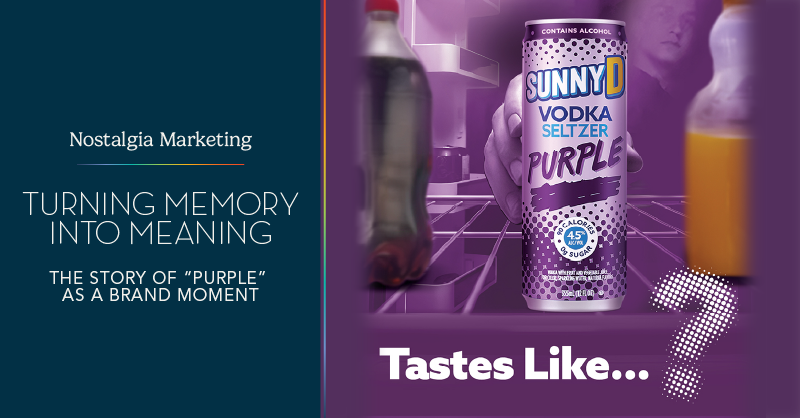
By bringing “purple stuff” to life through SunnyD’s latest launch of their Vodka Seltzer RTD beverage named Purple, the result wasn’t just a new product launch, but a moment of recognition for audiences who grew up with the reference.
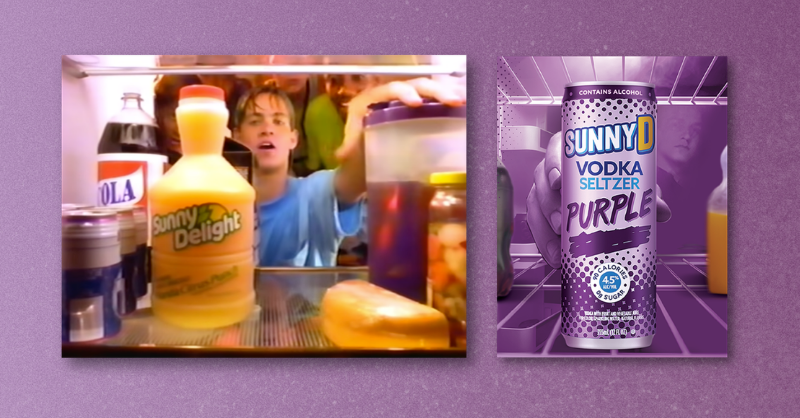
Commercial circa. 1991 | Key Visual, SunnyD Vodka Seltzer Purple

Reframing Nostalgia for Cultural Impact

Nostalgia remains one of the most effective tools in marketing because it resonates with people, creates immediate familiarity, and piques their interest. When people recognize something from their past, there’s no need to introduce it or explain it – the connection is already there.

This approach has become increasingly common as brands revisit recognizable elements from the 1990s, from the return of Dunkaroos, which came back after years of fan demand, to the revival of Floyd D. Duck across Bubble Yum’s social channels. By reintroducing familiar products and characters, these brands tap into shared cultural memory while also introducing those references to younger audiences encountering them for the first time.

The difference often comes down to how that nostalgia is applied. Forced nostalgia often tries to recreate moments too literally, relying on imitation rather than meaning. Authentic callbacks work differently; they take something that already exists in culture and give it new context, allowing audiences to complete the story themselves.

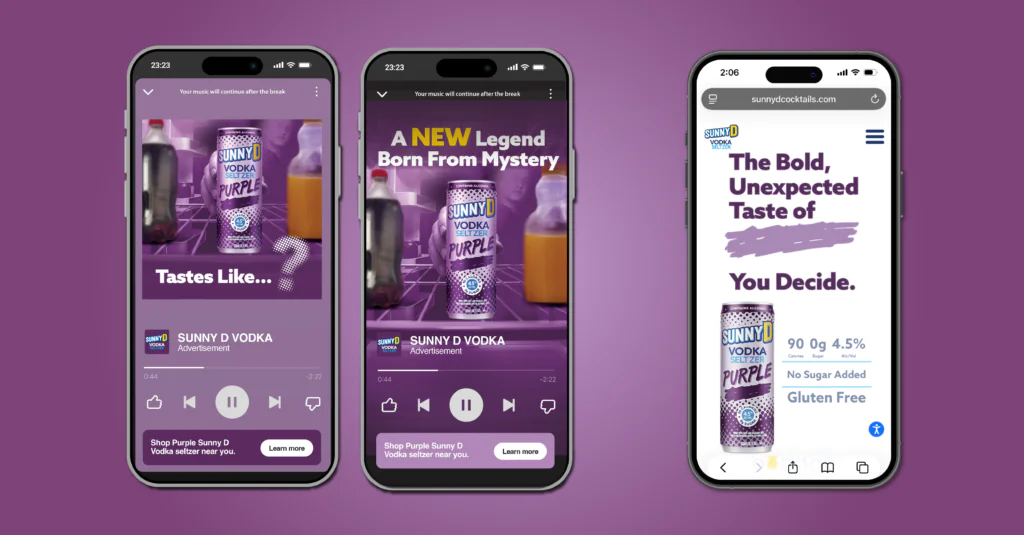
That’s what made this moment for SunnyD Vodka Seltzer work. The reference to “purple stuff” was already recognizable and understood, rooted in a 1990s cultural moment. It carried a kind of multi-generational awareness, resonating with those who grew up with it, while sparking interest through new eyes experiencing it for the first time. It also created a built-in curiosity. “What does purple taste like?” became part of the appeal, turning a long-standing joke into a real question people finally had the chance to answer.
Building Cross-Channel Campaigns from Cultural Relevance

Because the idea was rooted in a cultural reference that already carried meaning, the real challenge became ensuring the campaign could live consistently across every place consumers might encounter it. In today’s digital landscape, the strength of a campaign concept depends on how seamlessly it can translate without losing its recognizability. That is where we came in.

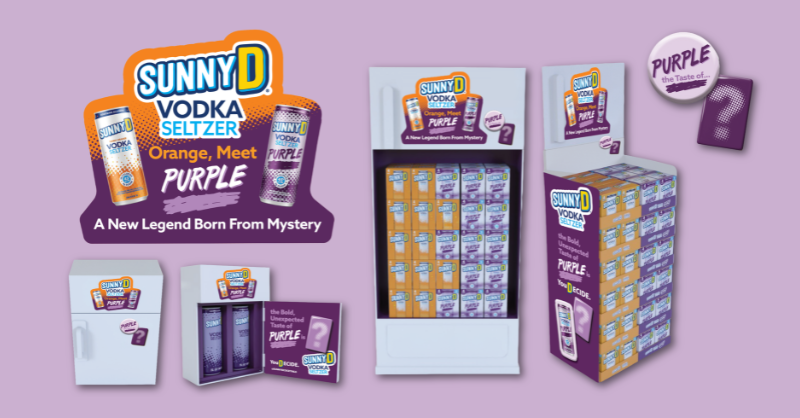
The Smith Design team helped the campaign come to life across a full ecosystem of touchpoints. We developed digital assets that carried the core “purple” idea into e-commerce, the brand website, Instacart, paid digital advertising, Spotify audio, trade advertising, and on in-store POS materials. In just three days, the campaign generated 117 million impressions, including 4.2 million from Walmart and Instacart display and 135.6K from Spotify ads, two key areas where we created digital assets for the campaign.

The goal wasn’t to reinvent the idea at every step, but to maintain consistency, so whether someone encountered it on their phone, in a store, or while streaming music, it felt like part of the same story.
Where Memory Becomes Experience

At its core, the SunnyD Vodka Seltzer Purple campaign launch shows how powerful it can be when brands don’t try to invent meaning but instead build from something that already exists in culture. Purple wasn’t created in the moment; it was something people already knew.

By turning that shared reference into a real product and a full campaign, the idea moved from memory to experience. And for audiences, that shift is what made it stick, not just seeing it again, but finally getting to experience it.


Design for the Omnichannel Experience

The post-covid retail landscape will become increasingly integrated, with brands leveraging both the widespread adoption of online shopping as well as a renewed interest in experiential brick & mortar offerings. With more consumers resuming a hybrid online and in-store shopping model, consistency is essential, as is understanding the nuances unique to each platform.

Design is a key tool in bridging the digital, in-store and at-home experiences that are crucial to brand experience. When approaching creative development, we look to create a universal, extractable elements that can function across platforms to create an engaging brand world.

Build Trust by Bringing Products to Life

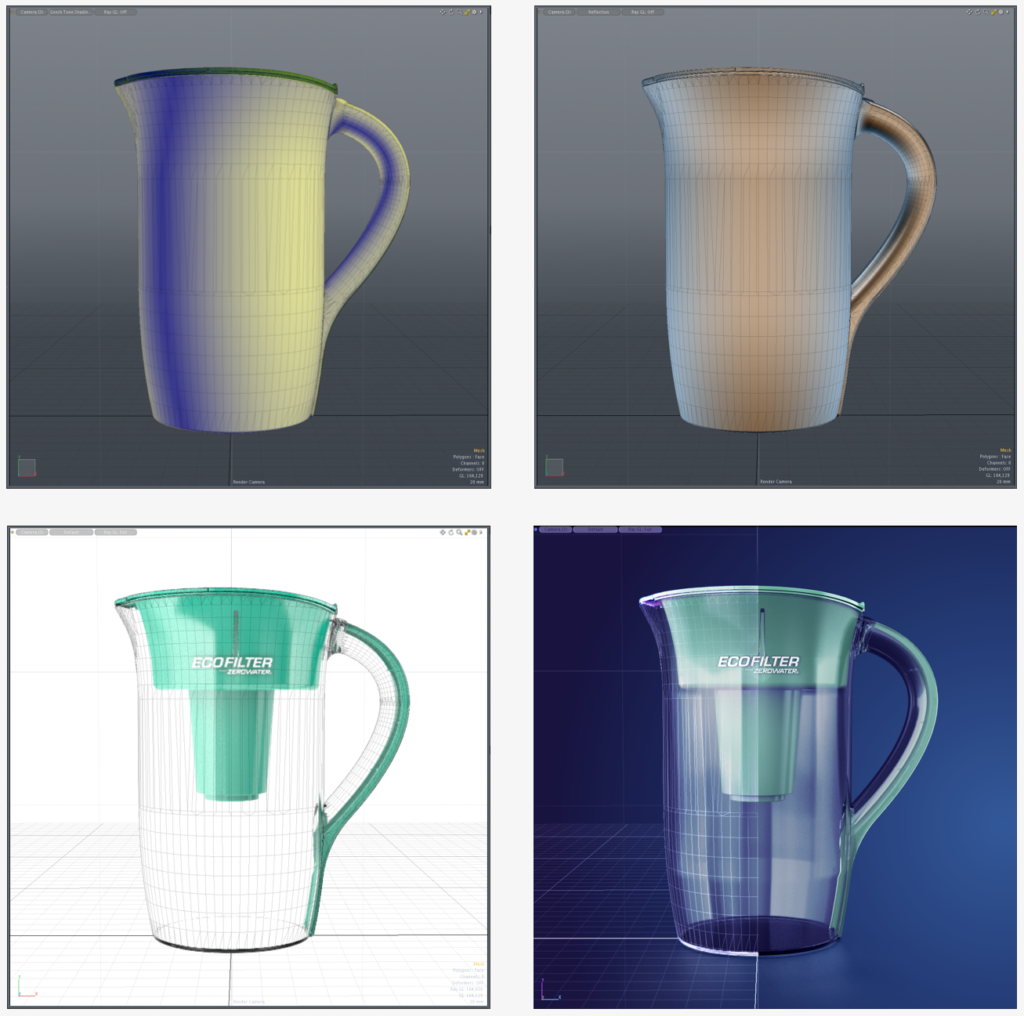
We’ve all been duped by products showing up differently than advertised. Keeping digital assets in line with the reality of the physical products builds brand trust and gives consumers confidence in purchasing new brands and products online. Luckily, innovations in digital media, such as 3D wireframing, can create a bridge between the physical reality of a product and its digital translation to e-commerce.

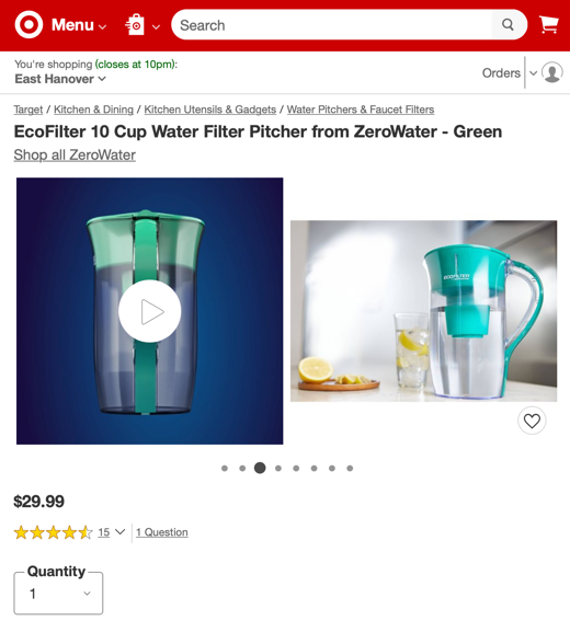
When ZeroWater developed the innovative EcoFilter, they had the opportunity to launch the new product exclusively online before expanding their presence in-store. A combination of photography, video and 3D renderings provided the assets needed for a successful virtual launch. Quality wireframing enabled consumers to get a wholistic, accurate view of the product, helping to build trust and drive purchase intent. Technical videos featuring live product demonstrations ensured a seamless customer journey from discovery to purchase. By unifying the online and in-hand product experience, shoppers were given the tools and the confidence to engage with the brand every step of the way.

Prioritize Packaging

Packaging is an anchor for a brand’s story. It is the consumer touchpoint with the highest physical interaction, living on in people’s homes far beyond any marketing campaign. We’ve mentioned the necessity of having compelling digital content, but it’s also essential that the packing experience be just as delightful and, most importantly, consistent to the look and feel of other touch points. A sleek and on-trend digital presence coupled with outdated packaging creates dissonance and can take consumers out of the brand experience. Packaging also serves as a billboard for the brand at shelf and at home; distinctive packaging, especially when disruptive to the category, is a key driver of overall brand recognition and awareness. In addition to primary packaging, shippers and even SIOC (ship in its own container) provide additional opportunities to bridge the gap and create tangible, memorable experiences.  

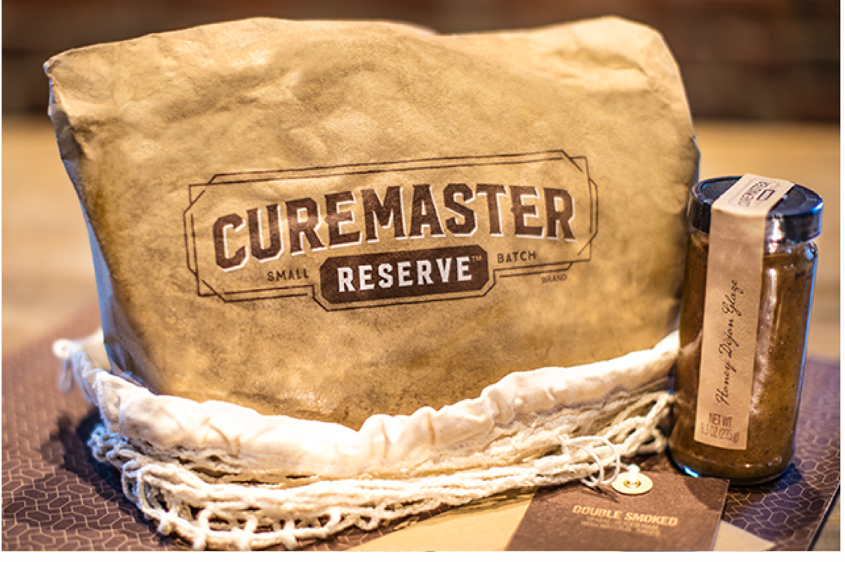
Curemaster Reserve was looking to introduce a new, artisanal ham with elevated flavor varieties to the e-commerce space. As this was to be the first Hormel brand to launch exclusively via e-commerce, Smith was asked to create a unique, super-premium packaging and unboxing experience. The unveiling included a custom designed shipping box and inner package. The recipient envelope with grommet fasten detail housed recipes, cooking information and a personalized letter from The Curemaster.

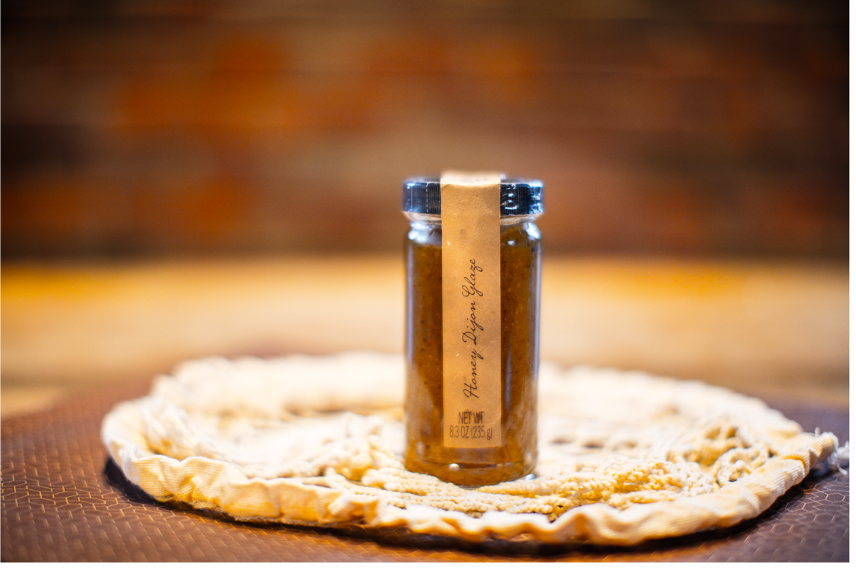
Within the box, details like the hangtag, a reusable net bag and a custom printed paper wrap added to the overall authenticity of the product while reinforcing the Artisan Mastery positioning.

Expanding Brand Experience to the Retail Environment

More people than ever before embraced online shopping during the pandemic, and many will continue to enjoy the added convenience and expanded product selection it affords. That said, consumers will also be looking for enticing brick and mortar experiences that can engage and entertain in ways that digital offerings can’t. Retail activations are one way that brands can capture attention and continue the dialog “IRL”. We’ve partnered with brands including Reese’s and Green Giant to create eye-catching in-store brand activations to compliment digital initiatives and reach new demographics.

Looking Ahead

The changes of the last year will have lasting impacts on consumer habits. Expectations for online, in-store and at-home experiences are higher than ever, and brands should be prepared to meet them. Those who embrace and leverage the omnichannel experience will emerge as leaders in the post-pandemic market.

Check out the video below for more on our omnichannel capabilities. Interested in learning more about how to prepare your brand for the Omnichannel Experience? Let’s talk!