

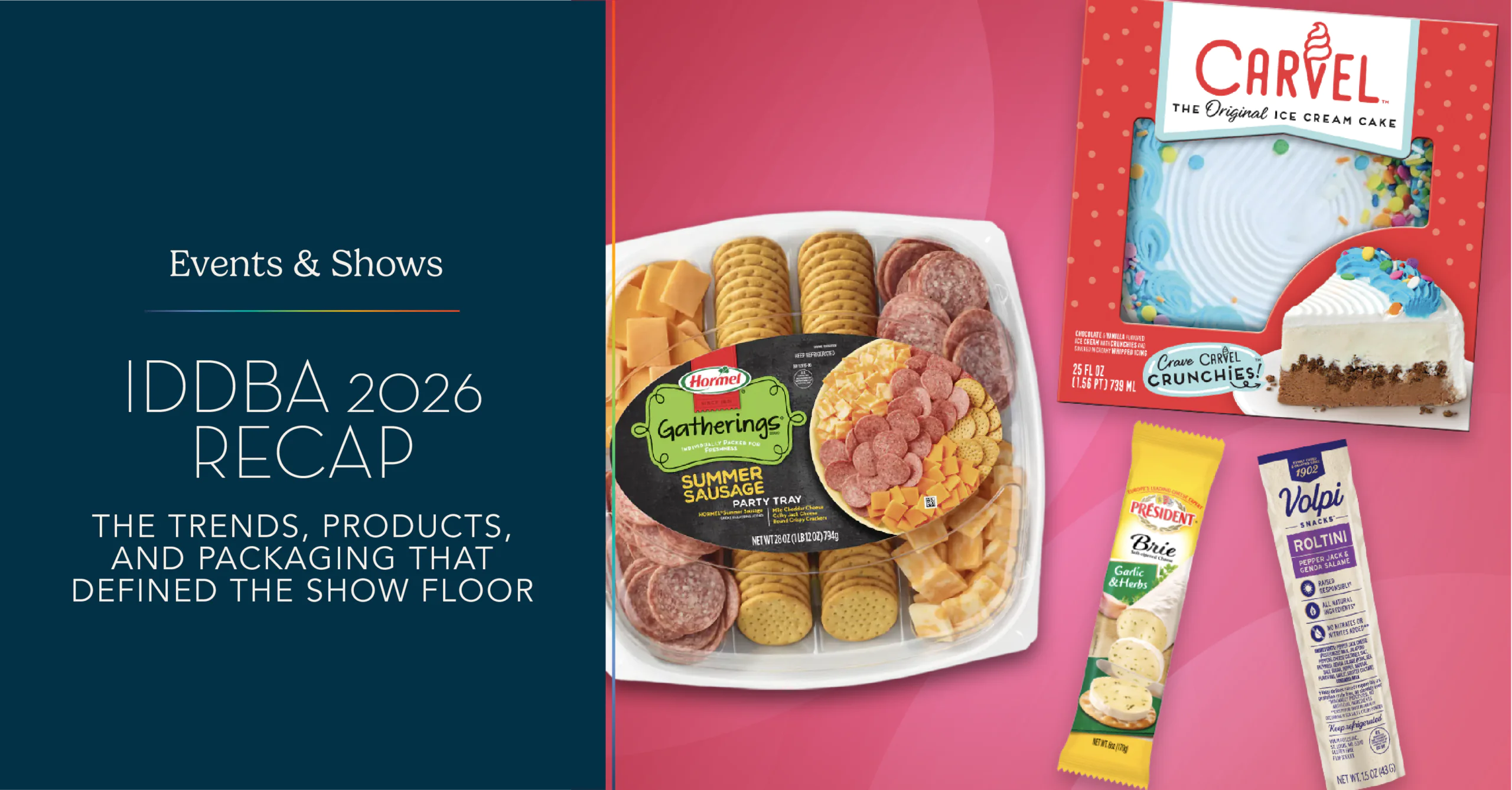
Orlando’s Orange County Convention Center hosted more than 10,000 industry professionals and 1,000-plus exhibitors at IDDBA 2026 this June, and if there was a single through-line across the dairy, deli, and bakery floor, it was this: protein, permissibility, and packaging that does more than hold food. The annual “From Brie to Brioche” trends presentation from 210 Analytics set the table: sustained inflation reshaping (not killing) perimeter sales, a demographic shift toward Gen Z and millennials, and a redefinition of health that now stretches from functional benefits all the way to unapologetic indulgence.
Here’s what caught our attention, from the ingredient innovations driving new formulations to the products on shelves and the packaging designs that bring it all together.
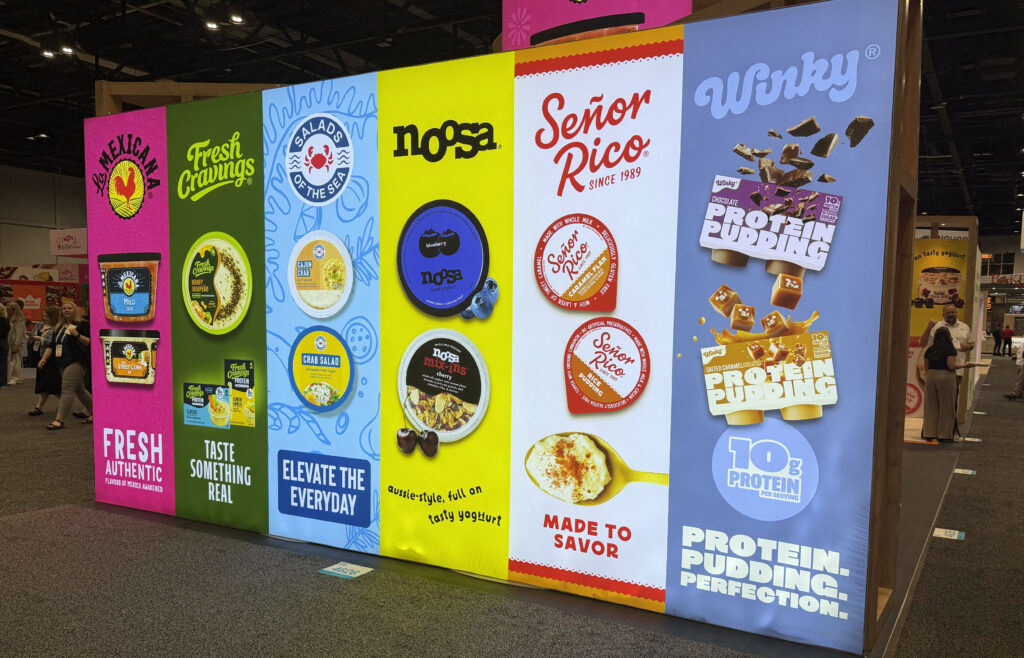
Meal Solutions and the “Mental Load of the Menu”
One of the most resonant ideas from the show came from a shopper quoted in the trends session describing the daily grind of feeding a family: “the mental load of the menu.” That phrase essentially became the strategic brief for the prepared-foods category, and several exhibitors answered it directly.
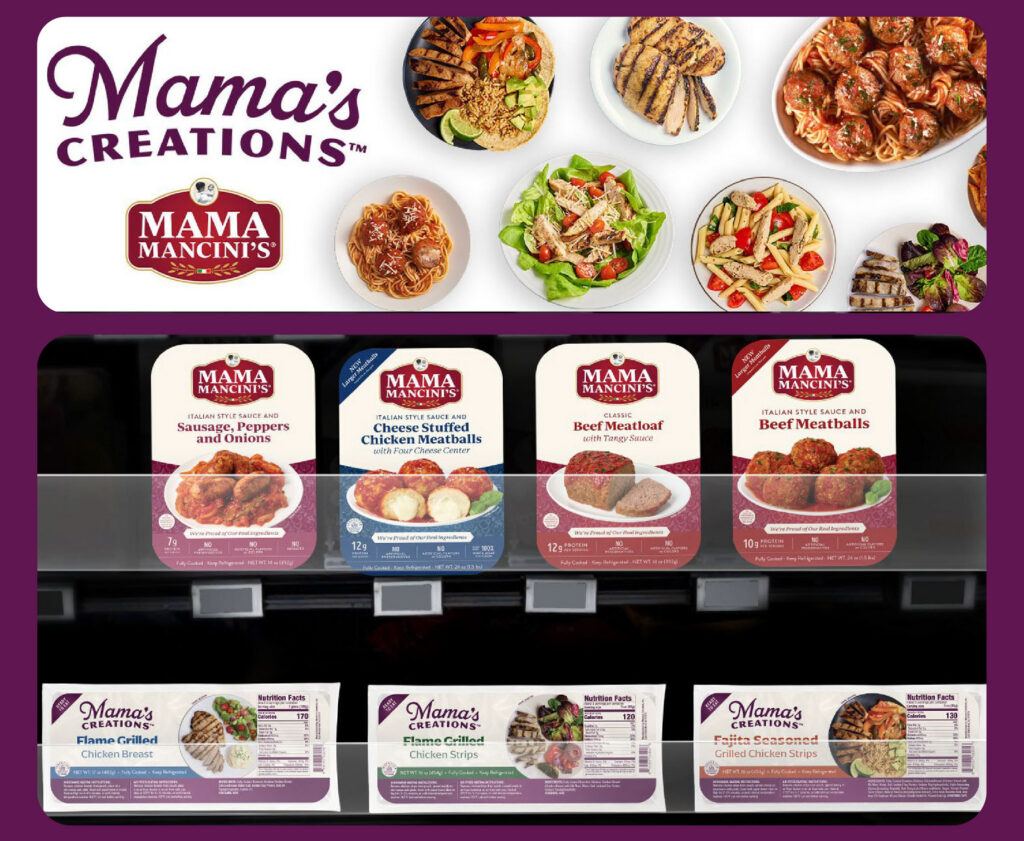
Mama’s Creations leaned hard into flexibility, showcasing new protein formats and globally inspired menu solutions built to support execution across multiple prepared-foods occasions, including hot bar, grab-and-go, and center-of-plate. Boosted by its recent Crown 1 acquisition, the lineup featured an upgraded “No Antibiotics Ever” chicken program (grilled, pulled, and breaded) alongside globally influenced items such as Korean BBQ-style meals and Mediterranean recipes. As CMO Lauren Sella put it, the innovations are “about expanding what our partners can execute, not just what they can carry.” Their pitch of “more variety with less complexity,” including serving-for-one formats alongside family-scale solutions, captured exactly where the deli-prepared category is heading as it cements itself as a genuine restaurant alternative. Deli-prepared has pushed past $31 billion, and the momentum skews young: a third of Gen Z shoppers are buying it more often than a year ago.
Reser’s leaned into the popularity of “cottage cheese” with its new High Protein Salads made with cottage cheese, translating a social-media-driven idea into a refrigerated perimeter solution. As shoppers look for familiar, protein-dense ingredients that feel both wholesome and versatile, cottage cheese is moving from retro diet food to a modern protein base, and brands are beginning to build full meal solutions around it.
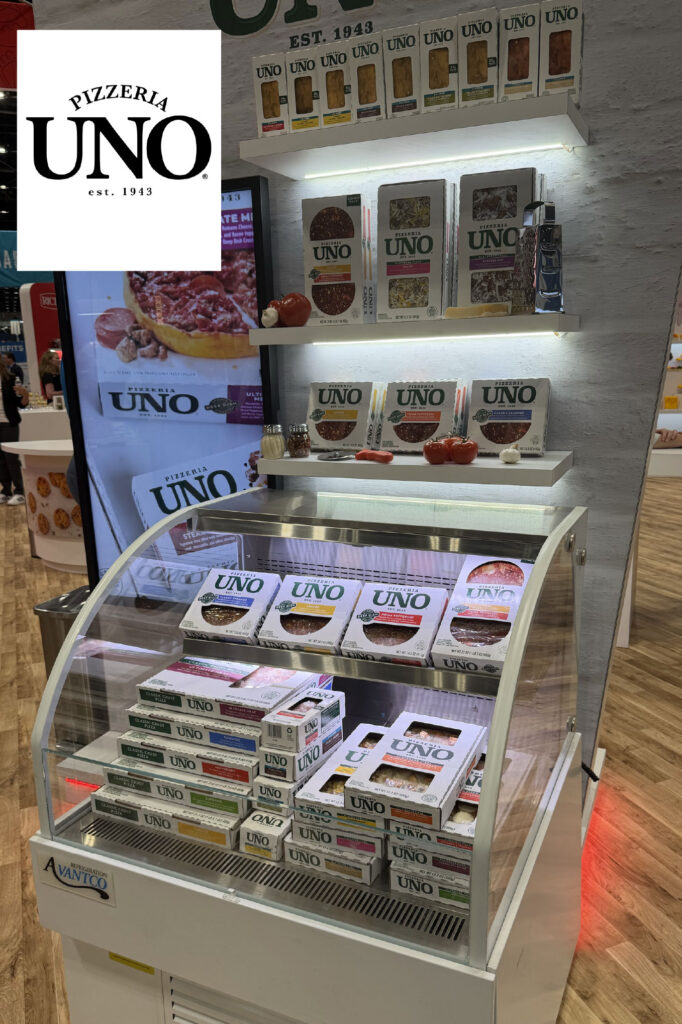
Rich Products built one of the more memorable booth experiences of the show, with continuous live demonstrations and sampling across seven stations. The substantive news, though, was reformulation: new Bettercreme and Buttrcreme icings containing no colors from artificial sources. A meaningful move given that roughly 30% of shoppers now say removing artificial colors is extremely important to them. Rich’s also debuted its newly acquired Pizzeria Uno brand at the show for the first time.
Rise Baking Company rounded out the in-store bakery story, spotlighting clean-label innovations, labor-saving solutions, and trend-forward decorating designed to drive impulse purchases while simplifying execution for understaffed bakery departments. The labor-saving angle is increasingly the quiet differentiator; retailers want indulgence that doesn’t require a full scratch-bakery team to deliver.
The Egg Takes Over: From Wraps to Pasta to Bread
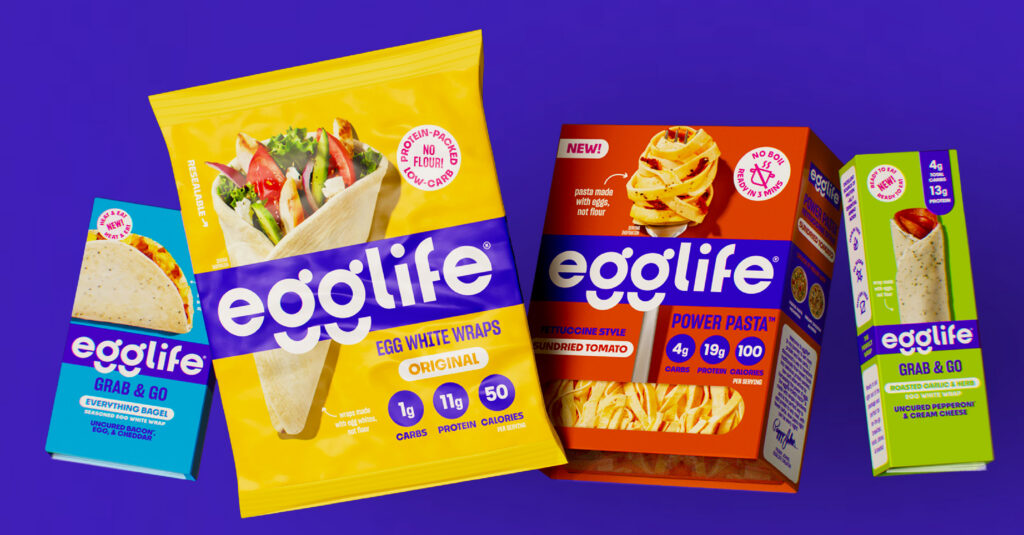
Egglife made the strongest case for where the category is headed. After building a loyal base on its flour-free egg white wraps, the brand has expanded into two new territories: Power Pasta, a first-of-its-kind refrigerated fresh pasta made with eggs instead of flour, and Grab & Go single-serve snacks built from its signature wraps and filled with premium meats and cheeses, delivering 13–16g of protein per pack. The move from a single hero SKU into pasta and convenient snacking is a textbook example of an egg-first brand stretching across the store.
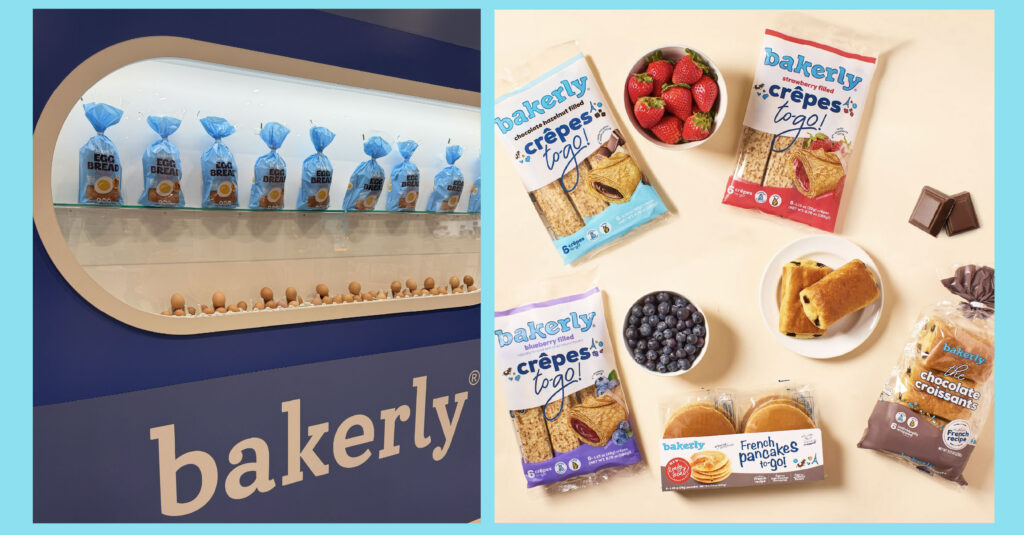
Bakerly brought eggs into the bread and breakfast aisle, with egg-forward breads and pastries that fold high-quality eggs into the formulation for both richness and protein, a reminder that “egg-based everything” now spans breads, pastas, and beyond.
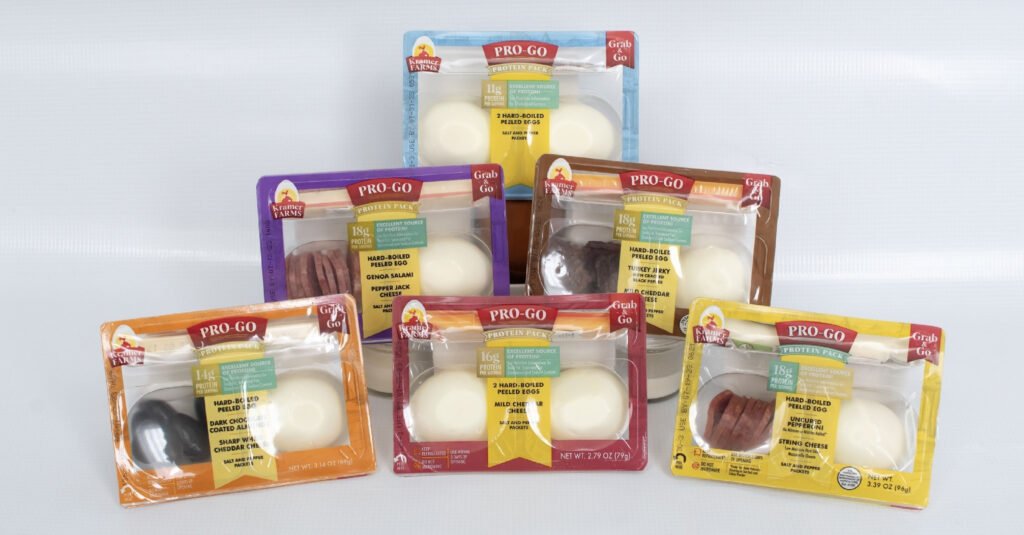
And eggs showed up as a protein booster inside other formats too. Kramer Farms Pro Go Protein Packs added an egg to the familiar meat-and-cheese snack tray, pushing the protein count higher than the meat and cheese could deliver alone, a small but telling sign that the egg has become the go-to lever when a brand wants to put a bigger protein number on the front of pack.
Quail Eggs Elevating Any Dish
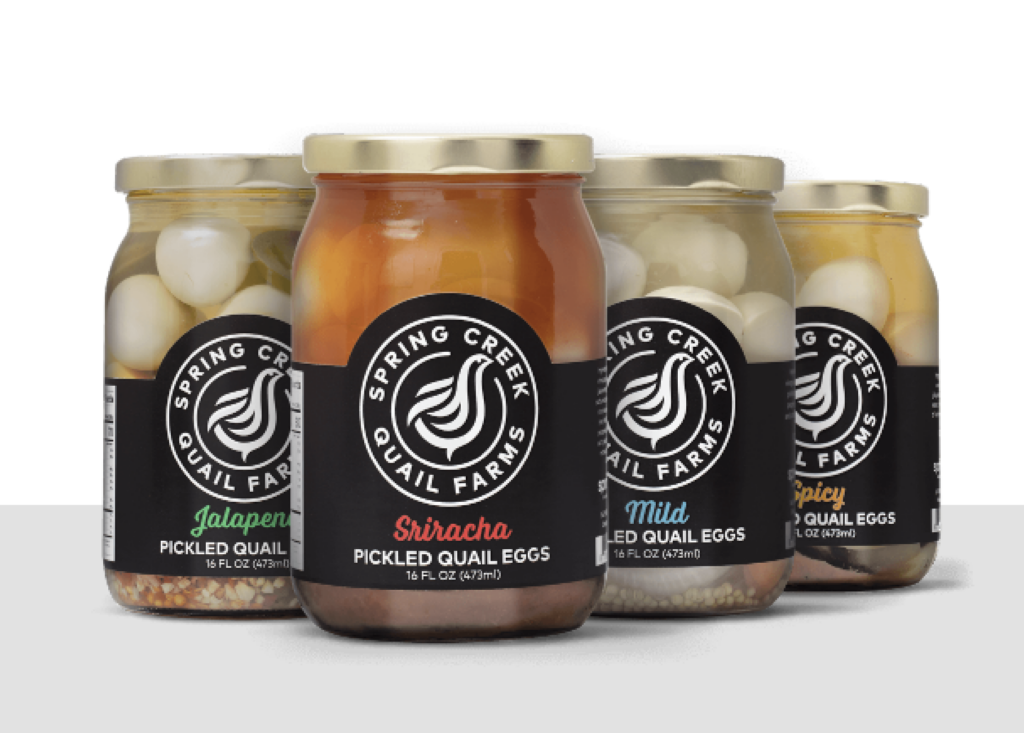
Perhaps the most interesting egg story was the smallest one. Quail eggs appeared in both raw and pickled forms, with brands like Spring Creek and Manchester Farms bringing the once-specialty item into broader distribution. As an added-protein novelty with built-in visual appeal, quail eggs hit several trends at once, protein density, snackable format, and the kind of discovery-driven “try something new” energy that younger shoppers reward.
Seafood Moves into the Refrigerated Convenience Set
A genuinely new shelf story this year: ready-to-eat seafood crossing over into refrigerated convenience. Historically anchored in the frozen and full-service counter, fish is increasingly showing up in grab-and-go formats aimed at the same shopper buying a protein snack or a prepared sandwich.
King & Prince Seafood showcased its Sauce ‘n Serve line, pairing seafood with finishing sauces in a format built for speed and minimal prep, bringing restaurant-style seafood into a far more convenient occasion.
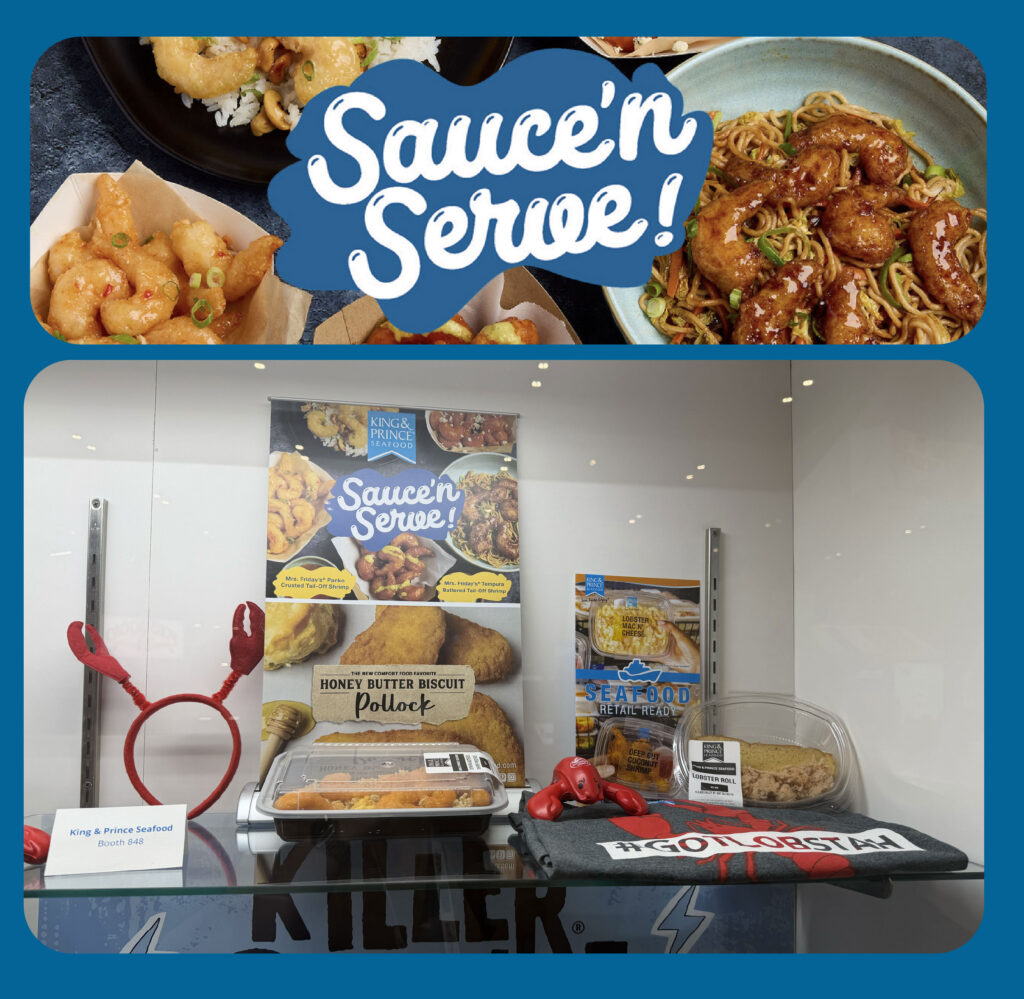
Raw Seafoods turned heads with its Grilled Seafood Cups, a single-serve, ready-to-eat format that does for seafood what cup-based snacking has done for everything from overnight oats to protein bowls. It’s seafood reimagined for the refrigerated convenience case, portioned, portable, and approachable for shoppers who’d never think to buy raw fish for a weeknight.
Together these launches signal a meaningful expansion of where seafood lives in the store, and a bet that the protein and convenience tailwinds powering deli-prepared can lift fish too.
Globally Inspired Flavor Goes Mainstream
If protein was the loudest signal, authentic global flavor was the fastest growing one, and it showed up across nearly every category. The trends data backs it up: deli cheese’s best cross-merchandising partners now include naan and specialty pasta, and younger shoppers are driving demand for flavor exploration and multicultural meal inspiration.
Mezete, the Jordan-based brand making its U.S. push, was a standout, bringing authentic Middle Eastern dips, sauces, soups, and stews, Classic Hummus made with higher tahini levels, Baba Ghanouj, Muhammara, Toum garlic sauce, Shatta chili sauce, and heat-and-eat soups like Adas and a Shakshouka base. The whole lineup is non-GMO Project Verified, vegan, halal, and free of preservatives and added oils, a clean-label, plant-based, and globally authentic package all at once, and a recent Vegan Besties Award winner to boot.
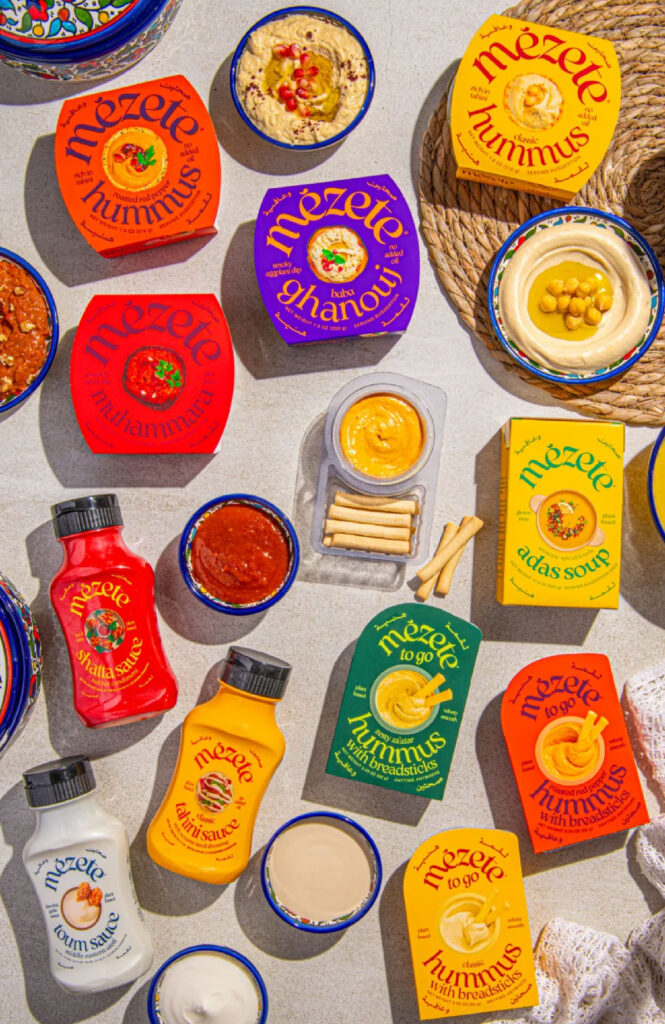
The global thread ran through the meal-solutions players too, Mama’s Creations’ Korean BBQ and Mediterranean recipes, and even into bakery, where bold, globally inspired heat became a recurring note (see St Pierre’s spicy brioche, below). Multicultural flavor is no longer a standalone aisle; it’s a layer being added across the perimeter.
Brioche, Heat, and the Limited-Edition Play
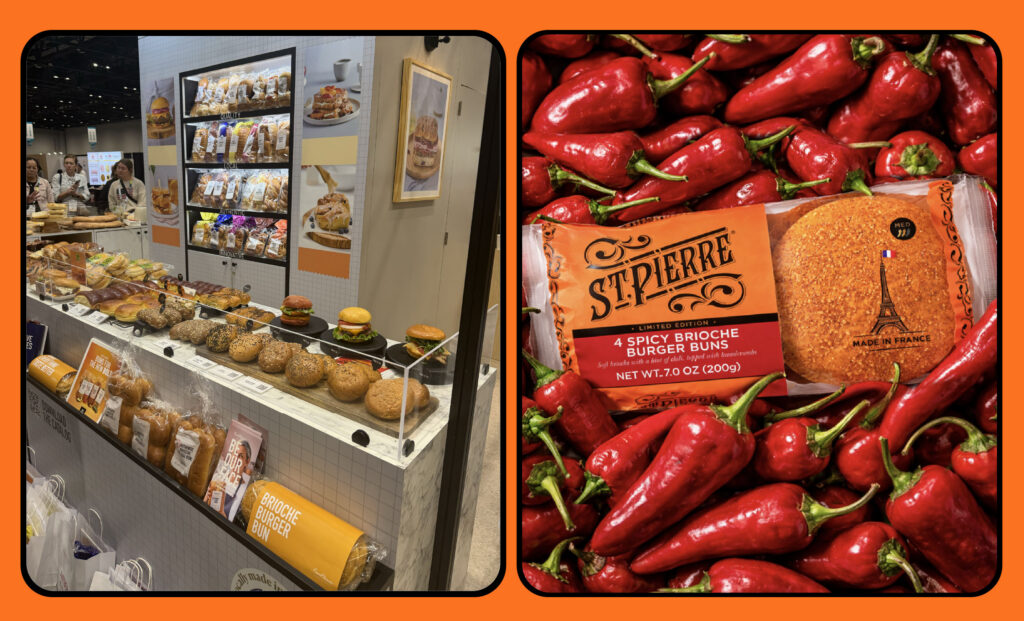
Bakery’s most strategically interesting moment came from St Pierre, the Bimbo Bakeries USA brand that holds roughly 76% share of branded brioche in the U.S. From its “corner of Paris” stand, St Pierre sampled its Spicy Brioche Burger Buns, the brand’s first-ever limited-edition product, blending its signature golden brioche with a gently spiced chili flavor and tapping directly into the bold-global-flavor current. The seasonal 4-pack runs through the end of August, designed to drive incremental summer sales.
Sweet, Savory, and the Power of a Familiar Brand
King’s Hawaiian introduced both sweet and savory bite-sized forms, extending the brand’s signature pillowy profile into snackable, shareable formats that fit entertaining and grazing occasions, squarely in line with the charcuterie and at-home-entertaining trend that continues to grow.
On the bakery side, the show leaned into playfulness and a younger sensibility:
- Corso’s Cookies played squarely in the celebration-bakery space, riding the same donut-cake and unboxing-ready momentum driving small bakery categories with gift-able, occasion-driven cookie presentations.
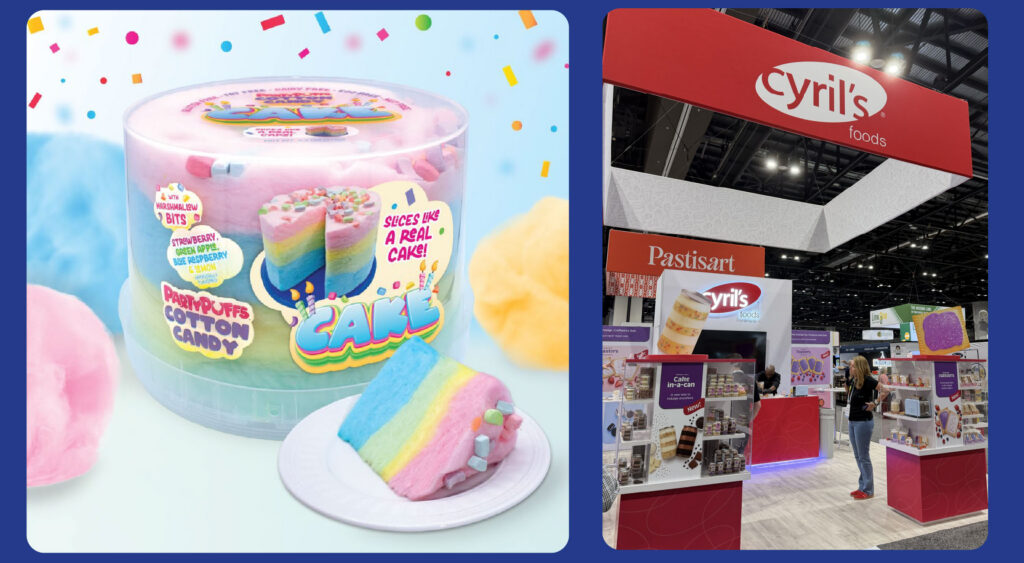
- Party Puffs, a separate vendor, stood out for taking the celebration cue in a different direction, a poppable, bite-sized treat format built for shareability and festive merchandising. Where a cookie is a single indulgence, Party Puffs leans into the grazing and party-snacking occasion, offering a colorful, fun-forward profile that merchandises as much as confection as bakery. It’s a good example of how “celebration” at IDDBA 2026 spanned multiple formats rather than a single product type.
- Cyril’s brought a youthful, almost toy-like sensibility to food, tapping into the experiential, social-media-friendly energy that increasingly drives discovery among Gen Z shoppers, 55% of whom draw food inspiration from social media.
The Cheese Case Gets Bold: Spice, Spectacle, and the Limited-Edition Drop
If one corner of the show captured the “celebrate taste” mandate most vividly, it was the specialty cheese case, the store’s best cross-merchandising category and one of its strongest performers, with deli cheese dollars up 4%. The innovation here clustered around three ideas: heat, visual spectacle, and the limited-edition launches.
Spice was everywhere. The clearest signal was hot-sauce- and chili-infused cheese moving from novelty to genuine category driver:
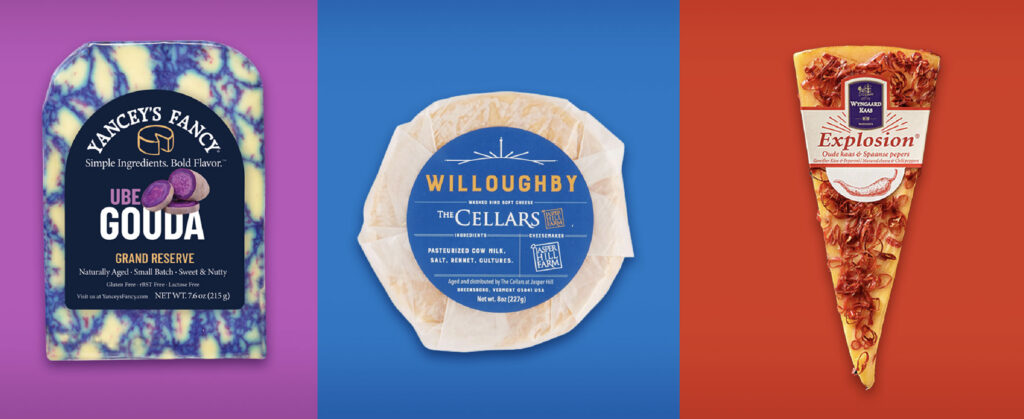
- Jasper Hill Farm’s “Fire on the Mountain” Willoughby, a special-edition take on the Vermont creamery’s beloved washed-rind Willoughby, tinted with annatto and hand-washed at the end of cave-aging with Secret Aardvark’s Smoked Reaper hot sauce. The buttery paste mellows the Carolina Reaper burn into what Jasper Hill calls a “middle-of-the-road” lingering heat, a sophisticated way to ride the hot-honey/spicy-everything wave without alienating mainstream palates.
- Wyngaard “Explosion” brought the trend in from the Netherlands, a Dutch gouda shot through with chili and pepper flakes for an upfront, fiery kick. Imported spicy gouda is a smart bet on the same bold-global-flavor current running through the rest of the floor.
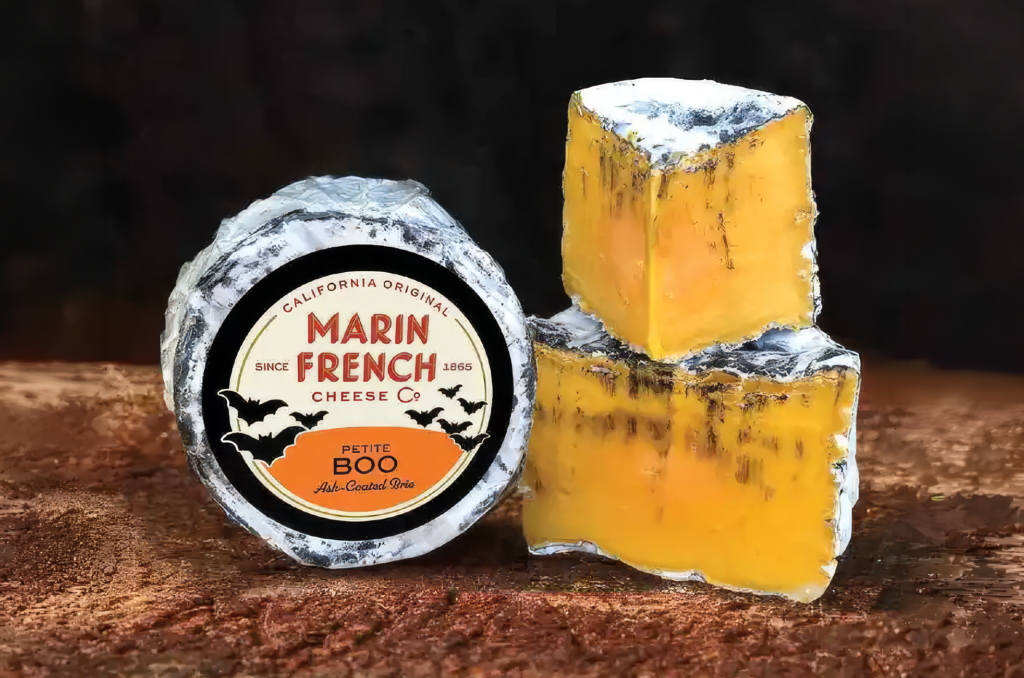
The holiday/seasonal LTO became a merchandising engine. Marin French Cheese Co.’s “Petite Boo” reimagined its rich, earthy Petite Ash as a Halloween “holiday exclusive,”. It’s a clean illustration of how even heritage soft-ripened cheeses are now being dressed for specific calendar moments to drive incremental, time-limited sales.
Charcuterie and Deli Meat: Convenience, Premiumization, and the Entertaining Boom
The charcuterie trend that many assumed had peaked continues to be huge, fueled by protein and at-home entertaining, and the deli-meat majors leaned all the way in.
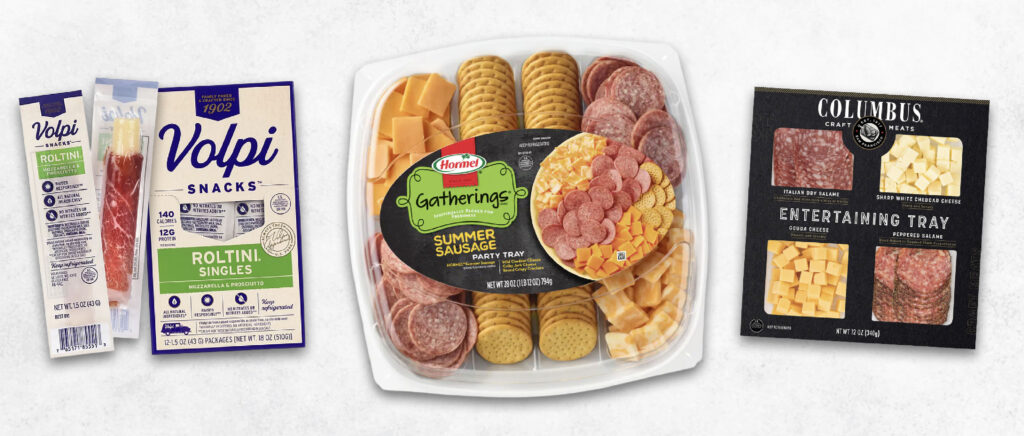
Hormel’s entertaining portfolio was front and center. The Columbus Craft Meats brand rolled out its new Columbus Entertaining Tray, a ready-to-serve charcuterie-and-cheese board pairing its top-selling Italian Dry Salame and Peppered Salame with white cheddar and gouda. Columbus cited that 61% of Gen Z and millennials now use “micro-moments” to gather more frequently, with 86% saying convenience is extremely important, so a zero-prep, no-mess, gluten-free board that wins on convenience and flavor is precisely the answer. The Hormel Gatherings brand continued its run as a snacking-and-entertaining powerhouse, with party and snack trays spanning its Bold and Spicy tray, jalapeño pepperoni and chorizo-style spicy salami balanced with pepper jack and cheddar, built for the rising spice trend, and its new addition Summer Sausage.
Volpi Foods brought the premiumization-meets-convenience story, with a fourth-generation salumeria pushing its craft charcuterie into formats and channels well beyond the deli case. Its Roltini singles (hand-cured meats wrapped around cheese, like Mozzarella & Prosciutto and Pepper Jack & Genoa Salami) and on-the-go Snack Cups and Snack Trays target protein-hungry, convenience-seeking shoppers. Two recent moves underscore the momentum: a nationwide QuikTrip rollout bringing artisanal Roltini to gas-station shelves, and a limited-time “Italian Escape” menu with Blaze Pizza, putting Volpi’s Raised Responsibly prosciutto on the menu at all 250+ locations through late June. Heritage charcuterie brand stretching into both grab-and-go convenience and foodservice without diluting its premium, nitrate-free, humanely-raised positioning.
Several other meat brands brought noteworthy innovation:
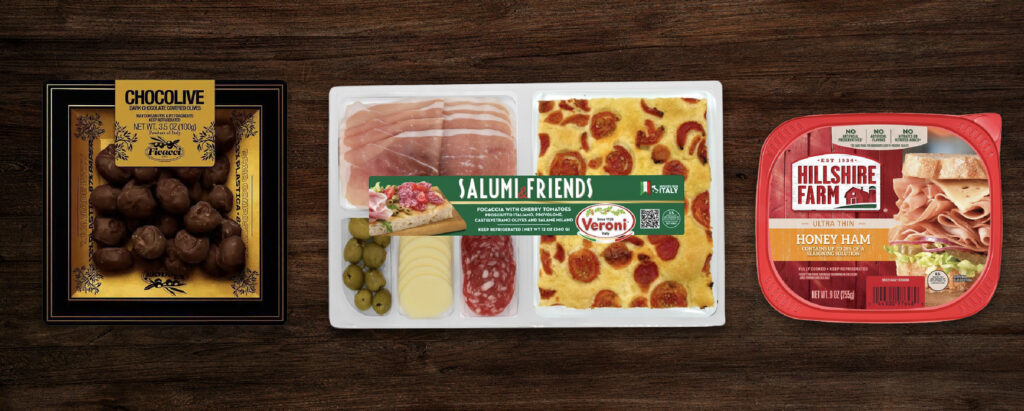
- Veroni, the leading imported Italian charcuterie brand in the U.S., debuted Salumi&Friends, billed as the “Ultimate Gourmet Italian Aperitivo Experience,” pairing traditional salumi like Salame Milano and Prosciutto with artisanal Italian focaccia (cherry tomatoes, Castelvetrano olives, provolone), in both 12-oz and 6-oz sizes. It also restyled its Antipasto Italiano platters into a more compact, merchandising-friendly 7-oz format, and brought a food stylist to the booth to build fresh charcuterie and aperitivo presentations, a clear read on the at-home-entertaining and “elevated convenience” trend.
- Brooklyn Cured focused on chef-driven salami and sausage, with a major push behind a new bulk beef charcuterie line built specifically for deli counters.
- Hillshire Farm (Tyson) brought flavor-forward energy to the everyday lunch-meat aisle with Sandwich Style Lunch Meats in bold new flavors, including Hot Honey Ham (sweet honey plus a chili kick) and Jalapeño Ranch Turkey Breast, a reminder that the hot-honey and bold-flavor currents reshaping specialty charcuterie are now flowing into mainstream sliced deli meat too.
- Ficacci Italian olive specialist, reinforced the show’s sustainability-and-structure theme with an expanded lineup of recyclable paper-based trays and platters, including larger multi-compartment formats designed for club and entertaining occasions. As Export Manager David Dottoroni explained in an interview with Deli Market News, the company paired its evolving paperboard packaging with bold new products like CHOCOLIVE (dark chocolate–covered olives) and garlipeño marinated olives, blending gourmet flavor exploration with more sustainable, retail-ready presentation formats built for discovery and entertaining.
Across all of these, the throughline is the same one powering deli prepared: shoppers want restaurant-and-entertaining-quality experiences with grocery-aisle convenience, and the meat-and-cheese players are racing to package exactly that.
The Licensing Craze: Flavors and IP Everywhere
Licensed flavors and branded collaborations were impossible to miss, as established flavor brands extended into adjacent categories and entertainment IP made its way onto packaging.
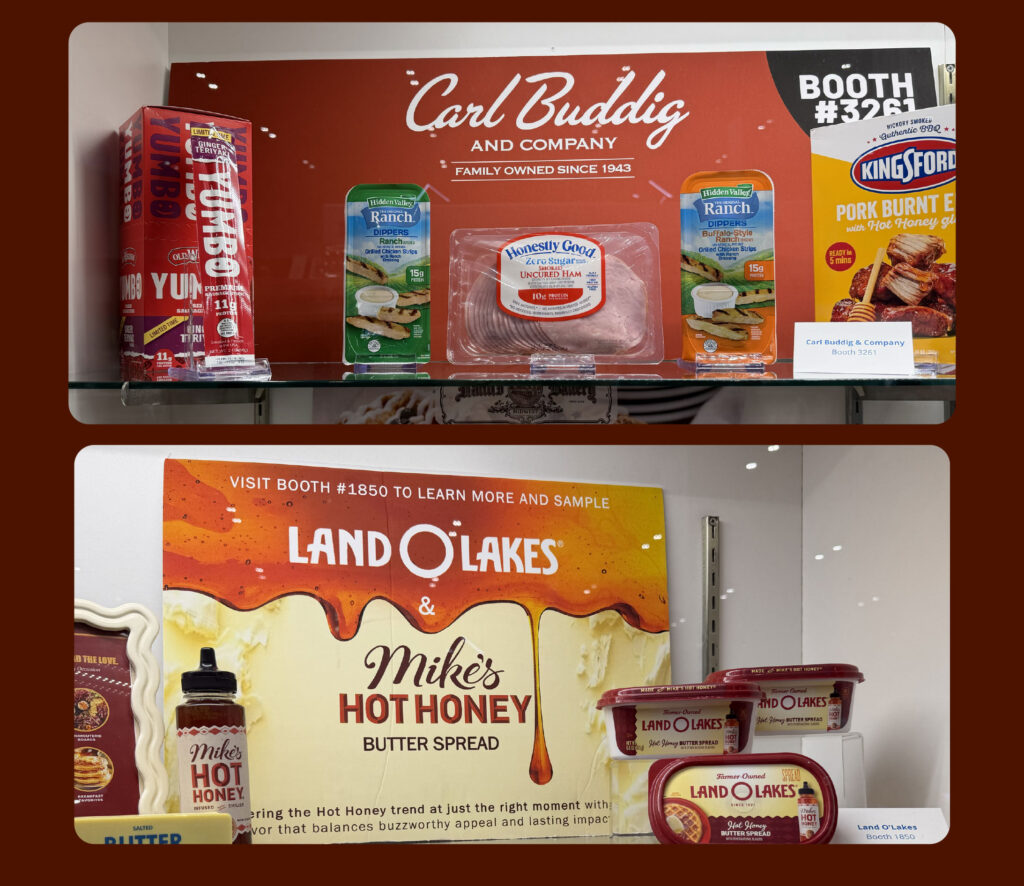
Hidden Valley Ranch officially entered the protein-snack category through a licensing deal with Buddig, which launched the Hidden Valley Ranch-branded chicken dippers, pairing seasoned chicken with the brand’s signature ranch flavor and giving a beloved condiment name a foothold in center-of-plate convenience. Mike’s Hot Honeycontinued its remarkable run as a flavor that gets added to everything, with Land O’Lakes specifically carrying the Mike’s Hot Honey brand into its flavored butter spreads, a clean illustration of how a single breakout flavor brand can now license its way across the perimeter and onto an established dairy staple.
On the entertainment side, Dere Street capitalized on the enduring popularity of Ted Lasso with a biscuit’s product in a “Biscuits with the Boss”-branded box, a nod to one of the show’s running themes: nostalgia, fandom, and pop-culture tie-ins as a way to earn a second look on a crowded shelf.
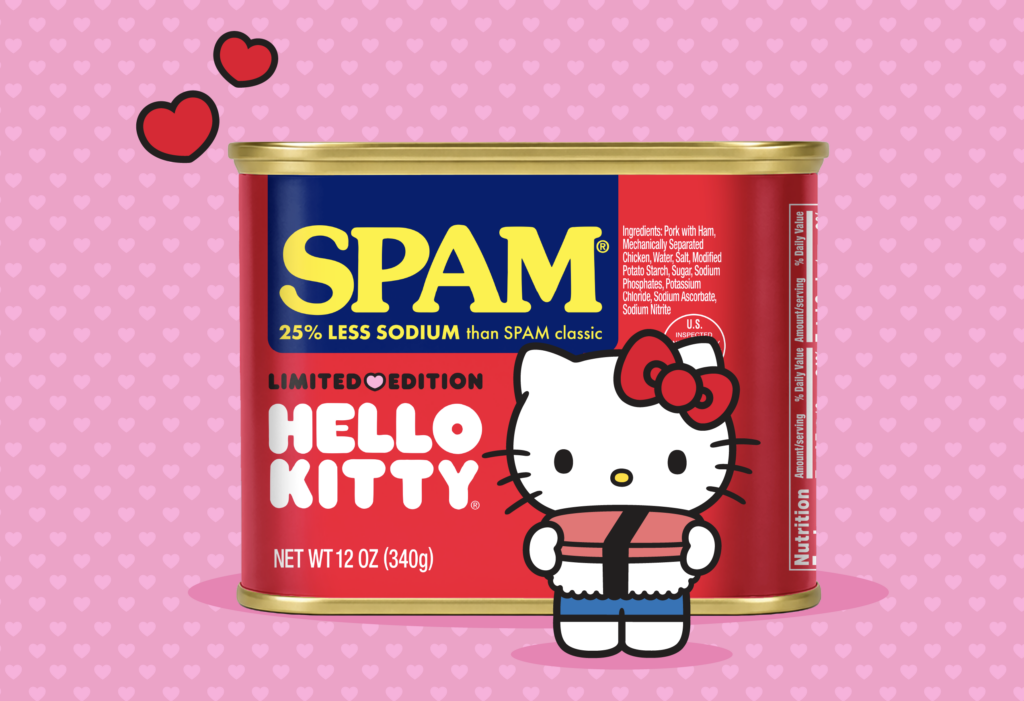
The biggest collectible play, though, came from SPAM. the Hormel brand teamed with Sanrio to launch a limited-edition SPAM x Hello Kitty collectible can, a 25%-less-sodium SPAM can wrapped in a label featuring Hello Kitty holding a SPAM musubi, it anchors a broader “Tour de Sizzle” campaign celebrating global SPAM dishes (Hawaiian musubi, Korean bibimbap, Japanese ramen, Canadian poutine) through an interactive microsite and sweepstakes. The pairing of two multigenerational fan-favorite brands generated immediate social buzz, and it captures three of the show’s biggest currents at once: collectible fandom, globally inspired flavor, and a scarcity-driven limited-edition drop.
Pickled Everything Keeps Growing
The pickle category showed no signs of slowing, and the innovation came through unexpected collaborations and flavor extensions:
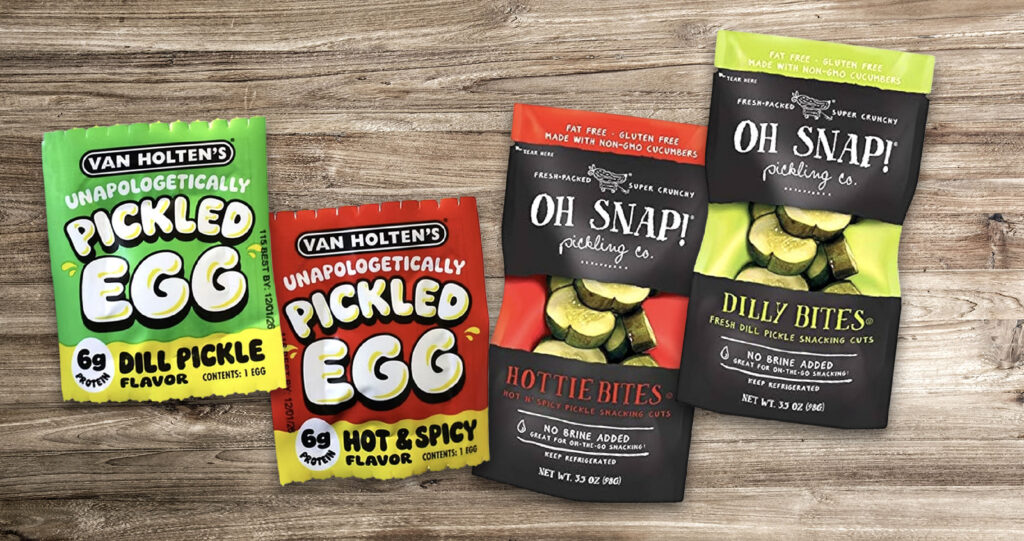
- Van Holten’s expanded beyond its iconic Pickle-In-A-Pouch with both a Warheads co-brand, fusing sour-candy fandom with the pickle craze, and a new Dill Pickle–flavored Pickled Egg pouch delivering 6g of protein in a single-serve, shelf-stable format. The move extends the brand from novelty pickle snack into portable protein, reinforcing how the pickled trend is colliding with the high-protein, grab-and-go set.
- OH SNAP! continued to expand its portfolio of grab-and-go pickle snacks into new varieties such as Chili Lime, layering on-trend global heat onto a shelf-stable, single-serve format.
Pickled items, including the broader pickled quail egg trend noted above, continue to benefit from the snackable protein and bold-flavor currents running through the whole show.
“No Seed Oils” Becomes a Front-of-Pack Claim
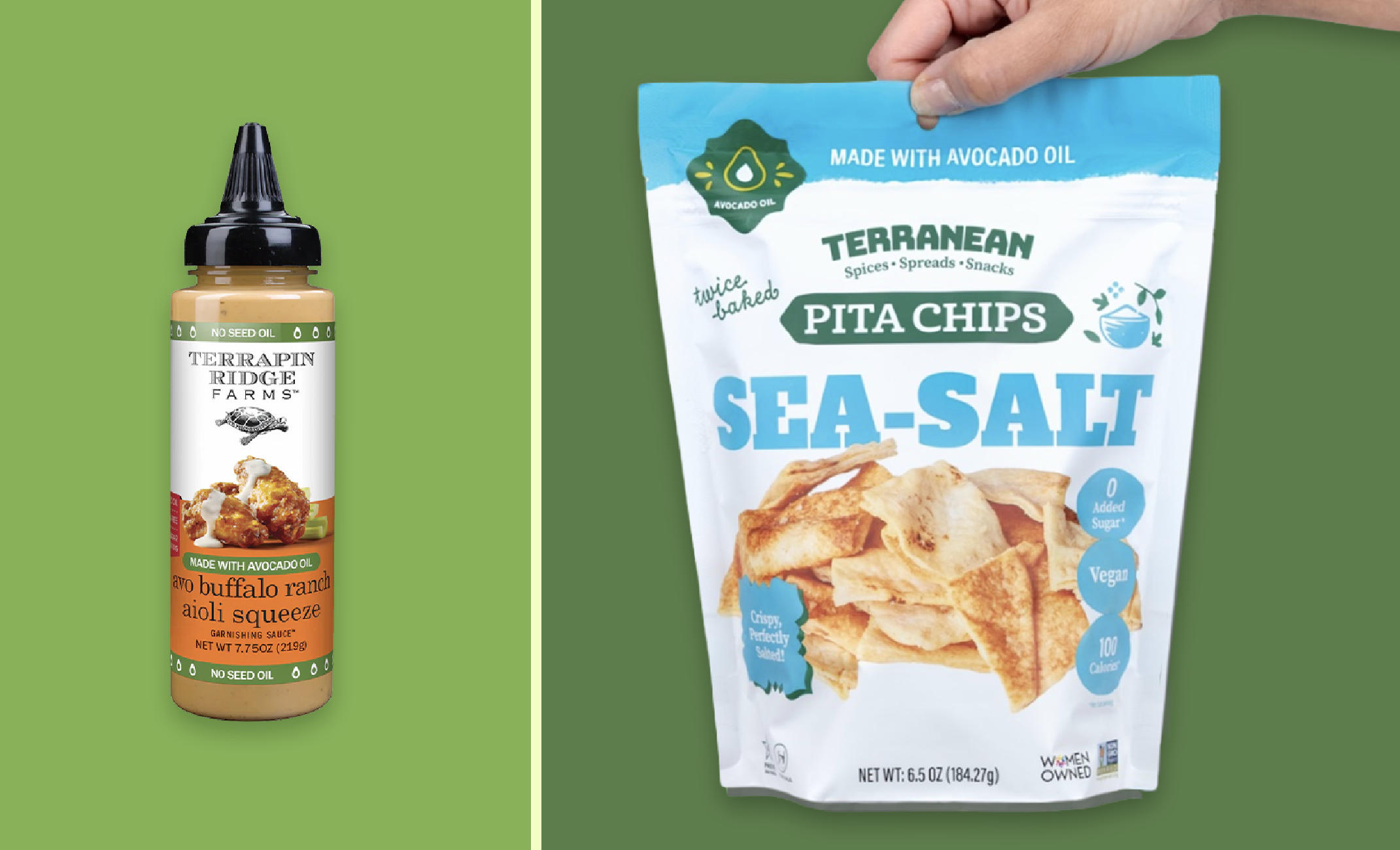
One of the fastest-rising messaging trends at IDDBA 2026 was the “made with avocado oil” / “no seed oils” callout, migrating from a niche wellness talking point to a prominent front-of-pack claim across categories.
Terrapin Ridge Farms captured it directly with its new No Seed Oil Avo Aioli Squeezes, reformulated with avocado oil in place of seed oils across flavors like Avo Buffalo Ranch and Zingy Garlic, leaning into one of the biggest ingredient conversations in food right now. The trend extends well beyond condiments: snack brands like Terranean The woman-owned food brand announced the debut of its Avocado Oil Pita Chips. Made with authentic pita bread, the double-layered snacks are twice baked and feature Levantine-inspired flavors such as za’atar, sea salt, and cinnamon with date sugar and are completely seed-oil free.
Packaging Innovation: Substrate, Structure, and Provable Sustainability
Packaging earned real billing at IDDBA 2026; the New Product Showcase explicitly spotlighted packaging alongside products and flavors. Two themes dominated the floor: traceable, certified recycled content as the answer to greenwashing scrutiny, and structure as a merchandising lever, not just containment.
Sabert (Booth 2000): The Multi-Substrate Thesis
Sabert’s whole story this year was built around how operators actually buy now, running mixed-substrate programs, with PCR plastic for one SKU, paper for another, and molded fiber pulp where compostability is prioritized. The portfolio on display spanned plastic, molded fiber, and paper, with options covering post-consumer recycled content, compostability, and high-performance formats. Highlights included:
- Closed-loop recycled resin via Nuvida, Sabert’s recycling operation and one of the world’s largest processors of food-grade recycled plastic resin, providing traceable supply for recycled-content claims as operators face growing scrutiny on sustainability marketing. This anti-greenwashing, “provably recycled” angle was the standout substrate story.
- The r-PRO PCR line (a proprietary polypropylene blend with 25% PCR meeting APR recyclability guidelines).
- Certified molded fiber pulp (Pulp Ultra and Pulp Plus, carrying GreenScreen, BPI compostability, and recyclability certifications).
- New grab-and-go formats, hinged PET bowls and tubs across PET, paper, and molded fiber, explicitly tied to smaller portions, protein-forward menus, and gut-health items.
- Custom-print paper positioned as a branded touchpoint for seasonal LTOs and signature lines.
Lacerta Group (Booth 5050): Structure as Shelf Appeal
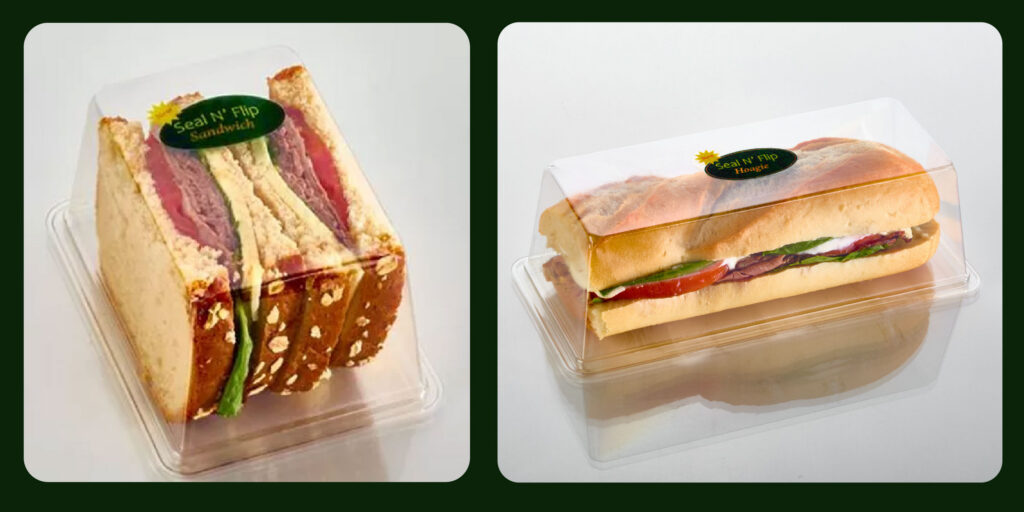
Lacerta’s Seal ‘N Flip was one of the more genuinely novel structural ideas on the floor. It reimagines traditional film lidding by placing it on the bottom, creating a product-forward, vertical display that elevates shelf appeal. The sustainability math is the hook: the design is estimated to reduce packaging costs by up to 25% and cut plastic use by up to 50%, while still delivering tamper-resistance and leak protection. Now in full production after debuting last year, it’s a reminder that packaging structure, not just material, can be a sales driver. Lacerta’s ReCERTA PCR line also recently earned ISO 14021 certification validating its recycled content.
ProAmpac: Fiber-Based Food-to-Go
ProAmpac returned with its fiber-based food-to-go platform, sandwich packs, trays, wraps, and soft packs positioned as a more sustainable alternative to rigid plastic, with flat-packed, automation-ready formats and improved barrier and moisture control to extend shelf life. Following its interpack 2026 emphasis on advanced film-and-fiber technologies and regulatory readiness, expect that compliance-forward framing to keep shaping its retail solutions.
Bizerba (Booth 5418): The Execution Layer
On the labeling and in-store execution side, Bizerba showcased label solutions for branding and compliance, a CSV bread slicer for consistent bakery output, and GLP light systems for efficient weighing and labeling in deli and fresh departments, the often-overlooked operational layer that makes all the new packaging and prepared-foods formats actually work at store level.
The Bigger Picture
A few connective threads tie IDDBA 2026 together. Protein remains the loudest signal; protein-claim units are up 27.5% in deli and a remarkable 80.4% in bakery, with Fiber quickly gaining as much popularity given the rise in GLP-1 users. Eggs (including quail) emerged as the most versatile vehicle for delivering it additional health benefits in breads, convenient grab and go, pickled, and even pastas/handhelds. Convenience keeps expanding into new categories, most notably seafood crossing into the refrigerated grab-and-go set. Entertaining and charcuterie kept climbing, with the deli-meat majors racing to deliver zero-prep, restaurant-quality boards and trays. Global flavor and bold heat became a layer added everywhere, from Mezete’s Middle Eastern dips to Korean BBQ prepared meals to spicy brioche to reaper-washed and chili-studded cheeses. The limited-edition “drop” went mainstream, with St Pierre’s spicy brioche, seasonal cheese LTOs (Marin French’s Petite Boo, Jasper Hill’s collaborations), and the collectible SPAM x Hello Kitty can all borrowing scarcity tactics from fashion and beverage. Indulgence and permissibility coexist with health, with licensed flavors, pop-culture tie-ins, and playful, visually striking formats earning attention while clean-label reformulations (natural colors, no seed oils) quietly reset the baseline. And packaging has become a strategic conversation, with provable recycled content and merchandising-driven structure leading the way.