Unveil the Future: Captivating Visual/UX Web Trends You Can’t Miss

When it comes to visual aesthetics, a trend can be defined as a style, look, or design approach that gains popularity or widespread adoption for a period of time. These periods are becoming increasingly brief, making it even more crucial to recognize what’s hot—while it’s still hot—and understand how to leverage those trends effectively.

Putting our best foot forward in any design project starts with understanding the competitive landscape. That includes being aware of common aesthetic choices (i.e., trends), but more importantly, understanding why those choices are being made. That “why” often comes from deeper influences such as user experience, interaction patterns, accessibility standards, and evolving audience expectations. We will dig into those factors a bit more below.

Still, visual design direction should not be dictated solely by trendiness. A popular look is not automatically right for a brand. Merit, substance, and quality must come first. The goal is not to mimic “the cool kids”, but to understand what makes them perceived as cool, and then interpret those qualities in a way that is authentic to your brand.

The in-depth research and insights that guided our most recent web design work for Green Giant, Grandma’s Molasses, and Crisco, all of which launched this year, still resonate with many aspects of today’s trends.

Now, let’s dive into the trends…
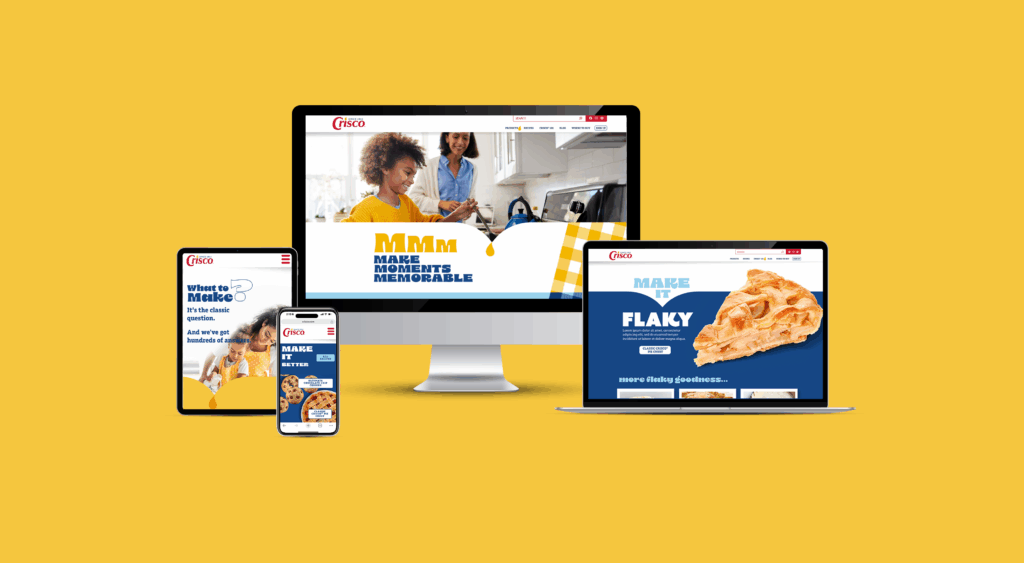
Crisco brand website development

Minimalism and Clean Design

Minimalism is still having its moment, mostly because users want clarity. With so much competing for attention online, clean, intentional design feels like a breath of fresh air. Avoid being overly stark, think minimal, but with a purpose. Key design principles still apply. The layout, hierarchy, and content are all carefully planned and intentional.

You will usually see this trend show up through:

  • generous amounts of whitespace
  • simple, readable type
  • fewer competing elements on the page
  • clear visual hierarchy that guides the eye

The end result for this minimalistic trend is having pages that load quickly and content that is easier to absorb.

Dark Mode and High-Contrast Themes

Although not everyone is a fan, Dark Mode remains a very popular trend and is an easy way to make a website look sleek.

Here are the benefits of Dark Mode:

  • strong contrast that boosts readability
  • richer colors that pop against darker backgrounds
  • a streamlined, contemporary vibe

Tip: Offering a toggle (light ↔ dark) is a strong UX move that accommodates user preferences. Giving users control over how they view your site is a small touch that goes a long way.
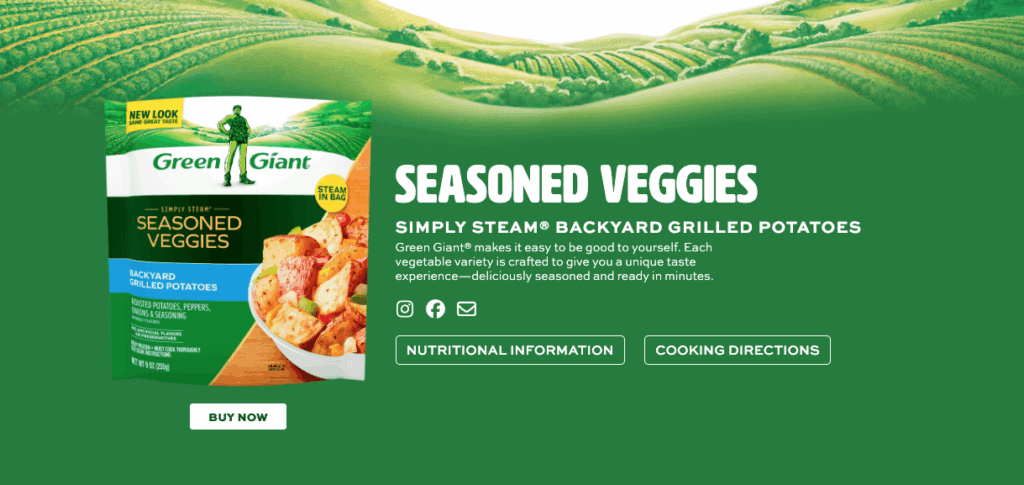
Green Giant Website Design

Bold Typography and Expressive Fonts

Type is doing a lot of heavy lifting these days. Instead of decorative flourishes, brands are leaning into typography to set the tone and deliver personality instantly.

  • oversized headlines, expressive, and creative fonts are tricks that seem to never get old
  • variable fonts (which can change weight/width dynamically) are becoming more common for adaptability

3D Visuals, Animations, and Immersive Elements

The web is getting more dynamic, sometimes in subtle ways, sometimes in totally immersive ones. A little motion can make a site feel alive, but we are also seeing more sites lean into 3D elements, scroll-triggered effects, and interactive elements.

Some hallmarks of this trend are:

  • animations that guide attention
  • 3D models or illustrations used as focal points
  • optimization for a smooth experience

These “user engagement” visuals help create memorable experiences and reinforce quality, but must be done with performance in mind, so they don’t bog down the user’s machine. Use animations/motion where they add meaning, not just for decoration.

Organic Shapes, Asymmetry and Fluid Layouts

There has been a steady shift away from perfectly rigid grids and sharp, rectangular shapes.

You will spot this trend through:

  • curved edges instead of sharp corners
  • sections that overlap or flow into each other
  • a more human, dynamic, and fluid feel, versus overly mechanical layouts

Tip: Asymmetry can draw attention, but make sure the layout still feels balanced, and navigation remains intuitive.

Grids and “Bento Boxes”

Counter to the above is a layout style where content is divided into distinct, modular “boxes” or compartments, much like the sections of a Japanese bento box, where the trend gets its name. Clarity, balance, and modularity are their key features.
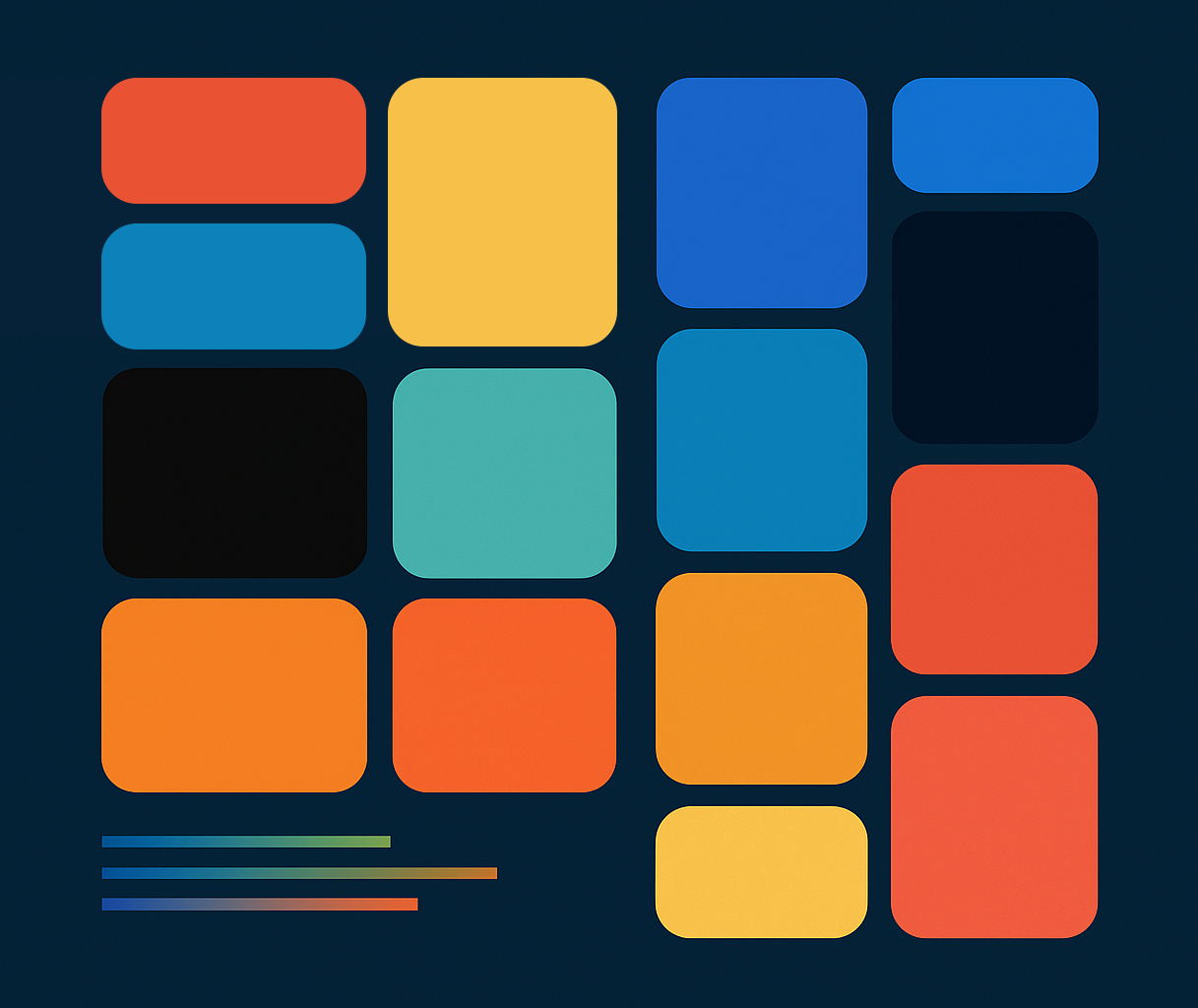
  • boxes can vary in size, not limited to just uniform squares
  • different sized blocks working together cohesively
  • size and various configurations of the grid are used to create an overall architecture as well as visual hierarchy

It’s not just decorative. Each box serves a purpose, presenting a specific type of content (text, image, video, link, etc.) It is clean, modern, and makes perfect sense for content heavy experiences.

Customization and Personalization

With AI involved with so much of our digital activity, personalization and adaptive experiences are becoming the norm, even if we do not realize it. Sites are starting to adjust themselves based on how and where people use them.

This shows up through:

  • content recommendations tailored to each visitor
  • navigation that prioritizes what you need most
  • location aware messaging or features
  • layouts that adapt based on user behavior

When done well, personalization feels intuitive, not invasive.

Privacy and Security

With all this customization comes stricter rules and regulations around Privacy and Security. These measures are in place to protect users and control how their information is shared, which is why cookie-consent popups are now appearing everywhere you look.

Accessibility

In order to discuss accessibility trends, it is only fair to start with WCAG 2.1/3.0 standards. While being compliant to these standards reduces the risk of lawsuits, 85% of organizations see accessibility as a competitive edge, with the added benefit that accessible sites improve SEO and conversions.

Meeting these standards, along with adding even more options for users to adjust contrast and point sizes for readability, only makes the experience that much better for the user.

Voice Navigation & Assistive Tech Integration are becoming increasingly popular. With AI assistants like Siri, Alexa, and Google Assistant searching the internet and assisting users, it is key to make sure the sites are developed in a way that they can access information easily and correctly.

Sustainability in Web Design

The internet accounts for about 3.7% of global carbon emissions, rivaling that of the airline industry, and could consume as much as 8% of global electricity by 2030.

To be sustainable, we need to recognize that websites rely on energy-intensive servers and data centers, which often utilize fossil fuels and substantial amounts of water for cooling. The key to reducing the carbon footprint is to minimize the energy required to maintain, operate and consume the site.

  • optimizing code creates a more efficient site, quicker load times, and less bandwidth
  • fewer unnecessary scripts which create less draw from servers
  • mobile-first design that prioritizes essentials
  • green hosting providers have their own initiatives in place to help reduce their carbon footprint

A lighter site is not just greener. It is faster and more user-friendly.

Web design trends are evolving faster than ever, driven by technology, user expectations, and cultural shifts. While it’s tempting to chase what’s popular, the most effective designs balance trend awareness with brand authenticity, usability, and accessibility. Minimalism, dark mode, bold typography, immersive visuals, and adaptive layouts all offer exciting opportunities, but they should serve a purpose beyond just aesthetics. Personalization powered by AI, sustainability considerations, and compliance with accessibility standards are no longer optional; they’re essential for creating inclusive, future-ready experiences. Ultimately, great design isn’t about following trends blindly; it’s about understanding why they resonate and using that insight to craft meaningful, user-focused solutions that stand the test of time.

Women in Design: Gail Anderson

In this blog series, we shine a light on women trailblazers in the design industry – women who have earned a Wikipedia page (or are likely to very soon). You might not know them by name, but definitely by their work and influence on the design world as a whole.

This month, we’re highlighting NYC-based designer, educator, and writer, Gail Anderson: the first woman of color to be honored with the American National Design Awards’ Lifetime Achievement from the Smithsonian Design Museum in 2018. 

Anderson’s formative years as a designer took place at Rolling Stone, where she contributed her passion for bold, innovative typography that defined the magazine’s feature pages and influenced designers around her.

Looking at Anderson’s body of work, you can see how her mentor, Paula Scher, has influenced her lyrical and expressive typography style. But what is really delightful is how much playful humor is imbedded in her work, and like any great piece of art it gets better the more time you spend with it. 

In 2002, Anderson began working at SpotCo to create artwork for Broadway and off-Broadway plays seen in bus stands, subway stations and billboards. The Avenue Q subway-inspired puppet-fur logo that she designed became a core part of the play’s marketing.

A love of words and passion for type has been evident throughout Anderson’s career, having co-authored several books on design, illustration and typography. One of her books, Type Tells Tales, explores typographic design as an art and as a storytelling device that expresses narratives, emotions, and voice.*

“Most of what I do is typography-driven, whether it’s through type play or working with hierarchies in editorial content,” Anderson said in a 2019 interview with Invision*. “More and more, I’m interested in creating that editorial content as much as designing it—I’m all about communication through design.”

Anderson has spoken about the stark lack of designers of color, especially in New York, where she’s based. She offers this caveat to studios looking to increase diversity: “When you make that ‘diverse’ hire, remember that person is NOT the spokesperson for an entire gender, race, ethnicity, etc.”

Her advice for budding designers and type enthusiasts: “Take pictures of type on the street and on your travels. Buy books. Save everything. Designers are collectors okay, hoarders. Take a class. Teach a class. Go on a safari. That’s on my bucket list.” *

*Sources:

https://www.amazon.com/Type-Tells-Tales-Steven-Heller/dp/0300226799
https://www.invisionapp.com/inside-design/meet-gail-anderson/
https://creativepro.com/the-creative-world-of-gail-anderson/

Women In Design: Paula Scher

In this blog series, we shine a light on women trailblazers in the design industry – women who have earned a Wikipedia page (or are likely to very soon). You might not know them by name, but definitely by their work and influence on the design world as a whole.

We’re kicking off our Women in Design series with Paula Scher.

Once called “the most influential woman graphic designer on the planet,” Scher’s best known work is synonymous with New York City in the 90’s: her posters edgy colors, dynamic layouts, and hip-hop inspired graphics. However, that doesn’t cover even half of her story.

With a career spanning 40+ years, including stints as an album cover designer at CBS (credits including Boston (Boston), Leonard Bernstein and Bruce Springsteen), she is now a partner at Pentagram. While she might be best known for her logos and posters (The Public Theatre, MoMA, New York Shakespeare Festival in Central Park festival), Scher’s personal work might be her legacy: huge detailed pointillistic maps that showcase her self deprecating humor as well as her dedication to her craft, one she is never completely satisfied with. In other words, she is a true artist.

“Being a woman has nothing to do with the work itself,” Scher says*. “I don’t like pink more. There was a group of feminists very active in the ’80s who believed that women actually made different kinds of work [than men]. I don’t buy that.”

 *Source: https://magenta.as/how-pentagrams-paula-scher-defines-success-14bd60ed586b

The Perfection of Blue for 2020

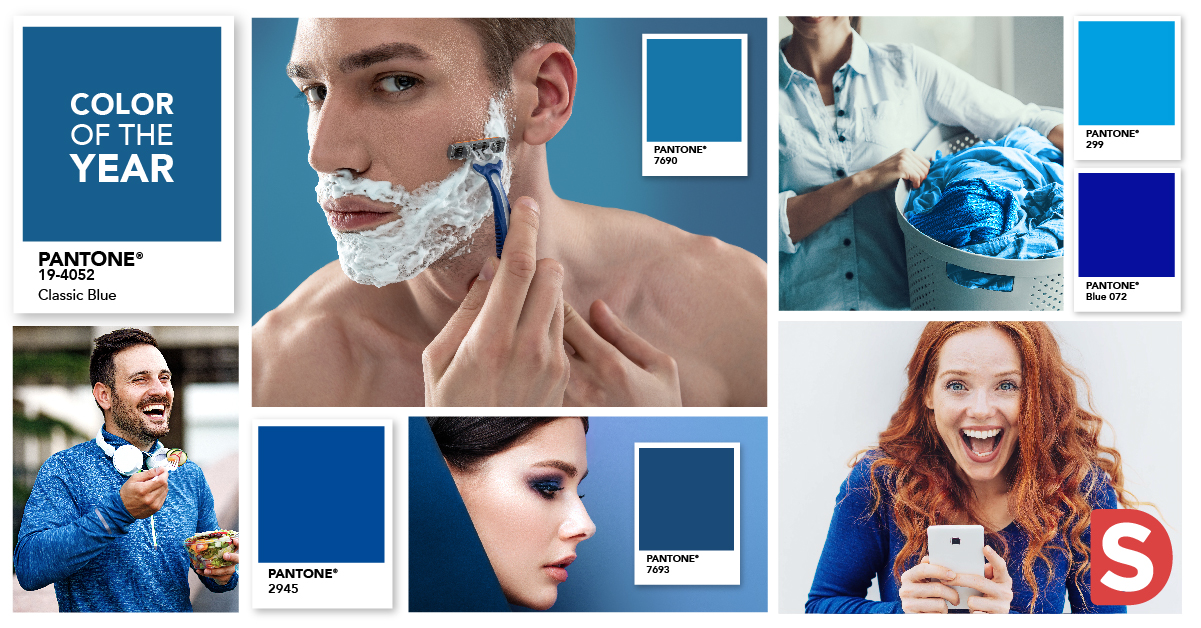
According to their website, Pantone’s 2020 color of the year “19-4052 Classic Blue” was chosen to offer the “hope of honesty and the promise of protection”. The color is a dense, darker shade of blue than the word “classic” implies, but for me, it is sophisticated, calming, and much more serious than previous years (2019’s “Living Coral” and 2018’s “Ultra Violet” being decidedly more upbeat and exciting). But I would add to those descriptions the word universal; as designers of brands, blue may be the most useful color we have in our tool kit. 

It’s easy to underestimate the power of blue. It all comes down to a certain hue, density or tone to make or break a design, evoke emotion & create connection. Blue is a color that can have many meanings, and that meaning can change significantly from category to category, brand to brand.

We looked at several CPG categories, all of which we design for here at Smith, to find the best blue hue for the job:

Smart & Savvy: Technology (PMS Blue 072)

Next to white & silver (thanks, Apple), blue is the first color that comes to mind when we think of high-tech products. Blues in technology tend to be primary & evoke intelligence, trustworthiness, and innovation.

Strong & Masculine: Male Grooming (PMS 7690)

Blue, as expected, plays a big role in men’s grooming products. Darker hues veering towards black and brighter shades skewing into teal bring strength, depth & energy while also cueing cleanliness.

Fresh & Clean: Household (PMS 299)

An obvious choice for household cleaning products are blue tones. Aside from the clean cues that brighter blues and cyans provide for products like laundry detergent or dish soap, the softer, more pastel tones work well in fabric softener and soap.

Simple & Advanced: Personal Care/Pharma (PMS 646)

Blue brings trust & innovation to the personal care category, trading in softer, more feminine hues with a purple or greyish tone. When paired with the right graphics, these blues communicate quality, trust, and sophistication.

In Blue We Trust: Food/Beverage (PMS 2945) 

Blue may be an unexpected choice for a food brand (less so for beverage, given its association with water), but many brands do well despite this. Think Skippy, Oreo or Kraft Mac & Cheese. Blue’s role here is one of a crowd-pleaser; a populist color that is known as the world’s most favorite color. In some cases, the blue can come to symbolize a long heritage – a brand that has stood the test of time and cues happy memories of a time gone by. 

Blue seems to me a perfect choice for 2020. Its calming & unifying qualities lend themselves to the dawn of a new decade, where nothing is assured or guaranteed. And our ability to adapt to that unknown might be the most important skill of all.

-Jane Sayer, Director of Visual Strategy


The 4 Archetypes of the Holidays

It’s the most wonderful time of the year! And that means, for a lot of us, the knowledge that we will be swept up in a whirlwind of cookie baking, socializing with friends & family, tree trimming, and yes – consuming in all its various forms.

For brands, the holiday season is a time to shine – to show their true spirit and capture a consumer looking for an authentic experience. We only have to look at the recent mishap of a certain exercise bike brand to know that not all marketing around the holidays is guaranteed to hit the right tone.

So why do some brands, like some people, fare better over the holiday season than others? To understand why, we must dig a little deeper to uncover the authentic messages connecting these brands with their consumers.

Hint: It has to do with Archetypes & Brand Personalities. 

Coca-Cola: Always The Innocent

Every year, Coca-Cola ups the ante on seasonal marketing. From its now iconic polar bear to the heavily nostalgic Santa topping up his rotund belly with a frosty beverage, Coca-Cola’s thoughtfully designed campaigns go all-in over the holidays – which makes sense considering the brand has always strived to remain true to its Innocent archetype.

With wide-eyed optimism, Coca-Cola makes the holidays feel special for its consumers by capturing and recreating that feeling of awe and wonder we have as children. I’m reminded of the story of The Polar Express, where a little boy is gifted a bell from Santa’s sleigh that only children can hear. As the boy grows, he finds he can still hear the jingle of the bell even though his sister cannot. This classic story reminds us that channeling our inner 5-year-old is the best way to truly enjoy the season. 

Tiffany: The Lover of all Things Shiny

Premium brands tend to do well at this time of year, with subliminal messages saying: “the more you spend, the more you care”. This is especially true for a heritage brand like Tiffany, where that message is neatly wrapped up in an iconic & desirable bird’s-egg-blue box.

Tiffany, as the Lover archetype, goes all out to let you know that you are special and deserving of love – and what better time to show that love than at this most special time of year. A Lover brand can speak to a deep-rooted desire in us all to be recognized, indulged and celebrated over the holidays – to feel #AllTheFeels – and Tiffany is happy to oblige…for a price. 

Starbucks Holiday Cup: The Everyman icon

Starbucks is typically an Explorer brand, but over the holidays, the Starbucks cup takes on a personality of its own – that of the Everyman. The eagerly anticipated design has come to represent the onset of the season, and in recent years Starbucks has taken steps to be more inclusive and less overtly Christmas, stating the intention to “usher in the holidays with a purity of design that welcomes all of our stories”. The coffee chain has been creating themed cups around the holidays since 1997 but stayed relatively under the radar at first, gaining real momentum during this last decade.

There is something fundamentally cheery and celebratory in these paper receptacles when clutched in the hands of a glove-wearing commuter in the dreary December half-light. It has come to represent the comforting predictability of the Starbucks experience with a promise of better days ahead, with family and friends & cocktails after work. And, aside from 2015, when the design went a little too minimal for some folks, the cups are a hit en masse.

Disney conjures up The Magician

It’s hard to imagine a more festive brand during the holiday season than Disney. Its theme parks embody the idea of celebration year-round but really come into their own at this time of year. No one captures the holiday spirit quite as well, because Disney is The Magician archetype… and let’s face it – Santa, Elves, flying reindeer – we enjoy suspending rational thought during the holidays and indulging in a little magical thinking.

John Lewis, an upscale department store in the UK, releases a commercial every year that tugs at the heartstrings while injecting a little fairy dust into the hardest of hearts. Disney & other Magician brands remind us that we can all use a little magic around the holidays.

We made it! 40 Acts of Kindness

We are so happy to share that the Smith Design team successfully reached 40 Acts of Kindness last week! It has been an honor to support so many incredible causes throughout the year, and we look forward to continuing giving back in the future. Here was our final act of 2019:

This time of year is typically one of joy and celebration for children everywhere: spending time with family and friends and receiving exciting gifts. However, for those less fortunate, the holidays can be a time of struggle. We wanted to support those in need and help create more smiles this holiday season, so we held a drive in our office for Toys For Tots. Our local fire station was kind to serve as a drop off location for the games and gifts.

Feeling Grateful this Thanksgiving: 40 Acts of Kindness

This time of year always inspires a deep gratitude for our lives and the people in it. This Thanksgiving, we are thankful for our team, our families, and our ability to give back to our community in a special way this year! Here’s how the Smith Design team gave back in November:

We were honored to walk with and hear the stories of those impacted by breast cancer at the Susan G. Komen More Than Pink Central & South Jersey Walk in early November. Almost the entire Smith team attended, including our founders, along with lots of friends and family. We were thrilled to raise and donate over $3,000 for the cause.

Our neighbors in Newark, NJ have been impacted by a drinking water crisis for several years now due to lead, and recently the city ended the bottled water program for residents except for those most vulnerable. As we write this, our team is donating several water filters, including filters from our friends at ZeroWater, to a local charity in the city. We hope that the city finds a strong long-term solution for the sake of its residents.

Importance of Social Media

For brands, being on social media is no longer an option: it’s a necessity.

What started out as a place for friends and family to stay connected and share updates has since evolved into a vital marketing channel with a deep impact on consumer behavior. As of 2019, 42% of the world’s population uses social media on a daily basis. Active social media users across the world have continued to increase, with 8% growth since 2017*. 

Users of major social media platforms like Facebook, Twitter, Instagram, and Pinterest utilize the platforms to keep up with current events, interact with their favorite bloggers, research brands to help make purchase decisions, and more. Active users tend not to regularly create content but do spend time on their favorite social media channels to view and/or engage with content.

In a 2018 study*, 71% of consumers who had a positive experience with a brand on social media were found to likely recommend the brand to their friends and family – which tells us that the potential for social media to help your brand is vast. Having a strong social media presence can enable brands to reach a wider audience, build brand authority and loyalty, engage directly with customers while gaining insight, etc. The key is to remember that social media, unlike other digital channels, is a two-way street – a conversation. When done right, the benefits are plenty – but where do you begin?

Whether you are just starting out or are stuck with your current plan and need a little direction, these four points are core to brand success on social:

  1. Identify your brand’s goals, marketing objectives, and target consumer(s).
    Put this information at the center of your discussion when creating a social media strategy. When there is internal alignment on these points, it is much easier for a social media strategy to bloom and receive consistent C-suite support.
  2. Select social media channels based on where your target consumer is.
    As tempting as it might be to hop on the latest and coolest platform, identifying and meeting your consumers where they are is key to your success on social. If you’re a fashion brand targeting teens, Snapchat might be the perfect fit, but if you’re a premium supplement brand targeting ages 45-60, Facebook would do a better job of reaching your core consumer.
  3. Set aside resources for content curation & creation, engagement, and ad spend.
    A mistake that many brands make is looking at social media channels as a PR outlet. Your social media strategy isn’t plug and play. Even if you have content scheduled for a couple months, interacting with your audience and staying tuned into the conversation about your brand and trending topics on your key channels helps you to stay relevant and shows customers that you care. Lastly, don’t forget ad spend, because social is a pay-to-play game.
  4. Stay on top of the competition and platform changes.
    The world of social media is changing constantly, so keeping up can feel daunting. For most brands, we’d recommend focusing on platform features, which enable you to talk to your audience in a new and potentially more engaging way, as well as algorithm changes, so you are sure to abide by those platforms rules and ensure as many people as possible will see your posts. Don’t forget to keep an eye on your top competitors’ social channels!

Looking for an agency to help you with your social media efforts? Get in touch: https://smithdesign.com/contact-us-2/

– Pareesha Narang, Social Media & Communications Manager

*Sources:

https://wearesocial.com/global-digital-report-2019
https://www.oberlo.com/blog/social-media-marketing-statistics