

Every 2027 forecast this fall has led with protein and GLP-1. Both are real, and both are everywhere, and neither sets a brand apart anymore, so we read past them. Our team reviewed the 2027 forecasts from Mintel, Innova, Nestlé USA, Datassential, Whole Foods, the Specialty Food Association, and GS1 US to look for signals that show up, and the most useful patterns are crossing category lines. For the first time, Mintel built its 2027 predictions across food and drink, beauty, household care, and wellness together, and its conclusion is that growth will come less from launching more products and more from helping people achieve outcomes, such as better sleep, steady energy, or a simpler home routine. That is why this list covers everything from the pantry to the medicine cabinet and the laundry room.
Circana expects US food and beverage sales to grow just 2% to 3% in 2027, and store brands reached a record 23.8% of units sold this summer. With little growth to go around, the brands shoppers understand fastest will take share.
1. Steady Beats Strong
Where it shows up: Food, Beverage, OTC, Supplements
The next functional promise is a smoother day. In Innova’s 2027 research, 39% of consumers want food and drink that helps keep their energy steady, and blood sugar balance is becoming a reason to pick one product over another. Calm and focus are following, with stress relief and nootropic ingredients moving into everyday formats.
That puts food on the same shelf as the medicine cabinet. Mintel found that in 2025, 58% of global launches with stress-relief or relaxation claims came from healthcare brands, compared with 33% from drinks and 9% from food. Mintel also predicts the word “wellness” itself will stop resonating, and that shoppers will reward benefits they can feel at a fair price. (We covered the beverage side of this earlier in the year in The Future of Functional Beverages.)
Shoppers are also tiring of claim stacks. At this summer’s Fancy Food Show, the Specialty Food Association’s trendspotters saw brands drop benefit claims to spotlight one familiar ingredient, like dates or bone broth, and called the reaction “function fatigue.”
For packaging: Name the outcome and the moment, like steady energy for the afternoon slump, instead of listing ingredients. Organize the line by when and why people use it (morning, afternoon, evening) so the shelf set reads as a routine. Borrow OTC packaging’s clarity about what a product does and when to use it, but in a wholesome, ingredient-led way.
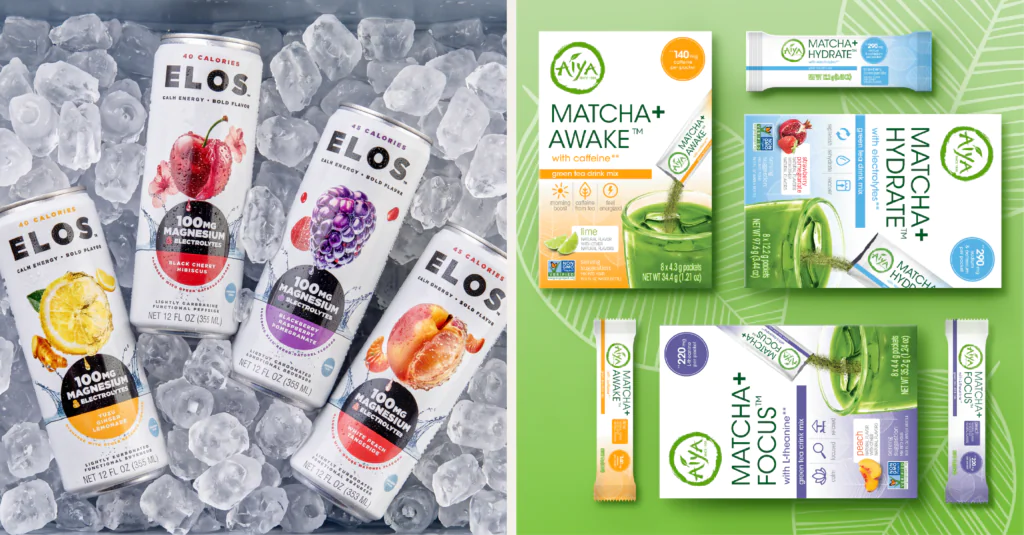
Smith Design packaging for ELOS (left) and Aiya Matcha+ (right), both named and built around the outcome they deliver.
2. The Pantry Becomes a Display Shelf
Where it shows up: Specialty Food, Personal Care, Household
More packaging is staying out on the counter. The Specialty Food Association calls it “Shelf-Stable Chic.” A well-stocked pantry has become a status symbol, and shoppers want products good-looking enough to leave out: tinned fish lined up like an artful keepsake, aged vinegar shown off like wine, dried pasta in jars that double as décor.
Familiar products are also moving into unfamiliar formats. At this summer’s Fancy Food Show, trendspotters found applesauce in yogurt-style tubes, honey in toothpaste-style bottles, kimchi in single-use sachets and balsamic vinegar in squeeze bottles. The same panel saw design moving away from neon and maximalism toward hand-drawn art and muted, organic color.
For packaging: Design the sides and back as carefully as the front, because the pack has a second life at home. Consider a giftable or premium tier in keepable formats like tins, jars, and refills. If a familiar product fits an unexpected format, test it. A new format is often an easier story to tell than a new flavor.
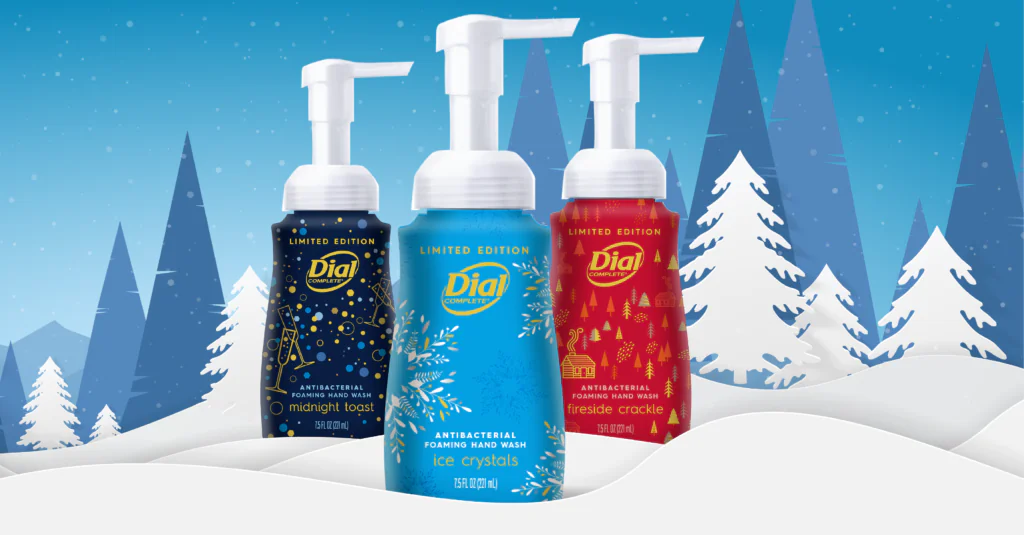
Packaging by Smith Design: three limited-edition Dial Complete scents, each with its own pattern and name, turn an everyday basic into a gift.
3. Short Labels, Specific Origins, Visible Process
Where it shows up: Food, Pet, Beverage
Shoppers are reading the back of the pack. Whole Foods named “Ingredient Minimalism” a 2027 trend, and the Non-UPF Verified seal now appears on brands like Simple Mills and Spindrift. Dye-free colors are coming too: Nestlé USA, Campbell’s and Tyson are listed as complete on the FDA’s pledge tracker, while Kraft Heinz and General Mills aim for the end of 2027.
Shoppers are less worried about processing than about not understanding it. The Specialty Food Association calls this “Honest Processing”: methods with a clear purpose, like fermentation or cold pressing, build trust when the pack explains them. Origin works the same way. Innova found that 27% of consumers say information about farming practices would increase their trust in a product. A named farm, harvest date, or batch code gives shoppers something concrete.
For packaging: Bring short ingredient lists forward, and check how new natural colors look in photography. Show the process when it is the reason to buy. Make origin tangible with a farm name, place, or date.
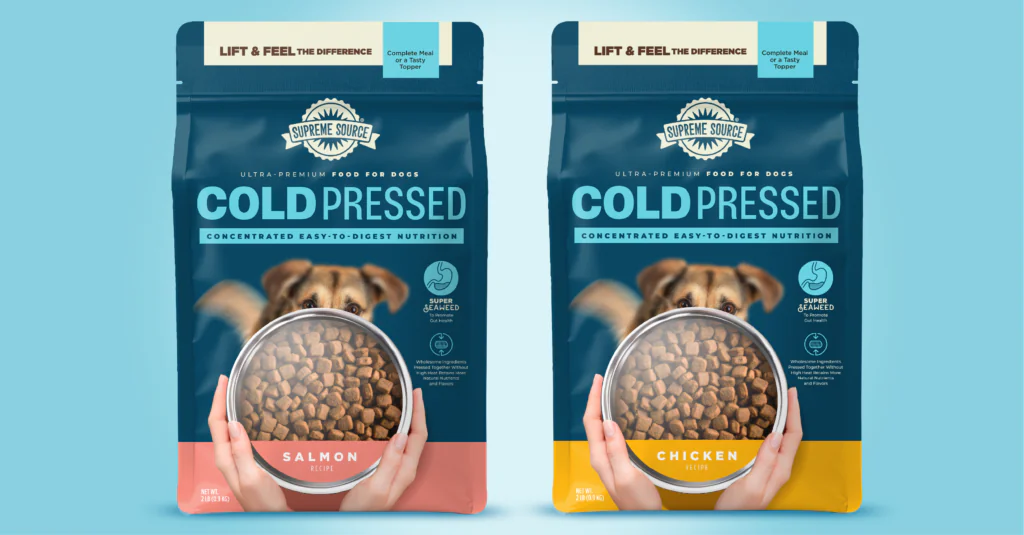
Process up front: Smith Design created the packaging for Supreme Source Cold Pressed dog food, where the method leads the front panel, and one line explains why it matters. | View our full Supreme Source Case Study here
4. Flavor Gets Glossier, More Local and Sharper
Where it shows up: Food, Beverage, Beauty
Food is borrowing from beauty. Whole Foods calls it “Beautrition,” and the Specialty Food Association calls it “Vanity Fare.” Purely Elizabeth launched a collagen granola during New York Fashion Week, and Clöud Café’s collagen coffee landed at Ulta Beauty. The overlap is growing from the beauty side as well: Mintel reports 23% of US adults took beauty supplements in 2026, up from 17% in 2022.
Global flavor is getting more specific. Datassential names Mexico City cuisine the one to know for 2027, and its beverage picks include Vietnamese lemonade made with salted preserved citrus and koji milk. Whole Foods points to Japanese comfort food like milk bread and katsu. Shoppers want the region and the dish, not just the country. Taste is moving from heat toward zesty, sour, and bitter.
For packaging: Borrow beauty-inspired styling while keeping the food the hero. Name the dish and where it comes from. Flavor is hard to show, so use color, words, and texture cues that say “bright” or “bitter” without looking like a warning label.
5. On the Horizon: Smarter Barcodes, Busier Front Panels and AI Shoppers
Where it shows up: Every category
By the end of 2027, GS1 US’s Sunrise 2027 initiative aims for retail checkouts to scan 2D barcodes such as QR codes. A 2D code can carry expiration dates, lot numbers, and a link to product information, which opens the door to automated markdowns at checkout and richer on-pack content. Today’s UPC is not going away, and GS1 guidance places the 2D symbol within 50 millimeters of it.
The front panel may also get busier. In January 2025, the FDA proposed a “Nutrition Info” box rating saturated fat, sodium, and added sugars as Low, Medium, or High. The rule is not final, but updated rules for the “healthy” claim take effect with a February 2028 compliance date.
Then there is the AI shopper. Only 22% of grocery shoppers say they would let an AI agent buy for them today, but half of US consumers already use or want to use generative AI to manage their health, according to Mintel, and nearly 7 in 10 US adults expect a home that anticipates their needs. An agent reads product data, and it may skip a product whose claims or sizes don’t match what it finds online.
For packaging: If a refresh is on your calendar for the next two years, plan the 2D code placement now, so you are not reworking artwork twice. Build front panels with room to flex, and keep claims and product details consistent across the pack, the brand site, and every retailer listing.
Three Questions Before Your 2027 Refresh
- Does the front panel name an outcome a shopper can feel, in their words?
- Would someone want to leave this pack out on the counter?
- Is there room for a 2D code near the UPC, and do the claims match every retailer’s listing?
If any answer is no, we should talk.
References
Mintel Predicts 2027 Brand Growth Will Shift From Selling Products to Delivering Outcomes
System Thinking: The New Rules for Brand Growth in 2027 (Mintel)
Smarter Spending Will Shape Food and Beverage Growth in 2027
Innova Market Insights: Top 10 Food Trends 2027
Top Trends From 2026 Summer Fancy Food Show Revealed
Specialty Food Association Announces SenseMaxxing as Trend of the Year Alongside Five Other Key Trends for 2026
Nestlé Identifies 5 Food and Beverage Trends for 2027
The Next Big Things: Our Top Food Trend Predictions for 2027
Tracking Food Industry Pledges to Remove Petroleum Based Food Dyes
Collagen beverages and ingestible K-beauty gain US retail traction as Clöud Café launches at Ulta
Datassential Predicts 2027 Food, Flavor And Beverage Trends
Food, Beverage Trends Leaning International
Setting Up for Sunrise 2027 (NACS)
Sunrise 2027 Advances at Retail; Amazon Adds Serialization as the Next Layer (Packaging World)
FDA Could Finalize Front-of-Pack Nutrition Label Rule in Spring 2026
Grocery shoppers embrace AI research, but not AI buying agents
Little Treat Culture: 62% Consider Little Treats Crucial to Self-Care