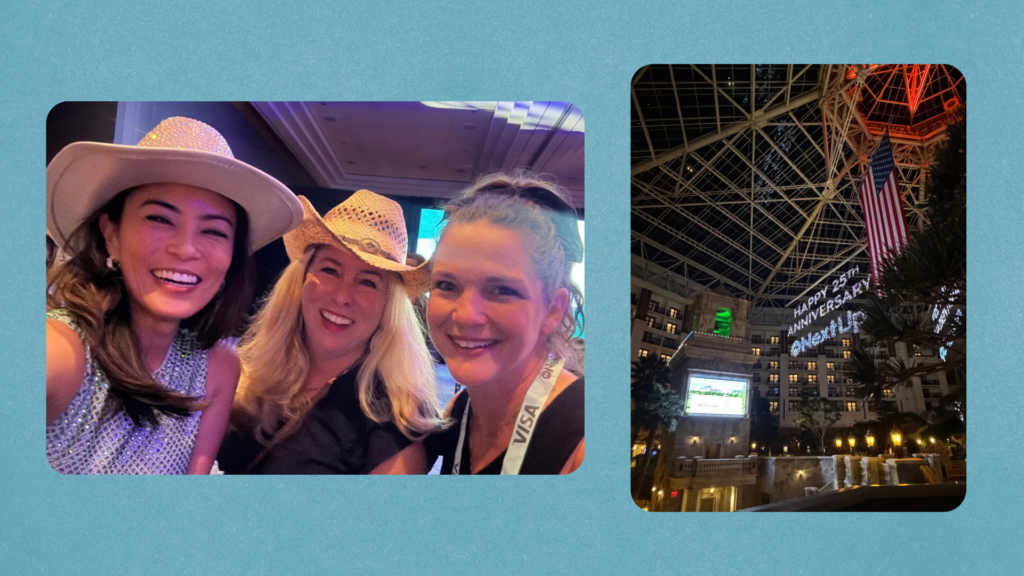

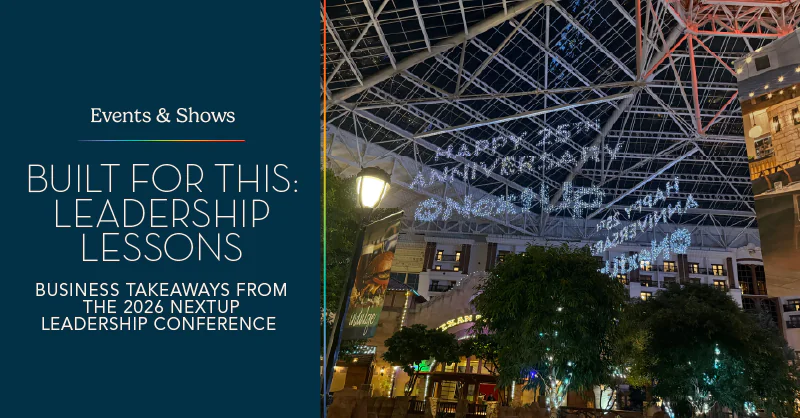
Business takeaways from the 2026 NextUp Leadership Conference by Jill Weible
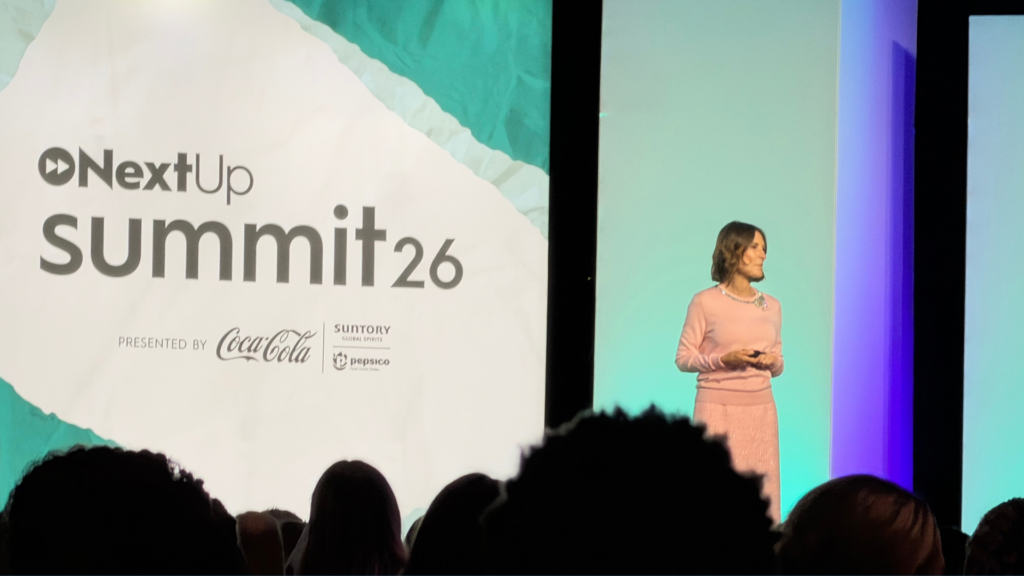
The 2026 NextUp Leadership Conference brought together over 1,000 leaders from across the consumer-packaged goods and retail industries to celebrate the organization’s 25th anniversary and explore what it takes to lead through change.
Over three days in Grapevine, Texas, one message surfaced repeatedly: Strong leadership is no longer simply about navigating the business in front of us. It requires understanding what is changing around us, determining what should remain constant, and building the organizational confidence to act before all the answers are clear.
The conference covered a wide range of topics, but three sessions offered particularly relevant lessons for businesses and leaders: Build-A-Bear’s story of resilience and transformation, Visa’s perspective on the economy, and Suzy Welch’s approach to purpose-driven leadership.
The Build-A-Bear Transformation: Evolving the Business While Staying True to the Brand
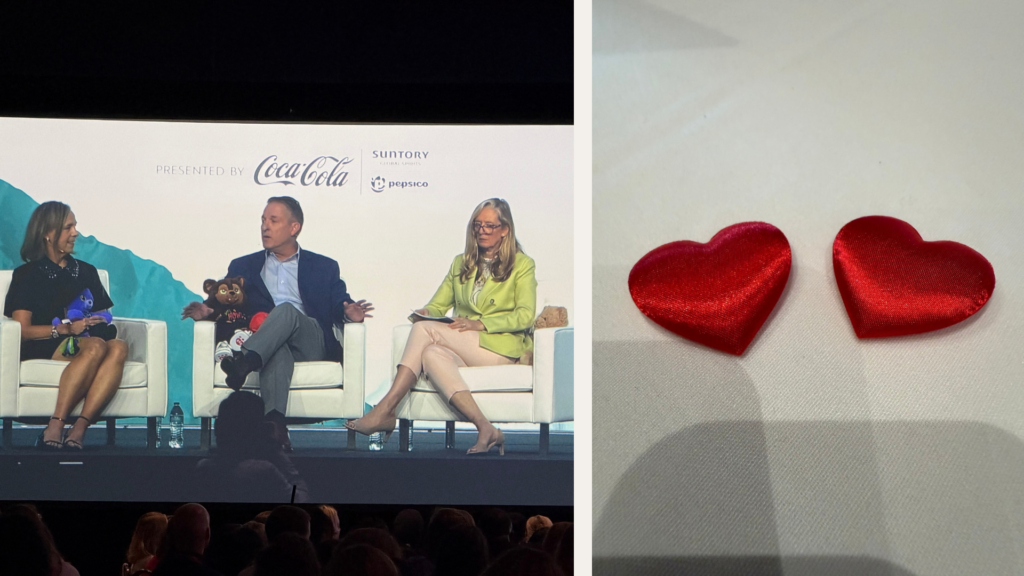
Nicola Johnson, Global Consumer Industry Leader at Deloitte and former NextUp board member, led a conversation with Build-A-Bear executives Chris Hurt and Kim Utlaut about the company’s transformation.
Build-A-Bear’s original business model was closely tied to the American shopping mall. As mall traffic declined during the early and mid-2010s, the company faced a fundamental challenge: How could it continue delivering an experience built around physical participation when consumer behavior and retail itself were changing? In response, they launched a multi-year turn around plan that included rethinking its store footprint, its consumers, and where the Build-A-Bear experience could live.
The pandemic intensified their challenges and vulnerability. In response, Build-A-Bear accelerated e-commerce, buy online and pick up in-store, curbside service, and other ways to reach consumers beyond its traditional locations. But the company’s response went much further beyond adding new sales channels.
Build-A-Bear’s leaders stepped back and asked broader strategic questions:
- What can we control, and what is the opportunity within the challenge?
- Who are our consumers today?
- What motivates them?
- Where else could the Build-A-Bear experience live?
- How can we attract new audiences without losing the people who already love the brand?
Those questions opened new avenues for growth. Build-A-Bear expanded into tourism destinations, cruise ships, Great Wolf Lodge locations, and pop-up experiences while strengthening the connection between its physical and digital channels. Partnerships with cultural properties such as the NFL, Marvel, and Super Mario also helped the company engage broader and increasingly adult audiences.
The most important lesson is that transformation does not have to mean abandoning what made a brand successful. Build-A-Bear did not walk away from the emotional experience at the heart of its business. It found more places, partnerships, and occasions through which that experience could be delivered.
Nostalgia has become one of the brand’s most valuable growth assets. A consumer who built a bear as a child can return years later to build a bear with their own children. An adult fan can also enter through entertainment, sports, gaming, or collecting. The company recognized that its brand was not confined to a specific age group. It was built around an enduring emotional experience.
That distinction matters. Brands can become so focused on reaching a new demographic that they dilute the meaning that made them valuable in the first place. Build-A-Bear demonstrates that the stronger strategy is often to reinterpret a brand’s core equity for new audiences rather than replace it.
Its international expansion, now in 37 countries, with the number of markets reportedly doubling in two years, also shows how a clearly understood emotional proposition can travel across cultures. As the company puts it, “A bear hug is understood in every language.”
The business takeaway
When market conditions disrupt a business model, leaders should separate the brand’s enduring value from the way that value has traditionally been delivered. Channels, formats, and consumer entry points can change while the central emotional promise remains intact.
Economic Resilience: Look Beyond the Headline
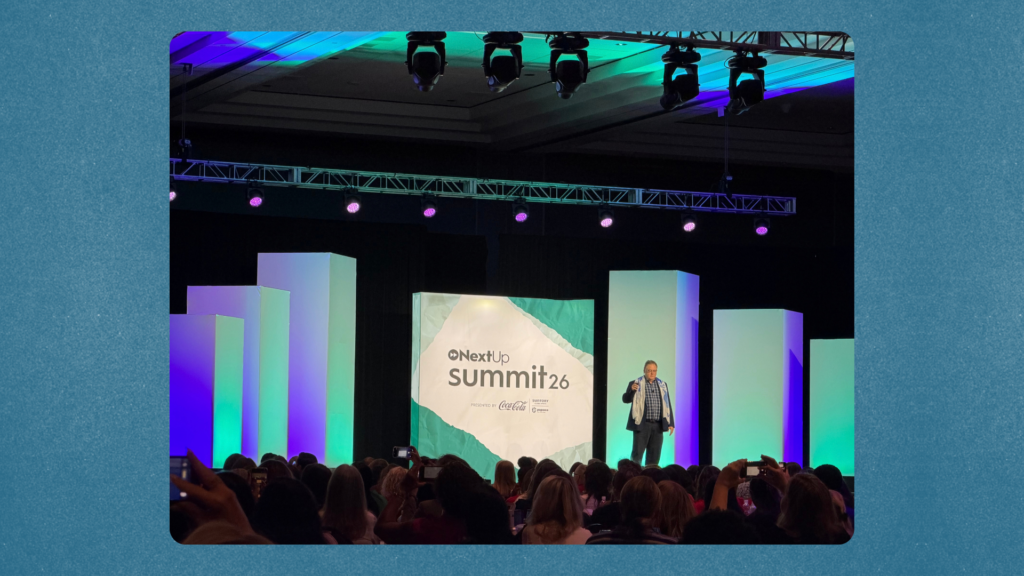
Wayne Best, Chief Economist at Visa, offered a broader view of the forces influencing consumer behavior and business decision-making.
His central argument was that the U.S. economy is more resilient than many headlines suggest. Inflation, interest-rate volatility, and uneven consumer confidence continue to create pressure, but headline sentiment does not always reflect the full economic picture.
For business leaders, that is an important reminder: Decisions should be grounded in multiple sources of evidence rather than the prevailing narrative alone. Economic uncertainty can cause companies to become overly defensive, delaying investment or innovation precisely when opportunities may be emerging.
Best also shared a striking perspective on AI adoption. According to the data he presented, 76% of C-suite executives reported saving four or more hours through AI during the previous week, compared with only 14% of workers. Whether that gap reflects differences in access, training, job responsibilities or expectations, it points to an important organizational challenge. Leaders may be experiencing AI as a meaningful productivity tool while much of the workforce has yet to see the same benefit.
The real measure of successful AI adoption is not the number of tools a company introduces. It is whether those tools make work measurably better across the organization. That requires understanding where employees lose time, designing AI around actual workflows, providing appropriate training, and evaluating the quality of the output. All of these factors must be considered while incorporating AI effectively, not simply the speed at which it is produced.
If productivity gains remain concentrated at the executive level, companies risk creating a disconnect between leadership’s enthusiasm for AI and employees’ everyday experience of it.
Best’s discussion of wealth transfer also illustrated how demographic and economic trends can create new consumer occasions. He shared that 28% of grandparents have taken their grandchildren on a trip without their parents, while 35% plan to take a “skip-gen” trip in the next three years. This trend reflects a broader shift in how wealth is being shared: not only through inheritance, but through experiences created in the present.
That has implications for brands across travel, hospitality, financial services, food, entertainment, and retail. Generational change is influencing not just who spends, but who participates in the purchase, who benefitsfrom it, and what kind of value the experience is expected to create.
The business takeaway
Economic data becomes more useful when businesses translate it into behavioral implications. Leaders should ask how changes in technology, wealth, and generational relationships are reshaping purchase occasions, not simply whether consumer spending is rising or falling.
Purpose as a Leadership Discipline
Author, leadership expert, and NYU Stern professor Suzy Welch brought the conversation from organizational transformation to individual decision-making.
Her “Becoming” methodology encourages people to evaluate career and life choices through a deeper set of questions: Who am I? What am I good at? What matters most to me? And does this opportunity align with the person I am becoming?
Although the framework for Suzy’s methodology is personal, it has clear business relevance. Organizations frequently evaluate talent through past performance and immediate business needs. Employees often make decisions in similar terms: Is this a promotion? Does it increase my compensation? Is it the logical next step?
Those questions matter, but they do not always reveal whether a role is aligned with someone’s strengths, values, and longer-term direction. When those factors are ignored, organizations can promote strong performers into roles that do not suit them, lose talented people who cannot see a meaningful path forward, or mistake upward movement for genuine development.
Purpose is sometimes treated as a softer leadership topic, but it has practical consequences for engagement, retention, and decision-making. Leaders who understand what motivates their people can build more individualized development paths and make better use of the talent already within the organization.
Welch’s methodology also reinforces the importance of self-leadership. Senior leaders spend significant time guiding teams and setting the direction of the business, but they also need to periodically reconsider whether their own skills, priorities, and definitions of success are evolving.
The business takeaway
Career development should not be treated as a predetermined ladder. The best leadership conversations connect organizational needs with an individual’s strengths, motivations, and future direction.
What I’m Taking Back to the Business
The three sessions addressed very different subjects, and together they created a useful leadership framework.
First, protect the enduring value of the brand while remaining flexible about how and where it is expressed. Build-A-Bear’s transformation shows that a company can modernize its model without losing its emotional center.
Second, examine the behavior beneath the data. Economic conditions, AI adoption, and demographic shifts matter most when leaders understand how they shape the real choices consumers and employees make.
Third, approach leadership and talent decisions with greater intentionality. Businesses are stronger when people understand not only what they are working towards, but why it fits their strengths and aspirations.
The conference reinforced that leadership is not about having certainty in an uncertain environment. It is about knowing what must remain true, recognizing what needs to change, and having the discipline to move forward thoughtfully.
That is what it means to be “Built to lead what comes next.”